Rebuilding trust during addiction recovery is a gradual and deeply meaningful process that extends beyond sobriety itself. Addiction can strain relationships through broken promises, secrecy, and emotional distance, leaving loved ones uncertain and guarded. Even when recovery begins, trust does not automatically return; it must be rebuilt through consistent actions, honesty, and accountability over time. Understanding this process helps both individuals in recovery and those around them approach healing with realistic expectations, patience, and compassion, creating the conditions necessary for relationships to repair and grow stronger.
Rebuilding Trust During Addiction Recovery: A Guide to Healing Relationships
Addiction often damages trust long before recovery begins. Broken promises, secrecy, emotional withdrawal, and unpredictable behavior can leave loved ones feeling hurt, guarded, or uncertain. Even after sobriety starts, trust does not automatically return—it must be rebuilt through consistent actions over time. Rebuilding trust is one of the most challenging yet meaningful parts of recovery because it requires patience, accountability, and emotional growth from everyone involved. Understanding how trust heals can help individuals and families move forward with realistic expectations and a shared commitment to healing.
Why Trust Is Often Broken During Addiction
Substance use can alter judgment, priorities, and behavior. People struggling with addiction may:
- Hide their use
- Break commitments
- Become emotionally unavailable
- Act impulsively or dishonestly
These behaviors are often symptoms of the disorder rather than intentional harm, but their impact on relationships is real and lasting.
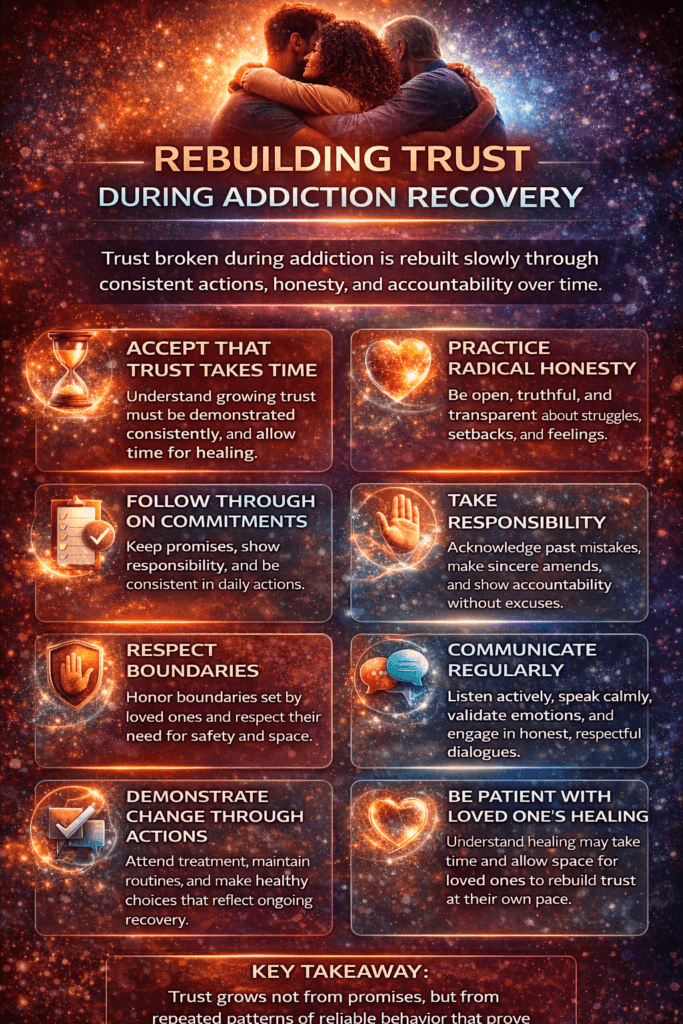
Accept That Trust Takes Time
Trust is not restored by words alone—it is rebuilt through repeated, reliable behavior. Loved ones may remain cautious even after sobriety begins, and this hesitation is normal. Healing relationships is a gradual process that depends on consistency rather than speed.
Key principle: Trust is rebuilt in small moments, not grand gestures.
Practice Radical Honesty
Transparency is one of the strongest trust-building tools. This includes:
- Admitting mistakes quickly
- Sharing struggles openly
- Being truthful about feelings and triggers
- Avoiding half-truths or omissions
Honesty signals reliability and shows commitment to change.
Follow Through on Commitments
Consistency proves reliability. Even small actions—arriving on time, keeping appointments, or completing daily responsibilities—demonstrate stability. Each kept promise strengthens confidence that change is real and lasting.
Take Responsibility Without Defensiveness
Accountability builds credibility. When past harm is acknowledged without excuses or blame-shifting, it reassures loved ones that growth is happening. A sincere apology includes:
- Acknowledging specific harm
- Expressing genuine remorse
- Making amends when possible
- Demonstrating changed behavior
Respect Boundaries
Loved ones may need emotional or practical boundaries to feel safe again. Respecting those limits—even when they feel strict—shows maturity and empathy. Boundaries are not punishments; they are protective tools that support healing for everyone involved.
Communicate Regularly and Calmly
Healthy communication helps rebuild emotional safety. Effective communication includes:
- Listening without interrupting
- Validating feelings
- Speaking calmly instead of reacting defensively
- Asking how to rebuild trust
Consistent, respectful conversations restore emotional connection.
Demonstrate Change Through Actions
Words may open the door, but actions keep it open. Examples of trust-building behaviors include:
- Attending treatment or support meetings
- Maintaining healthy routines
- Avoiding high-risk environments
- Practicing coping skills
Observable change provides reassurance that recovery is genuine.
Be Patient With Loved Ones’ Healing Process
Recovery affects the whole family, not just the individual. Loved ones may still feel hurt, anxious, or cautious even when progress is clear. Allowing them time to heal shows empathy and emotional growth.
Celebrate Progress Together
Acknowledging milestones—days sober, therapy progress, improved communication—reinforces hope and motivation. Shared recognition reminds everyone that healing is happening and that relationships can grow stronger than before.
When Professional Support Helps
Family therapy, couples counseling, or support groups can accelerate trust rebuilding by:
- Providing neutral guidance
- Teaching communication skills
- Addressing unresolved hurt
- Preventing misunderstandings
Professional support can help families rebuild trust safely and effectively.
Conclusion
Rebuilding trust during addiction recovery is not a single step but an ongoing process shaped by honesty, consistency, and patience. While the damage caused by addiction can feel overwhelming, relationships often become stronger when healing is approached with humility, empathy, and dedication. Trust grows when actions align with intentions day after day, proving that change is real and sustainable.
Key Takeaway:
Trust is not restored by promises—it is restored by patterns. In recovery, every honest conversation, kept commitment, and respectful interaction lays another brick in the foundation of lasting trust and healthy relationships.
Self-Management Strategies for Rebuilding Trust During Addiction Recovery
Rebuilding trust during addiction recovery begins from within. While trust from others is earned externally, it is strengthened by internal changes—such as self-awareness, emotional regulation, honesty, and consistency. Many individuals in recovery want to repair relationships quickly, but lasting trust develops gradually through repeated, reliable behavior. Self-management strategies help individuals stay accountable, regulate reactions, and demonstrate genuine growth. By focusing on personal responsibility and daily progress, people in recovery can create a foundation of stability that allows trust to return naturally over time.
Develop Daily Self-Awareness Habits
Understanding thoughts, triggers, and emotions is essential for trustworthy behavior. Helpful practices include:
- Journaling emotional patterns
- Tracking triggers and cravings
- Reflecting on daily decisions
- Identifying warning signs of stress or relapse
Self-awareness reduces impulsive actions and increases intentional responses.
Commit to Radical Honesty With Yourself
Trust with others starts with honesty toward yourself. This means:
- Acknowledging cravings instead of denying them
- Recognizing emotional struggles early
- Admitting mistakes immediately
- Avoiding rationalization
Self-honesty prevents small issues from growing into larger setbacks.
Build Consistency Through Structured Routines
Predictable habits demonstrate stability. Consistency can be built by:
- Keeping a regular sleep schedule
- Attending appointments on time
- Following treatment plans
- Completing daily responsibilities
Reliable routines signal to others that change is sustainable—not temporary.
Practice Emotional Regulation Skills
Emotional reactivity can damage trust quickly. Strengthening regulation skills helps maintain calm responses. Techniques include:
- Mindful breathing
- Grounding exercises
- Pausing before responding
- Physical activity to release stress
Regulation skills enable thoughtful communication rather than impulsive reactions.
Follow Through on Small Commitments
Trust is rebuilt through small successes repeated consistently. Start with manageable promises:
- Returning calls when you say you will
- Completing tasks you commit to
- Showing up on time
- Keeping personal goals
Small, consistent follow-through builds credibility faster than occasional big promises.
Accept Responsibility Without Defensiveness
When mistakes happen, taking ownership strengthens trust. Self-management steps include:
- Listening before responding
- Avoiding excuses
- Reflecting on what went wrong
- Creating a plan to improve
Responsibility demonstrates maturity and commitment to growth.
Strengthen Decision-Making Skills
Healthy decisions reinforce trustworthiness. Improve decision-making by:
- Pausing before acting
- Considering consequences
- Asking, “Does this support my recovery?”
- Reviewing long-term goals
Intentional choices show reliability and self-control.
Monitor Progress and Growth
Tracking progress keeps motivation strong and provides proof of change. Consider:
- Weekly self-check-ins
- Recovery milestone tracking
- Feedback from trusted people
- Reviewing personal goals
Seeing progress reinforces confidence and encourages continued growth.
Practice Patience With the Trust-Building Process
Trust cannot be forced or rushed. Self-management includes accepting that others may need time to feel safe again. Practicing patience shows emotional maturity and respect for others’ healing process.
Reinforce Change With Support Systems
Self-management doesn’t mean doing recovery alone. Strengthen your efforts by:
- Attending support groups
- Seeking therapy
- Connecting with mentors
- Staying accountable to sponsors or coaches
External support strengthens internal commitment.
Conclusion
Rebuilding trust during addiction recovery is a gradual process rooted in personal responsibility and consistent action. Self-management strategies—such as self-awareness, honesty, routine building, emotional regulation, and accountability—create the stability needed for others to believe in lasting change. Over time, repeated positive choices reshape both behavior and perception, allowing trust to grow naturally.
Key Insight:
Trust returns when actions repeatedly match intentions. By managing their thoughts, emotions, and behaviors with intention, individuals in recovery can rebuild credibility, restore relationships, and strengthen their confidence in their ability to live honestly and responsibly.
Family Support Strategies for Rebuilding Trust During Addiction Recovery
When someone enters recovery, healing relationships becomes just as important as healing the individual. Addiction often disrupts trust through broken promises, emotional distance, and unpredictable behavior, leaving family members feeling hurt, cautious, or uncertain. Rebuilding trust is not an automatic result of sobriety—it is a gradual process that requires patience, consistency, and mutual effort. Families play a powerful role in this process by creating a supportive environment that encourages accountability, honest communication, and emotional safety. With the right strategies, loved ones can help restore trust while also protecting their own well-being.
Understand That Trust Returns Slowly
Trust is rebuilt through repeated experiences of reliability, not reassurance alone. Families can support this process by:
- Allowing time for change to be demonstrated
- Avoiding pressure for immediate forgiveness
- Recognizing progress without expecting perfection
Patience communicates realistic expectations and reduces unnecessary tension.
Encourage Open and Honest Communication
Safe conversations strengthen trust. Families can promote healthy dialogue by:
- Listening without interrupting or judging
- Asking supportive rather than accusatory questions
- Validating feelings even when concerned
- Using calm, respectful tones
When communication feels safe, honesty becomes easier and more consistent.
Set Clear and Healthy Boundaries
Boundaries help both the individual in recovery and family members feel secure. Effective boundaries might include:
- Expectations about honesty and communication
- Limits on financial or logistical support
- Agreements about substance-free environments
- Consequences for unsafe behaviors
Boundaries are not punishments—they are guidelines that protect trust and stability.
Recognize and Reinforce Positive Changes
Acknowledging growth strengthens motivation and confidence. Families can:
- Praise consistent effort
- Celebrate recovery milestones
- Notice improvements in behavior
- Express appreciation for honesty
Positive reinforcement encourages continued progress.
Avoid Bringing Up the Past During Conflict
While processing past harm is important, repeatedly bringing up old mistakes during arguments can hinder progress. Instead, families can focus on:
- Current behavior
- Present solutions
- Future goals
This approach promotes forward movement rather than emotional setbacks.
Model Trustworthy Behavior
Family members also influence the emotional climate. Modeling reliability, honesty, and calm communication demonstrates what healthy trust looks like. Consistency from loved ones helps normalize stable interactions and strengthens mutual respect.
Support Accountability Without Control
Encouragement is more effective than monitoring. Healthy support includes:
- Asking how to help rather than telling what to do
- Respecting autonomy
- Offering reminders only when requested
- Avoiding surveillance or suspicion
Support fosters trust; control can undermine it.
Seek Family-Based Support Resources
Professional or peer support can accelerate healing. Families may benefit from:
- Family therapy
- Support groups for loved ones
- Educational workshops about addiction
- Counseling focused on relationship repair
Guided support helps families navigate complex emotions safely and constructively.
Practice Compassion for Yourself and Your Loved One
Recovery affects everyone emotionally. Family members may feel anger, grief, fear, or hope all at once. Practicing self-compassion allows loved ones to support recovery without becoming overwhelmed or resentful.
Conclusion
Rebuilding trust during addiction recovery is a shared journey shaped by patience, communication, boundaries, and consistent behavior. Families who approach this process with empathy and realistic expectations create an environment where trust can grow naturally rather than being forced. Over time, repeated positive interactions replace fear with confidence and rebuild the emotional bonds that addiction once strained.
Key Takeaway:
Trust is restored not through promises but through patterns. When families provide steady support, clear boundaries, and compassionate understanding, they become essential partners in rebuilding trust and strengthening lasting recovery.
Community Resource Strategies for Rebuilding Trust During Addiction Recovery
Rebuilding trust after addiction is not only a personal and family process—it is also a community effort. Individuals in recovery often face stigma, skepticism, and social barriers that make it difficult to restore credibility, even when they are working hard to change. Community resources can play a transformative role by providing environments where people are given opportunities to demonstrate responsibility, consistency, and growth. When communities offer structured support systems, safe spaces, and second chances, they help individuals rebuild trust not just in relationships, but in themselves. Trust restoration thrives when communities shift from judgment to support and from punishment to opportunity.
Create Recovery-Supportive Environments
Communities can foster trust-building by creating spaces that encourage and respect recovery. Examples include:
- Recovery-friendly workplaces
- Sober community events
- Drug- and alcohol-free recreation programs
- Safe housing initiatives
These environments allow individuals to practice responsibility and reliability in real-life settings.
Expand Access to Recovery Programs
Structured programs reinforce accountability and consistency—two key ingredients for rebuilding trust. Helpful community resources include:
- Outpatient treatment programs
- Peer recovery coaching
- Skill-building workshops
- Vocational rehabilitation services
Participation in structured programs demonstrates commitment to change and provides visible proof of progress.
Promote Second-Chance Opportunities
Employment, education, and volunteer opportunities help individuals show reliability through action. Communities can support trust restoration by:
- Offering fair-chance hiring practices
- Providing job training programs
- Supporting reentry initiatives
- Encouraging mentorship roles
When people are entrusted with responsibility, they are more likely to rise to the challenge.
Train Community Members in Addiction Awareness
Stigma often delays trust rebuilding. Public education programs that teach the science of addiction, recovery timelines, and relapse risk can help community members understand that recovery is a process, not a single event. Educated communities are more likely to respond with empathy rather than suspicion.
Establish Peer Support Networks
Peer groups provide social proof of change. Community-based supports such as:
- Recovery meetings
- Peer mentoring programs
- Sober social groups
- Alumni recovery networks
offer individuals a chance to build trust within supportive circles before extending it outward.
Encourage Accountability Systems
Communities can strengthen trust-building by supporting structured accountability, including:
- Drug monitoring or check-in programs
- Recovery court systems
- Case management services
- Progress tracking tools
These systems show others that recovery efforts are real, consistent, and measurable.
Provide Access to Mental Health and Counseling Services
Trust often breaks down because of emotional instability, impulsivity, or untreated mental health conditions. Accessible counseling and therapy services help individuals:
- Regulate emotions
- Improve communication
- Process guilt or shame
- Develop healthier coping skills
Emotional stability strengthens reliability, which naturally restores trust.
Support Restorative Justice Approaches
When harm has occurred, restorative programs allow individuals to take responsibility and repair relationships constructively. These approaches emphasize:
- Accountability
- Dialogue
- Understanding impact
- Making amends
Restorative practices help communities witness genuine change rather than focusing solely on past mistakes.
Foster Community Connection and Belonging
Isolation weakens recovery, while belonging strengthens it. Communities can build trust by encouraging:
- Volunteerism
- Group activities
- Faith or service organizations
- Neighborhood engagement
When individuals feel valued and included, they are more motivated to maintain responsible behavior.
Conclusion
Rebuilding trust during addiction recovery becomes far more achievable when communities actively participate in the process. By providing opportunities, education, accountability systems, and supportive environments, communities help individuals demonstrate real change over time. Trust grows not from promises but from consistent, observable actions—and community resources create the settings where those actions can be seen and validated.
Key Takeaway:
Strong communities don’t just witness recovery—they help make it possible. When communities offer structure, support, and second chances, they become powerful partners in restoring trust and helping individuals build stable, meaningful lives beyond addiction.
Frequently Asked Questions
Here are some common questions:
1. Why is trust often damaged during addiction?
Addiction can lead to secrecy, broken promises, mood changes, and unreliable behavior. These actions may stem from the disorder itself, but they can still hurt relationships and weaken confidence in a person’s reliability.
2. How long does it take to rebuild trust?
There is no fixed timeline. Trust is rebuilt gradually through consistent behavior over weeks, months, or sometimes longer. The pace depends on past experiences, the level of harm caused, and the consistency with which positive changes are demonstrated.
3. Can trust be restored after serious mistakes?
Yes. Many relationships recover after addiction when individuals show accountability, honesty, and sustained change. Repair is possible, but it usually requires patience, effort, and mutual willingness to heal.
4. What is the most important factor in rebuilding trust?
Consistency. Reliable daily actions—such as keeping commitments, communicating honestly, and following through—are more powerful than promises or apologies alone.
5. Should someone in recovery expect immediate forgiveness?
No. Forgiveness and trust are different processes. Forgiveness may come sooner, but trust usually takes longer because it is based on repeated evidence of change.
6. How can someone show they are trustworthy again?
They can demonstrate trustworthiness by:
- Being honest about struggles
- Attending treatment or support meetings
- Respecting boundaries
- Taking responsibility for mistakes
- Following through on commitments
Observable actions reassure others that change is real.
7. What role do boundaries play in rebuilding trust?
Boundaries create emotional safety. They help loved ones feel secure while allowing the person in recovery to show responsibility and respect. Healthy boundaries support healing rather than punishment.
8. What if loved ones are still suspicious or cautious?
Caution is normal after trust has been broken. Patience and consistent behavior over time are the most effective ways to ease doubts. Trying to rush the process can actually slow it down.
9. Can therapy help rebuild trust?
Yes. Individual therapy, couples counseling, or family therapy can improve communication, address past hurt, and provide structured guidance for repairing relationships.
10. How can families support trust rebuilding?
Families can help by:
- Communicating calmly and honestly
- Recognizing progress
- Avoiding constant reminders of past mistakes
- Setting clear expectations
- Practicing patience
Supportive environments make it easier for trust to grow.
11. What happens if setbacks occur?
Setbacks do not automatically erase progress. What matters most is how the individual responds—taking responsibility, learning from the situation, and recommitting to recovery. Growth often includes challenges.
12. Is rebuilding trust part of recovery itself?
Absolutely. Trust restoration reflects emotional growth, accountability, and stability. Rebuilding trust is not separate from recovery—it is one of the strongest signs that recovery is working.
✅ Key Insight:
Trust is rebuilt through patterns, not promises. Every honest conversation, responsible decision, and consistent action adds another layer of credibility and strengthens relationships over time.
Conclusion
Trust restoration is not defined by words or intentions, but by repeated patterns of reliable behavior. As individuals in recovery demonstrate honesty, responsibility, and emotional growth, confidence gradually replaces doubt, and relationships begin to heal. While setbacks and challenges may occur, persistence and support can transform damaged connections into stronger, healthier bonds than before. Ultimately, rebuilding trust is one of the most powerful signs of recovery progress, reflecting not only freedom from substances but also renewed integrity, stability, and emotional resilience.
Video: How to Rebuild Trust After You’ve Broken It #RecoveryJourney #RelationshipHealing #Honesty