If you’re spending time focusing on your sobriety and building a fresh start, friendships take on a whole new meaning. Some people will cheer you on and help you, while others might quietly (or not so quietly) pull you back into old habits. Not every friendship survives recovery, and that’s ok. Picking out which friends are bringing you down and which are rooting for your success becomes super important on this adventure. I’m here to share what I’ve learned and some insights that can help you spot those toxic friends when you’re getting your sober life off the ground.
Why Spotting Toxic Friends Matters in Sobriety
The friendships you keep can either help your recovery feel smoother or create hurdles you just don’t need. I’ve seen how even a couple of unsupportive people can create tension, stress, and temptations. This is especially true in the early stages. Research shows that having the right support system can make relapse less likely, both by lowering your stress and making sober living feel less isolating. Toxic friends don’t just make recovery harder; they actively put your progress at risk. Knowing what to look out for isn’t about judging others. It’s about keeping yourself safe and happy.
What Makes a Friend Toxic (Especially in Recovery)
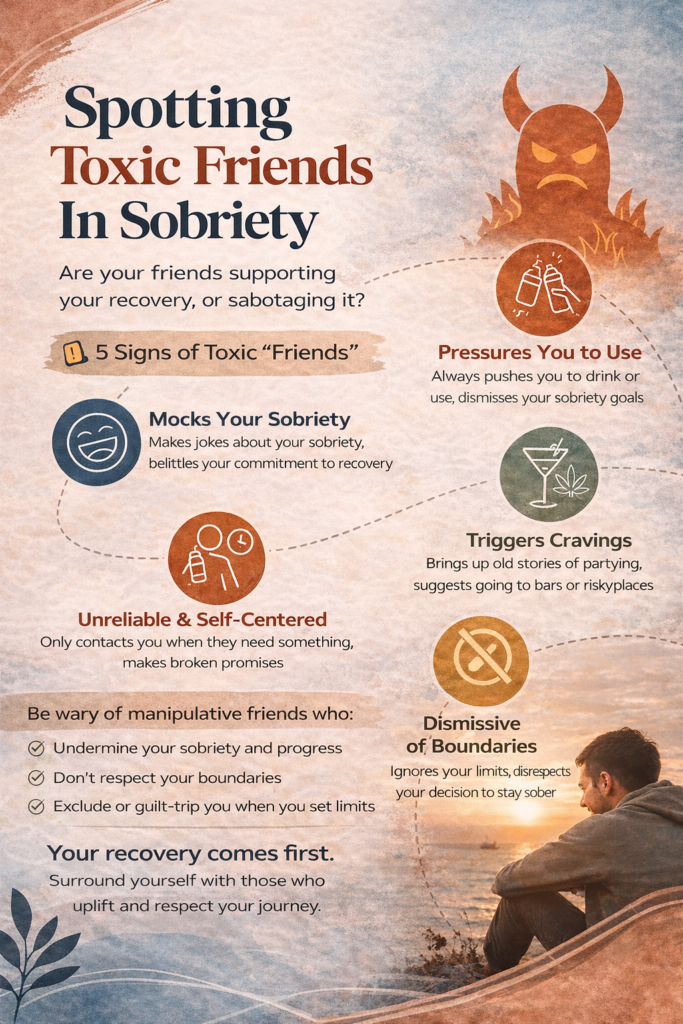
Toxic friendships can sneak up on you for a lot of reasons. Some friends may have always encouraged unhealthy habits, while others struggle to accept the changes you’re making. In recovery, toxicity isn’t just about arguments or obvious betrayal. It can look like subtle sabotage or emotional manipulation. I’ve found a few classic toxic patterns pop up time and again:
- Ignoring boundaries: Friends who joke about your sobriety, push drinks on you, or tease you for not joining in often have a hard time respecting your choices.
- Minimizing your progress: That friend who says “one drink won’t hurt” or rolls their eyes at your meetings might not realize how damaging their attitude can be.
- Bringing drama and negativity: Constant complaining, gossiping, or stirring up conflict can add unnecessary stress, something nobody needs in recovery.
- Expecting you to be their therapist: Some people get used to leaning on you for endless emotional support, without much concern for how you’re coping or feeling.
- Unreliable or only around for a good time: Everyone knows someone who disappears when things get tough or only calls when they want a party buddy. That’s a huge red flag in sobriety.
Common Toxic Behaviors to Watch Out For
Certain habits just aren’t healthy, no matter how close you used to be. Here are a few behaviors I’ve seen firsthand and caution others to watch for:
- Guilt-tripping: Friends who use guilt to make you hang out in bars or skip meetings might not understand your priorities, or just don’t care enough to respect them.
- Competitive attitude: Some friends act like your sobriety is about proving something or “winning.” They might compare your progress to theirs or mock your goals.
- Pushing boundaries: Repeatedly trying to tempt you or get you to “relapse just once” isn’t playful. It’s disrespectful and troubling.
- Jealousy or resentment: Friends who feel left out of your changes or resent your growth may suddenly go cold or start passive-aggressive arguments.
- Oversharing about substance use: People who go out of their way to tell you stories about drinking or drugs, even after you ask them to stop, aren’t being thoughtful.
How to Tell If a Friendship Is Hurting Your Recovery
If you’re second-guessing someone in your circle, that’s already a sign you should trust your gut. I like to use a few simple check-ins to see where I stand with people in my life. Ask yourself:
- Do I feel better or worse after spending time with this person?
- Do I feel pressured or uncomfortable about my sobriety around them?
- Are my boundaries respected, or do I constantly have to defend them?
- Is my recovery celebrated or ignored?
- Does this friend only come around when they want something?
If most of your answers make you feel uneasy, there’s a strong chance this friendship is making things harder than they need to be. Sometimes you notice these problems after a big event; other times, it’s the steady drip of little things that finally get your attention. It’s important to remember that feeling uneasy is valid and can be a sign your instincts are working to protect you.
Managing Toxic Friendships in Your Sober Life
Recognizing a toxic friend is just the first step. Figuring out what to do next is usually the tough part. Here’s what’s worked for me and others steering through these waters:
- Set clear boundaries: Let people know what’s ok and what’s not. It helps to be upfront about your needs, like not wanting to hang out in bars or talking about your recovery only when you’re comfortable.
- Limit contact: Sometimes distance is the best answer. You don’t have to cut people off entirely right away, but you can respond less or keep hangouts short and in safe places.
- Find new circles: Spend time with people who support your goals. This could mean joining sober groups, attending new meetups, or reconnecting with old friends who’ve always had your back.
- Practice saying no: It’s ok to decline invites and skip out on events if you feel they’ll make staying sober harder. No guilt required.
- Talk to a sponsor or counselor: Getting an outside perspective can help you feel heard and think through your options.
Real-World Examples of Toxic Friend Dynamics
I’ve found that stories help these concepts click. For example, someone I met at a recovery group realized a good friend was always offering rides to parties with heavy drinking. Another person noticed their best friend called only when they needed to vent about their own job or relationship drama, never once asking about sobriety. One friend would constantly joke about “falling off the wagon,” making everyone uncomfortable. Situations like these pop up often, and no matter how much history you share, your well-being comes first. If this sounds familiar, changing your approach to these friendships might be a super important next step.
Extra Tips for Handling Friendship Shifts
Letting go of old friends (or redefining those relationships) can feel like a loss. I’ve felt that sting before, and it’s totally normal to grieve friendships, sometimes more than you’d expect. Here are a few things I keep in mind:
- Change is uncomfortable, but it’s temporary. It might get lonely at first, but new, healthier connections eventually turn up.
- Your values come first. Only you know what’s best for your recovery and happiness. Trust your judgment.
- Keep track of your triggers. Notice when you feel stressed or tempted after spending time with someone. Journaling or mental notes can help.
- Focus on what you’re gaining, not losing. Growing out of toxic friendships makes room for stronger, more authentic ones down the line.
- Build new routines. Try out sober activities, like yoga classes, volunteering, or hobby groups. They are great places to meet like-minded people and give your social life a boost.
Frequently Asked Questions
Here are a few things people in recovery often ask when it comes to dealing with toxic friends:
Question: How do I know if I’m overreacting to a friend’s behavior?
Answer: If a friend makes your recovery harder, ignores boundaries, or leaves you feeling bad about yourself, those feelings are valid. You’re not overreacting to protect your health and happiness.
Question: What if my oldest friend is toxic?
Answer: Length of friendship doesn’t always mean it’s healthy or right for you now. If someone’s behavior is holding you back or putting your recovery at risk, it’s ok to distance yourself, no matter how long you’ve known them.
Question: Can a toxic relationship be fixed?
Answer: Sometimes, yes. If the other person is willing to respect your boundaries and grow with you, friendships can get better. If not, protecting your recovery should always come first.
Sober Support: The Bright Side of Cutting Loose Toxic Friends
Letting go of toxic friendships makes space for better connections and more peace in your sober life. It also builds your confidence and lets you focus on friendships that actually make you feel good. Recovery is about reclaiming your power, and protecting your space from negativity is a really important step. Surrounding yourself with positive, understanding people can be a total game-changer on your sobriety ride. Remember, choosing to step away from certain friends isn’t about being selfish; it’s about honoring your well-being and future. As you move forward, you’ll likely stumble upon new friends who celebrate your progress, share your values, and support your healthy lifestyle. Pay attention to the people who light you up and make you feel hopeful about the future; those are the connections that truly matter on this path.
Video: This Is What Toxic Friends Do During Recovery #sobriety #mindblown #toxic