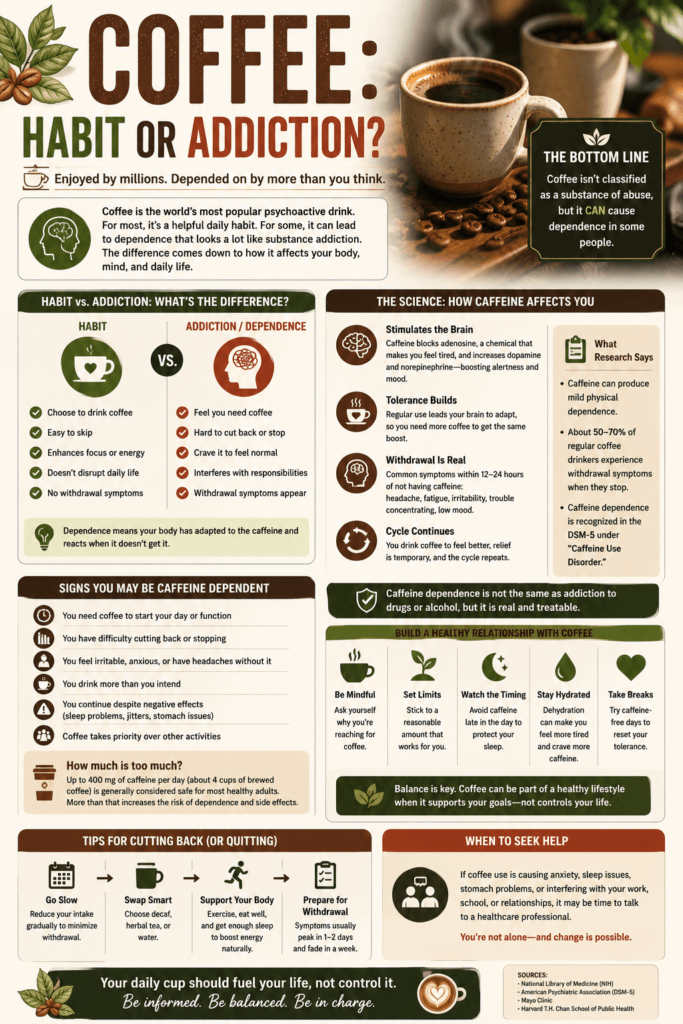
Coffee is one of the world’s most widely consumed beverages, and for many people it is a regular part of the daily routine. Its primary active ingredient, caffeine, is a stimulant that increases alertness and temporarily reduces feelings of fatigue. While moderate caffeine consumption is considered safe for most healthy adults, regular use can lead to physical dependence in some individuals. As the body adapts to caffeine, people may develop tolerance and experience withdrawal symptoms—such as headaches, fatigue, irritability, and difficulty concentrating—when intake is reduced or stopped. Understanding the difference between a healthy habit, physical dependence, and addiction can help individuals make informed decisions about their caffeine consumption and overall health.
What Happens When Coffee Becomes a Habit?
Coffee isn’t just a warm drink or a quick pick-me-up habit. Caffeine, the active ingredient in coffee, has a powerful effect on the brain. It blocks a chemical called adenosine, which normally makes you feel drowsy. Without adenosine slowing things down, your brain ramps up activity, making you feel alert, focused, and ready for action. This makes it easy to crave that boost and harder to imagine the day without it.
Drinking coffee has become part of the daily routines of billions of people around the world. According to the Institute for Scientific Information on Coffee, over 80% of the world’s population drinks a caffeinated product every day. Over time, regular caffeine use creates changes in the brain that make you want it not just for the “buzz,” but to feel normal. It’s not just about the energetic lift; it’s also the comforting feeling of holding a familiar mug in the morning, the social rituals, or the little moments of focus it provides before a busy day.
I’ve noticed that my energy drops when I try to go without coffee in the morning, and even the smell of a fresh brew makes me crave a cup. That’s not just a habit; it’s a pattern similar to what happens with many other substances people come to rely on.
Coffee Addiction: How the Brain Starts Craving Caffeine
Coffee addiction is really about dependence on caffeine. When I drink coffee regularly, my brain starts making more adenosine receptors to try to balance things out. Over time, I need more coffee to get the same perk, and skipping my usual dose can leave me feeling tired, cranky, or even foggy-headed.
The medical guides refer to this pattern as “caffeine dependence.” According to the National Institutes of Health, caffeine withdrawal can include headaches, tiredness, irritability, and trouble concentrating. It’s a weird cycle: I drink coffee to feel good, but if I don’t have it, I end up feeling even worse. Pretty convincing evidence that coffee addiction mimics substance dependence in a lot of ways.
Some folks argue that caffeine dependence is less serious compared to drugs like nicotine or alcohol, but the brain chemistry behind it is surprisingly similar. The American Psychiatric Association even includes caffeine withdrawal in its clinical manual of disorders (the DSM-5), showing that it’s a real thing, even if it doesn’t come with the same risks as other dependencies.
In addition, the social acceptance of coffee tends to mask its addictive potential. Most workplaces and social gatherings make coffee a standard, so dependence can creep up on anyone. I’ve seen how coffee drinkers often bond over “needing” their next cup, turning a solitary craving into a shared ritual that reinforces the pattern even more.
Why Coffee Feels So Hard to Quit
Trying to cut down on coffee often means running into a wall of classic withdrawal symptoms. In my experience, missing out on caffeine leaves me sluggish, with a dull headache that just won’t quit. For some people, the symptoms can linger for up to a week, making it tough to stick with cutting back.
Here are the most common signs coffee withdrawal is kicking in:
- Headaches: These often show up 12-24 hours after the last cup.
- Low Energy: Feeling extra tired or drained is super common.
- Bad Mood: Irritability, grumpiness, or a short temper can happen.
- Trouble Concentrating: The brain may feel foggy without its usual caffeine kick.
- Cravings: You might feel a strong urge to grab a coffee, even if you know you’re trying to cut back.
If you’ve ever tried stopping coffee cold turkey, these symptoms always seem to pop up right when you’re trying to focus or need some extra energy, making the process more challenging. In some cases, people may notice they get anxious or even nauseated when skipping their daily coffee, which further shows how attached our bodies get to this everyday pick-me-up.
Understanding the Upsides and Downsides of Coffee Addiction
Coffee dependence feels like a double-edged sword. On one hand, that reliable coffee ritual makes it easier to jumpstart the day and boost productivity. On the other hand, taking a closer look at what’s happening makes it easier to decide if your relationship with coffee is getting in the way of feeling your best.
The Good Stuff
- Boosts Alertness: Caffeine helps you stay awake and focused.
- Improves Mood: Coffee can spark the release of dopamine, a feel-good chemical in the brain.
- Gives a Boost to Performance: For many people (me included), a cup before a workout seems to offer a nice energy boost. Research suggests moderate caffeine before exercise can lead to better endurance and improved focus.
The Not-So-Great Stuff
- Creates Dependence: Regular use may mean you need more caffeine over time to get the same lift. This repeated cycle can make it tough to cut back, even when you want to.
- Withdrawal Symptoms: Missing coffee can cause headaches, irritability, and a whole lot of lethargy.
- Potential Health Issues: Too much caffeine can cause jitters, an increased heart rate, trouble sleeping, and sometimes stomach problems.
- Disrupted Sleep Patterns: Drinking coffee late in the day may interfere with falling asleep or staying asleep, impacting overall rest.
Moderation is pretty important. Some studies, Harvard T.H. Chan School of Public Health Coffee Guide. For example, research links regular coffee drinking with possible reduced risks for certain diseases, like Parkinson’s or Type 2 diabetes. But stepping over that line into high caffeine territory, especially if you already have anxiety or trouble sleeping, can mess with your well-being.
It’s worth noting that our sensitivity to caffeine can vary based on genetics, age, and overall health. I’ve met people who can knock back a double espresso and head to bed, while others get jittery even after a single cup in the morning. Knowing where you fall on this spectrum can help you make better choices for your coffee habit.
Common Questions About Coffee Addiction
There’s a lot of curiosity about caffeine and dependence. Here are some questions I hear a lot, along with what the research and my own experience have shown:
Question: How much coffee does it take to become dependent?
Answer: For most people, having 1-2 cups a day regularly is enough to build up dependence. You might not notice anything until you try skipping coffee and feel withdrawal symptoms like headaches or fatigue.
Question: Is coffee addiction dangerous?
Answer: In most cases, caffeine dependence is not dangerous unless you’re consuming very high amounts. But if you rely on large doses just to get by or have symptoms like heart palpitations or disrupted sleep, it’s worth rethinking your routine.
Question: Can you really quit caffeine?
Answer: Absolutely, but it helps to cut down slowly. Gradually lowering your coffee intake over a week or two is much less miserable than quitting all at once. Swapping some coffee for decaf or trying caffeine-free alternatives (like herbal tea) can also make things easier.
Question: What about other caffeinated drinks?
Answer: The same rules apply for tea, energy drinks, and even soda. If you use them regularly, your body will likely develop dependence over time. Watching your total caffeine intake from all sources can help you avoid unwanted side effects.
Question: Does coffee have any real health benefits?
Answer: Moderate coffee consumption has been linked to reduced risks of several chronic diseases, including liver disease and certain cancers. As with anything, balance is the key; too little or too much can tip the scale away from health benefits.
Tips for Managing Coffee Intake and Breaking the Habit
If you’re thinking about cutting back on coffee, or if you’re tired of feeling owned by your caffeine cravings, there are several practical steps you can take to manage your intake or quit altogether. Here’s what’s helped lots of other folks and me:
- Track Your Intake: Keep a note (even just in your phone) to see how much caffeine you actually consume each day. This includes coffee, tea, sodas, and even some medications or snacks that have hidden caffeine. You might be surprised where you track down extra sources.
- Swap Out Drinks: Try switching some of your regular cups for decaf or herbal tea. This helps ease your body into less reliance on caffeine. You might even jump into new routines by introducing drinks like chicory root coffee or golden milk.
- Reduce Gradually: If going cold turkey isn’t your thing, drop your intake by half a cup every few days to make withdrawal smoother. Slow and steady changes keep symptoms milder and can help you adjust mentally and physically.
- Focus on Sleep: Pay extra attention to getting enough rest; tiredness is a big reason many people reach for extra coffee. Setting a relaxing bedtime routine and cutting down on screen time can signal to your body that it’s time for real rest.
- Stay Hydrated: Drinking plenty of water can help reduce headaches and fatigue as you cut back on caffeine.
- Mix in Healthy Snacks: Sometimes, low energy makes you want coffee, but a light snack rich in complex carbohydrates or protein might help steady energy levels.
Staying consistent makes a big difference, and it’s totally okay to have challenging days. The body usually readjusts within a week or two, making life without caffeine dependence much easier to manage. Remember to celebrate little wins during the process—every step counts!
When to Get Help & What to Watch Out For
Coffee addiction rarely gets as much attention as other types of dependence, but it can still affect daily life and health. If you find that your caffeine habit disrupts your sleep, affects your mood daily, or causes health issues (like heart trouble), it’s definitely worth talking to your doctor. They can help rule out underlying problems and give advice tailored to your situation.
It’s also good to stay aware of where caffeine might be creeping in; chocolate bars, some pain medications, and other drinks can quietly add to your daily total. Stumble upon these sources by reading labels and keeping an eye out for unexpected ingredients.
Everything in moderation really is the key. Getting a sense of how coffee addiction mimics substance dependence can help you make smarter choices about your own coffee use and how it fits into feeling your best each day. Whether you stick with your morning cup or cut back, knowing the facts helps you chart a path that keeps you alert, happy, and healthy.
Video: How Your Body Traps Itself in a Caffeine Cycle #dependence #health #science