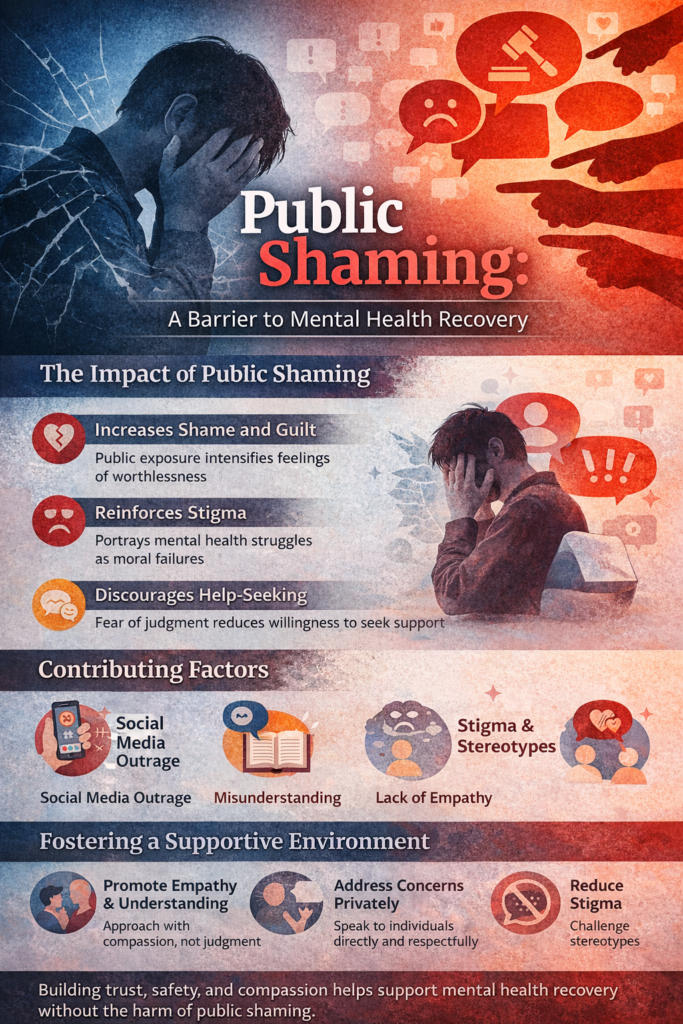
Public shaming has become more prevalent in today’s society, especially with the rise of social media, where personal struggles can easily be shared and scrutinized. Although it is sometimes seen as a tool for accountability or raising awareness, public shaming often leads to negative, unintended effects—particularly regarding mental health. For those already facing issues like anxiety, depression, trauma, or addiction, public exposure or criticism can deepen feelings of shame, stigma, and isolation. Instead of fostering growth or recovery, such experiences typically create more psychological obstacles, making it harder for individuals to reach out for help and engage in their healing journey.
Public Shaming: A Barrier to Mental Health Recovery
In an age where social media and public discourse dominate how we communicate, the line between accountability and harm has become increasingly blurred. Public shaming—whether intentional or not—has emerged as a common response to perceived wrongdoing, including behaviors linked to mental health struggles. While often framed as a way to promote awareness or responsibility, public shaming can have profound psychological consequences. For individuals already navigating mental health challenges, it may not act as a corrective force, but as a significant barrier to recovery.
At its core, public shaming intensifies one of the most damaging emotions in mental health: shame itself. Unlike guilt, which focuses on actions, shame targets identity, leading individuals to internalize negative beliefs about who they are. When struggles are exposed or criticized publicly, this can deepen feelings of worthlessness and self-blame. Rather than motivating change, such experiences often drive individuals inward, increasing isolation and discouraging help-seeking behavior.
Another critical issue is the role of stigma. Public shaming reinforces harmful societal narratives that mental health challenges are signs of weakness or moral failure. This can create a climate where individuals fear being judged, labeled, or misunderstood. As a result, they may avoid discussing their struggles altogether, delaying or entirely avoiding treatment. The very act intended to “call attention” to an issue can paradoxically silence those who need support the most.
Psychologically, public shaming also activates stress responses that can worsen mental health symptoms. Increased anxiety, depression, and emotional dysregulation are common outcomes. For individuals dealing with conditions such as substance use disorders, trauma, or mood disorders, this added stress can exacerbate symptoms and even trigger relapse or harmful coping behaviors. In this way, public shaming not only fails to support recovery—it can actively undermine it.
Moreover, recovery from mental health challenges is deeply rooted in connection, safety, and trust. Therapeutic progress often depends on creating environments where individuals feel accepted and understood. Public shaming disrupts this process by fostering fear and defensiveness rather than openness. When people feel exposed or attacked, they are less likely to engage honestly with others, including mental health professionals.
This is not to suggest that harmful behaviors should be ignored. Accountability is an important part of growth and recovery. However, there is a crucial difference between constructive accountability and public humiliation. The former encourages responsibility while preserving dignity; the latter often strips individuals of both.
Moving forward, a more effective approach requires shifting from judgment to understanding. This includes promoting mental health education, encouraging compassionate communication, and creating spaces where individuals can seek help without fear of exposure. By reducing stigma and emphasizing empathy, society can better support recovery rather than hinder it.
Final Thought
Public shaming may appear to offer quick answers, but it rarely leads to meaningful change. Instead, it deepens the very struggles it aims to address. True progress in mental health recovery lies not in exposing individuals, but in supporting them—quietly, respectfully, and without shame.
Protecting Recovery: Self-Management Strategies to Prevent the Harm of Public Shaming
In a world shaped by instant communication and social media, it has become increasingly easy to react publicly to others’ struggles. Whether driven by frustration, misunderstanding, or a desire for accountability, public shaming often emerges as a quick response. However, when it comes to mental health, these reactions can cause significant harm—reinforcing stigma, increasing shame, and creating barriers to recovery.
Preventing public shaming is not only a social responsibility but also a self-management skill. It requires awareness, emotional regulation, and intentional communication. By learning how to manage our own reactions, we can contribute to a culture that supports recovery rather than undermines it.
Recognizing Emotional Triggers Before Reacting
Public shaming often begins with an emotional reaction—anger, frustration, disappointment, or even fear. These emotions are valid, but how they are expressed matters.
A key self-management strategy is pause and awareness:
- What am I feeling right now?
- Why does this situation affect me this strongly?
- Am I reacting, or responding thoughtfully?
This moment of reflection creates space between emotion and action, reducing the likelihood of impulsive, harmful responses.
Practicing Emotional Regulation
Once emotions are recognized, the next step is managing them. Emotional regulation does not mean suppressing feelings—it means expressing them in a controlled and constructive way.
Helpful techniques include:
- Taking a break before responding (especially online)
- Deep breathing or grounding exercises
- Writing your thoughts privately before sharing them publicly
These strategies help shift communication from reactive to intentional.
Shifting from Judgment to Curiosity
Public shaming is often rooted in assumptions. We see behavior and quickly assign meaning without understanding the full context.
Instead, practice curiosity over judgment:
- What might this person be going through?
- Could there be underlying mental health factors?
- Is there information I don’t have?
This shift encourages empathy and reduces the urge to publicly criticize or expose.
Choosing Private Over Public Communication
When addressing concerns, the method of communication matters as much as the message itself. Public platforms can amplify shame, while private conversations allow for dignity and openness.
Self-management means asking:
- Does this need to be said publicly?
- Would a private conversation be more helpful?
Whenever possible, addressing issues privately supports accountability without causing unnecessary harm.
Using Language That Supports, Not Shames
Words carry psychological weight. Even well-intentioned messages can become harmful if they are framed in a way that attacks identity rather than behavior.
Instead of:
- “What’s wrong with you?”
Try: - “I’m concerned about what’s going on—do you want to talk?”
This approach maintains accountability while preserving respect and compassion.
Understanding the Impact of Public Exposure
Self-management also involves awareness of consequences. Public shaming can:
- Increase feelings of shame and isolation
- Discourage help-seeking
- Worsen mental health symptoms
- Damage trust and relationships
Recognizing these outcomes makes it easier to choose responses that support recovery rather than hinder it.
Setting Personal Boundaries with Social Media
Social media environments often encourage quick, emotionally driven responses. Setting boundaries can reduce the risk of engaging in harmful behaviors.
Consider:
- Avoiding posting when emotionally overwhelmed
- Limiting engagement in online conflicts
- Reflecting before sharing or commenting
These boundaries support more mindful and responsible communication.
Promoting a Culture of Compassion
Individual self-management contributes to broader cultural change. When people consistently choose empathy over judgment, it reshapes how mental health is discussed and addressed.
This includes:
- Modeling respectful communication
- Challenging harmful narratives when you see them
- Encouraging supportive dialogue rather than criticism
Final Thought
Preventing public shaming is not about staying silent—it is about choosing how to speak responsibly. Self-management allows us to respond with awareness, empathy, and intention, even in difficult situations.
In mental health, the goal is not to expose struggles, but to create space for healing. And sometimes, the most powerful response is not the loudest one—but the most thoughtful.
Supporting Without Shaming: Family Strategies to Promote Mental Health Recovery
Families often play a central role in how mental health challenges are understood and addressed. While support from loved ones can be one of the most powerful influences on recovery, it can also unintentionally become a source of harm when frustration, fear, or misunderstanding leads to public shaming. Whether through social media, sharing personal struggles without consent, or harsh public criticism, these actions can create significant barriers to healing.
Preventing public shaming within families requires intentional, informed strategies that prioritize dignity, trust, and emotional safety. By understanding how to respond effectively, families can become a source of strength rather than additional distress.
Understanding the Difference Between Accountability and Shaming
Families often want to hold loved ones accountable, especially when behaviors are concerning. However, there is a critical distinction between constructive accountability and public shaming.
- Accountability focuses on behavior and encourages growth
- Shaming targets identity and often induces guilt, embarrassment, or humiliation
A helpful shift is moving from “You need to be called out” to “You need to be supported while taking responsibility.” This approach promotes change without damaging self-worth.
Respecting Privacy and Confidentiality
One of the most important ways families can prevent public shaming is by protecting the individual’s privacy. Sharing someone’s mental health struggles publicly—without their consent—can intensify shame and break trust.
Healthy practices include:
- Keeping sensitive information within appropriate, private spaces
- Asking permission before discussing someone’s struggles with others
- Avoiding posting about personal issues on social media
Respecting privacy communicates: “Your story belongs to you.”
Responding Privately, Not Publicly
When concerns arise, addressing them in a private and calm setting is far more effective than reacting publicly. Public confrontation often leads to defensiveness, while private conversations create room for openness.
Try:
- Choosing a quiet, safe time to talk
- Using a calm and supportive tone
- Focusing on concern rather than blame
This approach reduces shame and increases the likelihood of meaningful dialogue.
Using Supportive and Non-Judgmental Language
Language shapes how messages are received. Even well-meaning concerns can feel like attacks if expressed harshly.
Instead of:
- “You’re embarrassing the family.”
Try: - “I’m concerned about you, and I want to understand what you’re going through.”
This shift moves from criticism to connection, which is essential for recovery.
Managing Emotional Reactions as a Family Member
Family members may experience strong emotions—fear, anger, frustration, or helplessness. Without self-awareness, these emotions can lead to reactive behaviors like shaming or blaming.
Effective self-management includes:
- Pausing before responding
- Reflecting on your emotional state
- Seeking your own support when needed
By regulating their own emotions, family members can respond in constructive rather than harmful ways.
Encouraging Help Without Forcing Exposure
Families often want to push loved ones toward treatment, but forcing help—especially in a public or coercive way—can backfire. Instead, support should be encouraging, not exposing.
This can look like:
- Gently suggesting therapy or support groups
- Offering to help find resources
- Respecting readiness while staying supportive
Recovery is more sustainable when individuals feel empowered rather than pressured.
Modeling Compassion and Reducing Stigma
Families help shape beliefs about mental health. When family members speak with empathy and avoid stigmatizing language, they create a safer environment for recovery.
This includes:
- Avoiding labels or stereotypes
- Educating themselves about mental health
- Normalizing help-seeking behavior
A compassionate family culture can counteract the harmful effects of societal stigma.
Rebuilding Trust Through Consistency
Public shaming can damage trust, but consistent, respectful behavior can help rebuild it. Trust grows when individuals feel safe, heard, and respected over time.
Small actions matter:
- Listening without interrupting
- Following through on support
- Respecting boundaries
These behaviors reinforce that support is steady and reliable, not conditional or reactive.
The Role of Family in Recovery
Families cannot control recovery, but they can influence the environment in which it happens. By choosing privacy over exposure, empathy over judgment, and support over shame, families create conditions where healing is possible.
Final Thought
Preventing public shaming within families is not about avoiding difficult conversations—it is about having them in the right way. Recovery thrives in environments built on trust, respect, and compassion.
Because in mental health, how something is said—and where it is said—can make all the difference between harm and healing.
Building Safer Communities: Preventing Public Shaming in Mental Health Recovery
Mental health recovery does not occur in isolation—it is deeply influenced by the communities in which individuals live, work, and interact. While awareness of mental health has grown, so too has the prevalence of public discourse that can unintentionally cross into shaming. Whether through social media, public institutions, or community conversations, individuals struggling with mental health challenges may find themselves exposed, judged, or misunderstood.
Public shaming, even when framed as accountability, can reinforce stigma, increase isolation, and discourage help-seeking. To support recovery effectively, communities must adopt strategies that prioritize dignity, accessibility, and compassion. Preventing public shaming is not just an individual responsibility—it is a collective one.
Promoting Mental Health Literacy
One of the most effective ways to prevent public shaming is through education. Misunderstanding often leads to judgment. When communities lack accurate knowledge about mental health, behaviors may be misinterpreted as personal failings rather than symptoms of deeper challenges.
Community strategies can include:
- Public awareness campaigns
- School-based mental health education
- Workshops for workplaces and organizations
By increasing understanding, communities reduce the likelihood of harmful assumptions and reactions.
Establishing Clear Ethical Communication Norms
Communities benefit from shared expectations about how mental health issues should be discussed. Establishing ethical communication norms helps prevent harmful exposure or commentary.
These norms may include:
- Respecting privacy and confidentiality
- Avoiding public discussion of individuals’ mental health without consent
- Encouraging respectful, non-stigmatizing language
When these standards are reinforced across institutions and social spaces, they shape healthier interactions.
Creating Safe and Confidential Support Spaces
Accessible, confidential spaces are essential for individuals who may fear judgment or exposure. Community resources should prioritize psychological safety.
Examples include:
- Anonymous helplines and online support platforms
- Confidential counseling services
- Peer support groups with clear privacy guidelines
These environments allow individuals to seek help without the risk of public scrutiny.
Training Community Leaders and Gatekeepers
Teachers, healthcare providers, religious leaders, employers, and first responders often serve as gatekeepers in mental health situations. Their responses can either reduce or reinforce stigma.
Training should focus on:
- Trauma-informed communication
- Recognizing signs of distress
- Responding without judgment or exposure
Equipping leaders with these skills ensures that individuals are met with support rather than shame.
Encouraging Private Intervention Over Public Exposure
Communities should actively promote the idea that concerns about someone’s mental health are best addressed privately and respectfully, not publicly.
This can be reinforced by:
- Organizational policies that discourage public call-outs
- Encouraging direct, compassionate conversations
- Providing guidance on how to approach sensitive situations
This shift helps maintain dignity while still addressing concerns.
Leveraging Social Media Responsibly
Social media can amplify both support and harm. Communities can reduce public shaming by promoting responsible digital behavior.
Strategies include:
- Campaigns encouraging “pause before posting.”
- Educating users on the impact of online shaming
- Moderating harmful content in community groups
Digital spaces should reflect the same respect and care expected in face-to-face interactions.
Reducing Stigma Through Representation and Dialogue
Open, respectful conversations about mental health can normalize struggles without exposing individuals. When communities share stories in consensual and empowering ways, they reduce stigma and replace judgment with understanding.
This includes:
- Featuring recovery stories (with consent)
- Hosting community discussions and panels
- Highlighting mental health as a shared human experience
Building a Culture of Accountability with Compassion
Preventing public shaming does not mean ignoring harmful behavior. Instead, it means addressing issues in ways that preserve dignity while encouraging growth.
Communities can:
- Promote restorative approaches rather than punitive ones
- Focus on behavior, not identity
- Encourage solutions that involve support and education
This balance ensures accountability without causing additional harm.
The Role of Community in Recovery
Communities shape the environment in which recovery either thrives or struggles. When individuals feel safe, respected, and understood, they are more likely to seek help and stay engaged in the recovery process.
Preventing public shaming is about creating a culture where people are not afraid to be seen—not because they won’t be judged, but because they will be met with compassion.
Final Thought
Public shaming may be loud, visible, and immediate—but its effects are often silent and lasting. Recovery, on the other hand, grows in spaces that are patient, private, and supportive.
Communities have the power to choose which environment they create.
And in that choice lies the difference between reinforcing stigma—
or fostering healing.
Frequently Asked Questions
Here are some common questions:
1. What is public shaming in the context of mental health?
Public shaming involves exposing, criticizing, or judging someone’s mental health struggles in a public setting—such as social media, workplaces, or communities—often without their consent. It can include negative comments, labeling, or sharing personal information.
2. Why is public shaming harmful to mental health recovery?
Public shaming increases shame, stigma, and emotional distress, which are already major barriers to recovery. Instead of encouraging change, it often leads to withdrawal, avoidance, and reluctance to seek help.
3. How does public shaming affect someone psychologically?
It can trigger:
- Increased anxiety and depression
- Feelings of worthlessness or humiliation
- Emotional dysregulation
- Heightened stress responses
These effects can worsen existing mental health conditions.
4. What is the difference between accountability and public shaming?
- Accountability focuses on behavior and encourages growth in a respectful way
- Public shaming targets the person’s identity and often humiliates them
Accountability supports recovery; shaming often undermines it.
5. Can public shaming discourage people from seeking help?
Yes. Fear of being judged or exposed can prevent individuals from reaching out for support, attending therapy, or openly discussing their struggles.
6. How does social media contribute to public shaming?
Social media amplifies visibility and speed. Posts, comments, or “call-outs” can quickly spread, making private struggles public and intensifying feelings of exposure and embarrassment.
7. Is public shaming ever effective in promoting change?
While it may create short-term compliance, it rarely leads to meaningful, long-term change. Instead, it often results in defensiveness, secrecy, or further harmful behaviors.
8. What role does stigma play in public shaming?
Stigma reinforces the idea that mental health struggles are weaknesses or moral failures. Public shaming amplifies this stigma, making individuals feel judged and misunderstood.
9. How can public shaming lead to isolation?
When individuals feel exposed or humiliated, they may withdraw from others to protect themselves. This isolation can worsen mental health and delay recovery.
10. What are examples of public shaming in mental health?
- Posting about someone’s struggles without permission
- Mocking or criticizing mental health symptoms
- Publicly confronting someone in a humiliating way
- Using stigmatizing labels in public forums
11. How can individuals avoid participating in public shaming?
- Pause before reacting publicly
- Choose private conversations instead of public posts
- Use respectful, non-judgmental language
- Consider the impact of your words on someone’s well-being
12. How can families prevent public shaming?
Families can:
- Respect privacy and confidentiality
- Address concerns privately
- Communicate with empathy rather than criticism
- Support rather than expose
13. What can communities do to reduce public shaming?
Communities can:
- Promote mental health education
- Encourage respectful communication norms
- Provide safe, confidential support resources
- Challenge stigmatizing language and behaviors
14. Can someone recover after experiencing public shaming?
Yes, recovery is still possible. However, it may require additional support to rebuild trust, self-esteem, and a sense of safety.
15. What is the most important takeaway about public shaming and recovery?
The key takeaway is that shame does not heal. Recovery is supported by empathy, privacy, and connection—not exposure or humiliation.
Conclusion
Understanding public shaming as a barrier to mental health recovery requires a shift in perspective—from judgment to empathy, and from exposure to support. While accountability remains important, it must be approached in ways that preserve dignity and promote constructive change. Public shaming, by contrast, often deepens emotional distress, reinforces stigma, and discourages open dialogue. Recovery thrives in environments built on trust, safety, and compassion, not fear or humiliation. By fostering more thoughtful and respectful approaches to addressing mental health challenges, individuals and communities can help remove these barriers and create pathways toward meaningful and sustainable recovery.
Video: They Judge You for Being Sick #MentalHealthAwareness #SupportNotShame