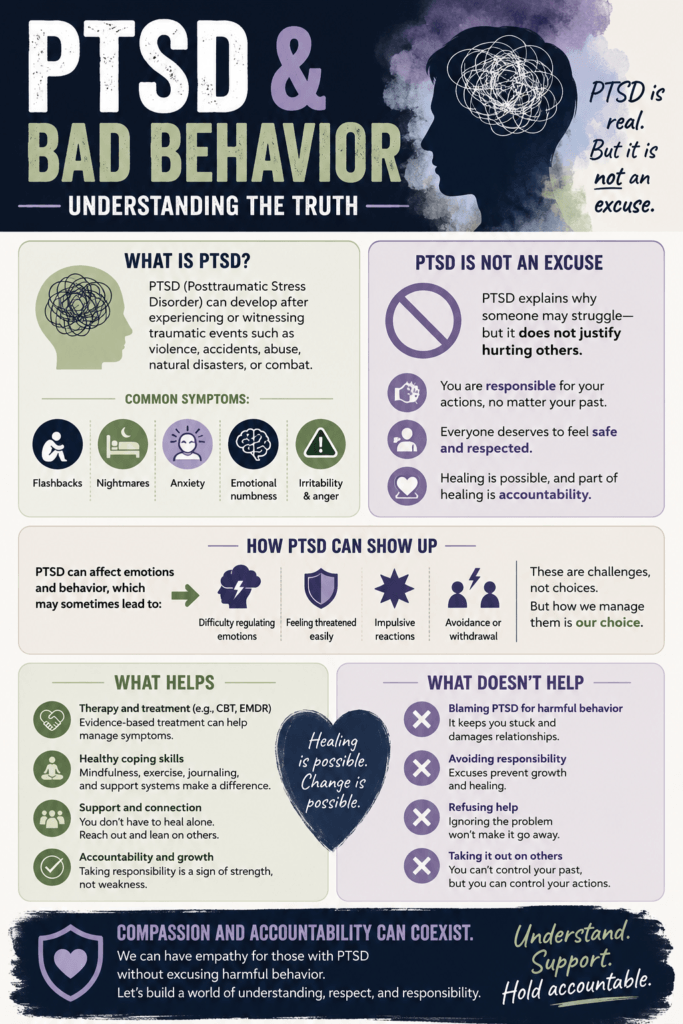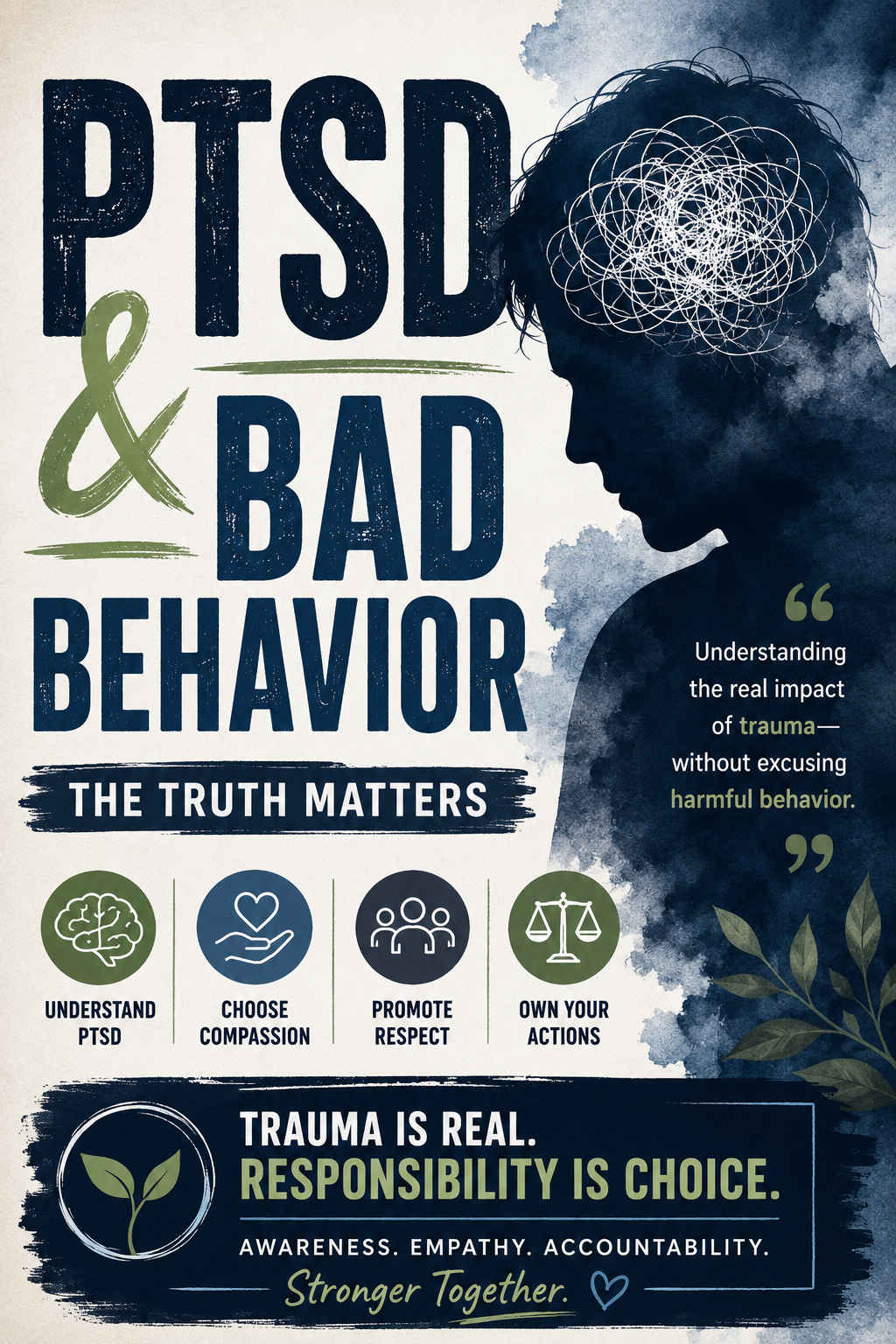
Posttraumatic Stress Disorder (PTSD) is a mental health condition that is often misunderstood despite growing public awareness. While PTSD can significantly affect a person’s thoughts, emotions, and behavior, it does not excuse harmful actions or eliminate personal responsibility. Living with PTSD can make daily life more challenging, but most individuals with the condition do not act violently or mistreat others. Understanding PTSD requires both compassion and accuracy. We can acknowledge the real impact of trauma while also recognizing the importance of accountability, healthy coping skills, and respectful relationships. Supporting someone with PTSD means encouraging treatment, healing, and responsible behavior—not excusing actions that cause harm to others.
Understanding PTSD: What It Actually Means
PTSD stands for Posttraumatic Stress Disorder, and it’s a reaction to experiencing or witnessing a traumatic event such as combat, assault, natural disasters, or other threatening situations. PTSD isn’t unique to soldiers—it can affect anyone, including survivors of accidents, abuse, or sudden loss. Emotional symptoms may include flashbacks, nightmares, severe anxiety, and uncontrollable thoughts about the trauma. Physical symptoms, such as increased heart rate or insomnia, often accompany these emotional effects. In children, it may look different, sometimes showing up as behavioral changes or regression.
According to the NIMH, about 6% of adults in the United States will experience PTSD at some point. The impact can run deep, affecting relationships, workplace performance, and daily life. But it’s important to remember that PTSD doesn’t remove a person’s understanding of right and wrong, nor does it strip them of moral responsibility.
Why PTSD Doesn’t Justify Bad Behavior
Having a mental health challenge is not the same as having an automatic excuse for harmful conduct. Yes, PTSD symptoms might lead someone to act distant or hyperalert at times, but it doesn’t mean they’re unable to make choices. Each individual is still responsible for their actions, even while managing mental health struggles. Mental illness can explain certain responses or behaviors, but it does not cancel out the need for accountability.
Sometimes, people with PTSD might lash out, have angry outbursts, or act withdrawn. These can be symptoms, not character flaws. However, using PTSD as a shield for repeated emotional, verbal, or physical mistreatment isn’t supported by mental health professionals. It’s crucial to tell apart a symptom that needs support from an ongoing pattern of bad choices. Accountability and empathy are not opposites—you can support someone with PTSD and still expect them to treat others with respect.
Too often, people confuse understanding with excusing. Giving someone support does not mean letting hurtful actions slide. Instead, it’s about offering compassion while encouraging ownership of one’s behavior—whether or not they’re struggling mentally. This approach helps everyone involved grow and feel respected.
Common Myths and Misunderstandings
Misunderstandings about PTSD are common, both with those who have it and those around them. Here are a few popular myths that can make things harder:
- Myth: People with PTSD can’t control their actions.
While PTSD may spark strong emotional responses, it rarely makes someone lose all self-control. Most individuals can spot right and wrong behavior, even in tough moments. - Myth: PTSD always looks the same.
Some people become jumpy, others might withdraw, and some look totally fine. PTSD is not one-size-fits-all, and it shows up in all kinds of ways, depending on the person and the situation. - Myth: PTSD is just an excuse to avoid responsibility.
Most people struggling with PTSD are working hard to manage triggers and lead a normal life. It’s neither fair nor accurate to assume they’re using their diagnosis as an out from consequences.
Understanding these myths helps break down stereotypes and makes it easier for everyone—those living with PTSD and those supporting them—to have healthier, more informed conversations.
Signs PTSD Is Affecting Behavior (But Not an “Excuse”)
PTSD can definitely influence behavior, especially during or after triggers. Here are classic ways it might show up:
- Sudden mood swings, irritability, or outbursts of anger
- Difficulty trusting others or keeping relationships afloat
- Avoiding certain places or situations altogether
- Problems concentrating or focusing on daily tasks
- Withdrawing emotionally or socially from friends and family
When these symptoms pop up, they’re signals that someone is struggling and could use some support. However, experiencing these challenges doesn’t mean anyone gets a blank check to hurt others. Seeking help, communicating openly, and finding healthy coping strategies will always work better than denying the problem or blaming everything on PTSD. If behavior is harmful, it needs to be addressed directly and kindly, not brushed off as “just the trauma talking.”
Practical Coping Skills and Boundaries
Managing PTSD takes commitment and practice. Here are a few practical approaches that help people keep their relationships and actions in check while fostering healing:
- Therapy: Cognitive Behavioral Therapy (CBT) and EMDR (Eye Movement Desensitization and Reprocessing) are both research-backed ways to process trauma and change unhelpful thought patterns.
- Mindfulness and Grounding Techniques: Staying present through deep breathing, grounding exercises, or body scans can help take the edge off emotional outbursts or panic when stress rises.
- Support Systems: Having a circle of friends, family, or support groups who listen and encourage healthy habits makes it easier to ask for help and stay accountable.
- Setting Boundaries: If you care about someone living with PTSD, calmly and clearly setting boundaries about what’s okay (and what’s not) keeps everyone safe and respected. Boundaries are a form of care—for you and for them.
Practicing these skills may take time, but they bring real relief. Whether you’re the one with PTSD or supporting someone who is, focusing on mutual respect and clear communication goes a long way.
Why Support and Accountability Matter Together
It’s possible to be patient with the struggles PTSD can bring and be clear about not tolerating abusive or damaging actions. In fact, holding someone accountable for their choices while showing understanding for their symptoms can actually set them up for better recovery. It’s all about finding a healthy balance—compassion doesn’t require ignoring what’s wrong, and boundaries don’t need to be cold or harsh.
For many, blending support and accountability brings out the best in everyone involved. When trust and respect flow both ways, people are more likely to make positive changes and heal over time.
Things to Watch For: When Behavior Crosses the Line
Most tough moments are not abuse, but lines do get crossed sometimes. Here are signs it’s going too far and needs a stronger response:
- Repeated name-calling, belittling, or ongoing verbal attacks
- Physical aggression or threats of violence
- Manipulating others with guilt trips or fear tactics
- Refusing to address or seek help for harmful behavior after being asked multiple times
If these are happening, it’s important to focus less on supporting someone through PTSD and more on everyone’s safety. Encourage professional help and get yourself (or others) to a safe space. No mental health diagnosis ever excuses ongoing harm to others—period.
Safety Planning in Challenging Situations
If you’re worried that a person with PTSD might behave in unsafe ways, making a simple safety plan can make things less overwhelming. This usually includes identifying safe places to go, talking with a trusted friend or counselor in advance, and keeping important phone numbers handy. Knowing when and how to reach out for help keeps you in control of your own safety and well-being. Remember, asking for help isn’t failing or betraying someone—it’s self-care, and it helps everyone involved.
Real-Life Examples: What This Looks Like
I’ve known people who were open about their struggles with PTSD, often checking in on how their symptoms affected those around them. Some would apologize after a rough day, asking what could be done to make things right. When someone owns up to their actions—even after a slip-up—it builds trust and allows room for both healing and growth. Saying “I’m sorry, I’ll do better next time” is powerful, especially when followed by a real effort to change.
On the flip side, I’ve seen examples where people regularly blame PTSD for yelling, controlling, or refusing to work on healthier ways to cope. In those cases, things typically improved only once everyone acknowledged the real problem and drew clear lines about what could and couldn’t keep happening. Honest, direct communication—without blaming or excusing—lays the groundwork for improvement on both sides.
It helps to remember that real progress is made when both parties work together: the person with PTSD tries their best to manage symptoms, and those around them set healthy boundaries and give honest feedback. This mix of understanding and firmness helps keep relationships healthy and respectful, even during the toughest times.
Frequently Asked Questions
Here are some questions that often come up about PTSD and personal responsibility:
Does PTSD make people violent?
Most people with PTSD are not violent. While a small number might experience angry outbursts, violence is neither common nor unavoidable. PTSD may explain why some reactions are bigger than expected, but a diagnosis doesn’t make someone inherently dangerous.
How can I support someone with PTSD without enabling bad behavior?
Listen and show empathy, but also set clear boundaries about what’s not okay. Encourage professional help for both PTSD and any ongoing issues with anger or harmful actions, so support and accountability both get the spotlight.
What should I do if I feel unsafe around someone with PTSD?
Trust your instincts. Put your own safety first, reach out to friends or professionals, and seek help if things escalate or feel overwhelming. Everyone deserves to feel safe, no matter what someone else is going through.
The Bottom Line: PTSD and Personal Responsibility
PTSD is a very real condition, and supporting someone as they deal with it can bring both challenges and rewards. However, personal responsibility always matters. No mental health diagnosis erases the need to treat others with kindness and respect. Set clear boundaries, communicate openly, and show support when you can—these steps help both people living with PTSD and those close to them build healthier, kinder relationships. By talking openly about these issues, we can break down stigma and make sure everyone feels seen, heard, and safe.
If you want to learn more about PTSD and healthy boundaries, the VA National Center for PTSD or NAMI are both great places to start checking out expert advice and helpful resources.
Video: PTSD & Bad Behavior #traumainformed #mentalhealthawareness #healingjourney