If you’ve ever wondered whether CBD can help curb cravings—whether that’s for unhealthy snacks, cigarettes, nicotine vapes, alcohol, or even harder substances—you’re not alone. CBD, or cannabidiol, has gotten a lot of buzz lately. People talk about it like it can fix just about anything. But what’s the real story, and does the research actually back up those claims?
Understanding CBD and How It Works
CBD comes from hemp, a cousin of the cannabis plant. Unlike THC, it won’t get you high. Instead, it interacts with your body’s endocannabinoid system, which is a network of receptors that help regulate things like mood, appetite, pain, and sleep. A lot of people use CBD for things like anxiety or to help them relax. The big question is, can it help with cravings?
When people talk about cravings, they usually mean these stubborn urges for certain foods, drinks, or addictive substances. These cravings can feel tough to ignore and are a huge reason people struggle to make lifestyle changes. If something could make those urges less intense, it would be pretty handy. So, is CBD up to the job?
The Science Behind CBD and Cravings
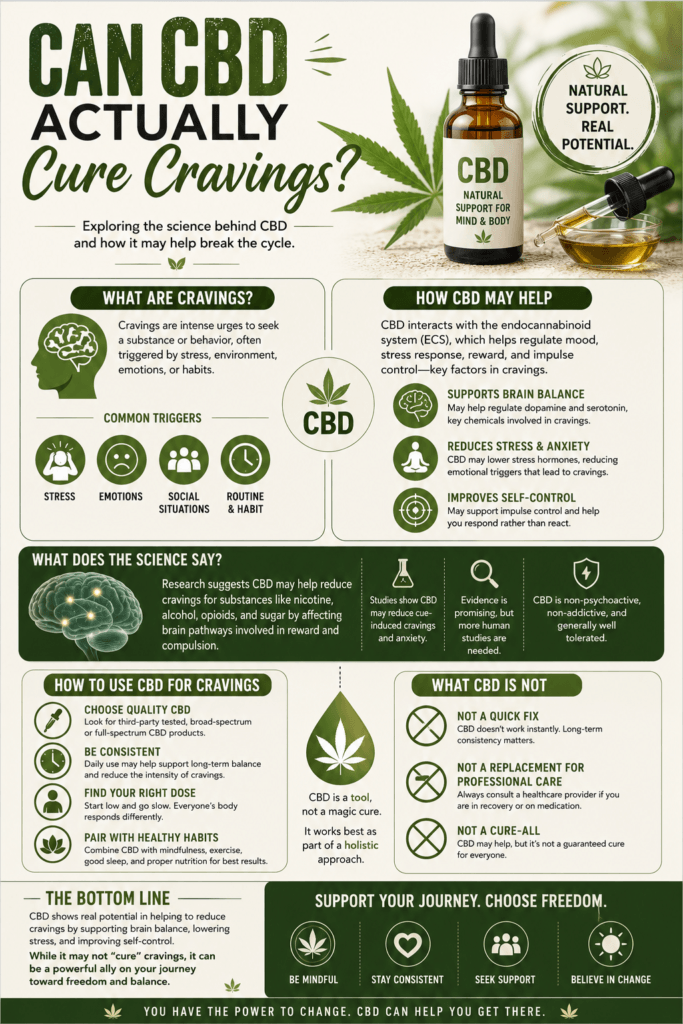
Some studies hint that CBD can influence how the brain processes cravings, especially with addictive substances. This seems to happen by helping to rebalance brain chemicals tied to stress and reward, such as serotonin and dopamine.
There’s a body of early research around CBD and tobacco cravings. One small clinical trial published in Addictive Behaviors found that smokers who used a CBD inhaler reduced the number of cigarettes they smoked by around 40% during a week. These results don’t mean CBD is a magic fix, but they’re still worth noting.
Other research suggests CBD could help people struggling with opioid cravings. Studies published in journals like Neurotherapeutics and the American Journal of Psychiatry have looked at how CBD impacts heroin cravings and anxiety. The results suggest CBD can lower both cravings and the jitters that often trigger a relapse.
CBD and Food Cravings – What’s the Deal?
Interest in CBD isn’t just about substance addiction. A lot of people talk about using CBD to chill out those midnight snack attacks or help with overeating, but there’s less hard research in this area.
A 2018 overview in Neuroscience & Biobehavioral Reviews showed that CBD appeared to lower overall food intake in animal studies. But in human trials, there’s not enough data to say for sure if CBD helps with cravings for sweets, junk food, or carbs.
Some folks report feeling less tempted by food after using CBD. This might be because CBD helps with anxiety, which is a big cause of emotional eating. The mental health benefits could make it easier to say no, but this isn’t quite the same as CBD wiping out cravings directly.
It’s also worth mentioning that lifestyle and personal habits play a big role. Pairing CBD with mindful eating and other healthy routines can have a greater impact than using CBD alone.
What to Expect (and What Not To)
It’s important to keep expectations realistic. CBD isn’t a cure-all, and the way it works can be pretty subtle. Here’s what I’ve learned from research and people’s personal experiences:
- Calming Effects: Many people feel more relaxed after taking CBD. Less stress can mean fewer cravings, especially if you reach for snacks or substances when you’re anxious.
- Better Sleep: Good sleep helps balance hormones that control appetite and cravings, and CBD can help with that for some people.
- Individual Differences: Some people feel less tempted right away, while others notice no difference at all. Everyone’s body reacts a bit differently.
- No High, No Intense Buzz: CBD doesn’t numb cravings in a dramatic way. If you’re looking for a loud, obvious effect, you probably won’t get it from CBD.
Different Ways People Use CBD for Cravings
There’s no single “right” way to take CBD for cravings, but here’s what you’ll see most often:
- CBD Oil Drops (Tinctures): The most popular form. You use a dropper to put a dose under your tongue. The effects usually show up in 30-45 minutes.
- Edibles: Gummies and capsules are easy and discreet, but they take longer to kick in (an hour or more).
- Vape Pens: Some people use these for faster relief. These are usually the type used in the cigarette craving studies.
- CBD Topicals: Creams and balms are more about localized relief, so less popular for cravings.
How Much CBD Should You Use?
Dosing varies based on your weight, metabolism, and the types of cravings you want to manage. Studies use anything from 25mg to 800 mg per day, but most people start with a low dose (10-20 mg) and adjust as needed. Pick a reputable brand and check for lab results, so you know what you’re actually getting.
Remember, consistency is key—trying the same dose for a few weeks can help you spot any patterns or benefits.
Possible Downsides and What You Should Know
CBD is generally considered safe, but that doesn’t mean it’s totally free from side effects or interactions, so keep these points in mind:
- Sleepiness or Fatigue: Some people report feeling tired after taking CBD, especially at higher doses.
- Digestive Upset: Rare, but things like diarrhea or nausea can happen for some folks.
- Drug Interactions: If you’re on medication (especially blood thinners), check with your doctor, since CBD can mess with how some meds are processed.
- Regulation Issues: Not all CBD products are what they claim to be, and some have been found to contain contaminants. Always buy from transparent companies with third-party lab testing.
When Not to Use CBD for Cravings
If you’re pregnant, breastfeeding, or have medical conditions that affect your liver or immune system, talk with your doctor before trying CBD. Also, CBD by itself isn’t enough for serious addiction or eating disorders—you’ll get better results combining CBD, if you try it, with professional support like counseling or therapy.
Common Challenges When Using CBD for Cravings
It may take some trial and error to figure out if CBD is helpful for you:
- Setting Expectations: People sometimes hope for an overnight fix, but CBD usually works gradually, if at all.
- Finding the Right Product: Some products are underdosed or mislabeled, so careful research helps buyers make informed decisions.
- Cost: High-quality CBD isn’t cheap. If you plan to use it daily, budgeting for ongoing use is wise.
- Regulatory Gray Areas: CBD laws vary by country and state, so check the rules in your area before making a purchase.
Tips to Get the Most Out of CBD for Craving Management
- Keep a journal to track how you feel before and after using CBD, and note any changes in cravings or habits.
- Pair CBD with healthy habits, like meal planning or stress reduction routines, for bigger results.
- Stick with one product and dosing schedule for a few weeks before making changes, so you get a clear impression of what’s working.
- If you’re using CBD to quit smoking or another substance, reach out for extra support. Counseling or support groups can seriously boost your chances and help when willpower runs low.
CBD in Real Life: What People Are Saying
Reading about studies is helpful, but hearing from real folks is just as eye-opening. Here’s a sample of what I’ve seen and heard:
- Several people swapped out their afternoon snack for a dose of CBD oil and lost interest in grabbing chips or cookies.
- A neighbor quit vaping nicotine by keeping a CBD vape on hand—she said it took the edge off the urge.
- A few people didn’t notice any change, no matter what dose or product they tried.
These stories show just how differently CBD acts from person to person. If you’re curious, treat it as an experiment and track your experience to see if it helps.
Quick Answers to Popular CBD and Cravings Questions
Does CBD totally remove cravings?
Most people notice a reduction in intensity rather than cravings disappearing completely. If cravings are tied to stress or anxiety, CBD might help take the edge off.
Is it safe to use CBD every day?
Most people tolerate daily CBD well, but it’s safest to talk with your healthcare provider if you’re on medications or have health issues.
Will I fail a drug test after using CBD?
Pure CBD products shouldn’t contain THC, but some do. Always buy from trusted brands with lab results. If drug testing is a concern, double-check for THC content.
Does CBD Actually Cure Cravings?
There’s no bulletproof evidence that CBD “cures” cravings. It might ease them for some folks, especially when those cravings are tangled up with stress or anxiety. Using CBD for cravings is more about managing the mental side of urges and making new habits stick. Anyone thinking about trying it should combine it with other healthy strategies, pay attention to product quality, and listen to their own experience. If you have bigger concerns, talking with a professional is always a good move. If you’re curious, it’s worth exploring, just tune in to your own body and needs.
Video: What Science Says About CBD and Cravings #CBD #science #remedy