Living with cirrhosis isn’t always easy, especially when it comes to figuring out what foods might trigger symptoms or even make things worse. After my own diagnosis, I quickly learned that adjusting my diet wasn’t just about avoiding a few obvious things; there’s a lot more to it. I put together some real talk here to help out anyone on their own sober adventure or just taking their liver health more seriously.
Why Food Matters with Cirrhosis
Cirrhosis is basically long-term liver scarring, and your liver just can’t handle things the way it used to. It filters your blood, aids digestion, and manages a wide range of nutrients. When it’s not working well, even everyday foods can cause problems. Things like swelling, brain fog, or stomach upset are much more common. Getting picky about what you eat can really help you feel better and slow down any issues.
One thing I learned early: certain foods and drinks put extra strain on a struggling liver. Changing your eating habits might mean swapping out old favorites for new meals that treat your body with a little more respect. It definitely took some getting used to, but I’ve noticed real improvements by sticking with what works.
Common Food Triggers for Cirrhosis
Doctors always stressed to me that everyone reacts a bit differently, but there are some common triggers you’ll hear about when it comes to cirrhosis:
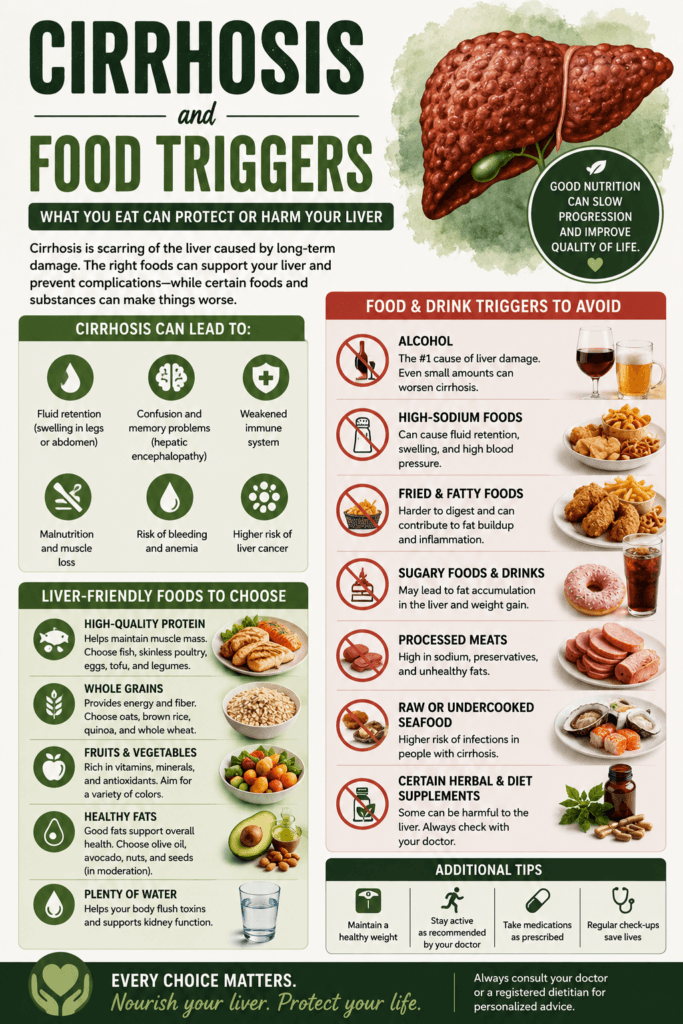
- Salt and salty foods: Extra salt increases fluid buildup, which worsens swelling (or ascites). Restaurant meals, chips, canned soups, and processed snacks are loaded with sodium.
- Alcohol: Kind of a no-brainer if you’re on a sober adventure. Alcohol is super tough on your liver, even in small amounts. I quit completely, and my body honestly thanked me.
- Fried and fatty foods: The liver already has trouble processing fats, so fried chicken, sausage, bacon, and things loaded with butter or cheese are best skipped.
- Red meat: Digging into a steak used to be my weak spot, but it’s hard for a damaged liver to break down, which can increase your risk of ammonia buildup.
- Raw or undercooked shellfish: These can contain bacteria that hit people with cirrhosis really hard, since your immune system isn’t as strong anymore.
- Sugary treats: Too much sugar puts pressure on your liver and can lead to more fat building up inside it.
I didn’t cut all these out on day one, but making small swaps each week added up. Reading food labels became second nature, which is a super useful way to spot hidden ingredients that can cause trouble.
Building a Liver-Friendly Eating Plan
Once I found out what to avoid, the next step was figuring out what I could eat. Getting the right balance of nutrients matters a lot because cirrhosis can mess with your appetite or even make it hard to keep your weight up.
- Fresh fruits and veggies: I try to fill half my plate with them at every meal. They’re packed with vitamins, fiber, and plant compounds that support liver health. Roasted sweet potatoes, spinach, berries, and carrots are all on regular rotation.
- Whole grains: Brown rice, quinoa, oats, and whole-wheat bread help keep blood sugar steady and provide more nutrients than white or processed grains.
- Lean proteins: My go-tos are chicken breast, turkey, eggs, low-fat dairy, and beans. Tofu is seriously underrated, and it’s easy on the liver.
- Healthy fats: I swapped out most of the butter and lard for olive oil or avocado, which have a lower impact on my liver.
- Flavor boosters: Lots of herbs, pepper, citrus juice, garlic, and vinegar. These add so much taste that I barely miss the salt.
Having a few easy recipes on hand that use these foods made it way less tempting to reach for something convenient (but risky). Investing in a decent set of storage containers also helps, since I can prep meals and avoid last-minute slipups.
Finding Your Way: Eating Out and Social Situations
Eating out took a little bravery at first. I was worried about being “that person” with special requests, but honestly, it matters more to stay healthy. Here’s what worked for me when going out or eating with friends:
- Check menus online in advance and pick spots with lots of grilled, baked, or steamed options.
- Tell the servers you’re watching your sodium and fat intake. Usually, they’re happy to leave sauces on the side or sub in veggies instead of fries.
- BYO snacks if you’re not sure there’ll be anything on the table, you can eat. Packing cut veggies or rice cakes feels a lot better than risking stomach pain later.
Family gatherings got easier once I was open with folks about why my eating changed. Most people respected my choices, and some even started trying new liver-friendly recipes with me.
Extra Challenges: Malnutrition and Changing Tastes
One sneaky part about cirrhosis is how it can lead to malnutrition. Even though I thought I was eating enough, my liver just wasn’t processing food like it used to. A few signs I noticed were unintentional weight loss, constant fatigue, and muscle weakness. My doctor had me meet with a dietitian, and that was a gamechanger. They helped me add extra calories and protein without turning to junk food.
Taste changes are another weird part of the adventure. Some foods just started tasting off, or I stopped craving foods I’d always loved. Keeping a food journal helped me recognize which things went down easily and which ones didn’t sit well anymore. Smoothies, mild curries, and simple soups became my safety-net meals for those rougher days.
Sometimes, you might also notice a metallic taste or a dry mouth. A few tricks that helped me were using plastic cutlery (it sounds odd, but it works), sucking on sugar-free mints, or adding extra mild seasonings like herbs and lemon to meals. Staying hydrated helped too, and my care team recommended drinking small sips throughout the day to keep my taste buds refreshed. It’s different for everyone, so trust your own experience and keep tweaking meals until they feel right for you.
Spotting and Managing Flare-Ups
After dealing with a few nasty setbacks, I finally learned to spot my own early warning signs. Eating the wrong thing, especially salty or fatty foods, made me retain water, feel bloated, or get brain fog. Catching it early meant I could get back on track and avoid a full-blown problem.
- Keep track of symptoms in a notebook or app after trying new foods.
- Pay close attention to swelling in your legs, feet, or stomach.
- If confusion or tiredness hits hard after a meal, talk to your healthcare provider. Sometimes, excess ammonia or toxins can build up due to a food trigger.
Open communication with my doctor was super important. They helped me fine-tune my eating plan whenever something threw things out of balance.
FAQ: Cirrhosis and Food Triggers
Question: Can I ever have my favorite salty foods again?
Answer: Eating these on occasion in small amounts might be possible, but talk to your doctor first. Salt substitutes and strong herbs can help scratch those cravings in the meantime.
Question: How do I handle cravings for sweets with cirrhosis?
Answer: I reach for fruit or dark chocolate when cravings hit. Keeping highsugar treats as occasional things instead of daily habits made a real difference for me.
Question: Do I need to avoid all fats?
Answer: Not all fats are created equal. Small amounts of healthy fats like olive oil, nuts, or avocado work for many people, but I stay clear of fried and processed snacks.
My Takeaways on Staying Sober and Nourished
Managing cirrhosis is all about figuring out what routines help me feel my best. Keeping food choices simple, reading labels, and asking for help from my care team pay off. It’s not about feeling deprived; it’s about finding new favorites and protecting progress on my sober adventure. If you’re struggling to adapt, know that every positive change, no matter how small, helps you build a healthier and more comfortable life.
Exploring new recipes, joining support communities, and tracking both food and symptoms are steps I always recommend. It gets easier the more you learn, and there’s always something new to try. Staying mindful and flexible is pretty much my secret weapon for living well with cirrhosis. Every day brings a new lesson, and every step counts for your health.
Video: Cirrhosis Gets Worse With These Common Foods #nutrition #livercare #cirrhosis