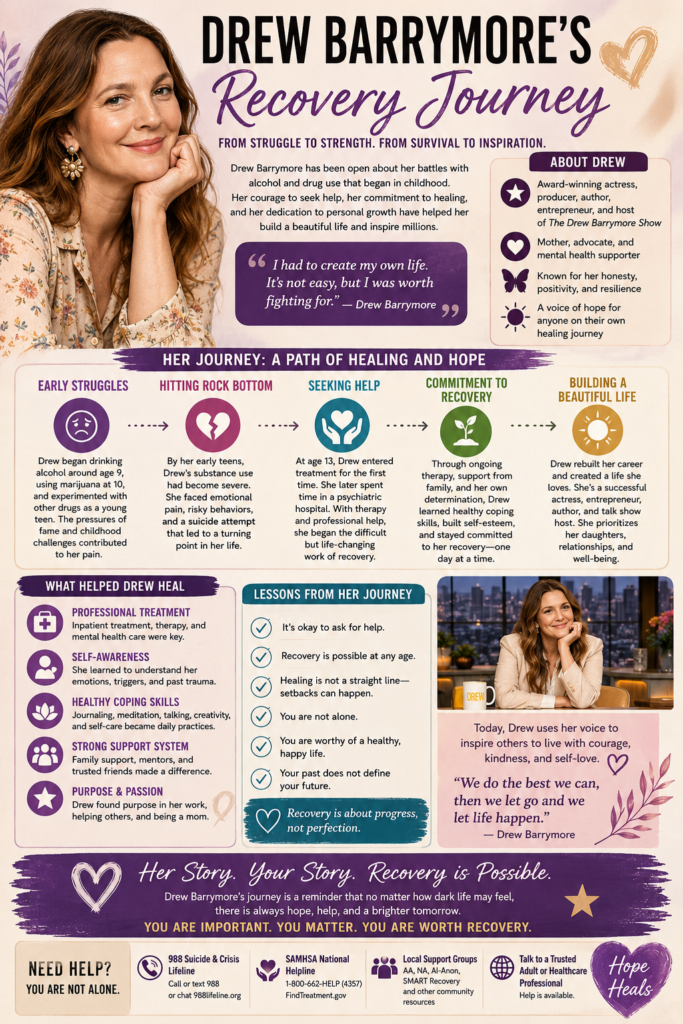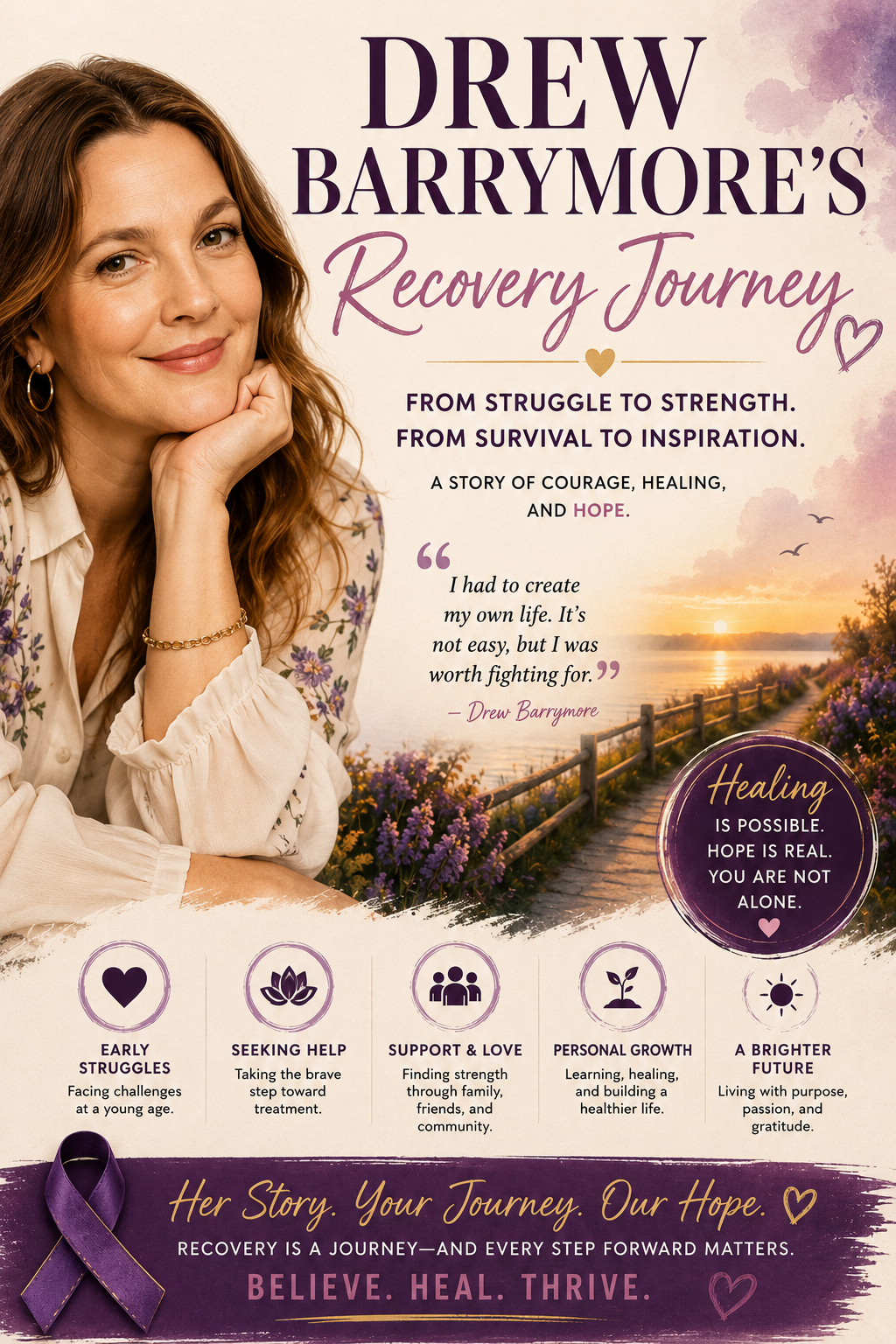
Drew Barrymore is an accomplished actress, producer, entrepreneur, and television host whose life has become an inspiring example of resilience and recovery. Rising to international fame as a child, she experienced extraordinary success but also faced significant personal challenges, including early alcohol and drug use during childhood and adolescence. Barrymore has spoken openly about entering treatment at a young age and the difficult journey of rebuilding her life through therapy, personal growth, and healthier coping strategies. Her willingness to share her experiences has helped reduce stigma surrounding substance use disorders and mental health, while demonstrating that recovery is possible regardless of how early addiction or substance misuse begins.
Drew Barrymore’s Recovery Journey
Drew Barrymore has been open about her early struggles with alcohol and drug use, making her story one of resilience, recovery, and personal growth. Rising to international fame as a child after starring in E.T. the Extra-Terrestrial, Barrymore experienced intense public attention at a very young age. The pressures of early fame, combined with exposure to adult environments, contributed to substance use during childhood and adolescence.
Early Substance Use
Barrymore has publicly shared that she began drinking alcohol around the age of 9, started using marijuana at about 10, and later experimented with cocaine at a young age. By her early teens, her substance use had become severe enough to require professional treatment.
Her experiences illustrate how early exposure to alcohol and drugs, combined with childhood stress and limited emotional support, can increase the risk of developing substance-related problems.
Treatment and Recovery
As a young teenager, Barrymore entered an inpatient treatment program and later spent time in a psychiatric hospital after a suicide attempt. She has spoken openly about these experiences, describing them as difficult but ultimately life-changing. With treatment, therapy, family intervention, and ongoing personal commitment, she began rebuilding her life.
Recovery was not an overnight process. Like many people recovering from substance use disorders, Barrymore faced setbacks, emotional challenges, and the difficult task of developing healthier coping skills. Her willingness to continue seeking help demonstrates that recovery often requires persistence rather than perfection.
Building a New Life
Over time, Barrymore focused on creating a healthier and more balanced life. She rebuilt her acting career, became a successful producer and entrepreneur, authored books, and later hosted The Drew Barrymore Show. Throughout her career, she has emphasized gratitude, emotional healing, and personal growth.
She has also spoken about prioritizing her daughters, maintaining healthier boundaries, and learning to manage stress without relying on substances.
Lessons from Her Recovery
Barrymore’s journey offers several important lessons:
- Addiction and problematic substance use can begin during childhood or adolescence.
- Early intervention significantly improves long-term outcomes.
- Recovery is a gradual process that often includes setbacks and continued learning.
- Therapy, family support, and professional treatment can make a meaningful difference.
- Success after recovery is possible with ongoing commitment and healthy coping strategies.
- Childhood trauma, stress, and early fame can increase vulnerability but do not determine a person’s future.
Hope for Others
Drew Barrymore’s story demonstrates that recovery is possible even after serious struggles with alcohol and drugs. Her openness has helped reduce stigma surrounding addiction and mental health by showing that asking for help is a sign of strength, not weakness. Today, she is widely recognized not only for her accomplishments in entertainment but also for her honesty about recovery and emotional wellness.
Conclusion
Drew Barrymore’s recovery journey is a powerful example of resilience, perseverance, and hope. Despite experiencing substance use problems at a very young age, she sought treatment, embraced personal growth, and rebuilt both her career and her personal life. Her story reminds us that addiction does not define a person’s future and that, with evidence-based treatment, supportive relationships, and ongoing commitment to recovery, long-term healing is possible. Her journey continues to inspire individuals and families facing similar challenges by demonstrating that recovery can lead to a healthy, meaningful, and successful life.
Self-Management Strategies to Understand Drew Barrymore’s Recovery Journey
Drew Barrymore has openly shared her journey from childhood substance use to long-term recovery, becoming an inspiring example of resilience and personal growth. She has discussed how early exposure to alcohol and drugs, the pressures of childhood fame, and emotional challenges affected her life. Through professional treatment, therapy, healthy lifestyle changes, and ongoing self-reflection, Barrymore rebuilt her life and career. Her recovery journey demonstrates that healing is a lifelong process requiring commitment, self-awareness, and support.
Learn About Addiction as a Treatable Medical Condition
Understanding addiction helps reduce shame and encourages recovery.
- Learn how addiction affects the brain’s reward, motivation, and decision-making systems.
- Recognize that addiction is a chronic but treatable medical condition.
- Understand that recovery often involves progress over time rather than immediate change.
- Replace self-blame with self-compassion and evidence-based knowledge.
Recognize Personal Risk Factors
Understanding individual vulnerabilities helps prevent relapse.
Common risk factors include:
- Childhood trauma or adverse experiences
- Early exposure to alcohol or drugs
- Chronic stress
- Mental health conditions
- Family history of addiction
- Peer pressure
- Social isolation
Identifying these factors allows individuals to develop healthier coping strategies.
Seek Professional Help Early
Early intervention improves recovery outcomes.
Consider working with:
- Primary care providers
- Addiction medicine specialists
- Therapists or counselors
- Psychiatrists when appropriate
- Peer recovery coaches
Professional guidance provides personalized treatment and ongoing support.
Develop Healthy Coping Skills
Learning new ways to manage stress reduces the temptation to rely on substances.
Helpful coping strategies include:
- Regular physical activity
- Mindfulness meditation
- Deep breathing exercises
- Journaling
- Creative hobbies such as art, writing, or music
- Spending time outdoors
- Practicing gratitude
Healthy coping skills strengthen emotional resilience.
Prioritize Mental Health
Recovery includes caring for emotional well-being.
Self-management strategies include:
- Recognizing symptoms of anxiety or depression.
- Attending therapy consistently.
- Following treatment recommendations.
- Practicing emotional awareness.
- Asking for help when emotions become overwhelming.
Addressing mental health concerns can reduce the risk of relapse.
Build Healthy Daily Routines
Structure promotes stability during recovery.
Healthy routines include:
- Maintaining a consistent sleep schedule
- Eating nutritious meals
- Exercising regularly
- Scheduling time for relaxation
- Keeping medical appointments
- Balancing work, family, and personal time
Daily routines support both physical and emotional health.
Establish Healthy Boundaries
Protecting recovery sometimes requires changing environments and relationships.
Healthy boundaries may involve:
- Avoiding high-risk situations.
- Limiting contact with individuals who encourage substance use.
- Saying “no” to unhealthy influences.
- Choosing relationships that support recovery.
Boundaries reduce unnecessary stress and protect long-term recovery.
Build a Strong Support Network
Recovery is strengthened through meaningful relationships.
Support may come from:
- Family members
- Trusted friends
- Recovery support groups
- Sponsors or mentors
- Faith communities
- Healthcare professionals
Positive relationships encourage accountability and hope.
Practice Self-Reflection
Recovery involves continuous learning.
Helpful practices include:
- Monitoring emotions and stress levels.
- Recognizing personal triggers.
- Celebrating recovery milestones.
- Learning from setbacks without giving up.
- Setting realistic personal goals.
Self-reflection encourages ongoing growth.
Focus on Long-Term Wellness
Recovery is about building a fulfilling life, not simply avoiding substances.
Long-term wellness includes:
- Pursuing education or career goals.
- Developing healthy hobbies.
- Strengthening family relationships.
- Volunteering or helping others.
- Practicing gratitude.
- Continuing personal development.
A meaningful life supports lasting recovery.
Understand That Recovery Is a Lifelong Journey
Drew Barrymore’s experience demonstrates that recovery does not happen overnight.
Important reminders include:
- Recovery looks different for everyone.
- Setbacks can be learning opportunities.
- Progress is more important than perfection.
- Ongoing self-care supports lasting success.
- Every healthy choice strengthens recovery.
Conclusion
Drew Barrymore’s recovery journey illustrates that even individuals who face substance use challenges at a very young age can build healthy, successful, and meaningful lives. Her openness about treatment, emotional healing, and personal growth reminds us that recovery is possible through education, professional support, healthy coping strategies, and consistent self-care. By recognizing personal risk factors, prioritizing mental health, building supportive relationships, and maintaining healthy daily habits, individuals can strengthen their recovery and move toward a future defined not by addiction, but by resilience, hope, and lifelong wellness.
Family Support Strategies to Understand Drew Barrymore’s Recovery Journey
Drew Barrymore has spoken openly about overcoming substance use that began in childhood and the challenges of growing up in the public eye. Her recovery journey demonstrates that addiction is a treatable medical condition and that healing is greatly strengthened by supportive relationships, professional treatment, and healthy family involvement. Although every recovery journey is unique, families can play a powerful role by providing encouragement, stability, and compassion while promoting accountability and long-term wellness.
Learn About Addiction Together
Families should educate themselves about substance use disorders and recovery.
Learning together helps families:
- Understand how addiction affects the brain.
- Recognize that recovery is often a long-term process.
- Replace blame with compassion.
- Better support a loved one’s treatment and recovery goals.
Education reduces stigma and encourages informed decision-making.
Encourage Open and Honest Communication
Healthy communication builds trust and strengthens relationships.
Families can:
- Listen without interrupting or judging.
- Encourage honest conversations about emotions and challenges.
- Ask supportive questions rather than making assumptions.
- Validate feelings while encouraging healthy solutions.
Open communication helps loved ones feel safe asking for help.
Recognize Early Warning Signs
Family members are often the first to notice behavioral changes.
Watch for signs such as:
- Changes in mood or personality
- Withdrawal from family and friends
- Declining school or work performance
- Increased secrecy
- Changes in sleeping or eating habits
- Loss of interest in hobbies
- Increased alcohol or drug use
Recognizing concerns early allows for timely intervention.
Encourage Professional Treatment
Recovery is strengthened through evidence-based care.
Families can:
- Encourage medical evaluations.
- Support counseling or therapy.
- Help schedule appointments.
- Encourage participation in recovery programs.
- Respect treatment recommendations from healthcare professionals.
Professional treatment addresses both substance use and underlying mental health concerns.
Promote Healthy Coping Skills
Families can encourage healthier ways to manage stress.
Examples include:
- Regular exercise
- Family walks or outdoor activities
- Creative hobbies
- Mindfulness or meditation
- Healthy sleep habits
- Balanced nutrition
- Relaxation techniques
Positive coping strategies reduce reliance on unhealthy behaviors.
Create a Stable and Supportive Home Environment
Consistency provides emotional security during recovery.
Families can:
- Maintain predictable routines.
- Reduce unnecessary conflict.
- Celebrate positive progress.
- Encourage healthy daily habits.
- Foster an atmosphere of acceptance and respect.
A stable environment supports healing.
Set Healthy Boundaries
Supporting recovery does not mean accepting harmful behaviors.
Healthy boundaries include:
- Holding loved ones accountable for their actions.
- Avoiding enabling substance use.
- Communicating expectations clearly.
- Encouraging responsibility while offering emotional support.
Boundaries protect both the individual and the family.
Support Mental Health
Many people with substance use disorders also experience mental health challenges.
Families should:
- Encourage treatment for anxiety, depression, or trauma.
- Normalize seeking mental healthcare.
- Avoid minimizing emotional struggles.
- Promote self-care and emotional well-being.
Addressing mental health supports long-term recovery.
Celebrate Progress Rather Than Perfection
Recovery is rarely a straight path.
Families can:
- Recognize recovery milestones.
- Encourage continued growth after setbacks.
- Focus on improvements rather than mistakes.
- Reinforce hope and perseverance.
Positive reinforcement strengthens motivation.
Practice Patience and Compassion
Recovery takes time.
Helpful reminders include:
- Healing occurs gradually.
- Setbacks do not mean failure.
- Encouragement is often more effective than criticism.
- Every positive step deserves recognition.
Patience helps maintain supportive relationships throughout recovery.
Take Care of the Entire Family
Addiction affects everyone in the household.
Family members should also:
- Attend family counseling if appropriate.
- Join family support groups such as Al-Anon or similar programs.
- Practice stress management.
- Maintain their own physical and emotional health.
- Seek professional support when needed.
Healthy families are better equipped to support recovery.
Build Hope for the Future
Drew Barrymore’s recovery demonstrates that a person’s past does not determine their future.
Families can encourage:
- Education and career goals.
- Healthy friendships.
- Meaningful hobbies.
- Volunteer work.
- Positive life experiences.
- Long-term personal growth.
Focusing on future possibilities encourages lasting recovery.
Conclusion
Drew Barrymore’s recovery journey reminds us that healing is possible with determination, professional treatment, and strong family support. Although she faced substance use challenges at a young age, she rebuilt her life through resilience, therapy, healthier coping strategies, and supportive relationships. Families can play a vital role by learning about addiction, maintaining open communication, encouraging evidence-based treatment, setting healthy boundaries, and celebrating progress along the way. Through compassion, patience, education, and ongoing encouragement, families can help create an environment where recovery can flourish, and individuals can build healthy, meaningful, and successful lives.
Community Resource Strategies to Understand Drew Barrymore’s Recovery Journey
Drew Barrymore has openly shared her experiences with childhood substance use and her path to long-term recovery. Her story demonstrates that addiction can begin early in life but also shows that recovery is possible with timely intervention, professional treatment, supportive relationships, and ongoing personal commitment. Communities play a vital role in preventing substance use disorders, supporting recovery, and reducing stigma by providing accessible education, healthcare, and recovery resources.
Promote Early Prevention Programs
Communities can help prevent substance use by providing age-appropriate education for children and adolescents.
Effective prevention programs should:
- Teach the health risks of alcohol and drug use.
- Build decision-making and problem-solving skills.
- Promote healthy coping strategies.
- Increase resilience and self-esteem.
- Encourage positive peer relationships.
Early prevention can reduce the likelihood of substance use during adolescence.
Increase Access to Mental Health Services
Mental health and substance use disorders often occur together.
Communities should support access to:
- Licensed counselors and therapists.
- Child and adolescent mental health services.
- Psychologists and psychiatrists.
- School-based counseling programs.
- Crisis intervention services.
Early treatment for emotional challenges may reduce the risk of developing substance use problems.
Expand Access to Addiction Treatment
Evidence-based treatment should be available to individuals of all ages.
Community resources should include:
- Addiction medicine specialists.
- Outpatient counseling programs.
- Intensive outpatient programs (IOPs).
- Residential treatment centers.
- Medication-assisted treatment (when appropriate).
- Recovery coaching and peer support services.
Accessible treatment improves long-term recovery outcomes.
Strengthen School and Youth Programs
Schools are important partners in prevention.
Communities can support:
- School counselors.
- Substance use education.
- Social-emotional learning programs.
- After-school activities.
- Mentoring programs.
- Bullying prevention initiatives.
These programs provide healthy alternatives and encourage emotional resilience.
Support Families Through Education
Families benefit from learning how to recognize and respond to substance use concerns.
Community organizations can provide:
- Parenting classes.
- Family counseling.
- Educational workshops.
- Support groups for caregivers.
- Communication and conflict-resolution training.
Educated families are better equipped to support recovery.
Promote Healthy Recreation Opportunities
Positive activities help reduce stress and strengthen emotional well-being.
Communities can encourage participation in:
- Sports leagues.
- Fitness programs.
- Art and music programs.
- Volunteer opportunities.
- Youth clubs.
- Outdoor recreation.
Healthy engagement provides alternatives to substance use.
Encourage Peer Recovery Support
Recovery is strengthened through supportive relationships.
Communities should expand access to:
- Peer recovery coaches.
- Mutual support groups.
- Young adult recovery communities.
- Recovery community organizations.
- Alumni recovery programs.
Peer support reduces isolation and increases motivation.
Reduce Stigma Through Public Education
Open conversations encourage individuals to seek help earlier.
Community awareness campaigns can:
- Explain that addiction is a treatable medical condition.
- Share stories of recovery and hope.
- Correct common myths about addiction.
- Promote compassion instead of judgment.
- Encourage early intervention.
Reducing stigma improves access to care.
Promote Trauma-Informed Care
Many individuals with substance use disorders have experienced adverse childhood experiences or trauma.
Communities should encourage organizations to:
- Recognize the effects of trauma.
- Provide trauma-informed counseling.
- Create emotionally safe environments.
- Train professionals in trauma-informed practices.
- Coordinate care among healthcare providers.
Trauma-informed care supports long-term healing.
Encourage Healthcare Collaboration
Better communication among professionals improves patient outcomes.
Communities should encourage collaboration among:
- Primary care providers.
- Mental health professionals.
- Addiction specialists.
- School counselors.
- Social workers.
- Pharmacists.
Team-based care addresses the whole person rather than a single condition.
Support Lifelong Recovery
Recovery continues long after formal treatment ends.
Communities can promote:
- Continuing counseling.
- Recovery support groups.
- Employment assistance.
- Educational opportunities.
- Housing support when needed.
- Wellness and relapse prevention programs.
Long-term support increases recovery success.
Inspire Hope Through Recovery Stories
Stories like Drew Barrymore’s demonstrate that recovery is possible.
Communities can:
- Invite individuals in recovery to share their experiences.
- Highlight positive recovery outcomes.
- Celebrate Recovery Month activities.
- Promote resilience and healthy lifestyles.
- Encourage people to seek help without shame.
Hope is one of the strongest motivators for recovery.
Conclusion
Drew Barrymore’s recovery journey illustrates that early substance use does not determine a person’s future. Her story demonstrates how treatment, resilience, supportive relationships, and personal commitment can lead to lasting recovery and a fulfilling life. Communities can build on these lessons by expanding access to prevention programs, mental health services, evidence-based addiction treatment, family education, peer recovery support, and trauma-informed care. By reducing stigma and creating compassionate, recovery-oriented communities, schools, healthcare providers, public health agencies, and community organizations can help individuals overcome addiction, strengthen resilience, and achieve long-term health and well-being.
Frequently Asked Questions
Here are some common questions:
1. Who is Drew Barrymore?
Drew Barrymore is an American actress, producer, entrepreneur, author, and television host. She rose to fame as a child actor and has openly shared her experiences with substance use, recovery, and personal growth to inspire others.
2. When did Drew Barrymore begin using alcohol and drugs?
Barrymore has shared that she began drinking alcohol around age 9, using marijuana around age 10, and experimenting with cocaine during her childhood. She has discussed how early fame and personal challenges contributed to these experiences.
3. Did Drew Barrymore receive treatment for substance use?
Yes. As a young teenager, Barrymore entered treatment and later spent time in a psychiatric hospital. She has credited professional treatment, therapy, and ongoing personal growth as important parts of her recovery.
4. What factors contributed to her substance use?
Several factors likely influenced her struggles, including childhood fame, exposure to adult environments at a young age, emotional stress, limited structure during childhood, and the pressures of living in the public eye. Every person’s experience with substance use is unique.
5. Is Drew Barrymore considered to be in long-term recovery?
Yes. Barrymore has spoken publicly about maintaining long-term recovery and focusing on a healthy, balanced life through self-awareness, family, meaningful work, and emotional well-being.
6. What helped Drew Barrymore recover?
She has described several important factors in her recovery, including:
- Professional treatment
- Individual therapy
- Emotional self-awareness
- Healthy coping skills
- Strong support systems
- Personal responsibility
- Continued personal growth
7. What can people learn from Drew Barrymore’s recovery journey?
Her story teaches that:
- Recovery is possible at any age.
- Early intervention can save lives.
- Seeking professional help is a sign of strength.
- A person’s past does not determine their future.
- Healing takes time, patience, and commitment.
8. Why is it important that Drew Barrymore speaks openly about recovery?
Her openness helps reduce stigma surrounding addiction and mental health. Sharing personal experiences encourages others to seek treatment and reminds families that recovery is possible.
9. Can people recover even after developing substance use problems at a young age?
Yes. Many people who begin using substances early can achieve lasting recovery with evidence-based treatment, supportive relationships, healthy lifestyle changes, and ongoing recovery efforts.
10. What role does mental health play in recovery?
Mental health is an important part of recovery. Addressing conditions such as anxiety, depression, trauma, or chronic stress through therapy and appropriate treatment can improve recovery outcomes and reduce the risk of relapse.
11. How can families support someone in recovery?
Families can:
- Learn about addiction.
- Communicate openly and without judgment.
- Encourage professional treatment.
- Set healthy boundaries.
- Celebrate progress.
- Offer consistent emotional support.
- Practice patience and compassion.
12. What community resources can support recovery?
Helpful community resources include:
- Addiction treatment programs
- Licensed therapists and counselors
- Peer recovery support groups
- Recovery community organizations
- School and workplace wellness programs
- Mental health clinics
- Primary healthcare providers
- Crisis intervention services
13. What healthy coping strategies support long-term recovery?
Healthy coping skills include:
- Regular exercise
- Mindfulness and meditation
- Journaling
- Creative activities
- Healthy sleep habits
- Balanced nutrition
- Building supportive relationships
- Stress management techniques
14. Does Drew Barrymore’s story show that relapse prevents recovery?
No. Recovery is often a lifelong process that may include setbacks for some individuals. What matters most is seeking help, learning from challenges, and continuing to move forward. Barrymore’s journey highlights resilience, perseverance, and long-term personal growth.
15. What is the most important message from Drew Barrymore’s recovery journey?
The most important message is that addiction does not define a person’s future. With professional treatment, family and community support, healthy coping strategies, and personal determination, recovery is possible. Drew Barrymore’s story demonstrates that people can overcome significant challenges, rebuild their lives, and thrive while inspiring hope in others facing similar struggles.
Conclusion
Drew Barrymore’s recovery journey reminds us that addiction and substance use challenges do not have to define a person’s future. Through professional treatment, perseverance, self-reflection, and the support of others, she transformed adversity into a life marked by personal growth, successful relationships, and professional achievement. Her story emphasizes the importance of early intervention, evidence-based treatment, ongoing self-care, and strong support systems in achieving lasting recovery. By promoting compassion, reducing stigma, and encouraging individuals to seek help without shame, Drew Barrymore’s journey continues to inspire hope for people and families affected by substance use disorders, proving that healing, resilience, and long-term recovery are possible.
Video: How Drew Barrymore Found Strength in Letting Go #Shorts