Understanding the difference between psychology and psychotherapy can make things a lot clearer if you’re curious about mental health or looking for support yourself. Psychology and psychotherapy come up all the time, but the two terms aren’t the same. I’m going to break down what each term means, how they work in real life, and when you might choose one over the other.
What Is Psychology? Definitions and Context
Psychology is the scientific study of the mind and behavior. It covers everything from how memories are formed to why people act the way they do in social groups. This field is massive; it includes everything from exploring how our brains function to examining development across a lifetime to examining emotional and cognitive processes.
People with a background in psychology often become researchers, educators, or applied specialists in areas like sports or business. You’ll also see psychologists working in schools, healthcare settings, and government organizations. The field keeps growing. For example, research into digital mental health tools and brain imaging has really expanded what psychologists do today. This “glow-up” means psychologists are now involved in designing well-being apps, consulting with businesses on work-life balance, and contributing to policy changes that support mental health in broader society. There is so much room for people with a passion for understanding behavior to find their niche, whether that’s improving learning environments or consulting on community programs that impact public health.
Modern psychology also plays a significant role in areas such as neuroscience, where understanding the biological roots of behavior helps shape interventions and treatments for conditions ranging from ADHD to Alzheimer’s. Educational psychologists might help schools set up learning plans for kids with special needs, while sports psychologists teach athletes mental strategies to manage performance anxiety. With mental health becoming a more popular topic in the media, psychology’s reach keeps spreading and adapting to meet new social needs.
What Is Psychotherapy? Breaking Down the Practice
Psychotherapy, sometimes just called “therapy,” is a professional process focused specifically on helping people manage emotional distress, mental health conditions, or personal challenges. Instead of being a whole field of study, psychotherapy is more like a practical toolkit; methods and conversations that help people work through issues, develop coping skills, or improve relationships.
Psychotherapists draw from psychological theories, but their main focus is guiding people through healing and growth. There are many approaches, such as cognitive behavioral therapy (CBT), psychodynamic therapy, and humanistic therapy, each with its own style. Some focus on how thoughts influence feelings, while others dig into past experiences. These sessions can happen one-on-one, with couples, families, or in groups.
Therapists may specialize in dealing with particular issues—like addiction, grief, or trauma—or tailor their style to specific clients, from children to older adults. What really sets psychotherapy apart is the focus on a trusting working relationship, where clients can explore feelings, talk freely about their experiences, and try out new coping strategies in a safe environment. The ultimate aim is to help people become more self-aware, resilient, and able to handle life’s ups and downs, rather than just offering advice. Over time, therapists and clients set goals together, measure progress, and adapt techniques to what works best for that individual.
Psychoeducation: The Area Where Knowledge and Practice Meet
One thing I’ve found really helpful for understanding is how psychology and psychotherapy intersect when professionals use psychoeducation. In therapy sessions or workshops, therapists might use their knowledge of psychology to help people understand anxiety, depression, or other challenges. Giving people the tools to recognize what’s happening in their minds and bodies is often the bridge between research and real change.
This blending of knowledge is popping up more in places like employee wellness programs, where practical strategies are taught to entire companies. It’s not therapy in itself, but it does draw from both worlds. Psychoeducation is also frequently used in schools, community health clinics, and even online courses to help people gain knowledge about mental processes and actionable steps to care for their own mental health. Through pamphlets, group classes, and even apps, psychoeducation gives people a baseline understanding that supports better outcomes if they choose to seek therapy in the future.
Key Differences Between Psychology and Psychotherapy
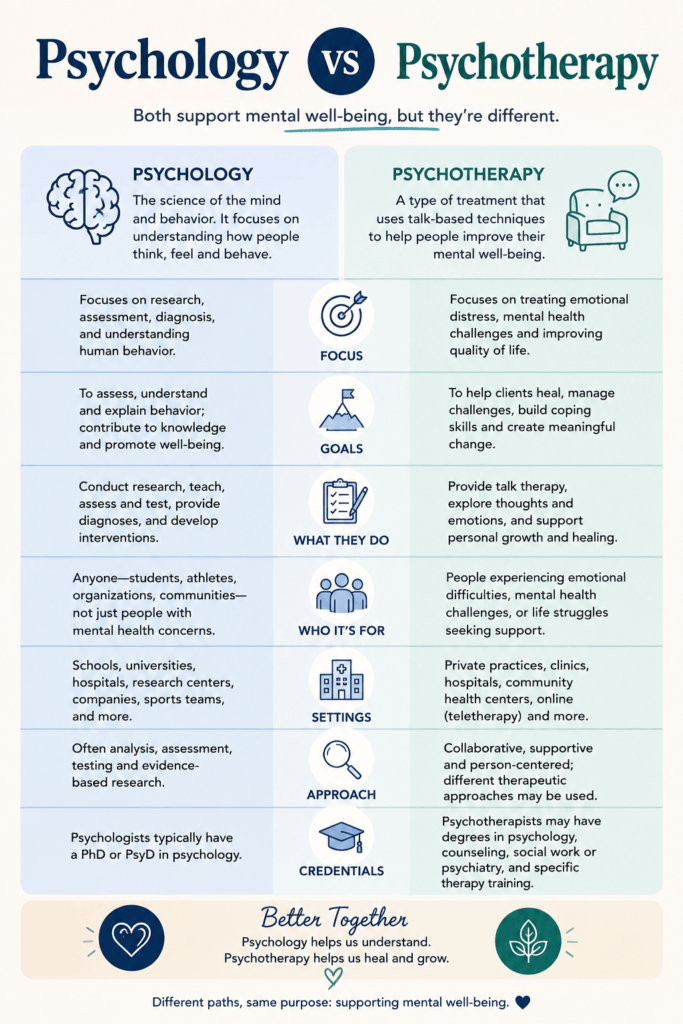
- Scope: Psychology involves studying many different topics in mind and behavior, while psychotherapy is strictly about providing help or treatment.
- Training: Psychologists have advanced degrees in general or specialized areas of psychology, while psychotherapists may have backgrounds in psychology, counseling, social work, or even psychiatry, plus additional training in therapeutic techniques.
- Goals: Psychologists might run experiments, teach, or consult, aiming to expand understanding. Psychotherapists want to support clients in feeling better or achieving personal change.
- Methods: Psychology uses scientific research, assessment, and sometimes testing. Psychotherapy focuses on conversations and relationship-building to help people change their thoughts, feelings, and behaviors.
Getting Started: What to Know Before Choosing a Psychologist or Psychotherapist
Thinking about mental health support means exploring lots of options, especially since credentials and roles change from place to place. A psychologist might offer assessments for learning or memory issues, but doesn’t always provide therapy sessions. On the other hand, a psychotherapist focuses on clinical issues, usually using specific approaches suited to things like anxiety, trauma, or relationship struggles.
Here are a few points that have helped me, and might help you, when sorting out the options:
- Understand What You Need: Are you looking for a mental health diagnosis, research-backed assessment, or ongoing support for daily stress or tough periods? Clarity helps you pick the right kind of professional.
- Check Their Credentials: Psychologists usually have titles such as “Ph.D.” or “Psy.D.” after their names and may work in both research and clinical settings. Psychotherapists hold certifications or licenses issued by their state or country. It’s totally normal to ask about these before starting.
- Think About Approach: If you’re drawn to understanding “why” you behave a certain way, psychology-focused assessments might help. If you want practical steps to feel calmer or to deal with a life change, psychotherapy might be a better fit.
- Match Personalities and Communication Styles: This one’s really important. Some people gel better with researchers, others prefer ongoing, conversational support. A trial session can help figure out if it feels right for you.
In addition, consider your budget, your availability, and what your insurance covers in your area. Telehealth has made accessing both psychologists and psychotherapists easier than ever, so you might have the option to get support from specialists outside your local area.
Common Issues Psychologists and Psychotherapists Address
Both psychologists and psychotherapists help with a range of emotional and behavioral challenges, but how they go about it may differ. Here’s what I usually see:
- Anxiety and Mood Disorders: Psychologists might offer standardized tests to understand symptoms, while psychotherapists might use exercises to practice coping strategies.
- Stress and Burnout: Psychology professionals study patterns and workplace impact; therapists might help set goals or develop problem-solving tools.
- Trauma and PTSD: Both fields play a role, but psychotherapists often lead care plans using trauma-focused therapy models.
- Relationship Issues: Psychologists sometimes offer assessments or advice for relationship patterns, while therapists guide couples or families in resolving issues directly.
- Childhood Development: Developmental psychologists provide insights into learning and behavior, while psychotherapists might support families or children directly through counseling sessions to address challenges such as ADHD or grief.
Real-World Example: Combining Skills in Practice
Imagine someone dealing with panic attacks. A licensed psychologist could conduct an evaluation using validated tests to determine whether the panic relates to other conditions. They may then recommend psychotherapy, where a therapist works side by side with the client, teaching practical skills to face and manage the anxiety in daily life. In some cases, the same person might work with both—a psychologist who outlines the diagnosis and a psychotherapist who handles ongoing sessions—so the client benefits from a broader skill set.
Popular Approaches in Psychotherapy
Therapy comes in many flavors. Here are some you’re likely to run into:
- Cognitive Behavioral Therapy (CBT): Uses practical exercises to help change unhelpful thoughts and behaviors. Super useful for anxiety, depression, phobias, and more.
- Psychodynamic Therapy: Focuses on exploring past relationships or events to understand present feelings and reactions.
- Humanistic Therapy: Emphasizes personal growth and self-acceptance, helping people develop more fulfilling lives.
- Solution-focused therapy: Focuses on building solutions rather than analyzing problems in depth.
- Integrative or Holistic Therapy: Some therapists blend multiple approaches, customizing their method to best suit the client’s needs. This flexibility is important, as mental health is not one-size-fits-all.
Each approach has its own strengths, and good therapists mix methods depending on what works best for their client. Asking about a therapist’s approach up front can help you know what to expect during sessions, whether that’s structured exercises, open conversation, or creative expression like art or movement.
Frequently Asked Questions
Here are some common questions that come up when people start looking into psychology and psychotherapy:
Is every psychologist a psychotherapist?
Answer: Not every psychologist provides therapy. Some focus only on research or assessments. If therapy is what you’re looking for, check whether the psychologist offers those services, or see a licensed psychotherapist.
Can psychotherapists diagnose mental health conditions?
Answer: This depends on local laws and training. Psychologists are often trained and licensed to diagnose. Some psychotherapists can diagnose, especially if they have mental health credentials, but this isn’t always the case.
How do I know what kind of help I need?
Answer: Think about what you’re experiencing. If you’re looking for practical support with daily challenges or emotions, psychotherapy may be a great place to start. If you want an official diagnosis, psychological testing, or a scientific understanding of behavior, a psychologist could be more helpful. Sometimes, working with both makes sense.
What about confidentiality?
Answer: Both psychologists and psychotherapists are bound by strict confidentiality rules, protecting your privacy unless there’s a risk of harm. Don’t hesitate to ask upfront about how your information will be kept safe.
Why Understanding the Difference Matters
Knowing the split between psychology and psychotherapy helps you make informed choices, whether that’s for your own adventure or if you’re just interested in mental health as a field. Each field plays its own unique role, and both are super important for research, education, prevention, and treatment. Reaching out for support doesn’t have to feel overwhelming once you’ve got a practical sense of where each professional fits in.
The path you choose depends on your needs, preferences, and what kind of guidance you find most helpful. If you’re unsure where to start, connecting with your local mental health network or asking for recommendations can help you find someone whose background and approach feel like a good match. The main thing is to take that first step—whether it’s reaching out for an initial chat or reading more—to make sure you’re getting the care or information you need.
Video: What’s Actually the Difference Between Psychology and Psychotherapy #psychology #shorts #facts