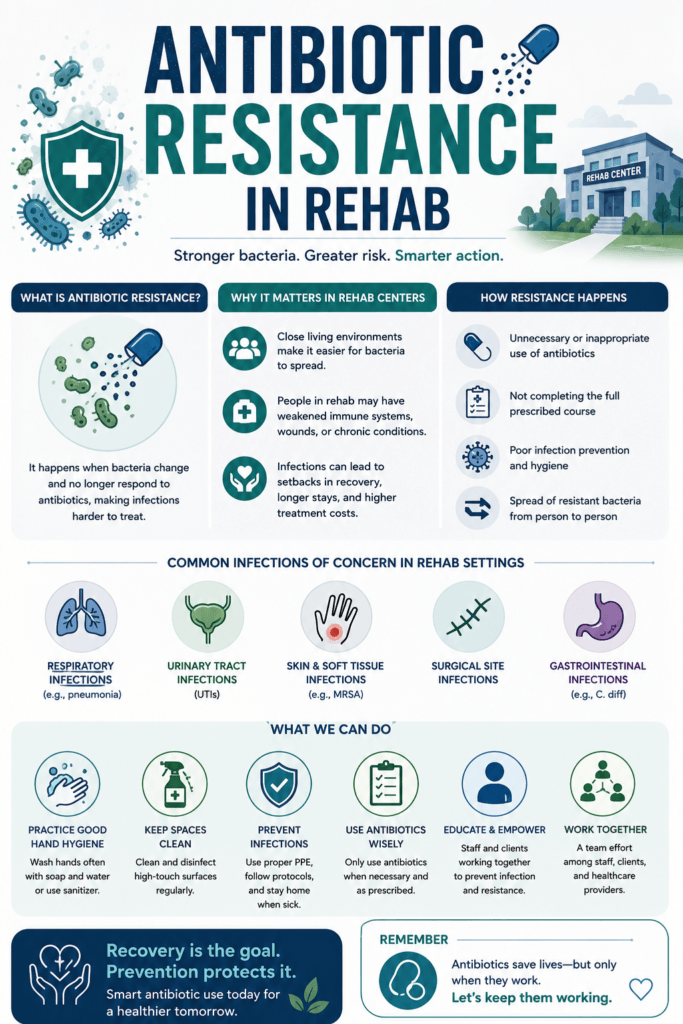
Antimicrobial resistance (AMR) has become a major challenge in healthcare, and rehabilitation centers are finding themselves at the heart of this issue. Time in a rehab facility brings plenty of benefits for folks healing after surgery or injury, or managing chronic illness, but it can also create the perfect scenario for bacteria and other germs to outsmart the usual antibiotics and other treatments. In this article, we’ll break down what AMR means, why it hits rehab centers especially hard, and what everyone involved can do to help ensure these facilities remain safe and healthy spaces for all.
What Is Antimicrobial Resistance?
Antimicrobial resistance arises when bacteria, viruses, fungi, or parasites evolve to survive the very drugs designed to wipe them out. In other words, these germs toughen up and stop responding to the treatments that once worked. And this isn’t just something that happens in big hospitals or among highly vulnerable groups—it’s showing up all over, including in rehabilitation centers where people are already on the mend.
After a hospital stay, many patients head to rehab centers for specialized care such as physical therapy, wound management, or long-term recovery. Because issues like wounds and respiratory complications are common, antibiotics are often prescribed. With every round of antibiotics, germs get another shot to learn and become resistant.
Why Do Rehab Centers Face Extra AMR Challenges?
Rehab centers are meant to help people recover and regain their strength, but several factors make them especially ripe for AMR:
- Close Living Spaces: Patients gather in dining halls, lounges, and therapy rooms, so close contact is constant, making it easier for bacteria to move from person to person.
- Frequent Antibiotic Use: Many patients are on antibiotics for surgical wounds, infections, or chronic conditions, which can lead to germs developing resistance more quickly.
- Patients Requiring Ongoing Care: Devices such as catheters or those requiring frequent dressing changes create openings that allow bacteria to enter unless handled with care.
- Longer Stays: Compared to typical hospitalizations, rehab stints can last weeks or months. More time means more opportunities for germs to spread through the facility.
With these dynamics at play, AMR prevention requires constant attention and action.
Key Terms: What You Should Know
- MRSA (Methicillin-Resistant Staphylococcus aureus): This stubborn strain of bacteria resists multiple antibiotics, making infections tougher to treat, especially in healthcare settings.
- VRE (Vancomycin-Resistant Enterococci): Another bug that’s hard to tackle with standard antibiotics, often found in wounds and bloodstream infections.
- Clostridioides difficile (C. diff): Not always considered truly antibiotic-resistant, but heavy use of antibiotics is often linked to C. diff infections, which are tricky to get rid of and can cause serious stomach problems.
- Infection Control: These are the rules and routines—such as strict handwashing and regular cleaning—designed to prevent the spread of germs in rehab centers.
How Does AMR Spread in Rehab Centers?
Resistant germs travel surprising distances within rehab centers. Here’s how they most commonly get around:
- Direct Contact: Shaking hands or touching surfaces after someone with MRSA has done so can transfer bacteria to you, too.
- Shared Equipment: Physical therapy tools, shared beds, and exercise gear are hotspots for contamination. If staff miss cleaning them between uses, germs catch a ride from patient to patient.
- Staff Movement: Healthcare pros go from patient to patient. If they skip hand washing or forget to disinfect their gear, the germs travel right along.
- Open Wounds: Open skin is an ideal entry point for bacteria, so careful wound care is essential in these settings.
Frequent Sources of Infection in Rehab Centers
- Wounds and Surgery Sites: Resistant bacteria love to set up shop in areas where wounds aren’t kept clean.
- Respiratory Therapy Gear: Devices like oxygen tubes, suctioning equipment, and even simple therapy tools can become breeding grounds if not cleaned properly.
- Indwelling Devices (catheters and more): These can be vital, but they also increase the risk of infection unless strict protocols are followed.
- Bathrooms: Moist and well-traveled, shared restrooms require constant cleaning and sharp attention to detail.
What Rehab Centers Are Doing to Fight AMR
Most rehab centers have stepped up their efforts to slow the spread of resistant germs. Here’s what many are doing right now:
- Hand Hygiene Focus: Rehab centers increase the number of handwashing stations and educate everyone about good hand hygiene practices. Staff, patients, and visitors are reminded constantly to clean their hands at key moments.
- Smart Use of Antibiotics: Doctors are careful not to overprescribe and ensure antibiotics are used only when absolutely necessary, which limits bacteria’s ability to strengthen their defenses.
- More Rigorous Cleaning: Cleaning crews focus on high-touch items and surfaces, use strong disinfectants, and ensure nothing is skipped.
- Screening and Precautions: New patients may be screened for MRSA or VRE, while those with confirmed infections may be placed on additional protective measures. When private rooms aren’t available, other precautions, such as gowns or gloves, come into play.
- Continuous Staff Training: Ongoing education ensures staff are up to speed on the signs of AMR, infection control, and how to step in if there’s an outbreak.
What Patients and Families Can Do
There are plenty of patients, and their families can play a positive part:
- Ask Questions: Don’t hesitate to check in with the staff about how they’re keeping things clean and what infection control protocols are in place.
- Stick With Hand Washing: Simple soap and water (or sanitizer) after touching surfaces or before meals makes a huge difference.
- Follow Care Instructions: Be sure to follow all wound care directions, including dressing changes and monitoring for signs of infection.
- Be Cautious with Antibiotics: Only take antibiotics as directed—no skipping or stopping early. This helps make sure the antibiotics work and don’t give bacteria a leg up.
The Extra Hurdles Rehab Centers Face—and How They’re Beating Them
- Staff Shortages: Sometimes centers are busier than their staff can handle, making it tough to maintain all cleaning and care protocols. Cross-training and shared routines help cover the gaps.
- Limited Private Rooms: Space can make it tough to isolate patients with resistant infections, so using gloves, gowns, and frequent handwashing helps ensure safer interactions.
- Lots of Patient Movement: Because patients use common areas and therapy spaces, everyone needs to follow rules about cleaning and hygiene, not just in their own rooms but everywhere else too.
Hand Hygiene: Simple and Powerful
Time and again, evidence shows that hand hygiene is the best way to stop AMR in its tracks. Rehab centers often provide sanitizer dispensers everywhere and regularly remind everyone to clean up, making it a team effort.
Smart Antibiotic Choices
Proper antibiotic stewardship programs are key. They ensure that only the right patients receive antibiotics, that tests are performed to verify infections, and that medication use is tracked for patterns that might reveal problems. Careful tracking helps clinics tweak policies if any concerning trends show up.
AMR in Real Life: Why Prevention Is Crucial
Outbreaks don’t only hit seriously ill patients. Anyone exposed during a rehab stay can develop a resistant infection. MRSA, for example, might seem minor on a small wound but can escalate if not handled fast. That’s why catching problems early and following guidelines closely really matters for everyone’s health.
- Timely Wound Care: Quick, thorough cleaning and well-placed coverings keep germs out.
- Equipment Disinfection: Taking the time to wipe down techniques and gear between uses sharply reduces the risk of cross-contamination.
- Family Involvement: Loved ones can support patients by helping with handwashing, monitoring for concerning symptoms such as swelling or fever, and encouraging adherence to routines.
Frequently Asked Questions
Here are answers to some common questions that patients and their families have about AMR in rehab settings:
Question: Can I catch a resistant infection as a visitor?
Answer: The risk is low, but using hand sanitizer upon arrival and departure is a smart choice. If visiting a friend in isolation, follow staff guidance and put on protective gear if requested.
Question: What if I think my wound is infected?
Answer: Notify nursing staff immediately if you notice redness or swelling, or if you develop a fever. Acting early helps not just you, but everyone else in the facility.
Question: Is it risky to take antibiotics at a rehab center?
Answer: Antibiotics are safe if prescribed and used the way your doctor suggests. Problems start if you skip doses, stop early, or ask for antibiotics when they aren’t really needed.
Making Rehab Centers Safer: Everyone Plays a Part
Antimicrobial resistance affects every participant in a rehab center—staff, patients, and visitors. Staying alert, following hygiene guidelines, and using antibiotics wisely help drop infection rates for everyone. Spotting infections early, checking in with staff about concerns, and sticking by best practices all add up, making these centers beacons of health and safety for every patient who walks in.
Video: The Bacteria Evolution Nobody Talks About #health #science