Richard Nixon served as the 37th president of the United States from 1969 to 1974. His presidency was marked by major political achievements, international diplomacy, and the Watergate scandal, which ultimately led to his resignation. Behind his public image, Nixon also faced emotional pressures, political isolation, and reported episodes of excessive alcohol consumption.
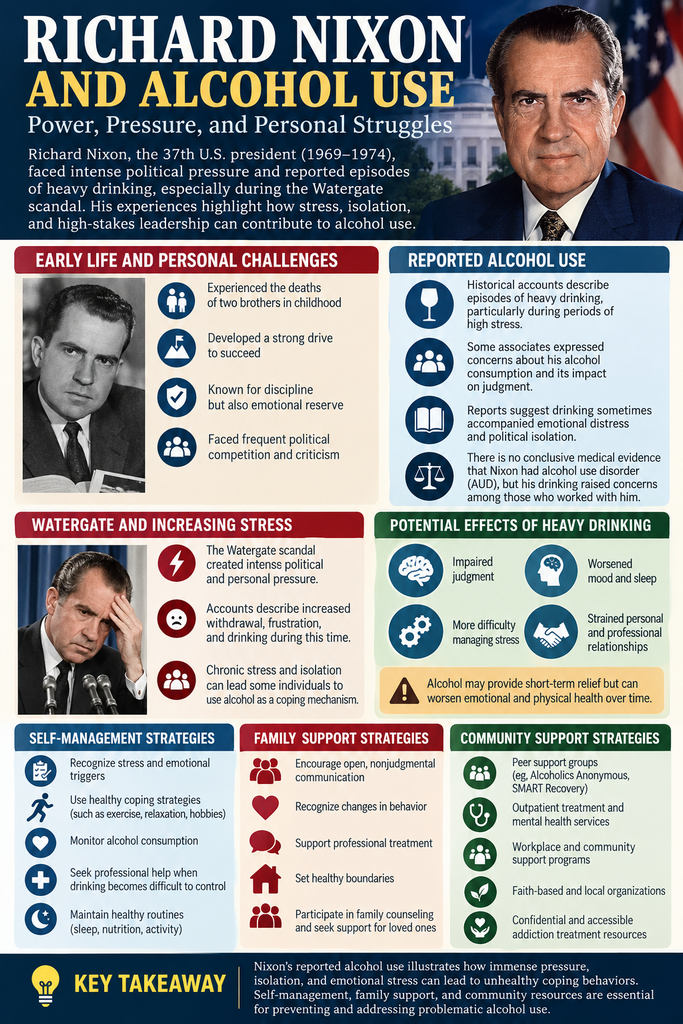
Historical accounts describe periods when Nixon drank heavily, particularly during times of intense stress. However, there is no conclusive public medical evidence establishing that Nixon had alcohol use disorder (AUD). His experiences offer an opportunity to explore how stress, alcohol use, emotional isolation, and reluctance to seek help can affect individuals in positions of responsibility.
Understanding Nixon’s reported struggles also provides important lessons about self-management, family involvement, and community support in preventing problematic alcohol use and promoting emotional well-being.
Richard Nixon’s Early Life and Emotional Challenges
Richard Milhous Nixon was born on January 9, 1913, in Yorba Linda, California. Raised in a financially modest Quaker household, he experienced significant personal losses, including the deaths of two brothers during his youth.
Nixon developed a reputation for determination, discipline, and competitiveness. Throughout his political career, he also showed a strong sensitivity to criticism, political opponents, and public perception.
Although these personality characteristics do not establish a mental health diagnosis, chronic stress, emotional suppression, and social isolation can increase vulnerability to unhealthy coping behaviors.
Factors that may have contributed to emotional stress
- Childhood losses: The deaths of his brothers were significant experiences during his formative years.
- Political competition: His career involved repeated elections, public criticism, and political conflict.
- Emotional reserve: Nixon was frequently described as private and reluctant to reveal personal vulnerabilities.
- Leadership responsibilities: Presidential decision-making involved considerable pressure and uncertainty.
- Public scrutiny: The Watergate investigation created extraordinary political and personal stress.
These factors provide historical context, but they do not establish that Nixon developed an addiction.
Richard Nixon’s Reported Alcohol Use
Nixon’s relationship with alcohol has been discussed in historical biographies, memoirs, and accounts from individuals who worked closely with him.
Some accounts describe episodes of heavy drinking during periods of intense political pressure, especially as the Watergate scandal threatened his presidency.
Former Secretary of State Henry Kissinger and other administration figures described occasions when Nixon’s alcohol consumption raised concerns about his judgment or ability to participate in sensitive discussions.
However, historical accounts differ in interpretation, and some reports are difficult to verify independently.
Reported concerns surrounding Nixon’s drinking
- Episodes of excessive alcohol consumption during periods of stress.
- Concerns expressed by some associates about alcohol-related impairment.
- Increased political isolation during the final months of his presidency.
- Reports suggesting that alcohol sometimes accompanied emotional distress.
- Questions about how drinking might have affected presidential responsibilities.
Important distinction: Heavy drinking, alcohol misuse, and alcohol use disorder are related but different concepts. Historical reports alone are insufficient to diagnose Nixon retrospectively.
Watergate, Emotional Isolation, and Alcohol Use
The Watergate scandal became one of the most significant political crises in American history.
Beginning with the 1972 break-in at Democratic National Committee headquarters, investigations uncovered abuses of political power and efforts to obstruct justice. As the investigation intensified, Congress, the media, and members of his administration put mounting pressure on Nixon.
On August 9, 1974, Nixon resigned from the presidency.
Historical accounts suggest that his emotional condition deteriorated during portions of this period. Some associates reported increased withdrawal, frustration, and alcohol consumption.
Stress does not inevitably lead to substance misuse. Nevertheless, alcohol can become an unhealthy coping mechanism when individuals use it repeatedly to escape distressing emotions.
How chronic stress can contribute to problematic drinking
- Alcohol may temporarily reduce feelings of tension while worsening sleep and mood.
- Repeated drinking for emotional relief can reinforce unhealthy coping patterns.
- Alcohol impairs judgment, concentration, and decision-making.
- Social isolation can reduce opportunities for others to recognize concerning behavior.
- Persistent stress combined with alcohol use can contribute to a cycle of emotional and physical deterioration.
Nixon’s experiences show why emotional support and healthy coping strategies matter, even for highly accomplished individuals.
Understanding Alcohol Use Disorder
Alcohol use disorder is a medical condition characterized by impaired control over alcohol consumption, continued use despite negative consequences, and other behavioral or physiological symptoms.
A diagnosis requires clinical assessment using established criteria, not assumptions based on reputation or historical anecdotes.
Common warning signs of alcohol use disorder
- Drinking more alcohol or for longer periods than intended.
- Repeated unsuccessful attempts to reduce consumption.
- Strong cravings or urges to drink.
- Continued alcohol use despite relationship or occupational problems.
- Neglecting responsibilities because of drinking.
- Using alcohol in physically hazardous situations.
- Developing tolerance or experiencing withdrawal symptoms.
Not everyone who drinks heavily has alcohol use disorder. However, recurring episodes of heavy drinking warrant attention because of their potential medical, psychological, and social consequences.
Self-Management Strategies: Learning From Nixon’s Experiences
Although Nixon’s personal experiences cannot establish a specific addiction diagnosis, his reported drinking and emotional stress provide lessons about recognizing unhealthy coping patterns.
Self-management involves developing awareness, strengthening emotional regulation, and seeking appropriate assistance before alcohol-related problems escalate.
Practical self-management strategies
- Recognize emotional triggers: Identify stress, loneliness, anger, disappointment, or anxiety that may contribute to drinking.
- Monitor alcohol consumption: Track drinking patterns and recognize increases in frequency or quantity.
- Develop healthier coping mechanisms: Practice physical activity, relaxation techniques, meditation, or enjoyable hobbies.
- Strengthen emotional awareness: Learn to acknowledge distress rather than suppressing difficult feelings.
- Establish healthy routines: Maintain consistent sleep, balanced nutrition, and regular physical activity.
- Seek professional evaluation: Consult a healthcare professional when drinking becomes difficult to control.
- Consider evidence-based treatment: Behavioral therapies and medications such as naltrexone or acamprosate may help appropriate patients with AUD.
- Create a relapse-prevention plan: Identify warning signs, support contacts, and strategies for managing high-risk situations.
Individuals who drink heavily every day should seek medical advice before suddenly stopping alcohol because withdrawal can cause seizures, delirium, and other life-threatening complications.
Family Support Strategies: The Importance of Connection
Family relationships can provide stability during periods of emotional distress.
Nixon’s wife, Pat Nixon, and their daughters, Tricia and Julie, were important figures in his personal life. However, public historical records do not establish that they provided a structured addiction treatment or recovery program.
Their family relationships offer a starting point for discussing how loved ones can support someone experiencing problematic alcohol use.
Effective family support strategies
- Encourage open communication: Create opportunities to discuss stress and drinking without shame or hostility.
- Recognize behavioral changes: Pay attention to increasing alcohol consumption, isolation, mood changes, or declining functioning.
- Express concern without accusations: Focus on specific behaviors and their consequences rather than labeling the individual.
- Support professional treatment: Encourage medical assessment, counseling, or addiction treatment when appropriate.
- Establish healthy boundaries: Avoid covering up dangerous behavior or accepting verbal or physical mistreatment.
- Participate in family counseling: Address communication difficulties, emotional distress, and relationship concerns.
- Promote healthy activities: Encourage shared meals, exercise, hobbies, and meaningful family interactions.
- Seek support for caregivers: Family members may benefit from counseling or peer support even when the person drinking declines treatment.
Family members cannot force someone to recover, but they can encourage them, maintain boundaries, and reduce barriers to seeking care.
Community Support Strategies: Building a Strong Recovery Network
People in leadership positions may experience barriers to seeking help because they fear public embarrassment, professional consequences, or appearing vulnerable.
Nixon’s historical experiences highlight the broader importance of confidential healthcare, trusted professional relationships, and supportive communities.
Community resources can help individuals recognize problematic alcohol use and access appropriate treatment.
Community-based recovery strategies
- Alcoholics Anonymous (AA): Offers peer support through a structured 12-step recovery program.
- SMART Recovery: Provides mutual support and practical strategies based on cognitive and behavioral approaches.
- Outpatient addiction treatment: Offers counseling, medication management, and continuing care while individuals remain in their communities.
- Mental health services: Address co-occurring anxiety, depression, trauma, or chronic stress.
- Employee assistance programs: Provide confidential referrals and support for workplace-related concerns.
- Faith-based organizations: May offer spiritual encouragement and recovery support for interested individuals.
- Family support groups: Al-Anon and SMART Recovery Family & Friends help loved ones develop coping skills and healthy boundaries.
- Public health education: Reduces stigma and improves awareness of alcohol-related risks and available treatment.
Communities can improve recovery outcomes by promoting early intervention, affordable treatment, confidentiality, and long-term support.
Leadership, Addiction Stigma, and the Fear of Seeking Help
One important lesson from Nixon’s presidency is the pressure public figures may feel to appear strong and emotionally controlled.
Leaders are often expected to show confidence, decisiveness, and resilience, even amid personal crises.
This expectation can make acknowledging psychological distress particularly difficult.
The same challenge may affect healthcare professionals, executives, military personnel, law enforcement officers, and others working in demanding occupations.
Ways to reduce addiction-related stigma
- Treat substance use disorders as medical conditions rather than moral failures.
- Encourage confidential screening and early intervention.
- Promote workplace environments that accept seeking mental health care.
- Educate leaders about the relationship between stress and substance use.
- Provide access to evidence-based addiction treatment.
- Recognize that professional achievement does not eliminate vulnerability to substance-related problems.
Seeking treatment demonstrates responsibility rather than weakness.
What Happened After Nixon Left Office?
Following his resignation, Nixon moved to California and experienced a period of significant emotional and physical difficulty.
In 1974, he developed serious complications from phlebitis, including a pulmonary embolism, requiring hospitalization.
Over time, Nixon gradually returned to public life through writing, interviews, and involvement in international affairs. He published several books and served as a foreign policy adviser.
Nixon died on April 22, 1994, at age 81, following a stroke.
Although some historical accounts discuss his alcohol consumption, there is insufficient reliable public evidence to describe his later life as a documented addiction recovery journey.
His later accomplishments should therefore not be presented as proof that he underwent or completed alcohol addiction treatment.
Lessons From Richard Nixon’s Reported Struggles
Nixon’s life demonstrates how political power, professional achievement, and personal stress can coexist.
His reported episodes of heavy drinking raise important questions about the relationship between emotional distress, alcohol consumption, and decision-making.
Several lessons remain relevant today:
- Success does not eliminate vulnerability: Individuals in powerful positions can experience emotional distress and unhealthy coping behaviors.
- Alcohol is not an effective long-term stress-management strategy: Temporary relief may be followed by worsening emotional or physical problems.
- Isolation can increase risk: Trusted relationships provide opportunities for early recognition and intervention.
- Family support matters: Compassionate communication and appropriate boundaries can encourage treatment.
- Professional treatment is valuable: Evidence-based interventions can help individuals reduce or stop harmful drinking.
- Recovery support should be accessible: Confidential healthcare and community resources can reduce barriers to seeking assistance.
Conclusion: Understanding the Person Behind the Presidency
Richard Nixon’s presidency remains closely associated with political controversy, international diplomacy, and the Watergate scandal. Historical reports about his alcohol consumption also reveal concerns about the emotional pressures he experienced during his final years in office.
While Nixon cannot be conclusively identified as having had alcohol use disorder, his reported drinking offers an opportunity to examine the relationship between stress, isolation, coping behaviors, and emotional well-being.
The broader lesson is that people facing overwhelming responsibilities need healthy ways to manage stress and trusted people who can recognize when they need additional support.
Self-management encourages personal awareness and healthier coping strategies. Family support provides understanding, accountability, and emotional connection. Community resources offer professional treatment, peer encouragement, and opportunities for sustained recovery.
Nixon’s story reminds us that public success does not guarantee personal well-being. Recognizing emotional struggles and seeking appropriate support can help prevent harmful alcohol use and protect long-term health.
Frequently Asked Questions and Answers
1. Did Richard Nixon struggle with alcohol addiction?
Historical accounts indicate that Richard Nixon experienced episodes of excessive drinking, particularly during stressful periods of his presidency. However, there is no conclusive publicly available clinical evidence establishing that he had alcohol use disorder (AUD). Heavy drinking does not automatically indicate addiction.
2. Was Richard Nixon an alcoholic?
Some historians and former associates described Nixon as having problematic drinking episodes. However, labeling him an alcoholic would require evidence of a persistent pattern of symptoms consistent with alcohol use disorder. His publicly documented history does not establish a definitive diagnosis.
3. Why did Richard Nixon drink alcohol?
Nixon’s reasons for drinking cannot be established with certainty. Some historical accounts associate his drinking episodes with political pressure and emotional strain. In general, individuals sometimes use alcohol to cope with stress, anxiety, loneliness, or overwhelming responsibilities.
4. Did the Watergate scandal contribute to Nixon’s drinking?
Historical reports describe episodes of alcohol consumption during the Watergate crisis. As Nixon faced investigations, political isolation, and the possibility of impeachment, his presidency became increasingly stressful. However, a direct causal relationship between Watergate and his drinking cannot be conclusively established.
5. Did Nixon’s alcohol use affect his presidential decisions?
Some historical accounts raise concerns about Nixon’s alcohol-related impairment. For example, a 1973 conversation between Henry Kissinger and Brent Scowcroft describes concerns about Nixon’s condition during an international crisis. However, such incidents do not establish that alcohol influenced particular presidential policy decisions.
6. Did Richard Nixon drink alcohol every day?
There is insufficient reliable public evidence to establish that Nixon consumed alcohol daily. Historical reports describe specific drinking episodes rather than a comprehensive record of how often he drank.
7. Did Richard Nixon ever receive treatment for alcohol addiction?
There is no well-established public documentation confirming that Nixon participated in formal alcohol addiction treatment, medical detoxification, or a structured rehabilitation program.
8. Did Richard Nixon’s family know about his drinking?
Nixon’s wife, Pat Nixon, and their daughters were central to his personal life. However, the extent of their knowledge about particular drinking episodes and any private conversations about alcohol is not fully documented. It would be inappropriate to assume that they ignored or enabled problematic drinking.
9. Did Nixon experience depression or anxiety?
Historical accounts describe periods of emotional strain, frustration, and isolation, especially during Watergate. These observations do not establish a clinical diagnosis of depression or anxiety. Only an appropriate clinical evaluation could determine whether he met diagnostic criteria.
10. How can chronic stress increase the risk of alcohol misuse?
Chronic stress may encourage individuals to use alcohol for temporary emotional relief. Repeatedly relying on alcohol can reinforce unhealthy coping behaviors and increase the risk of problematic drinking.
Alcohol can also interfere with sleep, emotional regulation, and judgment, potentially making existing stress more difficult to manage.
11. What is the difference between heavy drinking and alcohol use disorder?
Heavy drinking refers to consuming alcohol in quantities associated with increased health risks. Alcohol use disorder is a diagnosable medical condition involving clinically significant impairment or distress.
AUD is diagnosed using established criteria, including difficulty controlling drinking, cravings, continued consumption despite harmful consequences, and other symptoms.
12. What warning signs may indicate alcohol use disorder?
Common warning signs include:
- Drinking more than intended.
- Difficulty reducing or stopping alcohol consumption.
- Using alcohol despite relationship or work problems.
- Experiencing strong cravings.
- Neglecting responsibilities because of drinking.
- Developing tolerance or withdrawal symptoms.
A healthcare professional can determine whether these symptoms indicate alcohol use disorder.
13. What self-management strategies can help individuals experiencing alcohol-related problems?
Effective strategies include recognizing emotional triggers, monitoring drinking patterns, developing healthier coping skills, and seeking professional assistance.
Regular exercise, structured routines, relaxation techniques, and meaningful social relationships can support emotional well-being. Individuals with alcohol dependence should seek medical guidance before abruptly stopping drinking because withdrawal can be dangerous.
14. How can families support someone struggling with alcohol misuse?
Family members can support someone by encouraging honest communication, expressing concern without judgment, and helping them access professional treatment.
Establishing healthy boundaries is equally important. Families may also benefit from counseling and support organizations such as Al-Anon or SMART Recovery Family & Friends.
15. What community resources help people recover from alcohol addiction?
Community resources include Alcoholics Anonymous, SMART Recovery, outpatient addiction programs, mental health services, and family support groups.
Evidence-based treatment may include behavioral therapy, medication, or a combination of approaches. Treatment should be individualized according to the person’s needs.
16. Can powerful or successful individuals develop alcohol use disorder?
Yes. Professional success, wealth, education, and social status do not eliminate the possibility of developing a substance use disorder.
Genetic vulnerability, environmental influences, mental health conditions, and drinking patterns can contribute to alcohol-related problems.
17. Did Richard Nixon stop drinking after leaving the presidency?
Reliable public information does not establish a complete timeline of Nixon’s alcohol consumption after his resignation in August 1974. Therefore, it would be inaccurate to claim that he achieved sobriety or experienced a documented addiction recovery without supporting evidence.
18. Can alcohol misuse affect leadership and decision-making?
Yes. Alcohol intoxication can impair concentration, judgment, reaction time, and emotional regulation. These effects are especially concerning for individuals responsible for high-stakes decisions.
However, the general effects of alcohol should not be used to assume that specific decisions made by Nixon were alcohol-related.
19. What lessons can families learn from Nixon’s reported drinking?
Nixon’s reported experiences provide an opportunity to discuss the importance of recognizing unhealthy coping patterns before they become serious problems.
Families can benefit from maintaining open communication, recognizing behavioral changes, encouraging professional help, and understanding that emotional distress can affect anyone, regardless of their accomplishments.
20. What is the most important lesson from Richard Nixon’s alcohol use?
The most important lesson is that personal achievement and public responsibility do not eliminate the need for emotional support, healthy coping strategies, and appropriate healthcare.
Although Nixon’s historical drinking episodes do not establish a confirmed addiction diagnosis, they illustrate why recognizing alcohol-related risks and encouraging early intervention are important.
Video: