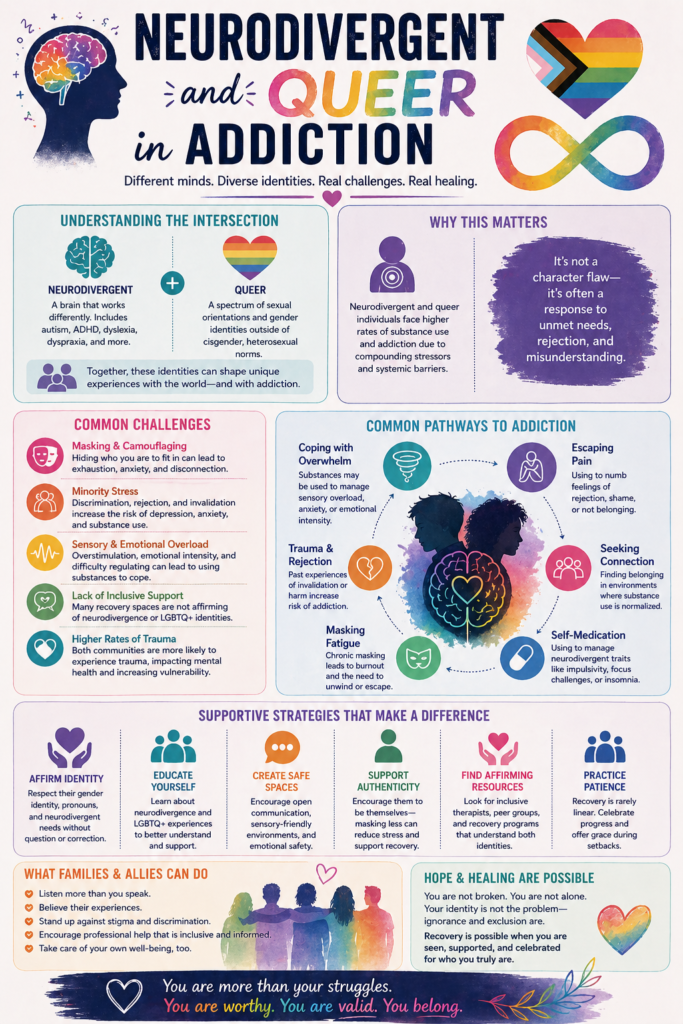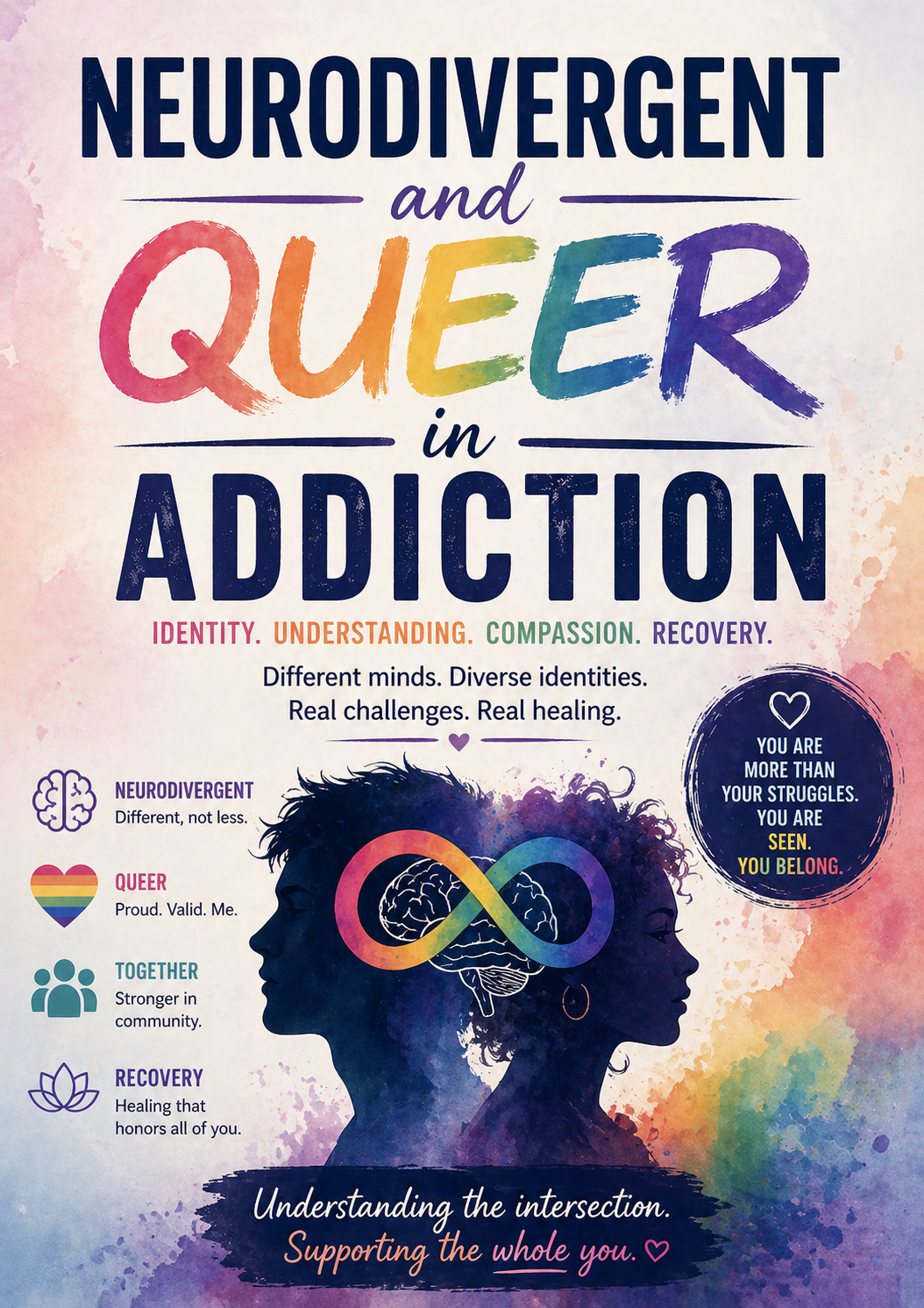
Addiction is rarely shaped by a single factor—it is influenced by identity, environment, and lived experience. For individuals who are both neurodivergent and queer, addiction often exists within a unique intersection of cognitive differences and identity-based stress. Navigating a world that may not fully understand or accommodate either identity can lead to challenges such as masking, social exclusion, and emotional overwhelm. In this context, substance use or addictive behaviors may develop not as a flaw, but as a way of coping with unmet needs, pressure, or disconnection. Understanding this intersection is essential for creating more inclusive, compassionate approaches to both awareness and recovery.
At the Intersection: Neurodivergent and Queer Experiences in Addiction
Addiction does not exist in isolation—it is shaped by identity, environment, and lived experience. For individuals who are both neurodivergent and queer, the journey through addiction and recovery often carries unique layers of complexity. These intersecting identities can influence how addiction develops, how it is understood, and how recovery is accessed.
Understanding this intersection is not about labeling—it’s about recognizing that different experiences require different kinds of support.
What Does “Neurodivergent and Queer” Mean?
- Neurodivergent refers to individuals whose brains function differently from what is considered typical (e.g., ADHD, autism, dyslexia, etc.)
- Queer (LGBTQ+) refers to diverse sexual orientations and gender identities outside of traditional norms
When these identities overlap, individuals may experience the world in ways that are both deeply insightful and, at times, challenging—especially within systems not designed for them.
Why This Intersection Matters in Addiction
People who are both neurodivergent and queer often navigate:
- Heightened emotional sensitivity or dysregulation
- Social exclusion or misunderstanding
- Identity-based stress (minority stress)
- Masking or hiding parts of themselves to fit in
These experiences can increase vulnerability to addiction—not as a flaw, but as a response to stress, overwhelm, or disconnection.
Common Pathways Into Addiction
1. Coping with Overwhelm
Neurodivergent individuals may experience sensory overload, executive functioning challenges, or emotional intensity. Substances or behaviors can become a way to:
- Quiet the mind
- Reduce anxiety
- Regulate emotions
2. Masking and Identity Fatigue
Both neurodivergent and queer individuals often learn to “mask”:
- Hiding traits to appear more socially acceptable
- Suppressing identity to avoid judgment
Over time, this creates exhaustion. Addiction can become a way to escape or soften that constant pressure.
3. Social Isolation and Belonging
Feeling “different” can lead to:
- Difficulty forming safe connections
- Seeking belonging in environments where substance use is normalized
- Increased loneliness
Addiction can sometimes fill the gap where connection is missing.
4. Trauma and Stigma
Experiences of rejection, discrimination, or misunderstanding can contribute to:
- Chronic stress
- Anxiety and depression
- Self-worth struggles
Substances may be used to cope with these internalized experiences.
Barriers to Recovery
Recovery systems are not always designed with intersectionality in mind.
Challenges may include:
- Lack of LGBTQ+-affirming spaces
- Limited understanding of neurodivergence in treatment settings
- One-size-fits-all approaches that don’t accommodate sensory or cognitive needs
- Fear of being misunderstood or judged
These barriers can make recovery feel inaccessible or unsafe.
What Support Should Look Like
Effective support recognizes the whole person—not just the addiction.
1. Identity-Affirming Care
- Respect for gender identity and sexual orientation
- Inclusive language and environments
- Representation within recovery spaces
2. Neurodivergent-Affirming Approaches
- Flexible communication styles
- Sensory-aware environments
- Structured but adaptable programs
3. Trauma-Informed Support
- Understanding the impact of past experiences
- Avoiding shame-based approaches
- Prioritizing emotional safety
4. Community and Belonging
- Peer groups with shared experiences
- Spaces where individuals don’t have to mask
- Opportunities for authentic connection
Reframing the Narrative
It’s important to challenge harmful assumptions.
Being neurodivergent and queer does not cause addiction.
Rather, it’s the stress, exclusion, and unmet needs surrounding these identities that can increase vulnerability.
At the same time, these identities can also bring strengths:
- Deep self-awareness
- Creativity and resilience
- Strong empathy and authenticity
These strengths can become powerful assets in recovery.
Moving Toward Inclusive Recovery
Improving outcomes requires:
- Expanding education in treatment systems
- Creating inclusive, accessible recovery spaces
- Listening to lived experiences
- Reducing stigma at all levels
Recovery is not one-size-fits-all—and it shouldn’t be.
Conclusion
For those who are both neurodivergent and queer, addiction is often intertwined with the challenge of navigating a world that doesn’t understand them.
But healing becomes possible in spaces where they don’t have to change who they are to recover.
The goal isn’t to fit into recovery—it’s to build recovery that fits you.
Self-Management at the Intersection: Strategies for Neurodivergent and Queer Individuals in Addiction
Recovery is never one-size-fits-all—but for those who are both neurodivergent and queer, it often requires a more personalized, flexible approach. Navigating addiction alongside differences in how you think, feel, process the world, and express identity can create unique challenges—but also unique strengths.
Self-management in this context isn’t about forcing yourself into rigid systems. It’s about understanding your needs and building strategies that actually work for you.
Understanding the Intersection First
Before focusing on strategies, it’s important to recognize what you may be managing:
- Sensory sensitivity or overload
- Emotional intensity or regulation challenges
- Identity stress or fear of rejection
- Masking (hiding traits or identity to fit in)
- Executive functioning difficulties (planning, consistency, focus)
Addiction can sometimes develop as a way to cope with these pressures—not because of weakness, but because of unmet needs.
👉 Self-management begins with this shift: “What do I need?” instead of “What’s wrong with me?”
1. Build a Regulation Toolkit That Fits Your Brain
Emotional and sensory regulation is key.
Try experimenting with:
- Sensory tools (headphones, weighted blankets, fidget items)
- Structured downtime to prevent overload
- Movement-based regulation (walking, stretching, pacing)
- Safe stimulation (music, textures, calming visuals)
The goal is to create alternatives to substances that help your nervous system reset safely.
2. Reduce Masking Where It’s Safe
Constantly hiding parts of yourself is exhausting—and often fuels addictive coping.
Self-management includes:
- Identifying spaces where you can be more authentic
- Allowing small expressions of identity (language, style, interests)
- Noticing when masking increases stress or urges
You don’t have to unmask everywhere—but even partial authenticity reduces internal pressure.
3. Use Flexible Structure Instead of Rigid Routines
Traditional recovery advice often emphasizes strict routines—but that doesn’t work for everyone.
Instead:
- Create loose frameworks rather than strict schedules
- Use reminders, visual cues, or apps for support
- Break tasks into smaller, manageable steps
- Allow for adjustments without self-criticism
Consistency matters—but flexibility makes consistency possible.
4. Identify Your Personal Triggers (Not Just General Ones)
Your triggers may be different from standard recovery lists.
Examples might include:
- Sensory overload (noise, crowds, chaos)
- Social exhaustion
- Identity invalidation or rejection
- Sudden changes in routine
Track patterns:
👉 “When do I feel most overwhelmed or likely to escape?”
Understanding your triggers allows for proactive coping, not just reactive responses.
5. Replace Coping, Don’t Just Remove It
Addiction often meets a real need—relief, stimulation, escape, or connection.
Ask:
- What was this behavior doing for me?
Then find alternatives:
- Need for calm → grounding exercises, sensory regulation
- Need for stimulation → creative outlets, movement, safe novelty
- Need for connection → affirming communities
Recovery works best when it fills the gap, not just removes the behavior.
6. Create Identity-Affirming Support Systems
Not all support spaces feel safe or inclusive.
Look for:
- LGBTQ+ affirming recovery groups
- Neurodivergent-friendly environments
- Online communities, if in-person spaces feel overwhelming
Feeling understood reduces the urge to cope through avoidance or substances.
7. Practice Self-Compassion Over Self-Correction
Many people at this intersection experience harsh self-criticism.
Shift from:
- “Why can’t I just do this normally?”
to - “What support do I need to make this easier?”
Self-compassion helps reduce shame, which is often a major driver of addiction.
8. Work With Your Energy, Not Against It
Energy levels may fluctuate due to:
- Sensory fatigue
- Social burnout
- Emotional processing
Self-management includes:
- Planning around high- and low-energy periods
- Prioritizing rest without guilt
- Recognizing that productivity ≠ is worth
Recovery is more sustainable when it aligns with your natural rhythms.
9. Develop Clear Communication and Boundaries
Being both neurodivergent and queer can make communication in certain environments challenging.
Practice:
- Expressing needs directly (even if it feels uncomfortable)
- Setting limits around overwhelming situations
- Saying no without over-explaining
Boundaries reduce stress—and reduce the need for unhealthy coping.
10. Seek Specialized Support When Possible
If accessible, look for:
- Therapists familiar with both neurodivergence and LGBTQ+ experiences
- Trauma-informed care
- Recovery programs that allow customization
You shouldn’t have to constantly explain your identity to receive help.
The Bigger Picture
Self-management at this intersection is not about “fixing” yourself. It’s about building a life that supports how you already function and who you already are.
Your brain is not wrong. Your identity is not the problem.
The strategies just need to match your reality.
Conclusion
Recovery doesn’t require you to become someone else.
For neurodivergent and queer individuals, healing often begins with the opposite:
👉 learning how to support yourself as you actually are.
Holding Space at the Intersection: Family Support Strategies for Neurodivergent and Queer Individuals in Addiction
When someone you love is navigating addiction, your instinct is often to help, protect, and guide them toward recovery. But when that person is both neurodivergent and queer, support requires a deeper level of understanding. Their experience of the world—and of addiction—is shaped not only by behavior, but by identity, processing differences, and lived experiences of acceptance or rejection.
Family support, in this context, is not about “fixing” the person. It’s about creating an environment where they feel safe enough to heal as they are.
Understanding the Intersection First
Before strategies, it’s important to recognize what your loved one may be managing:
- Differences in how they process emotions, communication, and sensory input
- Experiences of masking or hiding parts of themselves
- Identity-related stress (fear of rejection, discrimination, misunderstanding)
- Possible history of feeling “too much” or “not enough.”
Addiction may not be the root issue—it may be a response to overwhelm, isolation, or unmet needs.
👉 This shifts the question from “How do we stop this behavior?” to “What is this behavior helping them cope with?”
1. Prioritize Acceptance Over Correction
One of the most powerful things families can offer is unconditional acceptance.
This means:
- Respecting gender identity and sexual orientation without debate
- Avoiding attempts to “normalize” neurodivergent traits
- Letting them know they don’t have to change who they are to be loved
When identity feels safe, the need to cope through harmful behaviors often decreases.
2. Learn Their Communication Style
Neurodivergent individuals may communicate differently:
- They may need more time to process
- They may be more direct—or less verbal
- They may struggle with emotional expression
Support includes:
- Being patient with responses
- Asking clarifying questions instead of assuming
- Respecting nontraditional communication styles
Understanding reduces frustration on both sides.
3. Reduce Sensory and Emotional Overload at Home
Home should be a place of regulation, not additional stress.
Consider:
- Creating quieter, low-stimulation spaces
- Being mindful of noise, lighting, and chaos
- Avoiding overwhelming or rapid-fire conversations during stressful moments
A regulated environment supports recovery more than constant pressure.
4. Avoid Forcing One-Size-Fits-All Recovery Paths
Traditional recovery approaches may not always work.
Be open to:
- Flexible routines instead of rigid schedules
- Alternative coping strategies (creative outlets, movement, sensory tools)
- Different pacing in recovery
What matters is what works for them, not what works “on paper.”
5. Address Identity-Based Stress Directly
Ignoring identity doesn’t make stress go away—it can increase it.
Support includes:
- Acknowledging the challenges of being queer and/or neurodivergent
- Standing up against invalidation or discrimination (inside and outside the family)
- Encouraging connection to affirming communities
Validation reduces isolation—and isolation often fuels addiction.
6. Focus on Emotional Safety, Not Just Behavior
If your loved one feels constantly judged, they may hide struggles rather than address them.
Create safety by:
- Responding calmly instead of reactively
- Avoiding shame-based language
- Listening more than lecturing
When someone feels safe, they are more likely to be honest—and honesty is essential for recovery.
7. Support Authenticity Instead of Masking
Masking (hiding traits or identity) is exhausting and often linked to burnout and substance use.
Families can help by:
- Encouraging self-expression
- Accepting differences without criticism
- Avoiding pressure to “act normal.”
The less someone has to hide, the less they need to escape.
8. Encourage Specialized, Affirming Support
Not all professionals or programs are equipped for this intersection.
Look for:
- LGBTQ+-affirming therapists or recovery groups
- Professionals familiar with neurodivergence
- Trauma-informed care
The right support can make a significant difference in engagement and outcomes.
9. Respect Boundaries and Autonomy
Support does not mean control.
- Allow them to make choices in their recovery
- Respect boundaries around identity and personal space
- Avoid over-monitoring or micromanaging
Autonomy builds confidence and a sense of ownership in the recovery process.
10. Take Care of Yourself Too
Supporting someone through addiction can be emotionally demanding.
Families should:
- Seek their own support systems
- Set healthy boundaries
- Avoid burnout
You can be supportive without sacrificing your own well-being.
The Bigger Picture
At the intersection of neurodivergence, queerness, and addiction, the goal isn’t just sobriety—it’s sustainable, authentic well-being.
Recovery becomes more possible when individuals don’t feel like they have to choose between:
- Being understood
- Being accepted
- Getting help
They deserve all three.
Conclusion
You don’t have to fully understand every part of your loved one’s experience to support them.
But when families lead with acceptance, flexibility, and willingness to learn, they create something powerful:
👉 A space where healing doesn’t require hiding.
Building Inclusive Recovery: Community Resource Strategies for Neurodivergent and Queer Individuals in Addiction
Addiction recovery is not just an individual journey—it is shaped by the communities and systems surrounding a person. For individuals who are both neurodivergent and queer, traditional recovery spaces can sometimes feel inaccessible, invalidating, or simply not designed with their needs in mind. This creates a gap—not in motivation, but in fit.
Community resources have the power to close that gap. When designed intentionally, they can transform recovery from something people must adapt to into something that adapts to them.
Understanding the Need for Inclusive Community Support
At this intersection, individuals may experience:
- Sensory and communication differences
- Identity-based stress or discrimination
- Pressure to mask or hide parts of themselves
- Difficulty finding affirming and understanding spaces
Addiction can develop as a response to these challenges—but recovery can be strengthened when communities address them directly.
👉 The goal is not just access to resources, but access to the right kind of support.
1. Create Identity-Affirming Recovery Spaces
A foundational strategy is ensuring that spaces are safe and inclusive for both neurodivergent and queer individuals.
This includes:
- Using inclusive language and respecting pronouns
- Representing diverse identities in materials and leadership
- Actively addressing discrimination or exclusion
When people feel seen and respected, they are more likely to engage and stay in recovery.
2. Design Neurodivergent-Friendly Environments
Many recovery settings unintentionally create barriers through sensory overload or rigid expectations.
Communities can adapt by:
- Offering low-stimulation environments (lighting, noise control)
- Providing multiple ways to participate (speaking, writing, listening)
- Allowing flexibility in attendance, pacing, and structure
Accessibility is not just physical—it’s cognitive and sensory.
3. Offer Specialized Peer Support Groups
Peer connection is powerful—but only when it feels relatable.
Community resources can:
- Create groups specifically for LGBTQ+ individuals
- Offer neurodivergent-focused support spaces
- Develop intersectional groups where both identities are understood
Shared experience reduces isolation and fosters authentic connection.
4. Train Providers and Community Leaders
Education is key to effective support.
Training should include:
- Understanding neurodivergence beyond stereotypes
- LGBTQ+ cultural competency
- Trauma-informed approaches
- Communication and flexibility strategies
Well-informed leaders create environments where individuals don’t have to constantly explain themselves.
5. Integrate Flexible Recovery Models
One-size-fits-all programs can exclude those who process differently.
Communities can expand options by:
- Offering alternatives to traditional 12-step formats
- Incorporating creative, movement-based, or sensory-friendly therapies
- Allowing individualized recovery plans
Flexibility increases engagement and long-term success.
6. Address Barriers to Access
Even the best resources are ineffective if they are not accessible.
Communities should consider:
- Cost and insurance limitations
- Transportation and location
- Online or hybrid options for those who struggle with in-person settings
- Cultural relevance and inclusivity
Removing barriers makes participation possible.
7. Foster Community Education and Awareness
Reducing stigma benefits everyone.
Communities can:
- Host workshops on neurodivergence, queerness, and addiction
- Share lived-experience stories
- Challenge harmful stereotypes
Awareness builds empathy—and empathy builds stronger support systems.
8. Provide Integrated Mental Health Support
Addiction rarely exists alone.
Community resources should connect individuals to:
- Mental health services
- Trauma-informed care
- Identity-affirming therapy
Integrated support addresses the whole person, not just the behavior.
9. Encourage Authenticity Over Masking
Communities should actively promote environments where individuals don’t feel pressured to hide who they are.
This means:
- Valuing different communication styles
- Accepting varied emotional expression
- Encouraging individuality rather than conformity
Authenticity reduces internal stress—a key factor in both addiction and recovery.
10. Build Ongoing, Not One-Time, Support Systems
Recovery is not a single event—it’s a process.
Communities can:
- Provide long-term support networks
- Offer follow-up programs and check-ins
- Maintain spaces for continued connection
Consistency creates stability, which supports sustainable recovery.
The Bigger Picture
At the intersection of neurodivergence, queerness, and addiction, the challenge is not a lack of willingness to heal—it’s often a lack of environments that truly support that healing.
Community resources have the ability to shift this by moving from:
👉 standardized care → personalized, inclusive support
Conclusion
Recovery should never require someone to hide who they are to be accepted.
When communities build spaces that honor both identity and individuality, they don’t just support recovery—they create a foundation where people can heal, belong, and thrive without compromise.
Frequently Asked Questions
Here are some common questions:
1. What does it mean to be neurodivergent and queer in the context of addiction?
It means a person identifies as both:
- Neurodivergent (e.g., ADHD, autism, dyslexia, etc.)
- Queer (LGBTQ+)
In addiction, these identities can shape how someone experiences stress, coping, and recovery—often in ways that differ from traditional models.
2. Are neurodivergent and queer individuals more likely to struggle with addiction?
Research suggests a higher risk, but not because of identity itself. Contributing factors include:
- Chronic stress (minority stress)
- Social exclusion or misunderstanding
- Trauma or rejection
- Difficulty accessing affirming support
👉 It’s about environment and experience—not identity being “the problem.”
3. Why might addiction develop at this intersection?
Common reasons include:
- Coping with sensory or emotional overwhelm
- Escaping identity-related stress or rejection
- Masking exhaustion (hiding true self)
- Seeking belonging or connection
Addiction often functions as a coping mechanism, not a personal failure.
4. What is masking, and how does it relate to addiction?
Masking is hiding or suppressing parts of yourself to fit in.
This can include:
- Acting “neurotypical”
- Hiding queer identity
- Changing behavior to avoid judgment
Over time, masking leads to exhaustion, which can increase the need for escape or relief through substances or behaviors.
5. What are the common challenges in recovery for this group?
- Lack of LGBTQ+-affirming spaces
- Limited understanding of neurodivergence in treatment
- Sensory-unfriendly environments
- Rigid programs that don’t allow flexibility
- Fear of being misunderstood
These barriers can make recovery feel unsafe or inaccessible.
6. Can traditional recovery programs still work?
Yes—but they may need adaptation.
Helpful adjustments include:
- Flexible participation styles
- Sensory accommodations
- Identity-affirming language and support
- Individualized approaches
Recovery works best when it’s personalized, not forced.
7. What does affirming support look like?
Affirming support means:
- Respecting pronouns and identity
- Understanding neurodivergent needs
- Avoiding judgment or assumptions
- Creating emotionally and physically safe spaces
It allows individuals to heal without hiding who they are.
8. How can someone manage addiction while being neurodivergent and queer?
Self-management strategies include:
- Building sensory and emotional regulation tools
- Creating flexible routines
- Finding affirming communities
- Replacing harmful coping with supportive alternatives
- Practicing self-compassion
👉 The key is working with your brain and identity—not against them.
9. How can families support someone at this intersection?
Families can:
- Practice acceptance (no “fixing” identity)
- Learn about neurodivergence and LGBTQ+ experiences
- Reduce judgment and increase emotional safety
- Support access to affirming resources
Support works best when it’s understanding, not controlling.
10. What role do communities play in recovery?
Communities can:
- Provide inclusive recovery spaces
- Reduce stigma and discrimination
- Offer peer connection and belonging
- Ensure accessibility for diverse needs
Strong communities turn isolation into connection.
11. Is addiction caused by being neurodivergent or queer?
No.
Addiction is not caused by identity—it is often linked to:
- Stress
- Trauma
- Lack of support
- Environmental pressures
Identity can increase vulnerability only when support is lacking.
12. What strengths exist at this intersection?
Many individuals bring:
- High self-awareness
- Creativity and problem-solving
- Deep empathy
- Authenticity and resilience
These strengths can become powerful tools in recovery.
13. How important is finding the “right” support?
Very important.
The wrong environment can:
- Increase stress
- Reinforce masking
- Reduce engagement
The right environment:
👉 Encourages authenticity, safety, and long-term healing.
14. What is the biggest misconception about this topic?
That identity is the issue.
In reality:
👉 The biggest challenges come from a lack of understanding, acceptance, and appropriate support systems.
15. What is the first step toward healing?
Feeling safe enough to be honest.
That might look like:
- Finding one affirming space
- Talking to one understanding person
- Acknowledging your needs without judgment
Conclusion
Exploring addiction through the lens of neurodivergence and queerness highlights the importance of moving beyond one-size-fits-all perspectives. Recovery is most effective when it acknowledges the full complexity of a व्यक्ति’s identity, including how they think, feel, and experience the world. By fostering environments that are affirming, flexible, and responsive to diverse needs, individuals are better supported in building sustainable paths toward healing. Ultimately, progress is not about changing who someone is—it is about creating spaces where they can recover without having to hide or compromise their identity.
Video: The Addiction Nobody Expected #neurodivergent #queer #realstories