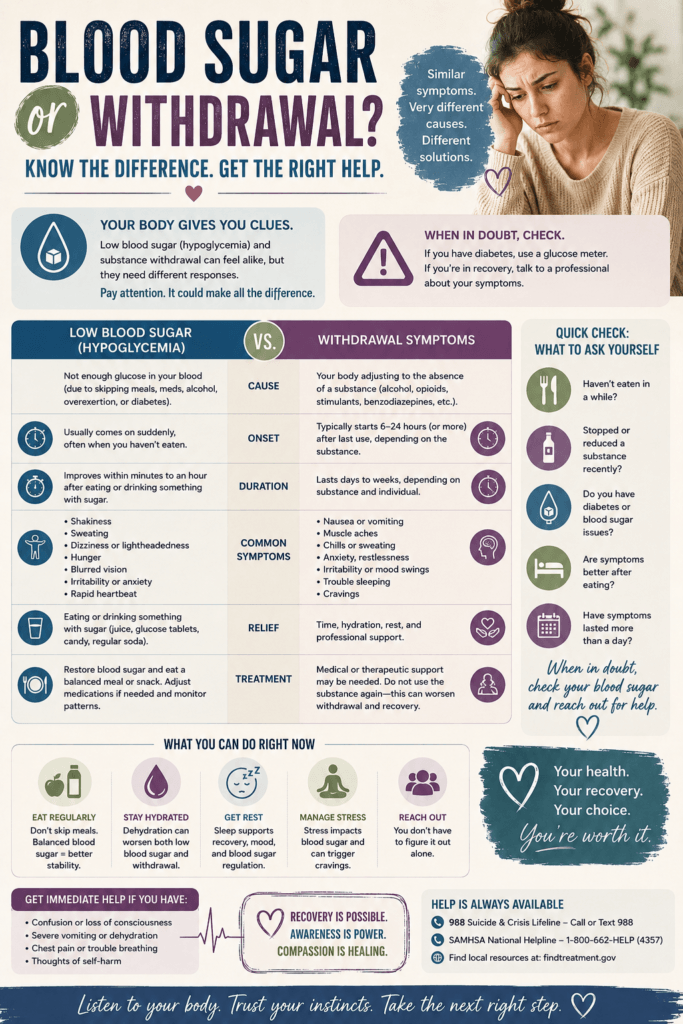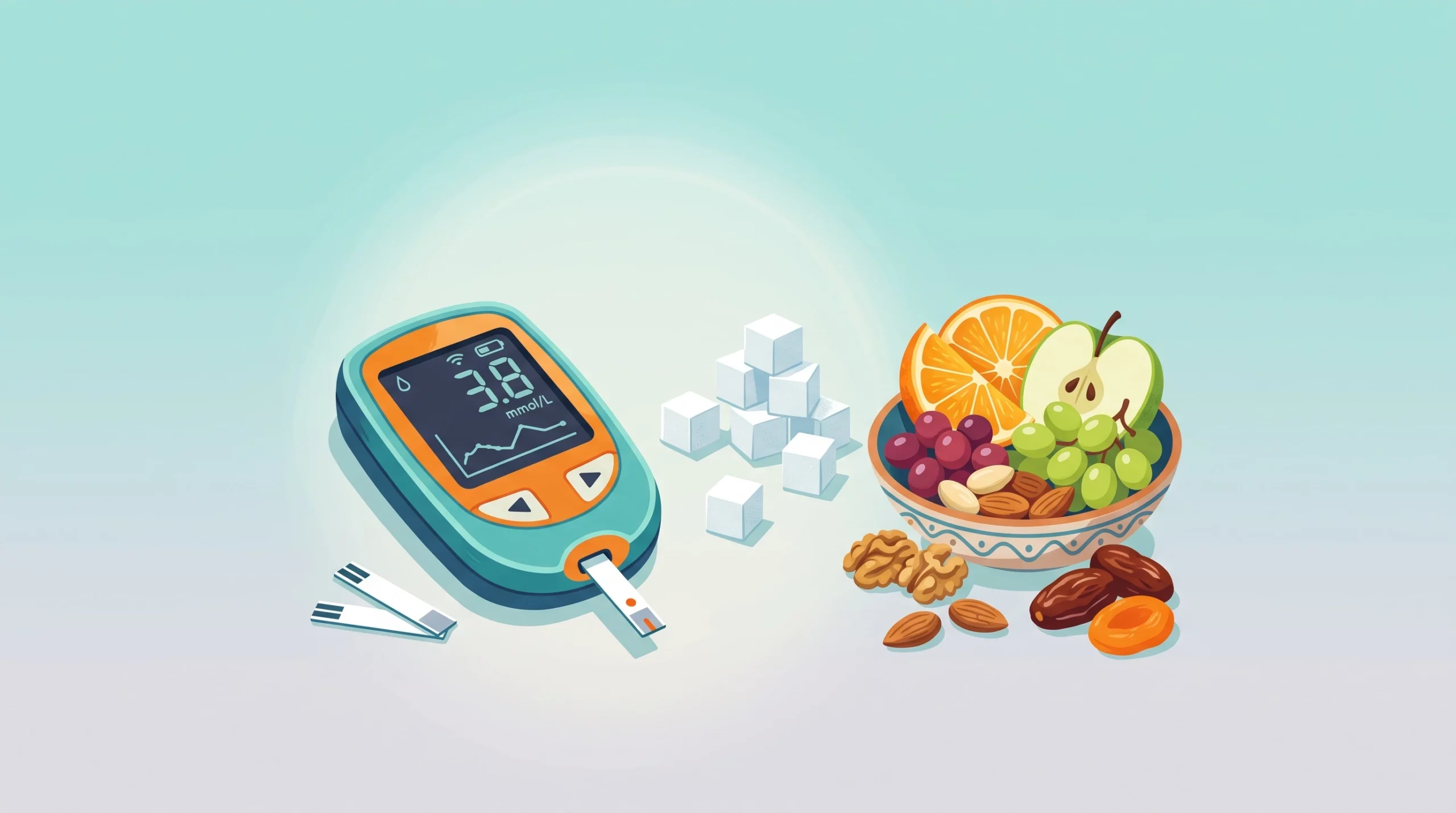
If you’ve ever felt lightheaded, shaky, or anxious and thought it was withdrawal from something like caffeine or alcohol, low blood sugar might actually be the real culprit. Hypoglycemia—just the technical name for low blood sugar—brings on a bunch of symptoms that can seriously look and feel like withdrawal. I’ve run into this situation more times than I care to admit, and the confusion between the two is more common than people realize. Understanding how low blood sugar mimics withdrawal symptoms really helps make sense of why you might be feeling off, especially if you aren’t actually going through withdrawal.
Why Low Blood Sugar Feels Like Withdrawal
Low blood sugar affects your brain and body in some wild ways. Since glucose is the main fuel for your cells, dropping levels means less fuel for your body and brain. When this happens, you might notice signs such as sweating, headaches, jitteriness, or even a rapid heartbeat. The twist? These symptoms overlap a lot with withdrawal from substances like caffeine, nicotine, or alcohol.
Your nervous system gets involved pretty quickly once your blood sugar dips. Stress hormones, like adrenaline, get dumped into your system, causing anxiety and shakiness. For anyone who’s tried to quit coffee and felt the jitters, the overlap becomes pretty obvious. It can be hard to tell what’s really behind those feelings unless you know what to look for.
Common Symptoms Shared by Low Blood Sugar and Withdrawal
The real confusion starts because hypoglycemia and withdrawal both crank up your nervous system. Here’s a quick breakdown of what you might feel during both experiences:
- Shakiness or Trembling: Both low blood sugar and withdrawal cause this. It often shows up as unsteady hands or mild twitching.
- Anxiety or Nervousness: Feeling on edge, tense, or extra alert happens in both cases.
- Heart Palpitations: Your heart might pound, race, or flutter. Usually caused by elevated adrenaline.
- Sweating: Breaking out in a cold sweat, especially without any physical activity, is super common.
- Lightheadedness or Dizziness: This can make you feel as if the room is spinning or that you’re about to faint.
- Irritability: Being short-tempered or cranky is a classic symptom of both situations.
- Fatigue or Weakness: Low energy and a drained feeling are also seen in both.
Mix in some confusion, difficulty concentrating, or even headaches, and it’s easy to understand why people, and a lot of doctors, sometimes mix up the two.
Why This Mix-Up Happens So Often
Withdrawal is talked about a lot more than low blood sugar in day-to-day conversation. People expect to feel bad when they skip their morning coffee or stop drinking alcohol, so they connect the dots pretty quickly. But skipping a meal, eating too many sugary snacks, or having certain health conditions can tank your blood sugar, too. The average person doesn’t always consider that.
I’ve known folks who went hours between meals and thought they were just grumpy or tired from quitting their afternoon soda. Turned out, it was just their blood sugar crashing. Once they grabbed a snack, the symptoms went away fast.
This mix-up can become a real issue for people with diabetes, too, since recognizing hypoglycemia quickly is super important for safety. But you don’t need to be diabetic for glucose dips to cause these tough moments.
Identifying Whether It’s Low Blood Sugar or Withdrawal
Knowing the cause behind your symptoms can help you take action quickly. Here’s how I typically tell the difference:
- If symptoms come on strong after missing a meal or several hours without eating, blood sugar is a likely suspect. Eating a quick snack (like fruit or crackers) usually helps in about 15 to 20 minutes.
- If you’re quitting caffeine, alcohol, nicotine, or a similar substance, watch for symptoms that build gradually. Withdrawal symptoms usually don’t hit all at once.
- Symptoms like cravings or mood swings may point more toward withdrawal, while shakiness relieved by eating usually means blood sugar is to blame.
- Keep in mind that other factors, like stress or illness, can muddy the waters and trigger either scenario.
If you have a way to check your blood sugar (like a glucose meter), that can help confirm things. If your readings are normal and you still feel off, it might be withdrawal after all.
What Causes Low Blood Sugar in Everyday Life
You don’t have to have diabetes for blood sugar dips to pop up. There are some triggers that make most people more likely to experience hypoglycemia now and then:
- Going a long time without eating, skipping meals, or fasting.
- Heavy exercise without a snack before or after.
- Eating lots of simple sugars (like candy or sweet drinks) can spike insulin and then quickly crash blood sugar.
- Certain medications, especially if you’re taking things like insulin or other diabetes drugs.
- Drinking alcohol, especially without food.
- Stress, which affects how your body processes and releases glucose.
If you find yourself feeling weird under any of these circumstances, keeping an eye on your eating habits and snacks can help smooth things out.
How to Handle Low Blood Sugar Safely
Getting your blood sugar back up is usually pretty simple if you catch symptoms early. Here’s what’s worked for me and what most guidelines recommend:
- Eat a quick source of sugar: juice, hard candy, honey, or glucose tablets all work quickly.
- Follow up with a balanced snack having some protein and fat (like peanut butter on bread) for longer-lasting energy.
- Keep snacks on hand if you know you’re prone to going long stretches without a meal.
- Listen to your body. The sooner you treat symptoms, the better you’ll feel.
If symptoms are really severe or not improving, definitely reach out for medical help.
Everyday Tips for Preventing Blood Sugar Dips
Staying ahead of hypoglycemia is way easier than dealing with its symptoms after they start. Here are a few simple habits that have saved me from plenty of crashing moments. These habits work for just about anyone, and you don’t have to make huge changes to see a real difference:
- Eat regular meals with some protein, fiber, and healthy fats; they help keep blood sugar steady.
- Snack when hungry, especially between meals or after exercise.
- Avoid loading up on just sugary treats or drinks.
- If you’re drinking alcohol, have it with food.
- Pack easy-to-carry snacks for busy days. Fruit, nuts, or cheese sticks can be life-savers on the go.
Checking in with your doctor is always a good idea, especially if blood sugar issues are frequent. You might need to look into diabetes, prediabetes, or other health concerns.
FAQ: Common Questions About Low Blood Sugar and Withdrawal Confusion
Here are some quick answers for the stuff I get asked most:
Can low blood sugar cause mental symptoms like confusion or panic?
Totally. Low blood sugar hits your brain pretty fast, so confusion, irritability, and even panic attacks can pop up.
I’m quitting coffee and feeling jittery, but I also forgot to eat. Which one is it?
Might be both! Withdrawal from caffeine builds slowly, but skipping breakfast or lunch could trigger symptoms quickly. Try a snack and see how you feel after 20 minutes.
Are there medical conditions besides diabetes that lead to hypoglycemia?
Yes. Some hormone imbalances, digestive conditions, or pancreatic issues can cause this. If you’re getting symptoms often, have a chat with your doctor.
Wrap-Up Thoughts: Telling the Difference and Taking Care of Yourself
Low blood sugar and withdrawal symptoms often get mixed up, especially since they overlap so much. Paying attention to your meal timing, daily habits, and how your body responds to food can really help you spot what’s behind those rough spells. When in doubt, fueling up with a balanced snack is a good way to test whether food brings fast relief.
If confusing symptoms occur often, a quick visit with your healthcare provider can clarify what’s really going on and help you get back to feeling your best. Staying prepared with snacks and listening to your body makes a big difference in keeping those shaky, cranky moments at bay. Having a bit of awareness and some healthy snacks can really boost your daily well-being, no matter what you’re going through.
Video: Skipping Meals Feels Exactly Like Relapsing #recovery #shorts