For many LGBTQ+ individuals, the journey toward self-acceptance can be complicated by social rejection, discrimination, internalized shame, and the pressure to hide their authentic identities. When these experiences become overwhelming, some individuals may turn to alcohol or drugs to temporarily escape emotional pain, anxiety, loneliness, or feelings of inadequacy.
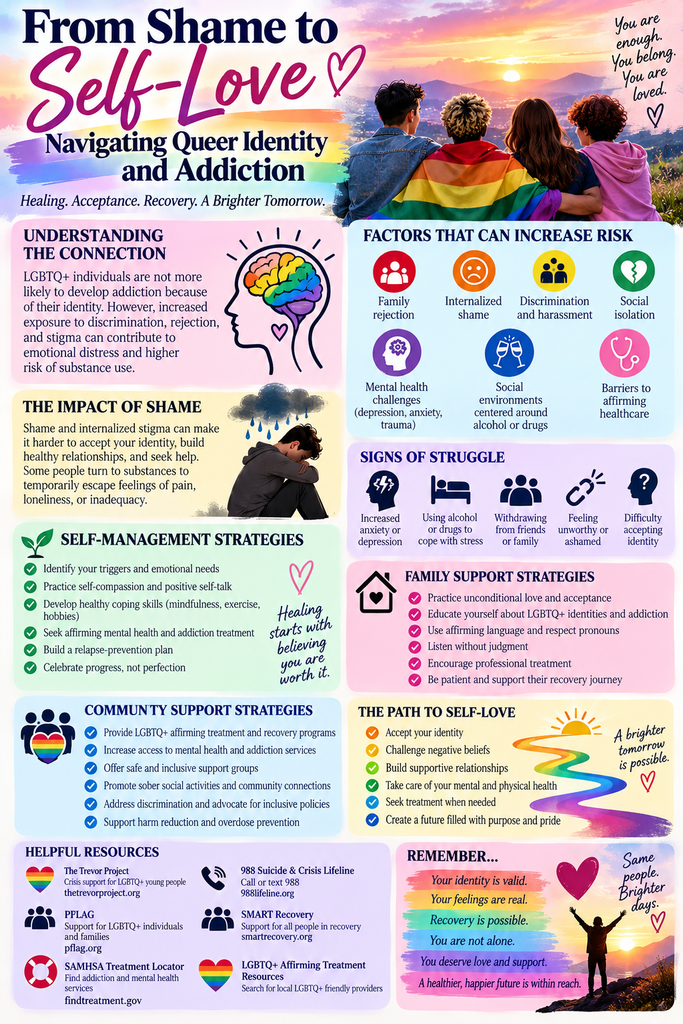
Addiction does not develop because someone identifies as lesbian, gay, bisexual, transgender, queer, or another sexual or gender minority. Rather, increased exposure to discrimination, family rejection, harassment, and social isolation can contribute to psychological distress and increase vulnerability to substance use disorders.
The journey from shame to self-love involves more than achieving sobriety. It requires healing emotional wounds, challenging harmful beliefs, building supportive relationships, and learning to embrace one’s identity without fear or apology.
Understanding the connection between queer identity, mental health, and addiction can help individuals, families, healthcare professionals, and communities create environments where recovery and authentic self-expression can thrive.
Understanding the Connection Between Queer Identity and Addiction
LGBTQ+ individuals are not inherently more susceptible to addiction because of their sexual orientation or gender identity. However, research has identified disparities in substance use and substance use disorders among some LGBTQ+ populations.
One important explanation is the minority stress model, which describes how chronic exposure to prejudice, discrimination, anticipated rejection, and internalized stigma can negatively affect mental and physical health.
When individuals repeatedly encounter rejection or feel pressured to conceal their identity, emotional distress may accumulate over time.
For some, alcohol or drugs become a way to temporarily manage painful emotions.
Factors that may contribute to substance use
- Family rejection: Lack of acceptance from parents or relatives can increase emotional distress and isolation.
- Internalized stigma: Negative social messages about LGBTQ+ identities may become incorporated into a person’s self-image.
- Discrimination and harassment: Experiences involving bullying, workplace discrimination, or violence can contribute to chronic stress.
- Social isolation: Difficulty finding affirming relationships may increase loneliness.
- Mental health challenges: Depression, anxiety, trauma-related symptoms, and other conditions may coexist with substance use disorders.
- Social environments: Some LGBTQ+ social spaces have historically centered around bars or nightlife, potentially increasing alcohol exposure.
- Healthcare barriers: Fear of discrimination or previous negative healthcare experiences may discourage individuals from seeking treatment.
These risk factors do not affect every LGBTQ+ person equally. Many individuals develop strong coping skills, supportive relationships, and healthy communities that protect against substance-related problems.
Key message: Queer identity is not the problem. Stigma, rejection, untreated emotional distress, and barriers to appropriate care can increase vulnerability to addiction.
The Hidden Burden of Shame and Internalized Stigma
Shame can become a powerful emotional burden when individuals grow up hearing that their sexual orientation or gender identity is unacceptable.
Over time, repeated negative messages may influence self-esteem, relationships, and emotional well-being.
Some individuals may come to believe they must hide their identities to receive love, acceptance, or protection.
This internal conflict can create significant psychological distress.
How shame can influence addiction
Shame may contribute to substance use through several pathways:
- Emotional avoidance: Alcohol or drugs may temporarily suppress painful feelings.
- Negative self-image: Individuals may struggle to believe they deserve happiness or healthy relationships.
- Secrecy: Concealing substance use or identity-related distress may delay treatment.
- Social withdrawal: Fear of rejection can discourage meaningful connections.
- Self-destructive behavior: Persistent hopelessness may increase engagement in risky behaviors.
- Relapse vulnerability: Shame following a return to substance use may intensify emotional distress and discourage re-engagement with treatment.
Although substance use may temporarily reduce uncomfortable emotions, repeated use can create additional problems involving physical health, relationships, employment, and emotional stability.
Recovery often requires addressing both the substance use disorder and the emotional experiences that contributed to harmful coping patterns.
From Self-Rejection to Self-Acceptance
Self-love is not simply positive thinking. It means developing a realistic, compassionate relationship with yourself, including accepting your identity, recognizing your emotional needs, and making choices that support long-term well-being.
For LGBTQ+ individuals recovering from addiction, self-acceptance may involve challenging years of negative social messages.
It can also mean recognizing that neither queer identity nor a history of addiction diminishes a person’s worth.
Steps toward self-acceptance
- Recognize that sexual orientation and gender identity are not illnesses or moral failures.
- Identify negative beliefs learned from discriminatory environments.
- Practice self-compassion during setbacks.
- Establish personal values that support authentic living.
- Develop relationships with people who respect individual identity.
- Separate personal worth from past substance use.
- Celebrate recovery progress without demanding perfection.
- Seek affirming mental health care when emotional distress becomes difficult to manage.
Self-acceptance does not require disclosing one’s identity publicly or to unsupportive individuals. Coming out is a personal decision, and emotional and physical safety should remain priorities.
Recovery becomes more sustainable when individuals begin to believe they deserve a healthy life, meaningful relationships, and freedom from addiction.
Self-Management Strategies: Building Recovery Through Self-Love
Self-management plays an important role in addiction recovery. It involves identifying triggers, developing healthy coping skills, participating in treatment, and creating daily routines that support physical and emotional stability.
For LGBTQ+ individuals, effective self-management may also include addressing minority stress and identity-related experiences.
Practical self-management strategies
- Identify emotional triggers: Recognize situations involving rejection, discrimination, loneliness, or shame that increase cravings.
- Develop healthy coping skills: Practice mindfulness, journaling, exercise, creative activities, or relaxation techniques.
- Seek affirming professional treatment: Work with clinicians who understand LGBTQ+ experiences and substance use disorders.
- Create a relapse-prevention plan: Identify warning signs, supportive contacts, and steps to take when cravings intensify.
- Build emotional resilience: Challenge negative self-talk and practice self-compassion.
- Set healthy boundaries: Limit contact with people or environments that repeatedly undermine your emotional safety.
- Develop supportive routines: Maintain consistent sleep, nutrition, physical activity, and participation in treatment.
- Celebrate personal growth: Recognize progress in recovery, relationships, and self-acceptance.
The role of professional addiction treatment
Evidence-based addiction treatment may include cognitive behavioral therapy, motivational interviewing, contingency management, and medications for opioid or alcohol use disorder when clinically indicated.
Individuals experiencing trauma-related symptoms may also benefit from trauma-informed psychotherapy.
Treatment should be individualized and should never attempt to change or suppress a person’s sexual orientation or gender identity.
Addressing Co-Occurring Mental Health Conditions
Addiction and mental health conditions frequently occur together.
Some LGBTQ+ individuals experience additional psychological stress because of discrimination, harassment, family conflict, or experiences of violence.
These experiences may contribute to anxiety, depression, post-traumatic stress symptoms, and difficulties with emotional regulation.
However, not every LGBTQ+ individual experiences mental illness, and queer identity itself is not a psychiatric disorder.
Common co-occurring challenges
Depression: Persistent sadness, hopelessness, loss of interest, and reduced motivation may complicate addiction recovery.
Anxiety: Fear of rejection, discrimination, or negative judgment can increase emotional distress and substance use urges.
Trauma-related symptoms: Experiences of bullying, abuse, or violence may contribute to intrusive memories, avoidance, and hypervigilance.
Low self-esteem: Internalized negative beliefs may interfere with healthy relationships and motivation to recover.
Suicidal thoughts: Individuals experiencing severe depression, isolation, or overwhelming distress may require urgent mental health intervention.
Integrated treatment that addresses both substance use and co-occurring psychiatric conditions generally offers a more comprehensive approach than treating either condition in isolation.
Family Support Strategies: Replacing Rejection With Acceptance
Family relationships can profoundly influence emotional well-being and addiction recovery.
For LGBTQ+ individuals, family acceptance may provide protection against isolation, depression, and harmful substance use.
Conversely, rejection or persistent invalidation can create additional emotional stress.
Families don’t need to understand every aspect of a loved one’s experience immediately to offer meaningful support.
Compassion, respect, and willingness to learn can help rebuild relationships.
How families can support LGBTQ+ loved ones in recovery
- Practice unconditional respect: Communicate that a loved one’s identity does not diminish their value.
- Listen without judgment: Let individuals share their experiences without interruption or criticism.
- Use affirming language: Respect names, pronouns, and identity-related preferences.
- Learn about addiction: Understand substance use disorders as treatable medical conditions.
- Avoid shame-based communication: Refrain from blaming, threatening, or humiliating someone for their substance use.
- Encourage professional treatment: Help identify LGBTQ+-affirming addiction and mental health services.
- Participate in family counseling: Address conflict, rebuild trust, and improve communication when appropriate.
- Respect personal boundaries: Let individuals decide when and how they disclose their identity.
- Recognize recovery achievements: Celebrate treatment participation, healthier coping, and positive behavioral changes.
When family relationships are harmful
Not every family environment is emotionally or physically safe.
Some individuals experience rejection, coercion, threats, or violence after disclosing their identity.
In these situations, maintaining distance or establishing firm boundaries may be necessary.
Chosen family—trusted friends, mentors, partners, and supportive community members—can provide meaningful emotional support when biological relatives are unavailable or unsupportive.
Key lesson: Family support should promote safety, dignity, accountability, and acceptance rather than control or shame.
The Power of Chosen Family in Addiction Recovery
Chosen family refers to supportive relationships developed outside traditional family structures.
For many LGBTQ+ individuals, these relationships provide emotional security, belonging, and understanding.
Chosen family may include close friends, mentors, partners, peer recovery specialists, or community members.
Such relationships can be especially important when biological family relationships are strained.
How chosen family supports recovery
- Provides emotional encouragement during difficult periods.
- Creates opportunities for honest conversations about identity and addiction.
- Reduces loneliness and social isolation.
- Encourages participation in treatment and recovery activities.
- Helps individuals recognize unhealthy relationships or environments.
- Celebrates personal identity and recovery milestones.
- Offers practical assistance during periods of instability.
Healthy recovery relationships should also respect boundaries and encourage independence.
Support does not mean taking responsibility for another person’s sobriety. Instead, it involves creating conditions that make recovery more achievable.
Community Support Strategies: Creating Safe and Affirming Recovery Spaces
Communities play an important role in reducing addiction-related harm and improving access to treatment.
LGBTQ+ individuals may encounter healthcare professionals who lack training in sexual and gender diversity, as well as treatment programs that do not adequately address discrimination or minority stress.
Affirming community resources can help reduce these barriers.
Community-based strategies
- Expand LGBTQ+-affirming treatment services: Ensure addiction programs provide respectful, culturally responsive care.
- Train healthcare professionals: Educate clinicians about minority stress, inclusive communication, and substance use disparities.
- Increase access to peer support: Develop recovery groups where LGBTQ+ individuals feel respected and understood.
- Promote sober social activities: Offer community events that do not revolve around alcohol or drug use.
- Address discrimination: Support policies and practices that improve safety and equitable access to healthcare.
- Provide housing resources: Assist individuals experiencing homelessness or unsafe living environments.
- Offer mental health education: Increase awareness of depression, trauma, anxiety, and addiction.
- Support harm reduction: Expand access to naloxone, overdose education, infectious disease prevention, and evidence-based treatment.
Community programs should recognize that LGBTQ+ populations are diverse and that experiences differ by age, race, gender identity, economic circumstances, and geographic location.
Finding LGBTQ+-Affirming Addiction Treatment
The right treatment program can significantly influence engagement in recovery.
An affirming treatment environment recognizes sexual orientation and gender identity as normal aspects of human diversity.
It also addresses addiction without relying on stigma, shame, or discriminatory assumptions.
Questions to ask a treatment provider
- Does the program have experience treating LGBTQ+ individuals?
- Are staff trained in culturally responsive and trauma-informed care?
- Does the program respect patients’ names, pronouns, and privacy?
- Are medications for addiction treatment available when appropriate?
- Does treatment address depression, anxiety, and trauma?
- Are LGBTQ+-affirming peer support groups available?
- Does the program provide individualized relapse-prevention planning?
- Can family or chosen-family members participate when the patient wishes?
A high-quality program should provide evidence-based addiction treatment while respecting the patient’s dignity, identity, and autonomy.
Rebuilding Self-Worth After Addiction
Addiction can damage self-confidence, relationships, financial stability, and a person’s sense of purpose.
For someone who has also experienced identity-related rejection, rebuilding self-worth may require addressing multiple sources of shame.
Recovery is not about becoming a different person to earn acceptance.
It is about developing a healthier relationship with yourself while taking responsibility for harmful behaviors.
Strategies for rebuilding self-worth
- Practice self-forgiveness without dismissing personal responsibility.
- Identify strengths and accomplishments unrelated to substance use.
- Set realistic personal and recovery goals.
- Rebuild trust through consistent actions.
- Develop meaningful hobbies and interests.
- Participate in supportive relationships.
- Challenge beliefs that equate past mistakes with permanent failure.
- Seek professional support for persistent shame or trauma.
Self-love includes accountability. Individuals can acknowledge past decisions, repair relationships when possible, and still recognize their inherent worth.
Preventing Relapse Through Identity-Affirming Recovery
Relapse, or a return to substance use, can occur during recovery and does not mean that treatment has failed.
For LGBTQ+ individuals, identity-related stress may be one of several factors that contribute to increased cravings or emotional vulnerability.
An effective relapse-prevention plan should address both general addiction triggers and individual experiences involving discrimination or rejection.
Relapse-prevention strategies
- Identify situations that increase emotional distress or cravings.
- Maintain regular contact with treatment providers.
- Develop alternatives to substance-centered social activities.
- Build a reliable support network.
- Practice coping skills for rejection, anxiety, and loneliness.
- Continue medications for addiction treatment when prescribed.
- Address co-occurring mental health symptoms.
- Establish a clear plan for responding to a return to substance use.
Individuals recovering from opioid use disorder should understand that overdose risk can increase after periods of reduced opioid tolerance. Access to naloxone and ongoing, evidence-based treatment can save lives.
Key lesson: Relapse prevention should support both sobriety and psychological well-being, without requiring individuals to hide or reject their identities.
Helpful LGBTQ+ Mental Health and Addiction Recovery Resources
Several national organizations provide educational materials, support, crisis services, and treatment information.
The Trevor Project
Provides crisis intervention and suicide prevention services for LGBTQ+ young people.
Website: thetrevorproject.org
PFLAG
Offers education, advocacy, and support for LGBTQ+ individuals, families, and allies.
Website: pflag.org
SAMHSA
Provides information about mental health and substance use treatment services.
Treatment referral: FindTreatment.gov
SMART Recovery
Offers evidence-informed mutual support for people seeking recovery from addictive behaviors.
Website: smartrecovery.org
988 Suicide & Crisis Lifeline
Provides crisis support for individuals experiencing suicidal thoughts or severe emotional distress.
Call or text 988 in the United States.
Website: 988lifeline.org
Moving From Shame to Self-Love: A New Definition of Recovery
Recovery is often described as freedom from alcohol or drug dependence. However, for individuals who have experienced identity-related shame, recovery may involve a deeper transformation.
It can mean learning to live without hiding, building relationships based on mutual respect, and recognizing that you don’t need to change your identity to deserve love.
The transition from shame to self-love rarely happens immediately.
Some individuals must first process trauma, rebuild trust, establish safe living environments, or distance themselves from harmful relationships.
Others may need time to understand their identities and develop confidence in expressing them.
Regardless of the path, recovery should allow individuals to pursue both emotional well-being and authentic self-expression.
Five principles for lasting recovery
- Acceptance: Recognize that LGBTQ+ identity is a valid part of human diversity.
- Compassion: Replace shame and harsh self-judgment with understanding and accountability.
- Connection: Develop supportive relationships that encourage recovery and authenticity.
- Treatment: Use evidence-based addiction and mental health services when needed.
- Growth: Build a meaningful life centered on health, relationships, purpose, and personal values.
Conclusion: Healing Begins With Acceptance
The journey from shame to self-love is an important part of recovery for many LGBTQ+ individuals who have experienced addiction.
Discrimination, rejection, internalized stigma, and emotional distress can create significant challenges, but these experiences do not define a person’s identity or determine their future.
Through self-management, professional treatment, family acceptance, chosen-family relationships, and supportive community resources, individuals can develop healthier coping strategies and rebuild confidence.
Families can contribute by replacing judgment with understanding. Healthcare professionals can help by delivering evidence-based, affirming treatment. Communities can promote recovery by creating environments where people feel safe, valued, and connected.
Most importantly, individuals deserve to know that their sexual orientation or gender identity is not something that needs to be corrected, hidden, or overcome.
Recovery is not about changing who you are. It is about healing from what has hurt you, developing healthier ways to cope, and building a life where you can be yourself without relying on substances to escape emotional pain.
Frequently Asked Questions and Answers
Understanding Queer Identity and Addiction
1. What is the connection between queer identity and addiction?
Queer identity itself does not cause addiction. However, LGBTQ+ individuals may experience additional stressors, including discrimination, bullying, family rejection, and social isolation. These experiences can increase emotional distress and, for some individuals, contribute to substance use as a coping mechanism. The relationship is best understood through social, psychological, and environmental factors rather than sexual orientation or gender identity alone.
2. Are LGBTQ+ individuals at greater risk of developing substance use disorders?
Research has identified higher rates of certain substance use behaviors and substance use disorders among some LGBTQ+ populations compared with heterosexual or cisgender populations. However, risks vary considerably by age group, identity, and circumstances. Minority stress, discrimination, trauma exposure, and barriers to affirming healthcare may contribute to these disparities.
3. What is minority stress, and how does it influence addiction?
Minority stress refers to chronic psychological stress experienced by individuals belonging to socially stigmatized groups. For LGBTQ+ individuals, it may involve discrimination, anticipated rejection, concealing one’s identity, or internalized negative beliefs. Persistent stress can contribute to anxiety, depression, and unhealthy coping behaviors, including substance misuse.
4. How does shame contribute to substance use?
Shame can create feelings of worthlessness, inadequacy, and emotional isolation. Some individuals use alcohol or drugs to temporarily escape these painful emotions. Although substances may provide short-term relief, repeated use can increase dependence, worsen mental health symptoms, and reinforce cycles of secrecy and self-criticism.
5. What is internalized homophobia or internalized stigma?
Internalized stigma occurs when individuals absorb negative societal messages about their sexual orientation or gender identity and begin applying those beliefs to themselves. This can contribute to low self-esteem, emotional distress, and difficulty forming supportive relationships. Affirming therapy, education, and healthy social connections can help address internalized stigma and improve emotional well-being.
Mental Health and Emotional Healing
6. Why are depression and anxiety important concerns in LGBTQ+ addiction recovery?
Depression and anxiety can coexist with substance use disorders and complicate recovery. Experiences of discrimination, rejection, or trauma may contribute to these conditions. Integrated treatment that addresses both addiction and mental health symptoms can improve functioning, strengthen coping skills, and support long-term recovery.
7. Can trauma contribute to addiction among LGBTQ+ individuals?
Yes. Trauma involving bullying, abuse, violence, rejection, or other distressing experiences can increase vulnerability to substance misuse. Some individuals use substances to manage intrusive memories, emotional distress, or sleep difficulties. Trauma-informed addiction treatment helps address these experiences while emphasizing safety, emotional regulation, and recovery.
8. What does moving from shame to self-love mean in addiction recovery?
Moving from shame to self-love means developing self-acceptance, recognizing personal worth, and replacing harmful coping patterns with healthier behaviors. It involves understanding that a person’s identity and history of substance use do not define their value. Self-love also includes accountability, seeking treatment, setting boundaries, and making choices that protect long-term well-being.
9. How can LGBTQ+ individuals overcome feelings of worthlessness?
Individuals can begin by identifying negative beliefs, practicing self-compassion, connecting with affirming people, and seeking professional mental health support when needed. Cognitive behavioral therapy may help challenge distorted thinking, while supportive relationships can reinforce belonging and self-worth. Emotional healing often requires time, consistency, and patience.
10. Is coming out necessary for successful addiction recovery?
No. Coming out is a personal decision and is not a requirement for recovery. Individuals should determine when, how, and whether to disclose their sexual orientation or gender identity based on their safety, circumstances, and preferences. Affirming treatment should respect privacy and support authentic self-expression without pressuring disclosure.
Self-Management Strategies for Recovery
11. What self-management strategies can help LGBTQ+ individuals maintain sobriety?
Helpful strategies include:
- Identifying emotional and environmental triggers.
- Practicing mindfulness and stress-management techniques.
- Developing healthy routines involving sleep, nutrition, and exercise.
- Attending therapy or recovery support meetings.
- Building relationships with affirming individuals.
- Creating a personalized relapse-prevention plan.
- Following prescribed addiction treatment medications when appropriate.
- Celebrating recovery progress without demanding perfection.
Self-management works best alongside professional treatment when a substance use disorder is present.
12. How can self-compassion reduce the risk of relapse?
Self-compassion encourages individuals to respond to setbacks with understanding rather than harsh self-criticism. This can reduce shame and make it easier to seek help after cravings or a return to substance use. Self-compassion does not eliminate personal responsibility; instead, it supports constructive responses and continued engagement in recovery.
13. How can someone manage addiction triggers related to discrimination or rejection?
Individuals can identify situations that intensify emotional distress and develop coping strategies before cravings occur. Helpful approaches include grounding exercises, contacting trusted supporters, attending therapy, practicing assertive communication, and, when possible, limiting exposure to harmful environments. A written relapse-prevention plan can provide guidance during emotionally difficult situations.
14. What role does mindfulness play in addiction recovery?
Mindfulness involves paying attention to thoughts, feelings, and physical sensations without immediately reacting. It may help individuals recognize cravings, tolerate emotional discomfort, and respond more intentionally to stress. Mindfulness-based approaches can complement evidence-based addiction treatment but should not replace necessary medical or psychological care.
15. How can someone rebuild self-esteem after addiction?
Rebuilding self-esteem often involves setting achievable goals, repairing relationships when appropriate, developing healthy habits, and recognizing personal strengths. Individuals may benefit from therapy that addresses shame, negative self-beliefs, and trauma. Measure progress through meaningful behavioral changes rather than perfection.
16. What should someone do if they experience a relapse?
A return to substance use should prompt reassessment and renewed support rather than shame or abandonment of recovery. Individuals should contact their treatment provider, identify contributing factors, and adjust their recovery plan. For opioid use disorder, overdose risk can increase after reduced tolerance, making naloxone access and prompt treatment engagement particularly important.
Family Acceptance and Support
17. How does family rejection affect LGBTQ+ individuals struggling with addiction?
Family rejection can contribute to emotional distress, isolation, housing instability, and reduced access to support. These experiences may increase vulnerability to harmful substance use or complicate recovery. However, family rejection does not inevitably lead to addiction, and supportive relationships outside the family can provide important protective benefits.
18. How can families support an LGBTQ+ loved one in addiction recovery?
Families can offer support by:
- Listening without judgment.
- Respecting sexual orientation and gender identity.
- Using preferred names and pronouns.
- Learning about substance use disorders.
- Encouraging evidence-based treatment.
- Avoiding blame, shame, and threats.
- Participating in family counseling when appropriate.
- Respecting personal boundaries and privacy.
- Celebrating healthy recovery milestones.
Acceptance and emotional safety can help individuals remain engaged in treatment.
19. What should parents do if they struggle to understand their child’s LGBTQ+ identity?
Parents can seek reliable educational resources, participate in family support groups, and speak with affirming mental health professionals. They should communicate love and respect as they learn. Organizations such as PFLAG provide education and support for families navigating questions about sexual orientation and gender identity.
20. Can family therapy improve addiction recovery outcomes?
Family therapy can improve communication, address conflict, establish healthy boundaries, and strengthen recovery support. When family relationships are safe and supportive, involving relatives may improve engagement in treatment. However, family participation should be individualized, and it may not be appropriate when abuse, coercion, or serious rejection is present.
21. What if an LGBTQ+ person does not have supportive biological relatives?
Individuals can build a chosen family consisting of trusted friends, partners, mentors, peers, and supportive community members. These relationships can provide emotional connection, encouragement, and practical assistance. Recovery does not require reconciliation with relatives who remain harmful or unsafe.
Community Support and Affirming Treatment
22. Why are LGBTQ+-affirming addiction treatment programs important?
Affirming programs recognize and respect sexual orientation and gender identity while providing evidence-based addiction care. They aim to reduce discrimination, improve trust, and address experiences such as minority stress and trauma. Patients may feel more comfortable discussing sensitive issues when healthcare professionals demonstrate cultural responsiveness and respect.
23. What should someone look for in an LGBTQ+-affirming treatment center?
Important considerations include staff training in LGBTQ+ health, respectful communication, confidentiality, trauma-informed care, access to addiction medications, and treatment for co-occurring psychiatric conditions. Individuals may also ask whether the program offers LGBTQ+-affirming peer groups and supports participation from chosen family when desired.
24. How can communities reduce addiction-related stigma among LGBTQ+ individuals?
Communities can provide accurate addiction education, challenge discriminatory attitudes, support inclusive healthcare practices, and expand access to treatment. Offering sober social activities, peer recovery programs, and safe community spaces can strengthen social connection. Harm-reduction services and overdose prevention education are also important.
25. Are LGBTQ+-specific recovery support groups available?
Yes. Some communities offer LGBTQ+-focused Alcoholics Anonymous, Narcotics Anonymous, SMART Recovery, and other peer-support meetings. Availability varies by location, and online meetings may provide additional options. Individuals should choose groups where they feel safe, respected, and supported.
26. What role does chosen family play in long-term recovery?
Chosen family can provide belonging, emotional encouragement, accountability, and practical support. These relationships may be especially valuable for individuals experiencing family rejection. Healthy chosen-family relationships respect boundaries, encourage professional treatment when needed, and support independence rather than control.
Building Self-Love and Preventing Relapse
27. How can LGBTQ+ individuals develop a healthier relationship with themselves?
Developing a healthier relationship with oneself involves recognizing personal strengths, challenging internalized stigma, practicing self-compassion, and establishing meaningful goals. Affirming relationships, psychotherapy, creative expression, and recovery activities may strengthen self-acceptance. Encourage individuals to explore identity at their own pace.
28. Can self-love improve long-term addiction recovery?
Self-love may support recovery by reducing shame, encouraging healthier choices, and strengthening motivation to seek help. However, self-love alone is not a treatment for substance use disorders. Lasting recovery often requires evidence-based care, supportive relationships, coping skills, and ongoing monitoring.
29. How can someone create a relapse-prevention plan that addresses identity-related stress?
A comprehensive plan should identify personal triggers, including discrimination, rejection, loneliness, and stressful social environments. It should also include coping strategies, supportive contacts, treatment resources, and clear steps for responding to cravings or substance use. Review the plan regularly and adjust it as circumstances change.
30. What is the most important message for LGBTQ+ individuals navigating addiction recovery?
The most important message is that sexual orientation and gender identity are not problems to be corrected, and addiction does not determine a person’s worth. Individuals deserve respectful treatment, supportive relationships, and opportunities to build meaningful lives. Recovery is possible, and asking for help is a sign of strength.
Video: