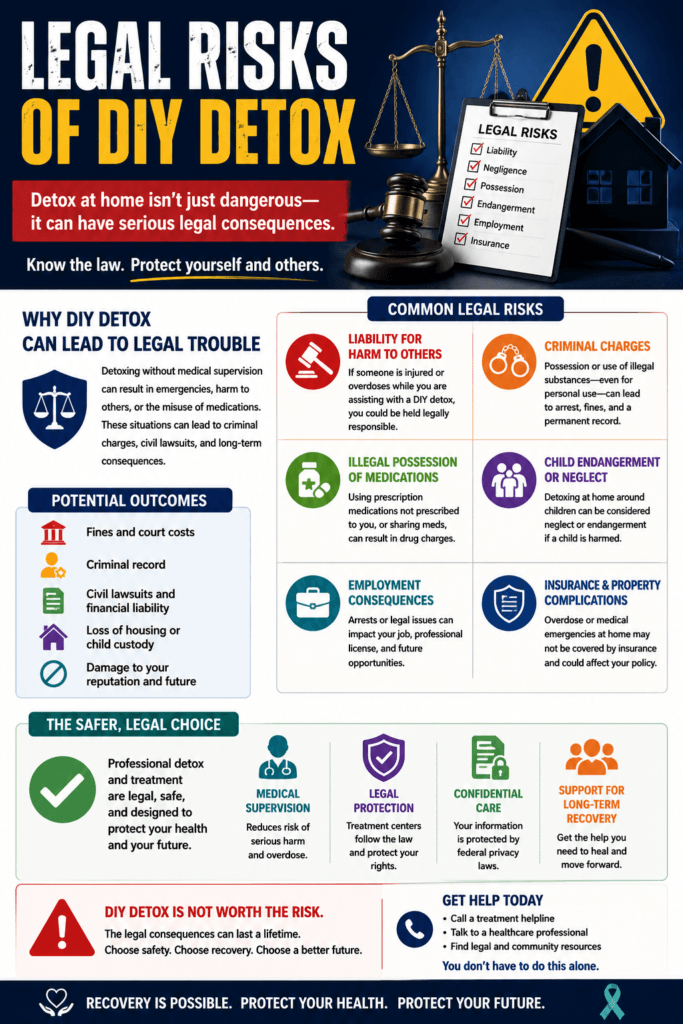
If you’ve ever looked up ways to “detox” your body at home, you’re not alone. Detox trends seem to pop up everywhere, promising a quick fix for everything from fatigue to digestive issues. But many of these do-it-yourself solutions come with risks that most people don’t consider, especially when it comes to legal troubles. This article breaks down what you should know about the legal risks of DIY detox, why those laws exist, and what steps you can take to protect yourself if you’re considering a home detox approach.
Why DIY Detox Is So Popular (and Sometimes Risky)
“Detox” covers everything from juice cleanses and herbal teas to supplements and homemade remedies. While I get why people look for natural or inexpensive ways to feel better, the explosion of DIY detox routines has created a gray area in both health and law.
First, many of these regimens seem harmless—think lemon water, apple cider vinegar, or green juice. But when you start using substances like activated charcoal, megadose vitamin kits, or off-label prescription drugs, the risks start stacking up. These aren’t just health issues. They’re sometimes legal issues, especially when substances cross into pharmaceuticals or regulated supplements.
Understanding the Legal Side of Home Detox
DIY detox might sound like a harmless at-home project, but there are big reasons laws exist around medicines, supplements, and health claims. Here are some basics to help untangle the legal landscape before you consider making your own detox plan.
- Regulation of Supplements: In countries like the United States, the FDA regulates supplements, but not as strictly as prescription drugs. That means some so-called detox supplements may contain ingredients that aren’t tested for safety or effectiveness.
- Off-label Use of Medications: Using prescription drugs (even leftovers from an old prescription or from a friend) to detox at home is illegal and can get you into serious legal and health trouble.
- Controlled Substances: Some detox routines, especially those targeting substance use, involve substances that are controlled and only legal with a prescription.
- Unauthorized Medical Practice: Sharing or offering medical advice on detoxing, especially for a fee or as a service, may constitute practicing medicine without a license, which carries steep penalties.
The Most Common Legal Risks of DIY Detox
Plenty of folks don’t realize that buying, sharing, or making their own detox products can set off legal flags. Here’s what to keep an eye out for:
- Buying Detox Kits from Unlicensed Sources: Ordering detox products from shady online stores or foreign suppliers can mean accidentally importing substances that are banned or highly regulated in your country. Customs agents do sometimes seize these shipments.
- Making Your Own Remedies with Controlled Ingredients: Some “herbal” ingredients are subject to real legal restrictions. For example, using poppy seeds for opiate detox can cross into illegal territory if you’re not careful.
- Sharing or Selling Detox Products: Sharing a detox kit with a friend starts to look like drug distribution if the kit contains anything with a legal limit, a prescription ingredient, or a banned herb.
- Falsifying Urine or Blood Tests: People sometimes try to beat workplace or probation drug screening with detox products or fake samples. If discovered, this counts as fraud and can even lead to criminal charges.
Home Detox and Medical Advice Laws
Lots of people want to help friends or clients detox “naturally.” The problem is, there’s a fine line between giving advice and practicing medicine without a license.
- Writing “Detox Plans” for Others: If you’re promoting, selling, or even just giving a step-by-step detox protocol, you might trigger laws that protect against the unauthorized practice of medicine or nutrition counseling. This is especially true if you claim your plan treats disease.
- Social Media and Influencer Risks: If you have a large following or even a small online group, making health claims about your DIY detox methods could attract regulatory scrutiny. The FTC in the U.S., and similar agencies elsewhere, have cracked down on influencers making unsupported health claims.
Real-Life Issues People Have Faced
I’ve seen situations where people got surprised by legal letters just for selling detox teas online, especially if their marketing said anything about illness or withdrawal. Others have been fined, lost jobs, or ended up in court after using detox kits to tamper with drug tests. Sometimes, even a simple shipment held at customs triggers an investigation.
Specific Rules to Watch Out for in Different Countries
Laws regarding detox products and health claims vary worldwide. Before trying anything experimental or importing a supplement, here’s what I always recommend checking:
- FDA and FTC (USA): The FDA can crack down on detox products that claim to treat or cure health issues. The FTC targets false advertising and unproven claims around weight loss, addiction treatment, and disease “prevention.” (FDA Consumer Updates).
- Health Canada: Supplements, herbs, or pills must be authorized and carry a Natural Product Number (NPN). Customs may seize unauthorized imports. (Health Canada Natural Health Products).
- European Union: Food supplements must follow EFSA rules on health claims. Some herbs are classified as medicinal and are available by prescription only.
- Australia: The Therapeutic Goods Administration strictly regulates complementary medicines, and customs seizes anything on the restricted list.
Common Mistakes People Make With DIY Detox
- Not Researching Product Legality: Just because you can buy something online doesn’t mean it’s actually legal to import, possess, or use in your country. Many ingredients in “detox” tea or pills land on restricted lists.
- Assuming Supplements Are Always Safe: Supplements aren’t tested as carefully as prescription drugs. Some have hidden pharmaceuticals or dangerous levels of heavy metals, risking not just your health but also legal action if you try to sell or share them.
- Trying to “Detox” Before a Drug Test: Using or selling products to cheat a drug screen can get you charged with fraud or even obstruction, depending on local laws.
- Ignoring warnings or medical advice: Checking on the credentials.
The Health Side: Why Do Laws Exist?
Governments regulate detox products and detox advice for actual safety reasons. Many supplements or herbal remedies can interact with prescription drugs, cause harsh side effects, or delay proper medical treatment. Some homemade formulas have even landed people in the hospital with liver problems or severe dehydration. These risks are exactly why health and medical laws were put in place.
Some Famous Cases
- The FDA has banned and recalled several “detox” teas and supplements sold online that actually contained hidden pharmaceutical drugs or dangerous laxatives.
- In one case reported by The New York Times, people selling DIY chelation kits faced both lawsuits and criminal charges.
- Australian customs regularly confiscates imported detox supplements that fail safety or legal checks.
Smart Steps to Avoid Legal Trouble
- Research Before You Buy: Check your country’s official government health websites for lists of banned supplements or substances.
- Avoid Making or Sharing Medical Claims: Be careful not to suggest that any home remedy “cures” a disease or detoxifies any specific organ.
- Don’t Share or Sell: Never distribute your DIY detox kits or medications to others, especially for money.
- Consult a Professional: When in doubt, ask your doctor or a licensed nutritionist before making any detox move. This is especially important with supplements or off-label substances.
- Be Careful With Online Orders: If a website looks sketchy or promises eye-catching results, your money and your legal record are probably safer elsewhere.
Frequently Asked Questions
Can I legally buy detox products online?
Sometimes, but not always. If the ingredients are unrestricted and you’re not importing banned goods, it’s generally allowed. Always double-check your country’s rules before buying. Customs can and does seize illegal supplements.
Is it illegal to share detox teas or supplements with friends?
It depends on what’s in them. If your product contains prescription drugs or restricted substances, it’s definitely risky. Even with legal supplements, selling or promoting them as medical treatments can break the law.
Can someone get in trouble for helping a friend detox from drugs at home?
This is really tricky. Giving a friend advice isn’t usually a crime, but supplying medications, injections, or substances can absolutely be illegal if you’re not a licensed health provider.
Final Thoughts on Staying Safe
DIY detox probably isn’t going away anytime soon, but it comes with a lot of fine print most people miss. Understanding the legal risks- not just the health ones- can save you a ton of trouble. Whenever you’re unsure, sticking to safe, researched methods and consulting a professional is really important.
If you’re thinking about a big detox routine, start with honest research and keep health and legal safety at the top of your list. This way, you won’t accidentally trade one set of problems for another.
Video: Can You Legally Detox at Home? What You Must Know Before You Start