Kratom, a tropical plant native to Southeast Asia, has gained attention in recent years as a natural alternative for pain relief, anxiety, and even easing opioid withdrawal symptoms. Its popularity has skyrocketed, especially in wellness circles and online forums. But even though some people swear by its benefits, kratom actually comes with some risks that don’t always get the spotlight. My goal here is to lay out the hidden dangers you need to know before deciding if kratom is right for you.
What is Kratom and Why Do People Use It?
Kratom (Mitragyna speciosa) is a leafy plant from countries such as Thailand, Malaysia, and Indonesia. The leaves are usually dried and powdered, then brewed as tea, taken in capsules, or even mixed into smoothies. It’s gained a reputation as a natural fix for all sorts of things, including chronic pain, low mood, and energy slumps. Many users appreciate its versatility and the sense of well-being it can sometimes bring.
Kratom works by influencing opioid receptors in the brain, much like prescription painkillers. Depending on the dose, it can either pep you up or chill you out, which explains why some people reach for a cup of kratom tea instead of coffee or medication. In small amounts, folks often feel more alert and social. In larger amounts, people tend to feel relaxed, sometimes even drowsy.
On paper, kratom seems like a pretty handy way to manage pain or stress without relying on pharmaceuticals. However, the full story is layered, and not all parts are reassuring. For those who think of it as a wellness shortcut, it’s worth exploring the twists and turns this plant brings.
Kratom’s Risky Side: Health Dangers You Won’t Want to Ignore
With kratom’s rise in popularity, more research has focused on its drawbacks. There are several sneaky health risks that don’t always come up when people talk about kratom online or in casual conversation.
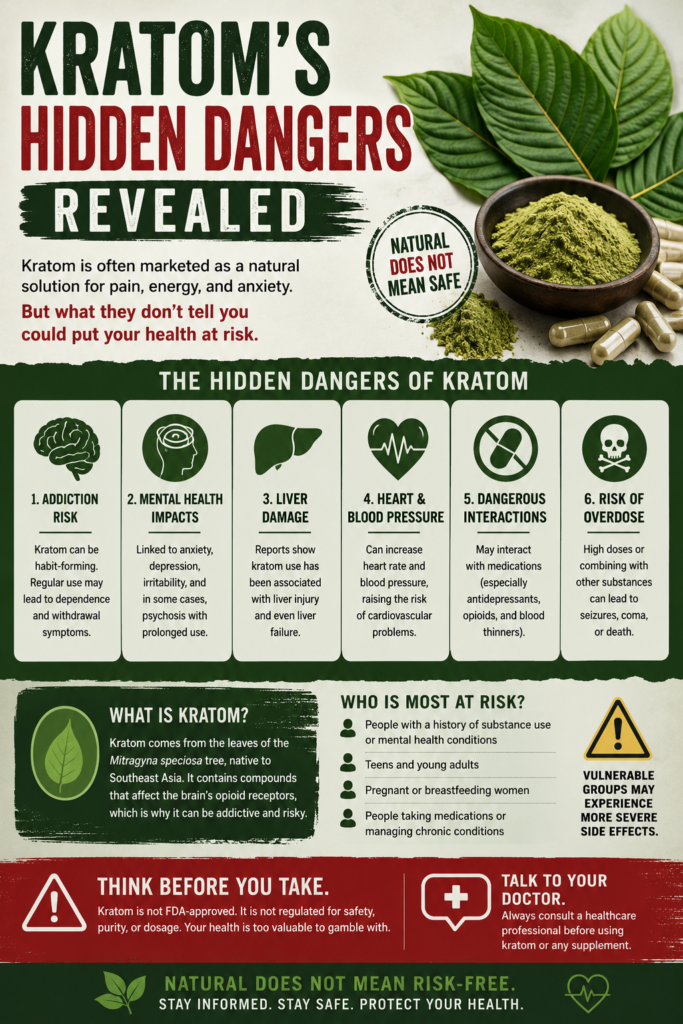
- Liver Damage: Symptoms such as yellowing of the skin, dark urine, and stomach pain have popped up in kratom users. Some studies and case reports link kratom to sudden liver problems, even in otherwise healthy people.
- Risk of Addiction: Even though it comes from a plant, kratom can be habit-forming. People sometimes find themselves needing higher doses to feel the same effects, leading to dependence. Withdrawal is real and can include mood swings, trouble sleeping, or body aches.
- High Blood Pressure and Heart Problems: Kratom may put extra stress on your heart. Reports include increased heart rate, high blood pressure, and palpitations, especially at higher doses.
- Seizures and Confusion: High doses or mixing kratom with other substances have led to seizures, confusion, and even a risk of passing out.
- Interaction with Other Drugs: Kratom may not mix well with some prescription medications, especially those for mood disorders or chronic pain. The effects can be unpredictable and may cause further harm.
For the most part, these problems show up with regular or high-dose use, but even casual users should keep these risks in mind. The bottom line: just because it’s natural doesn’t mean it’s always safe, especially if mixed with other substances or medications.
Understanding Kratom’s Addictive Potential
One of the biggest myths floating around is that natural products can’t be addictive. That’s just not the case with kratom. Over time, your body can get used to the effects, which means you may need to bump up your dosage to get the same relief—that’s a recipe for a habit.
Withdrawal symptoms are another clue about dependence. Users have reported muscle aches, crankiness, poor sleep, nausea, and even trouble feeling happy without the plant. The cycle often looks like this: someone uses kratom to ease pain or feel better, but after a while, simply stopping leads to discomfort, so they take more to feel “normal” again. Kicking the habit is not easy, especially without support. Many folks find that what started as an occasional crutch can transform into a daily routine that is difficult to break, affecting their work, relationships, and moods. It can become a silent struggle that’s hard to share with others who don’t understand the risks.
The Legal Gray Area: Dosage, Quality, and Contamination Risks
Kratom isn’t regulated in the same way as medication or even other supplements. In some places, it’s perfectly legal; in others, it’s restricted or banned. The rules can change quickly, and checking your local laws before buying kratom is super important.
- Unregulated Products: Without official oversight, quality varies widely. Powders and capsules might not contain what the label claims. Sometimes, they’re mixed with other substances to stretch the supply.
- Contamination: There have been cases where kratom powder was contaminated with bacteria like Salmonella or mixed with heavy metals. Since there’s no regular testing, what you buy might be carrying invisible risks.
- Dosage Problems: Without clearly marked or measured dosages, it’s pretty easy to take too much. Even small changes in batch strength can make a noticeable difference in your body’s reaction. Some people experience unintended effects purely because of inconsistent dosages.
If you’re thinking about trying kratom, buying from a company that tests and provides lab results can lower the risk. Still, these hidden dangers remain tough to spot without proper regulation. The lack of consistency also means people can easily underestimate or misjudge the amount to use, increasing the chance of side effects.
Everyday Situations Where Kratom Can Be Extra Risky
- Mixing with Medications: If you take prescription meds for things like anxiety, blood pressure, or chronic pain, kratom could make your meds weaker or stronger than you expect. That’s a hidden hazard many people don’t see coming.
- Driving or Using Machinery: Since kratom can make you drowsy or confused (especially at higher doses), you might not notice your reaction time slowing, which raises the risk of accidents. Even if you feel alert, delayed judgment or slight dizziness can put you and others in danger.
- Underlying Health Issues: Folks with liver, kidney, or heart problems are especially at risk. Kratom can worsen these conditions without obvious warning signs, making it even more important to talk to a healthcare provider before trying it.
Being aware of these less obvious dangers can make a big difference in safety, especially if you find yourself reaching for kratom more often than planned or mixing it with other substances.
Kratom Overdose: What Are the Warning Signs?
Taking too much kratom can quickly overwhelm your system. Common warning signs to look out for include intense sweating, nausea, rapid heartbeat, agitation, and, in more serious cases, seizures or loss of consciousness. There have also been reports linking kratom to a higher risk of death if combined with alcohol, prescription meds, or other drugs. These combinations can have unpredictable effects on breathing and heart function, magnifying the dangers.
If you or someone you’re with starts feeling extremely sick after taking kratom, it’s really important to get help quickly. Emergency services can offer support fast, especially if it’s unclear how much was taken or if other substances were used at the same time. Acting quickly can be the difference between life and death in certain cases.
Common Questions About Kratom’s Risks
I see a lot of curiosity and concern surrounding kratom, so I’ve pulled together some frequently asked questions to clear things up.
Q: Can you build a tolerance to kratom?
A: Yes. Regular use can make your body less sensitive to the same dose, leading some people to increase the amount they take over time. This cycle adds to the danger of developing a dependence on kratom.
Q: Is kratom withdrawal really hard?
A: It can be. While not everyone experiences severe withdrawal, some people go through mood changes, nausea, headaches, and cravings. Support from a doctor or counselor is often helpful if you’re finding it hard to quit.
Q: Are kratom supplements safely regulated?
A: No. Because kratom isn’t under FDA regulation, there’s no guarantee of purity, accuracy, or even that what’s on the label matches what’s in the container. This lack of oversight is a major safety concern.
Q: What should I do if someone overdoses on kratom?
A: Take quick action. Call emergency services and describe what was taken and, if you know, how much. Don’t wait for the symptoms to go away if someone is struggling to breathe or stay conscious—helping right away matters most.
Safer Alternatives and Harm-Reduction Tips
If you’re searching for ways to manage pain, anxiety, or low energy without hidden dangers, a few safer options are worth a try. Physical therapy, mindfulness practices, speaking to your doctor about prescription options, or researching other natural remedies (with more solid research behind them) could be helpful. You could try yoga or gentle exercise to help with pain and mood, or look into therapy for anxiety or stress.
- Stay Informed: Research and talk to health professionals before trying kratom, especially if you have health conditions or take other medications.
- Start Small: If you decide to use it anyway, start with the lowest possible dose and pay close attention to side effects. This can help you spot warning signs early and avoid escalation.
- Avoid Mixing: Don’t use kratom alongside alcohol, prescription drugs, or recreational substances. Mixing can create unpredictable and sometimes dangerous effects.
- Watch Your Source: Buy from companies with third-party lab testing so you know more about what’s inside. Reading up on reviews and company practices also helps ensure safety.
Keeping your doctor in the loop—even if you’re just experimenting—can also make your experience safer. Most healthcare providers just want you to stay healthy and are there to offer support and advice when needed.
Wrapping Up
Kratom may have roots in traditional medicine and a following in health circles, but it’s far from risk-free. There are hidden dangers that rarely surface in brand marketing or online reviews. From addiction and withdrawal risks to concerns around quality and unpredictable effects, it’s smart to get the full picture before getting into kratom. Staying alert, finding reliable information, and talking things through with trustworthy health professionals can help you make choices that support your long-term wellbeing.
Video: I Didn’t Know Kratom Could Do This #kratom #awareness