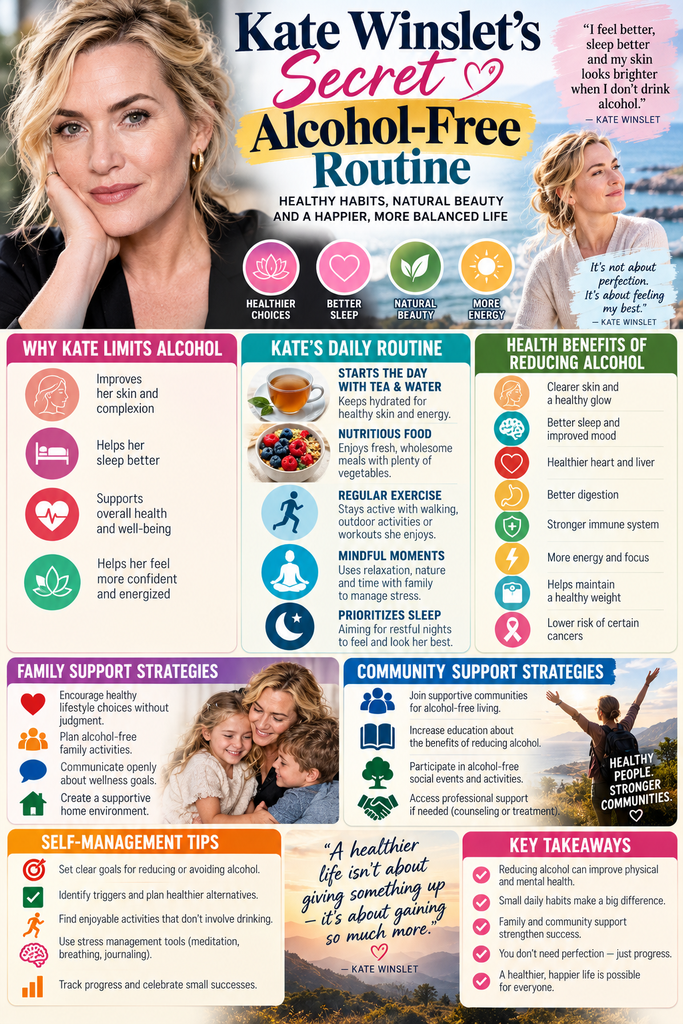
Kate Winslet is internationally recognized for her performances in Titanic, The Reader, and Mare of Easttown. Beyond her successful acting career, Winslet has become an advocate for self-acceptance, healthy aging, emotional well-being, and maintaining balance between her professional and personal life.
One aspect of her wellness philosophy involves limiting alcohol, particularly before major public appearances. Winslet has openly discussed how drinking wine can affect her skin, sleep, and overall appearance as she ages. Rather than relying on elaborate beauty treatments, she emphasizes hydration, nutritious food, adequate rest, and everyday self-care.
However, an important distinction must be made: Kate Winslet has not publicly established that she follows a permanently alcohol-free lifestyle or that she has experienced alcohol addiction. In interviews, she has acknowledged that she occasionally drinks wine. Her approach is more accurately described as mindful alcohol consumption and periodic abstinence.
Her experiences provide an opportunity to explore how reducing alcohol consumption can support physical health, emotional resilience, and personal well-being. They also demonstrate how self-management, family encouragement, and community resources can help individuals establish healthier relationships with alcohol.
Kate Winslet’s Approach to Alcohol and Healthy Living
Unlike celebrities who have publicly discussed recovery from alcohol use disorder, Winslet has generally described her relationship with alcohol in terms of moderation and personal wellness.
In an interview with British Vogue, she explained that she avoids alcohol before important public appearances because she notices changes in her complexion when she drinks. She also emphasized the importance of sleep, hydration, and maintaining healthy daily habits.
Her approach includes several practical wellness choices:
- Reducing alcohol before major events: Avoiding wine when she wants to feel rested and look refreshed.
- Prioritizing hydration: Drinking water regularly throughout the day.
- Maintaining adequate sleep: Recognizing how fatigue affects her appearance and well-being.
- Choosing nutritious foods: Incorporating vegetables and plant-based meals into her diet.
- Practicing self-acceptance: Rejecting unrealistic beauty standards and embracing natural aging.
- Maintaining work-life balance: Spending meaningful time with family and participating in outdoor activities.
These habits reflect a broader commitment to wellness rather than a documented addiction recovery program.
Why Reducing Alcohol Can Improve Physical and Mental Health
Alcohol affects multiple body systems, including the brain, liver, cardiovascular system, gastrointestinal tract, and sleep regulation.
Even when someone does not meet the criteria for alcohol use disorder, reducing alcohol consumption can offer meaningful health benefits.
Physical benefits of drinking less alcohol
Potential benefits include:
- Improved sleep quality: Alcohol can initially cause drowsiness but often disrupts sleep later in the night.
- Better hydration: Alcohol increases urine production and may contribute to dehydration.
- Reduced liver stress: Lower alcohol exposure can decrease the risk of alcohol-related liver disease.
- Improved cardiovascular health: Reducing heavy drinking can help lower blood pressure.
- Lower cancer risk: Alcohol is a known carcinogen, and reducing consumption decreases exposure.
- Improved energy levels: Better sleep and fewer alcohol-related aftereffects may improve daytime functioning.
Although people sometimes associate moderate drinking with health benefits, there is no established risk-free level of alcohol consumption.
Psychological and emotional benefits
Reducing alcohol may also help individuals recognize whether they have been using drinking as a response to emotional distress.
Potential improvements include:
- Greater emotional awareness.
- More consistent sleep and daily energy.
- Improved concentration and decision-making.
- Reduced alcohol-related anxiety.
- Increased confidence in handling social situations without drinking.
- Greater awareness of stress-related triggers.
However, reducing alcohol is not a substitute for treatment when someone experiences a mental health disorder or alcohol use disorder.
Self-Management Strategies: Building an Alcohol-Free or Alcohol-Reduced Routine
Kate Winslet’s emphasis on simple daily habits offers useful inspiration for people looking to reduce alcohol consumption.
The following strategies are general health recommendations, not a description of Winslet’s private routine.
A. Evaluate your relationship with alcohol
Understanding personal drinking patterns is an important first step.
Individuals can begin by asking themselves:
- How often do I drink alcohol?
- Do I drink because I enjoy it or because I feel stressed?
- Does alcohol affect my sleep, mood, or relationships?
- Have I tried to reduce drinking but struggled?
- Do I feel uncomfortable attending social events without alcohol?
- Would I benefit from professional guidance?
A validated screening tool such as the AUDIT-C can help identify potentially unhealthy drinking patterns.
B. Establish a healthy morning routine
A consistent morning routine can encourage healthier decisions throughout the day.
Consider:
- Starting the morning with water or another nonalcoholic beverage.
- Eating a balanced breakfast.
- Taking a short walk or engaging in gentle stretching.
- Practicing mindfulness or breathing exercises.
- Setting realistic goals for the day.
- Planning enjoyable activities that do not involve alcohol.
Winslet has described beginning her mornings with tea and adapting her routine to family responsibilities rather than following an elaborate wellness schedule.
C. Replace alcohol-centered habits
For individuals who routinely drink during evenings, weekends, or social gatherings, developing alternative activities can help reduce reliance on alcohol.
Healthy alternatives include:
- Preparing sparkling water with fruit or herbs.
- Drinking nonalcoholic beverages.
- Attending fitness or yoga classes.
- Spending time outdoors.
- Practicing cooking, painting, or gardening.
- Scheduling relaxing activities after work.
- Connecting with friends who support alcohol-free activities.
The goal is to build rewarding routines that don’t depend on drinking.
D. Manage stress without relying on alcohol
Stress is a common reason individuals increase alcohol consumption.
Healthier coping strategies include cognitive behavioral techniques, mindfulness, regular physical activity, and supportive conversations.
Professional counseling may be especially helpful when alcohol has become a primary method of managing anxiety, grief, depression, or trauma.
E. Monitor progress and celebrate achievements
Tracking alcohol consumption can increase awareness and reinforce healthier choices.
Individuals may benefit from:
- Recording alcohol-free days.
- Monitoring sleep quality and energy.
- Identifying emotional triggers.
- Setting achievable weekly goals.
- Recognizing improvements in mood and functioning.
- Reviewing progress with a healthcare professional.
For people with physical alcohol dependence, suddenly stopping drinking can cause dangerous withdrawal, including seizures and delirium tremens. Medical evaluation is important before attempting abrupt abstinence.
Family Support Strategies: Encouraging Healthy Lifestyle Choices
Kate Winslet frequently emphasizes the importance of family, relationships, and maintaining a supportive home environment.
In interviews, she has credited family members with helping her manage professional responsibilities and maintain emotional balance. Her comments highlight the importance of relationships in overall wellness, although they do not establish that her family supports a formal alcohol abstinence program.
A. Encourage open communication
Family members can discuss alcohol consumption without judgment or criticism.
Supportive approaches include:
- Asking about personal wellness goals.
- Listening without interrupting.
- Avoiding assumptions about addiction.
- Encouraging healthy lifestyle changes.
- Recognizing individual autonomy.
- Offering emotional support during stressful periods.
When someone chooses to reduce drinking, family encouragement can strengthen confidence and motivation.
B. Create alcohol-free family activities
Families can normalize enjoyable experiences without alcohol.
Examples include:
- Planning outdoor picnics and nature walks.
- Organizing family movie nights.
- Preparing healthy meals together.
- Attending community festivals.
- Participating in recreational sports.
- Celebrating birthdays and holidays with appealing nonalcoholic beverages.
These activities help reinforce the idea that alcohol is not necessary for relaxation, celebration, or meaningful connection.
C. Model healthy behaviors
Children and adolescents often watch how adults handle stress and social situations.
Parents and caregivers can model healthier habits by:
- Demonstrating responsible decision-making about alcohol.
- Avoiding jokes that normalize drinking as the only way to cope.
- Discussing the health risks of excessive alcohol consumption.
- Showing healthy ways to manage frustration.
- Encouraging emotional expression.
- Practicing consistent self-care.
D. Support individuals who choose sobriety
When a family member chooses complete abstinence, relatives can respect that decision without pressuring them to drink.
Support may include avoiding alcohol-centered gatherings, offering alternative beverages, and respecting personal boundaries.
For individuals recovering from alcohol use disorder, family counseling may also improve communication and reduce conflict.
Community Support Strategies: Promoting Alcohol-Free Wellness
Community organizations, healthcare professionals, schools, and employers can help create environments where choosing not to drink is socially accepted.
A. Increase public education about alcohol
Community education programs can explain:
- The relationship between alcohol and cancer risk.
- How alcohol affects sleep and mental health.
- Warning signs of alcohol use disorder.
- The difference between moderation and abstinence.
- The risks associated with heavy episodic drinking.
- Available treatment options for individuals experiencing alcohol-related problems.
Accurate education can help people make informed decisions without reinforcing shame or stigma.
B. Expand alcohol-free social opportunities
Communities can organize events that encourage connection without making alcohol the central activity.
Examples include:
- Alcohol-free music festivals.
- Community wellness workshops.
- Fitness and recreational events.
- Sober social gatherings.
- Art and cooking classes.
- Family-friendly cultural activities.
- Alcohol-free networking events.
These opportunities can help individuals maintain social connections while reducing exposure to drinking environments.
C. Improve access to mental health and addiction services
Healthcare systems should provide accessible screening, early intervention, and treatment for individuals experiencing unhealthy alcohol use.
Evidence-based services may include:
- Brief motivational interventions.
- Cognitive behavioral therapy.
- Behavioral couples or family therapy.
- Medically supervised withdrawal when indicated.
- Medications for alcohol use disorder, such as naltrexone or acamprosate, when appropriate.
- Continuing recovery support.
D. Promote peer support and recovery communities
Individuals seeking complete abstinence or recovery support may benefit from organizations such as:
- Alcoholics Anonymous (AA).
- SMART Recovery.
- Women for Sobriety.
- Recovery Dharma.
These organizations offer different approaches to peer support. Participation is voluntary, and people may choose the program that best fits their needs.
Lessons From Kate Winslet’s Wellness Philosophy
Winslet’s public statements about health, aging, and self-acceptance offer several lessons for individuals seeking healthier lifestyles.
Lesson 1: Wellness does not require perfection. Her approach emphasizes practical habits rather than extreme routines or unrealistic expectations.
Lesson 2: Small choices can make a difference. Cutting back on alcohol, prioritizing sleep, and staying hydrated can improve overall well-being.
Lesson 3: Healthy aging involves self-acceptance. Winslet has consistently challenged unrealistic beauty standards and emphasized appreciating the natural aging process.
Lesson 4: Family relationships can strengthen emotional resilience. Supportive relationships may help individuals manage stress and maintain healthier routines.
Lesson 5: Choosing not to drink does not require a history of addiction. People may reduce or avoid alcohol for health, personal, religious, cultural, or lifestyle reasons.
Lesson 6: Sobriety and moderation are different goals. Someone who occasionally avoids alcohol is not necessarily permanently abstinent, and neither choice should be misrepresented.
Practical Seven-Day Alcohol-Free Wellness Challenge
For individuals who do not have physical alcohol dependence, a short alcohol-free challenge can provide an opportunity to evaluate how drinking affects daily life.
Seven-day wellness checklist
Day 1: Reflect on your current drinking habits and wellness goals.
Day 2: Replace your usual alcoholic drink with a nonalcoholic alternative.
Day 3: Practice a relaxing evening routine and prioritize sleep.
Day 4: Plan an enjoyable alcohol-free activity with family or friends.
Day 5: Use exercise, meditation, or journaling to manage stress.
Day 6: Explore a local alcohol-free social activity.
Day 7: Review changes in your sleep, mood, energy, and cravings.
This challenge is intended for general wellness, not as a substitute for medically supervised alcohol withdrawal or treatment.
When Should Someone Seek Professional Help for Alcohol Use?
Reducing alcohol consumption may be straightforward for some individuals, but others may experience cravings, withdrawal symptoms, or repeated difficulty controlling drinking.
Professional evaluation is recommended when someone:
- Frequently drinks more than intended.
- Experiences strong urges to drink.
- Continues drinking despite health or relationship problems.
- Has unsuccessful attempts to cut back.
- Uses alcohol to cope with emotional distress.
- Experiences shaking, sweating, nausea, or anxiety when alcohol wears off.
- Needs alcohol to function normally.
Individuals experiencing severe withdrawal symptoms, seizures, confusion, or hallucinations require urgent medical attention.
Community Resources for Alcohol Education and Support
Several organizations provide reliable information and treatment resources:
- National Institute on Alcohol Abuse and Alcoholism (NIAAA): Alcohol research, health information, and treatment guidance.
- SAMHSA National Helpline: 1-800-662-HELP (4357), providing confidential treatment referrals.
- FindTreatment.gov: Locate substance use treatment services.
- SMART Recovery: Explore recovery meetings and self-management resources.
Conclusion: Kate Winslet’s Wellness Approach Encourages Healthier Choices
Kate Winslet’s approach to alcohol reflects a broader philosophy of self-care, moderation, healthy aging, and emotional well-being. Her public comments about avoiding alcohol before important events, prioritizing hydration, and maintaining healthy routines demonstrate how everyday decisions can influence physical and mental health.
Although there is no verified evidence that Winslet follows a permanently alcohol-free lifestyle or has undergone addiction recovery, her wellness philosophy offers meaningful lessons for individuals seeking to reduce their alcohol consumption.
Self-management strategies can help people recognize drinking patterns, manage stress, and establish healthier routines. Family support can strengthen motivation, encourage open communication, and create alcohol-free opportunities for connection. Community programs can improve education, reduce stigma, and expand access to treatment when necessary.
The most important takeaway is that choosing to drink less—or not at all—can be a positive health decision. A healthier lifestyle doesn’t require perfection—only informed choices, consistent habits, and support when needed.
Frequently Asked Questions and Answers
Understanding Kate Winslet’s Alcohol-Free Wellness Approach
1. What is Kate Winslet’s secret alcohol-free routine?
Kate Winslet has discussed limiting alcohol, especially before important public appearances, as part of her approach to feeling and looking healthy. Her broader wellness philosophy emphasizes hydration, nutritious food, sleep, self-acceptance, and maintaining balance in her personal life.
However, she has not publicly confirmed following a permanently alcohol-free routine. The phrase “secret alcohol-free routine” is better understood as a description of her occasional alcohol avoidance rather than a formal sobriety program.
2. Has Kate Winslet completely stopped drinking alcohol?
There is no reliable public confirmation that Kate Winslet has permanently stopped drinking alcohol. She has previously discussed occasionally enjoying wine while choosing to avoid alcohol at certain times. Her approach appears to emphasize moderation and personal wellness rather than lifelong abstinence.
3. Why does Kate Winslet avoid alcohol before important events?
Winslet has discussed noticing how alcohol can affect her complexion and appearance. Avoiding alcohol before public events may help her feel more refreshed. Alcohol can contribute to dehydration, facial puffiness, and disrupted sleep, although these effects vary between individuals.
4. Has Kate Winslet ever struggled with alcohol addiction?
There is no verified public evidence that Kate Winslet has been diagnosed with alcohol use disorder or undergone addiction treatment. Choosing to reduce alcohol consumption does not necessarily indicate addiction. People may avoid alcohol for many reasons, including health, sleep, personal preference, or professional commitments.
5. What makes Kate Winslet’s wellness philosophy different from celebrity detox trends?
Winslet has often emphasized practical self-care and natural aging over extreme beauty treatments or unrealistic expectations. Her public wellness philosophy focuses on consistency, self-acceptance, and everyday habits. There is no evidence that she follows a medically defined detoxification program.
Alcohol Reduction and Physical Health
6. What are the health benefits of reducing alcohol consumption?
Reducing alcohol can improve sleep quality, decrease alcohol-related calorie intake, lower blood pressure in some individuals, and reduce the risk of liver disease and several cancers. Benefits depend on your past drinking patterns, overall health, and how much alcohol you cut back on.
7. Can avoiding alcohol improve skin appearance?
Yes, reducing alcohol may improve skin hydration and decrease temporary facial puffiness or redness in some individuals. Alcohol can contribute to dehydration and worsen certain inflammatory skin conditions. However, skin health also depends on genetics, nutrition, sun exposure, sleep, and other factors.
8. Does alcohol affect sleep quality?
Yes. Although alcohol may initially make someone feel sleepy, it can disrupt normal sleep architecture, increase nighttime awakenings, and reduce sleep quality. Avoiding alcohol near bedtime may improve sleep continuity and daytime alertness.
9. Can reducing alcohol improve mental health?
Reducing alcohol may improve mood stability, concentration, and sleep, particularly among people who previously drank heavily. Alcohol can worsen anxiety and depressive symptoms in some individuals. However, mental health conditions may require separate professional assessment and treatment.
10. Does drinking less alcohol help with healthy aging?
Reducing alcohol exposure may support healthier aging by decreasing certain cardiovascular, liver, and cancer risks. It may also improve sleep and daily functioning. However, reducing alcohol is only one part of healthy aging; it also depends on physical activity, nutrition, preventive healthcare, and social connection.
Self-Management Strategies for an Alcohol-Free Lifestyle
11. What healthy habits does Kate Winslet prioritize?
In interviews, Winslet has emphasized hydration, adequate sleep, balanced nutrition, movement, and accepting the natural aging process. She has also described limiting alcohol before major appearances. These habits reflect a practical wellness philosophy rather than a strict or medically prescribed routine.
12. How can someone begin an alcohol-free routine?
Start by evaluating your drinking patterns and establishing realistic goals. Helpful strategies include:
- Identifying situations that trigger drinking.
- Choosing appealing nonalcoholic beverages.
- Planning alcohol-free activities.
- Establishing consistent sleep and exercise routines.
- Tracking progress and recognizing improvements.
- Seeking professional guidance when needed.
Individuals who drink heavily or experience withdrawal symptoms should consult a healthcare professional before abruptly stopping alcohol.
13. What are healthy alternatives to drinking alcohol?
Alternatives include sparkling water with fruit, herbal tea, flavored water, and nonalcoholic mocktails. Enjoyable activities such as walking, gardening, cooking, reading, or attending fitness classes can also help replace alcohol-centered routines.
14. Can mindfulness help someone reduce alcohol consumption?
Yes. Mindfulness can help individuals recognize cravings, emotional triggers, and automatic drinking habits. Breathing exercises, meditation, journaling, and mindful decision-making may strengthen self-awareness and support healthier choices.
15. How can someone manage stress without drinking alcohol?
Healthy stress-management strategies include regular exercise, relaxation techniques, adequate sleep, supportive conversations, and professional counseling. Cognitive behavioral therapy can be particularly helpful for individuals who use alcohol to cope with anxiety or emotional distress.
16. How long does it take to notice benefits after reducing alcohol?
Some people notice improvements in sleep, energy, and morning alertness within days or weeks. Changes in blood pressure, liver health, and other medical outcomes may take longer. The timeline depends on previous drinking levels and individual health.
Family Support Strategies
17. How can family members encourage alcohol-free living?
Families can encourage healthier choices by creating a supportive environment, respecting personal decisions, and planning enjoyable alcohol-free activities. Encouragement should be compassionate, not judgmental.
18. What alcohol-free activities can families enjoy together?
Examples include:
- Family movie nights.
- Nature walks and outdoor picnics.
- Cooking healthy meals together.
- Visiting museums and community events.
- Gardening or creative projects.
- Participating in recreational sports.
These activities encourage meaningful connections without making alcohol the center of social interaction.
19. How does Kate Winslet’s family influence her wellness philosophy?
Winslet has spoken about the importance of her children, family relationships, and maintaining emotional balance. She has described family life as an important source of personal fulfillment. However, there is no verified evidence that her family participates in a specific alcohol-free program.
20. Can family counseling help someone who struggles with alcohol?
Yes. Family counseling can improve communication, address relationship conflicts, establish boundaries, and strengthen recovery support. It can be particularly beneficial when alcohol use disorder has affected trust, family responsibilities, or emotional well-being.
Community Support Strategies
21. How can communities encourage healthier drinking habits?
Communities can promote alcohol awareness through education, wellness workshops, alcohol-free social events, accessible healthcare services, and public health campaigns. These efforts can help normalize choosing not to drink.
22. What community programs support alcohol-free living?
Programs include alcohol-free social groups, community fitness programs, wellness centers, peer recovery meetings, and addiction treatment services. Organizations such as SMART Recovery and Alcoholics Anonymous provide support for individuals seeking recovery from problematic alcohol use.
23. How can workplaces support employees who choose not to drink?
Workplaces can offer alcohol-free celebrations, inclusive networking activities, mental health resources, and confidential employee assistance programs. Employers should respect employees’ decisions not to drink and not require explanations.
24. Why is reducing stigma around alcohol use important?
Stigma can discourage individuals from discussing drinking problems or seeking treatment. Respectful communication and accurate education encourage earlier intervention and support individuals who choose abstinence or recovery.
25. Where can individuals find professional help for alcohol-related concerns?
In the United States, individuals can contact the SAMHSA National Helpline at 1-800-662-HELP (4357) or visit FindTreatment.gov for treatment resources. The NIAAA Rethinking Drinking website also provides tools for evaluating alcohol consumption.
Lessons From Kate Winslet’s Wellness Philosophy
26. Does someone need to have an alcohol addiction to benefit from abstinence?
No. Individuals may reduce or avoid alcohol for better sleep, physical health, personal preference, pregnancy, medication safety, or other reasons. Choosing not to drink does not imply a history of alcohol addiction.
27. Is moderation or complete abstinence healthier?
From a health-risk perspective, not drinking avoids alcohol-related risks. For someone who currently drinks, consuming less generally reduces harm. Complete abstinence is particularly important for individuals with certain medical conditions, alcohol use disorder, pregnancy, or medications that interact with alcohol.
28. Can a seven-day alcohol-free challenge improve self-awareness?
Yes. For individuals without physical alcohol dependence, a short alcohol-free challenge may help reveal patterns involving sleep, mood, stress, and social habits. Tracking these changes can support informed decisions about future alcohol consumption.
29. What is the biggest misconception about Kate Winslet’s alcohol-free routine?
The biggest misconception is that Winslet has confirmed permanent sobriety or recovery from alcohol addiction. Her published interviews instead describe moderation and temporarily avoiding alcohol, particularly before important events. She has also openly acknowledged that she occasionally drinks wine.
30. What is the most important lesson from Kate Winslet’s wellness approach?
The central lesson is that healthy living does not require extreme routines or perfection. Small, consistent decisions—like drinking less alcohol, getting enough sleep, staying hydrated, eating nutritious foods, and maintaining supportive relationships—can support long-term well-being.
Video: Kate Winslet’s wellness rule most people ignore #katewinslet #wellness