If you’re someone who tends to need alone time to recharge, it’s easy to wonder whether you’re just introverted or if there’s something else going on, like social anxiety. Both terms show up a lot in conversation and on social media, but they don’t actually mean the same thing. While introverts and people with social anxiety might skip out on big parties or feel wiped after too much social time, the reasons behind those choices are pretty different. I’m going to walk through what sets introverts apart from folks dealing with social anxiety, and share some practical tips for figuring out which might be true for you or someone you care about.
Key Traits of Introversion
Introversion is a personality trait that describes how people interact with and respond to their surroundings, especially in social settings. I’ve found that being introverted doesn’t mean you don’t like people or hanging out—it just means you prefer quieter, less stimulating environments and need solo time to recharge. Here are a few traits that often show up in introverts:
- Enjoyment of solitude: Spending time alone or with a small, close group of friends feels good and refreshing.
- Preference for deep conversations: Small talk can feel awkward, but meaningful conversations light you up.
- Needing downtime after socializing: Even fun gatherings can leave you drained and ready for some alone time.
- Listening more than talking: You might observe and think things through before speaking.
Introversion isn’t about being shy or afraid; it’s more about energy. You might love a one-on-one coffee chat or a long walk by yourself, but you feel tired after lots of group interaction. Many introverts find peace and creativity during solo activities like reading, writing, or simply taking a stroll to reflect on ideas. Interestingly, introverts often excel when working independently and can provide unique insights during brainstorming sessions due to their reflective nature.
What is Social Anxiety?
Social anxiety is different from introversion; it’s a mental health concern that involves intense fear or worry about social situations. This fear isn’t just about feeling awkward; it’s about being afraid of being judged, embarrassed, or rejected. Here’s how social anxiety usually shows itself:
- Physical symptoms: Heart racing, sweating, blushing, or feeling shaky when around people.
- Intense fear of judgment: Worrying that others are closely watching or judging everything you do.
- Avoidance of social situations: Sometimes skipping work or school or turning down plans to avoid anxiety.
- Overthinking after events: Replaying conversations in your mind and worrying that you embarrassed yourself.
People with social anxiety often want to connect with others, but worry, fear, and uncomfortable physical symptoms get in the way. The anxiety isn’t just being uncomfortable. It can stop you from doing things you care about, like attending important events or speaking up in class. Over time, social anxiety may even lead to isolation, frustration, or a cycle of worrying about worrying. Even day-to-day interactions, like making a phone call or saying hello to a neighbor, can trigger distress for those with this condition.
Introvert vs Social Anxiety: What’s Actually Different?
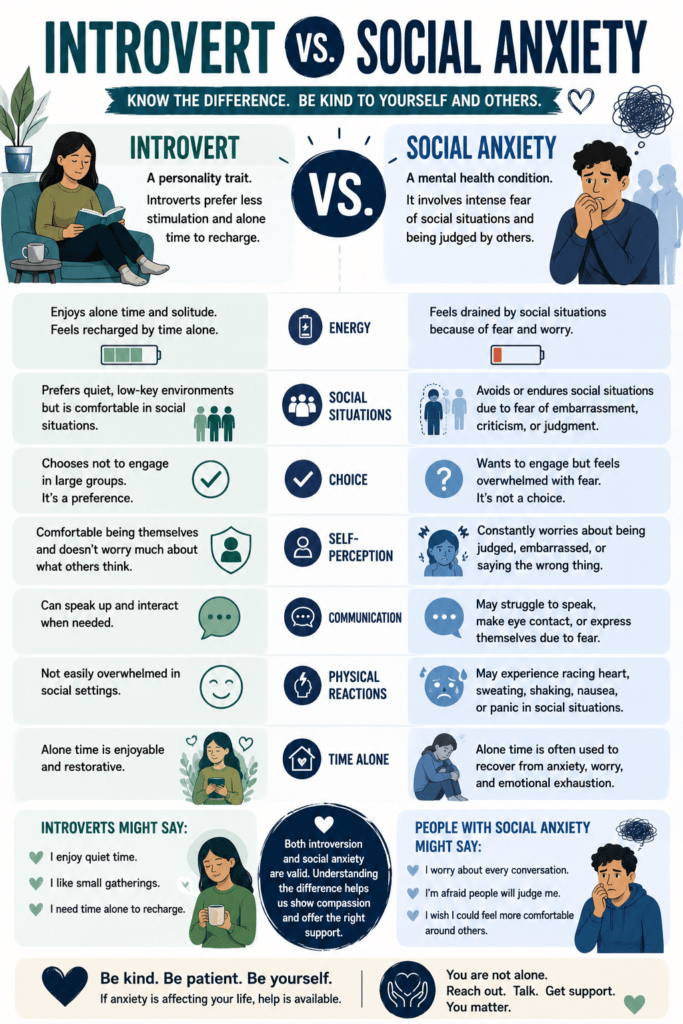
It’s easy to mix up these two because both might look like avoiding big social events. But I’ve found that the reason behind the behavior is where things split:
- Energy vs. Fear: Introverts prefer low-key settings to manage their energy. People with social anxiety might avoid events because of overwhelming fear or worry.
- Choice vs. Distress: Introverts are totally comfortable (and sometimes happy) being alone, while social anxiety brings stress about being with others—even if you want to enjoy social time.
- Feeling after socializing: After a social outing, introverts may feel tired but content, while people with social anxiety can feel relief that the event is over, or distress from replaying every moment.
- Impact on Daily Life: Introversion rarely gets in the way of what you want to do. Social anxiety can make it tough to go to class, work, or grab a coffee, even if you want to.
Recognizing which experience you’re having is super important because it shapes what steps are helpful moving forward. For instance, an introvert might need some quiet music and a good book after a party, but someone with social anxiety could spend hours worried about whether they said the right thing or seemed odd. Understanding these differences can make it easier to find meaningful self-care and support strategies.
How to Tell If It’s Introversion or Social Anxiety
Sometimes, figuring this out means looking at how you feel before, during, and after social situations. Here are a few questions that can help tell the difference:
- Do you dodge parties because you want quiet time, or because you worry about what people will think of you?
- Do you feel refreshed after alone time, or is your alone time filled with worry about past or future interactions?
- Is skipping social events optional and guilt-free, or does it come with regret, anxiety, or loneliness?
If it’s mainly about needing downtime and enjoying being alone, you’re probably leaning toward introversion. If you want to join in but feel stuck or frozen by worry, social anxiety could be at play. Keeping a journal of your feelings and reactions to social events over time can help you spot patterns and figure out which fits best for your experiences.
Common Myths About Introversion and Social Anxiety
There are lots of myths floating around about both introverts and people with social anxiety. I hear these a lot:
- “Introverts are antisocial.” This one misses the mark. Introverts like connecting with others, but just in different ways, often in small groups or one-on-one settings.
- “Social anxiety is just shyness.” Social anxiety goes way beyond being shy. It involves ongoing fear, worry, and sometimes panic in social situations.
- “If you work hard, you can just get over social anxiety.” Managing social anxiety can take real effort, including therapy, self-help strategies, and sometimes medication.
- “All introverts are socially anxious.” Introversion isn’t a problem to fix. Many introverts feel totally content and confident in their quieter preferences.
Knowing the facts can help you avoid mislabeling yourself or others and make it easier to get support when you need it. Keep in mind that personality traits and mental health conditions are different, and respecting someone’s way of recharging or handling social settings supports better relationships for all.
Tips for Thriving as an Introvert
Living as an introvert isn’t about fixing yourself. It’s about owning what works for you. Here are some ways I’ve found helpful for making the most of introverted strengths:
- Schedule recharge time: Block out quiet hours after social events or busy workdays so you don’t run out of steam.
- Pick activities that fit: Choose hobbies and events that let you enjoy meaningful connections without overwhelming crowds. Things like book clubs, coffee dates, or creative workshops offer connection without sensory overload.
- Communicate boundaries: Let people know when you need solo time. Most friends appreciate honesty and will work with you. You could even introduce them to your favorite quiet places or activities you enjoy together, like hiking or watching movies.
- Lean into strengths: Use your listening skills, creative thinking, and eye for detail in work and relationships. Introverts often make great teammates and thoughtful friends because they can focus deeply and empathize with others.
Introversion doesn’t hold you back when you build a life around your own rhythms and preferences. Over time, you might even find your energy and creativity growing as you respect your own needs.
Steps to Manage Social Anxiety
Social anxiety can make daily experiences feel challenging, but there are strategies that genuinely help. Here’s what I recommend based on what works for many people:
- Practice gradual exposure: Try facing small social fears a bit at a time, like saying hi to a neighbor or joining in a short Zoom call. The goal is to slowly get used to what makes you anxious, building up confidence step by step.
- Cognitive-behavioral therapy (CBT): This type of therapy helps change unhelpful thought patterns and build confidence in social settings. Lots of people have had great results with CBT. Learn more about CBT from the ADAA.
- Relaxation techniques: Deep breathing, mindfulness, or progressive muscle relaxation can lower anxiety before or during social events.
- Celebrate progress: Every small step, even if it feels awkward, is worth celebrating. Progress is learning, not perfection. Remembering your growth, rather than focusing on setbacks, builds momentum over time.
- Reach out for support: Sometimes, talking with a trusted friend or a mental health professional makes a big difference. Building a support network, even a small one, provides a safe way to share concerns and receive validation that your feelings are okay.
You can find more details about effective approaches in this resource from NIMH (National Institute of Mental Health). Remember that professional help is available if anxiety starts to impact your everyday life or well-being.
Frequently Asked Questions
Here are answers to some common questions about introversion and social anxiety:
Question: Can you be both introverted and have social anxiety?
Answer: Absolutely. Some people fit both descriptions and need both downtime to recharge and support to handle social fears.
Question: Do introverts need therapy?
Answer: Not just for being introverted. Therapy isn’t needed for introversion, but it’s helpful for folks dealing with distress from social anxiety or other concerns.
Question: How do I support a friend who’s introverted or has social anxiety?
Answer: Respect their boundaries, check in with them, and offer low-pressure ways to connect. If a friend has social anxiety, encourage small steps and let them take the lead. Sometimes inviting them to less crowded gatherings or encouraging relaxed activities can help them feel more comfortable without pressure.
Final Thoughts
Knowing the difference between introversion and social anxiety is really important for self-awareness and supporting others. When you recognize what’s at the root — personality or anxiety — it’s easier to find what works, whether that means embracing alone time or trying out some practical tips to feel more confident around people.
If you’re curious about making life a little easier for yourself or someone you care about, understanding these key differences is a really good place to start. Building compassion for yourself while growing your awareness makes every social experience a bit easier and more enjoyable. And, whether you’re an introvert, dealing with social anxiety, or both, remember that your unique perspective matters and deserves respect.
Video: Introversion and Social Anxiety: What You Need to Know