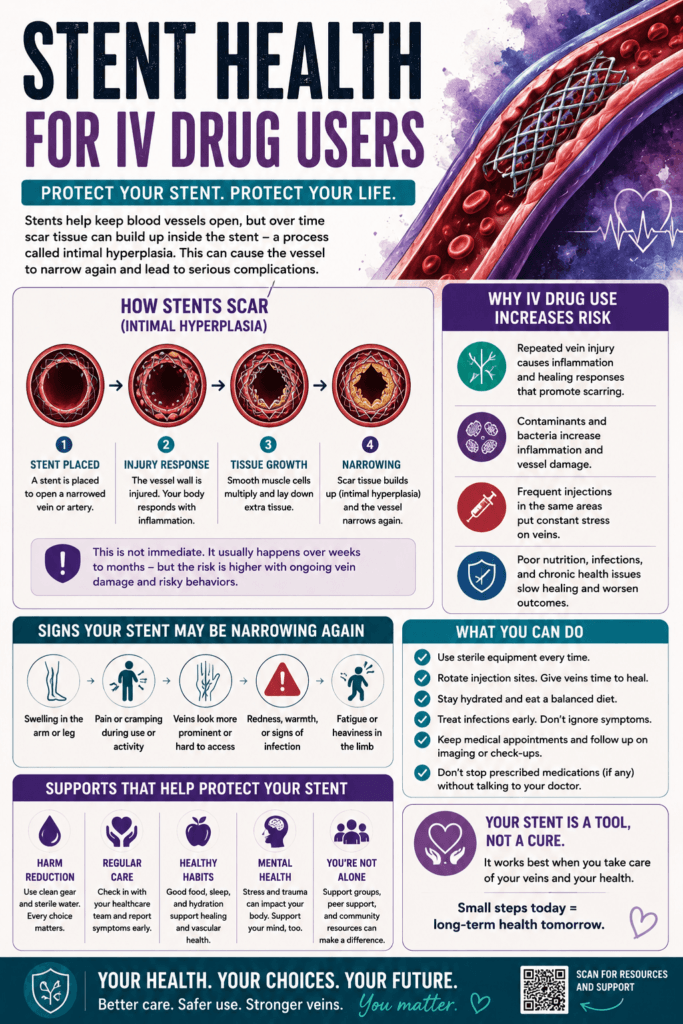
Understanding how stents scar and what intimal hyperplasia means can really help anyone concerned about vascular health, especially folks with a history of IV drug use. Stent placement is a common fix for blocked blood vessels, but the body’s healing response doesn’t always work out as planned. Scar tissue can creep in, narrowing the vessel again and making things trickier for patients and care providers alike. In this article, I’m breaking down what intimal hyperplasia is, what causes stent scarring, why IV users should pay extra attention, and some ideas for prevention and management.
Stents and Why They’re Used
A stent is a tiny tube, often made of metal mesh, that doctors put into narrowed or blocked blood vessels to help keep them open. They’re often used when blood flow needs to be restored, such as in the heart (coronary arteries), neck (carotid arteries), or limbs (peripheral arteries). For people with vascular damage due to repeated IV use, stents can offer a way to repair or bypass a vein or artery that’s struggling to stay open on its own.
While stents are super useful for restoring blood flow, the body reacts to them as foreign objects. That’s where the trouble sometimes starts; scar tissue builds up inside the vessel, threatening to narrow it again. This process is called intimal hyperplasia.
Breaking Down Intimal Hyperplasia
Intimal hyperplasia is just a fancy term for the thickening of the innermost layer of a blood vessel (the intima). When a stent is placed, the body tries to heal the injury caused by the procedure. This healing isn’t always perfect. Blood vessel cells proliferate beyond normal limits, piling up inside the stent like weeds in a garden bed. Over time, this buildup can clog the stent, making it less effective or causing a blockage again.
- Intima: This is the inner lining of the blood vessel. When it grows too thick, blood has a harder time getting through.
- Hyperplasia: Means “too much growth.” Here, it just means that too many smooth muscle cells and connective tissue accumulate within the vessel.
- Restenosis: the medical term for the recurrence of narrowing in a blood vessel, usually due to intimal hyperplasia.
It’s super important to keep an eye on intimal hyperplasia because it’s the most common reason stents don’t last as long as doctors and patients hope.
Why IV Drug Users Are at Higher Risk
Folks who have used IV drugs deal with some unique challenges when it comes to their veins and arteries. Repeated injections can scar, inflame, or even destroy the vessel lining. That means the blood vessels are already jumpy and more likely to react strongly to anything new, like a stent. The risk factors stack up for intimal hyperplasia and stent failure.
IV drug use can also introduce bacteria, substances, or contaminants that make blood vessels more likely to heal badly after any procedure. That makes it really important for these patients (and their healthcare teams) to understand how to spot and prevent stent-related vessel scarring.
What Actually Causes the Scarring?
Stent scarring isn’t random; it’s a chain reaction that starts with the procedure and keeps going long after. Here’s what’s happening step by step:
- Injury: The placement of the stent injures the vessel’s inner lining (the endothelium). Even careful placement can’t avoid this totally.
- Inflammation: The body spots the damage and sends in immune cells to help heal the area. This is a normal response, but it can get out of hand.
- Cell Growth: Smooth muscle cells and connective tissue start growing rapidly to heal the injury. This is where intimal hyperplasia kicks off.
- Buildup: Cells, tissue, and sometimes even fatty debris collect inside the stent, forming a scar that narrows the vessel.
People with a history of IV drug use are often working with blood vessels that have already seen a lot of trauma. That means even more inflammation and a higher risk of scarring blocking the stent sooner rather than later.
Signs the Stent Might Be Clogging Up
After a stent is placed, it’s really important to know the signs that the stent is narrowing again. Here are a few red flags I think everyone should watch for:
- Pain: New or increased pain where the stent was placed, especially when moving or exercising.
- Swelling: Unusual swelling in the limbs or body, which could mean blood isn’t flowing well.
- Changes in Skin Color: Bluish or pale skin around the stented area can mean poor blood supply.
- Fatigue: Getting tired easily or weakness in the affected limb or area.
If any of these show up, getting checked promptly is key. Doctors can use tests such as an ultrasound or angiography to see if there’s narrowing within the stent.
Preventing Intimal Hyperplasia and Stent Scarring
There’s no magic bullet to prevent scarring, but there are several things that help lower the risks. Here are some options providers and patients should look into:
- Drug-Eluting Stents: These special stents slowly release medication to limit cell growth directly within the vessel. They’re often used in higher-risk cases because they help keep the vessel clear for longer.
- Careful Aftercare: Following the doctor’s plan, taking prescribed medications, and not missing follow-up appointments really makes a difference.
- Controlling Inflammation: Medications like antiplatelet drugs (aspirin, clopidogrel) help prevent clotting and reduce inflammation. Discussing the best meds for your situation is important.
- Quitting IV Drug Use: Easier said than done, but reducing or stopping IV drug use takes a lot of pressure off the vessels and gives the body a fighting chance at healing.
- Lifestyle Tweaks: A healthy diet, drinking plenty of water, proper wound care, and not smoking can all support better stent healing.
Regular checkups are especially important for people who’ve had stents placed in veins or arteries that have seen months or years of IV injections.
Practical Tips for Living with a Stent
Living with a stent is often more about maintenance than anything else. I recommend paying attention to the following:
- Stick to the medication plan, even when you feel fine.
- Watch for any changes in the area where the stent was placed.
- Keep all follow-up appointments and ask lots of questions.
- If you’re struggling with IV use, reach out for support. Harm reduction services can help provide cleaner supplies, safer practices, or connections to treatment if and when you’re ready.
A good relationship with your healthcare team and open conversations about IV use can really help tailor your care plan.
Common Questions About Stents and Intimal Hyperplasia
Here are a few questions I hear a lot about stents, scarring, and vascular health for folks with a history of IV use:
Can a stent work if I’ve damaged my veins from IV drug use?
It depends on how much damage has been done and where the stent needs to go. Doctors will carefully assess the area and discuss the risks, but sometimes a stent is still the best option.
How do I know if my stent is getting blocked?
Look out for pain, swelling, color changes, or numbness in the area. Any of these signs should prompt a doctor’s visit.
Are drug-eluting stents better for people with a history of IV use?
They often are because the medication helps prevent excessive cell growth. It’s a good topic to bring up with your care team to decide what’s best for your situation.
Can I use IV drugs after getting a stent?
Using IV drugs after a stent increases the risk of infection and damage. It’s super important to talk openly with your healthcare provider for the safest plan moving forward.
Key Takeaways for IV Users with Stents
Stent scarring and intimal hyperplasia aren’t things to ignore, especially for those with a history of IV drug injection. Knowing how scarring happens, watching for symptoms, and keeping up with care all help support better long-term results. Support from healthcare teams, harm reduction services, and honest communication can make a real difference in keeping those blood vessels open and healthy.
For more on vascular health and harm reduction, check out resources from organizations like the National Harm Reduction Coalition or talk to your local healthcare clinic. Taking proactive steps, such as discussing your health openly, making small lifestyle adjustments, and checking in with your provider regularly, can go a long way toward ensuring your stent continues to work as it should. Remember, information and support are your best tools for keeping your blood vessels open and your health in check.
Video: The Injection Mistake Nobody Talks About #medical #shorts