While living with ADHD, I’ve found that managing symptoms can sometimes feel like riding a rollercoaster. One pattern that can really throw a wrench in things is how symptoms flare up before periods. If you ever wondered why things feel so much tougher during this part of your cycle, you’re definitely not alone. Hormonal changes in the days before a period can stir up all sorts of challenges for people with ADHD. Here’s what’s going on and some practical ways to find your way through it.
How Period Hormones Influence ADHD Symptoms
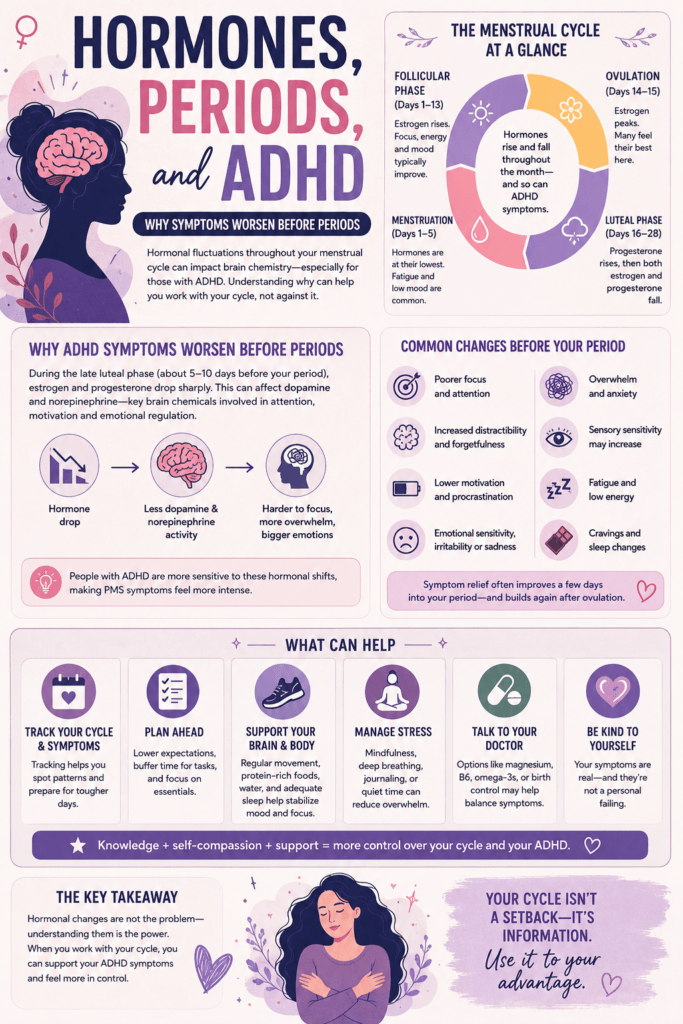
Period cycles and ADHD may seem unrelated, but the link is actually pretty strong. The days leading up to a period, known as the premenstrual phase, are when lots of folks with ADHD notice that their attention, mood, and coping skills feel like they’re taking a hit. Tracking cycles can be really eye-opening because these flare-ups aren’t random; they’re rooted in monthly hormone shifts.
Two main hormones set the stage: estrogen and progesterone. Estrogen helps out with brain chemicals like dopamine, which is key for focus, motivation, and feeling balanced. Dopamine, in particular, is already lower than usual in people with ADHD, so when estrogen drops before a period, there’s even less support for those pathways. Progesterone, which rises during this phase, can actually make things a bit worse since it tends to have a calming, even sedating, effect. For people with ADHD, this can mean foggier thinking and less energy for daily tasks.
The Science Behind Hormonal Fluctuations and ADHD
Estrogen and dopamine interact in several interesting ways. When estrogen levels are higher, they help boost dopamine in brain regions that control focus, working memory, and motivation. Right before a period, estrogen takes a plunge, and dopamine activity can drop, too. That’s why some people with ADHD suddenly feel more distracted, impulsive, or overwhelmed in the days leading up to their period.
This isn’t just a theory; research shows the pattern happens consistently. A study from the National Institutes of Health found that women with ADHD experienced a spike in symptoms and emotional difficulties during the premenstrual phase. Another paper in the journal Frontiers in Psychiatry shines a light on how hormone shifts during the cycle can make ADHD medication feel less effective, making these days feel extra tough.
Common Symptoms That Get Worse Before a Period
Everybody’s experience can look a bit different, but there are some common themes I tend to notice, and readers often mention these, too. Here’s a quick rundown of the ADHD symptoms that like to show up louder just before a period:
- Forgetfulness: Losing track of stuff, missing appointments, or walking into a room and forgetting why you’re there.
- Trouble Focusing: Tasks that felt doable earlier in the month suddenly seem impossible to start or finish.
- Impulsivity: Making snap decisions, speaking out of turn, or grabbing snacks on a whim shows up more often than usual.
- Mood Swings: Feeling more irritable, frustrated, or sad, and little annoyances feel way bigger or harder to shake off.
- Restlessness and Sleep Issues: Extra trouble falling asleep, staying asleep, or dealing with racing thoughts at night.
You might also spot that sensitivity to rejection or criticism ramps up, and emotional regulation becomes trickier. If you’re used to juggling the usual ADHD symptoms, the added hormonal load can make it seem like someone turned the volume way up.
Personal Experience and Why It Matters
There was a time when I found myself feeling “off” for reasons I couldn’t spot—forgetting bills, snapping at people for minor things, and feeling stuck when switching between tasks. It wasn’t until I started tracking the cycle that I realized how closely these moments aligned with the premenstrual phase. Chatting with others in the ADHD community, I’ve learned that many people have a similar story. Just knowing there’s a predictable reason behind these changes takes away some of the mystery and judgment.
Keeping a mood or symptom journal can be a really helpful start. Even jotting down a few lines about focus, mood, and stress each day makes patterns clearer. The information is valuable for both self-support and when talking with healthcare providers. In some cases, joining support groups either online or in-person can give a boost, as sharing and hearing from others can reduce the feeling of isolation that sometimes comes with ADHD.
Day-to-Day Strategies That Help
Managing these monthly symptom patterns takes some trial and error, but a few habits and adjustments can make the whole experience less overwhelming. Here are some practical tips I’ve tried myself or heard success stories about from others:
- Built in Extra Routine: Reinforcing structure, like meal times, sleep schedules, and reminders, makes it easier to coast through foggy days. Setting up phone alarms and sticky notes to help keep track can really cut down on last-minute stress.
- Plan for Lower Motivation: Saving high-focus tasks for early in the cycle and blocking off time for lighter workloads during the premenstrual days takes some pressure off. Rescheduling non-urgent meetings or chores is one way to make things more manageable.
- Extra Support Tools: Using planners, checklists, and task breakdowns can keep things moving, even when mental energy dips. Apps that send kind nudges or help chunk big tasks into smaller steps are pretty handy these days.
- Nutrition and Exercise: Balanced meals and gentle exercise refresh mood and boost focus, even when motivation is hiding. If a brisk walk is the only thing you can manage, that’s still progress.
- Stay Connected: Reaching out to understanding friends, online groups, or therapists can make it easier to ride out the rough patch. Sometimes, just telling those close to you what’s going on is enough to help them offer support rather than confusion.
It might also help to keep a list of “no-pressure” activities you can do when focus is low—like tidying your space a bit, doing light crafts, or playing a favorite playlist. These can serve as gentle breaks that don’t require much mental energy yet still help you feel productive and present.
What to Discuss with Your Doctor or Therapist
Bringing up cycle-related ADHD challenges with your healthcare team is important for getting the care that actually fits. Some medications might work differently at different points in the cycle, or you might want to ask about options for symptom relief specific to the premenstrual phase. Tracking symptoms and cycle timing gives you and your provider more details to make helpful changes.
Some people work with their doctors to adjust medication doses or timing, especially during weeks when symptoms peak. Hormonal birth control is sometimes suggested to level out hormone swings, but experiences with this can really vary, so it’s important to work out what makes sense for your body and needs. Taking notes about what works and what doesn’t over a few months can help guide next steps.
Treatments and Lifestyle Adjustments Worth Checking Out
Managing ADHD during these premenstrual days takes a little flexibility. Here are a few things you could ask a medical professional about or try on your own, depending on your preferences:
- ADHD Medication Adjustments: If your meds suddenly feel less effective before your period, check with your doctor about options. Some people find that a temporary change in dose or timing helps, but this always needs professional input.
- Yoga and Mindfulness: These practices have helped many people reset their focus and manage mood swings. Even short daily routines or simple deep-breathing exercises can make a difference.
- Supplements: Omega-3s, magnesium, and vitamin B6 are sometimes mentioned as ways to support mood and focus, but it’s smart to check with your doctor before adding anything new to your routine.
- Cognitive Behavioral Therapy (CBT): Working with a therapist to develop coping skills and strategies for managing both ADHD and hormonal mood shifts is worth considering. CBT can help you spot habits and create more effective routines.
Other adjustments, such as staying hydrated, limiting caffeine intake late in the day, or setting aside time for relaxation, can also reduce symptom intensity. Some people try gentle stretching or short meditations to wind down in the evening, creating a smoother path to better sleep.
Real World Examples
In my own routine, I know I’ll need extra reminders, a shorter to-do list, and a bit more patience with myself during those “rough weeks.” Some people prefer to front-load demanding tasks while energy is highest earlier in the cycle, while others build in more rest or creative time so that lower-energy days still feel productive in their own way. It comes down to tracking what works and tweaking plans as you go.
- Teachers: Some teachers with ADHD plan their grading or classroom prep around their cycle, saving more tedious work for high-focus days and switching in more creative work for later in the cycle.
- Students: College students often plan study blocks or major projects to fall outside the week before their period, or make greater use of campus support services during that time.
- Parents: Parents with ADHD often delegate harder parenting tasks or ask for help more in the days before their period, freeing up energy for higher-demand moments.
Frequently Asked Questions
Why do my ADHD symptoms seem worse right before my period?
The drop in estrogen and spike in progesterone can lead to lower dopamine activity, which sets off more forgetfulness, distractibility, and mood swings; these are pretty common ADHD symptoms.
Can tracking my menstrual cycle help me manage ADHD symptoms better?
Yes, keeping a record of symptoms along with cycle timing can provide helpful insights and make it easier to adjust routines or meds or to seek extra support when needed.
Should I change my ADHD medication during my period?
Some people adjust their meds with a doctor’s help, so check in with your provider about changes in how they feel throughout your cycle. Never change medication without their guidance.
Are there specific therapies that work best for ADHD and hormone changes?
Cognitive behavioral therapy (CBT) is a solid option, and some people benefit from additional counseling or lifestyle changes specific to the premenstrual days.
Final Thoughts
Tracking and understanding hormonal fluctuations creates space for more self-compassion and better planning. Those tough pre-period days might still feel challenging, but with the right tools, support, and awareness, you can ride out the wave a bit more smoothly. Everyone’s body and brain are unique, so experimenting with different routines and strategies, while staying connected to healthcare providers and support networks, really pays off for day-to-day life with ADHD.
Video: ADHD + hormones = the worst combo #adhd #periods #shorts