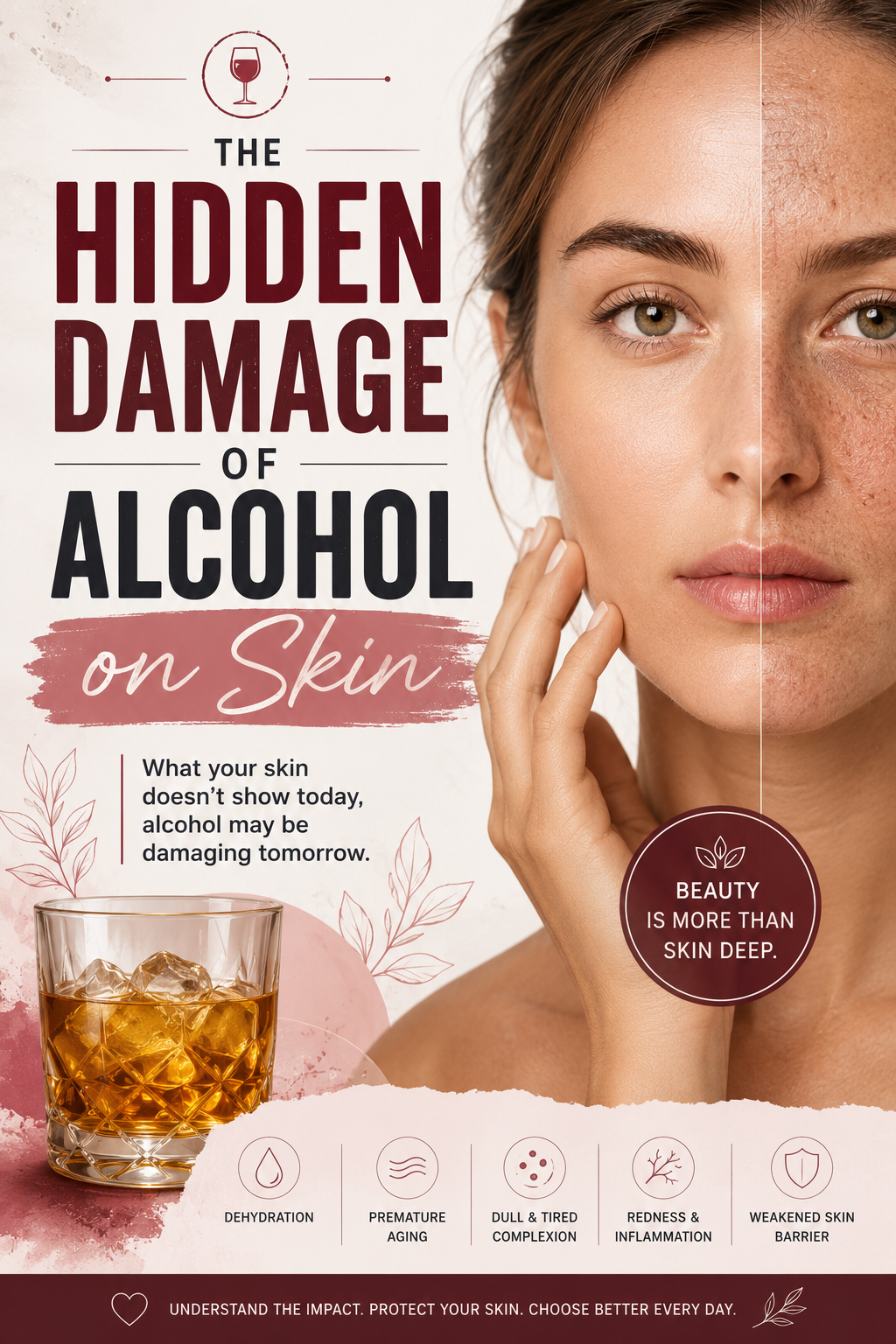
Alcohol is one of those sneaky culprits that can have a real impact on your skin, even if you don’t notice the changes right away. Many people focus on the obvious effects of a night out, like puffiness or redness, but the long-term hidden effects of alcohol on your skin tell a much bigger story. I want to break down what actually happens, why it matters, and what you can do to keep your skin looking healthy, whether you drink occasionally, socially, or more regularly.
How Alcohol Affects Your Skin (More Than Just a Hangover Face)
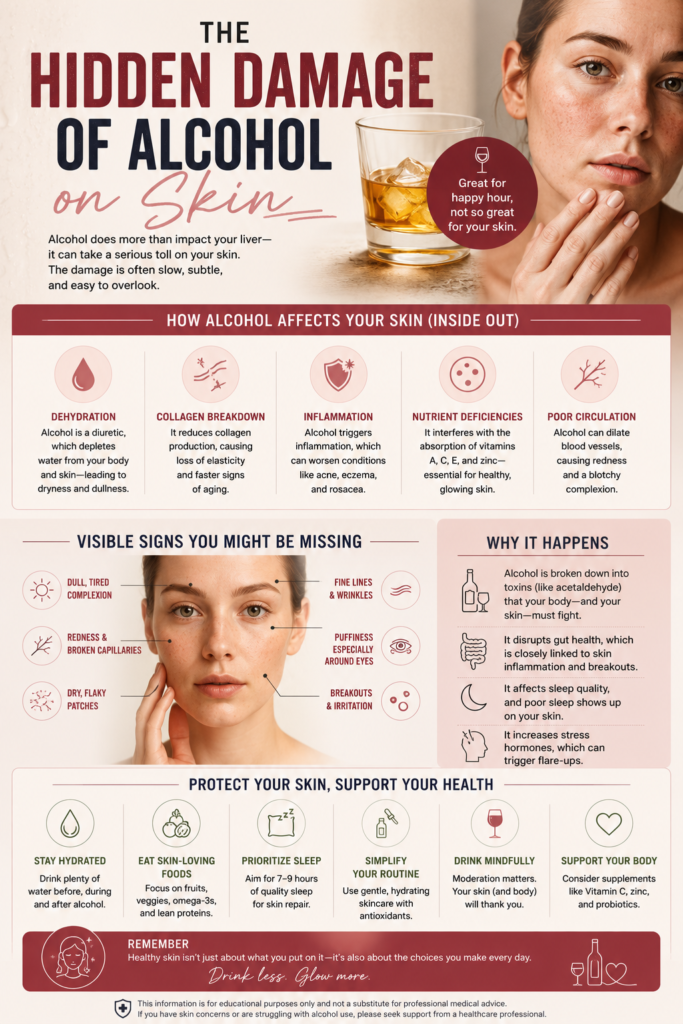
Alcohol’s effect on your skin is more complicated than just waking up with puffy eyes after a big night. Alcohol changes the way your body processes hydration, vitamins, and even your immune system. All of these things are connected to how your skin behaves and ages over time.
When you drink, your body focuses on getting rid of the alcohol, which usually means your skin gets pushed to the back of the line. As a result, skin can become dry, irritated, and even lose its natural glow. If you look at regular drinkers, you’ll notice more lines, deeper pores, and a duller complexion. These changes creep up on you after years rather than overnight.
Some studies show that alcohol can ramp up inflammation levels and increase the risk of skin conditions like rosacea and even psoriasis. Research also suggests that regular heavy drinking might speed up the appearance of wrinkles and broken blood vessels just beneath the skin.
What’s Going On Under the Surface?
Most people are aware of visible signs like blotchy cheeks or a puffy face after drinking, but the real trouble from alcohol is what you don’t see right away. Let’s check out some hidden ways alcohol messes with your skin behind the scenes:
- Dehydration: Alcohol works as a diuretic, so you lose more water each time you drink. This leaves your skin drier and makes fine lines more noticeable.
- Weakening Your Skin Barrier: The top layer of your skin is meant to retain moisture and keep irritants out. Alcohol makes this barrier less effective, so your skin becomes more sensitive, flakier, and more prone to irritation from things like the sun or pollution.
- Vitamin & Mineral Shortages: Your skin needs vitamins and minerals, such as vitamins A and C and zinc, for repair and renewal. Alcohol can strip your body of these, slowing down the skin’s natural healing process and making it harder to bounce back from breakouts or sun damage.
- Increased Inflammation: Drinking can trigger inflammation, which not only causes redness but also makes chronic conditions like acne or eczema flare up more often.
There’s another angle too. When you drink regularly, your skin’s ability to repair itself gets weaker, and your entire complexion starts looking less lively. This isn’t just about appearance, either; over time, skin that’s continually stressed by alcohol tends to heal more slowly from scrapes or blemishes and starts showing signs of long-lasting damage, like dark spots or uneven tone.
Short-Term vs. Long-Term Effects on Skin
Not all skin damage from alcohol happens overnight, but even a single drinking session can set off a chain reaction that lingers much longer than your hangover.
Short-Term Changes
- Puffiness and Swelling: Fluid shifts from alcohol cause quick swelling around the eyes and cheeks.
- Flushed Skin: Blood vessels expand, leading to that signature red face. After a few years, these blood vessels can become permanently visible, especially around the nose and cheeks.
- Itchiness or Rash: Sensitive skin often reacts with small rashes, itchiness, or bumpiness. Your skin may look extra shiny or splotchy for a day or two after drinking.
Long-Term Damage
- Premature Wrinkles: Ongoing dehydration, cellular breakdown, and vitamin loss can cause more lines and wrinkles, with less bounce-back from stress or sun exposure.
- Broken Capillaries: Repeated vessel expansion and contraction cause little red lines (capillaries) to appear and stick around.
- Stubborn Redness: Ongoing inflammation can make rosacea or general redness a constant feature rather than a temporary one.
- Slower Skin Recovery: Wounds and acne take longer to heal, and scarring or changes in skin pigmentation can become more common.
Common Conditions Linked to Alcohol Use
Some skin changes have very specific links to drinking, and knowing about them helps you spot issues early. Here are a few that are super common among people who drink often or heavily:
- Rosacea: Chronic redness and tiny pimples that can flare up after drinking even one glass. Alcohol is a well-known trigger, especially for people already prone to this.
- Psoriasis: Drinking raises risk and makes flare-ups angrier and longer lasting.
- Spider Veins: Little red or purple lines across the face or legs, caused by repeated blood vessel expansion and weakening.
- Oral Thrush and Perioral Dermatitis: Problems with immune defense and yeast balance can show up as flaky, red skin around the mouth or white patches inside the mouth.
On top of these, regular drinkers sometimes notice that wounds take longer to scab over and heal. The skin may bruise more easily because alcohol affects blood flow and the body’s overall renewal process. This makes age spots and discoloration even more likely, especially as the years go by.
What Makes Some People’s Skin React Faster?
Genetics, your other health habits, and even how much sun you get can all play a role in how quickly alcohol changes your skin. Some people get flushed or start getting broken capillaries after just a few years, while others look fine even after regular drinking.
Lifestyle matters too. If you smoke, skimp on sleep, or spend a lot of time in the sun, your skin takes a double hit when you drink. Pairing alcohol with dehydration and poor nutrition really speeds up those skin changes and makes recovery even slower.
Also, your skincare routine can make a difference. Using harsh products on alcohol-stressed skin can make damage and irritation worse, while gentle routines help skin bounce back more effectively.
Quick Guide: How to Lower Alcohol’s Impact on Your Skin
Cutting down or stopping drinking will always have the best effect, but there are a few other things I keep in mind for minimizing damage if I do have a drink:
- Hydrate, Hydrate, Hydrate: Have water between drinks, before bed, and the next morning. Water helps flush toxins and keeps skin from drying up too much.
- Pile on Moisturizer: Look for fragrance-free, gentle moisturizers to use right before bed and first thing in the morning.
- Shield Your Skin: Sunscreen helps limit extra sun damage on already stressed-out skin.
- Load Up On Antioxidants: Eating foods rich in vitamins A, C, and E is super important for helping undo some damage. Think leafy greens, berries, and nuts.
- Be Kind to Sensitive Spots: Avoid exfoliating right after drinking. Your skin is usually more delicate and red than usual.
Everyday Choices That Make a Real Difference
Besides changing how often you drink, a few everyday habits can really help support your skin’s health:
- Consistent Sleep: Alcohol messes with your sleep cycle, which can show up as dullness and dark circles. Sticking to a routine gives your skin time to recover.
- Gentle Cleansing: Alcohol can make your skin more vulnerable, so use gentle, nonfoaming cleansers and avoid hot water.
- Support Collagen: Eating enough protein and vitamin C helps your skin rebuild what alcohol breaks down, keeping it firmer and smoother for longer.
Adding a humidifier to your bedroom in a dry climate can help lock in skin moisture overnight, reducing irritation. Also, wearing hats or staying in the shade on sunny days helps protect skin that might already be inflamed from drinking. Even small steps, like washing your face before bed to remove potential irritants, can make a significant difference in the long run.
FAQ About Alcohol and Skin Health
People usually have a lot of questions about the not-so-obvious side of mixing booze and skincare. Here’s a quick Q&A I find helpful:
Does drinking cause acne?
Alcohol doesn’t directly cause acne, but it can set off hormonal imbalances, dehydrate your skin, and lead to inflammation. All things that make breakouts much more likely. Sugary mixers in some cocktails can also worsen breakouts.
Can your skin recover if you stop drinking?
Skin can recover from a lot of alcohol’s damage if you cut back or stop drinking. It usually takes a few weeks for moisture to return and redness to fade. Over the long run, less alcohol means fewer wrinkles, clearer tone, and a smoother feel.
Is some alcohol less harsh for your skin?
Certain drinks, such as red wine, contain antioxidants that may be beneficial for your skin. However, the dehydrating and inflammatory effects tend to outweigh any good stuff you get from antioxidants, especially if you drink regularly.
Healthy Habits for Skin That Goes the Distance
Taking care of your skin isn’t just about which cleanser or moisturizer you use. Your whole lifestyle comes into play, and alcohol is a pretty big player in the overall story. Even if you don’t want to cut alcohol out entirely, knowing the real impact it can have on your skin makes it easier to balance choices and support your skin’s natural strength and glow. Treat your skin kindly, stay hydrated, and your complexion will thank you in the long run. Even the simple act of tracking how much you drink can help you spot patterns and new changes in your skin. Remember, small lifestyle tweaks can add up to big skin improvements over time.
Video: