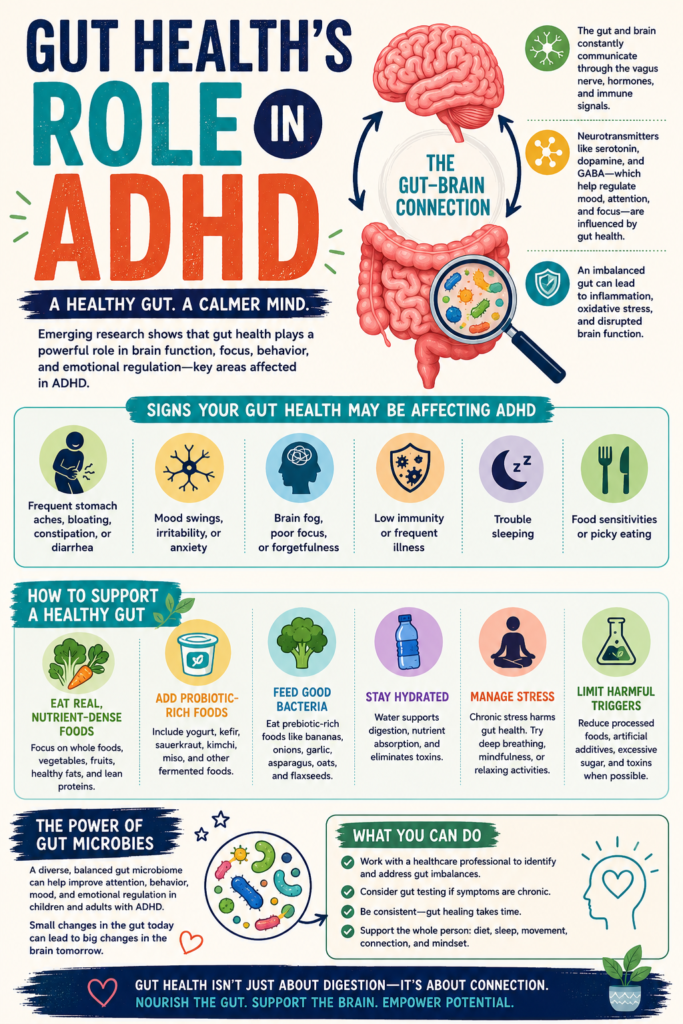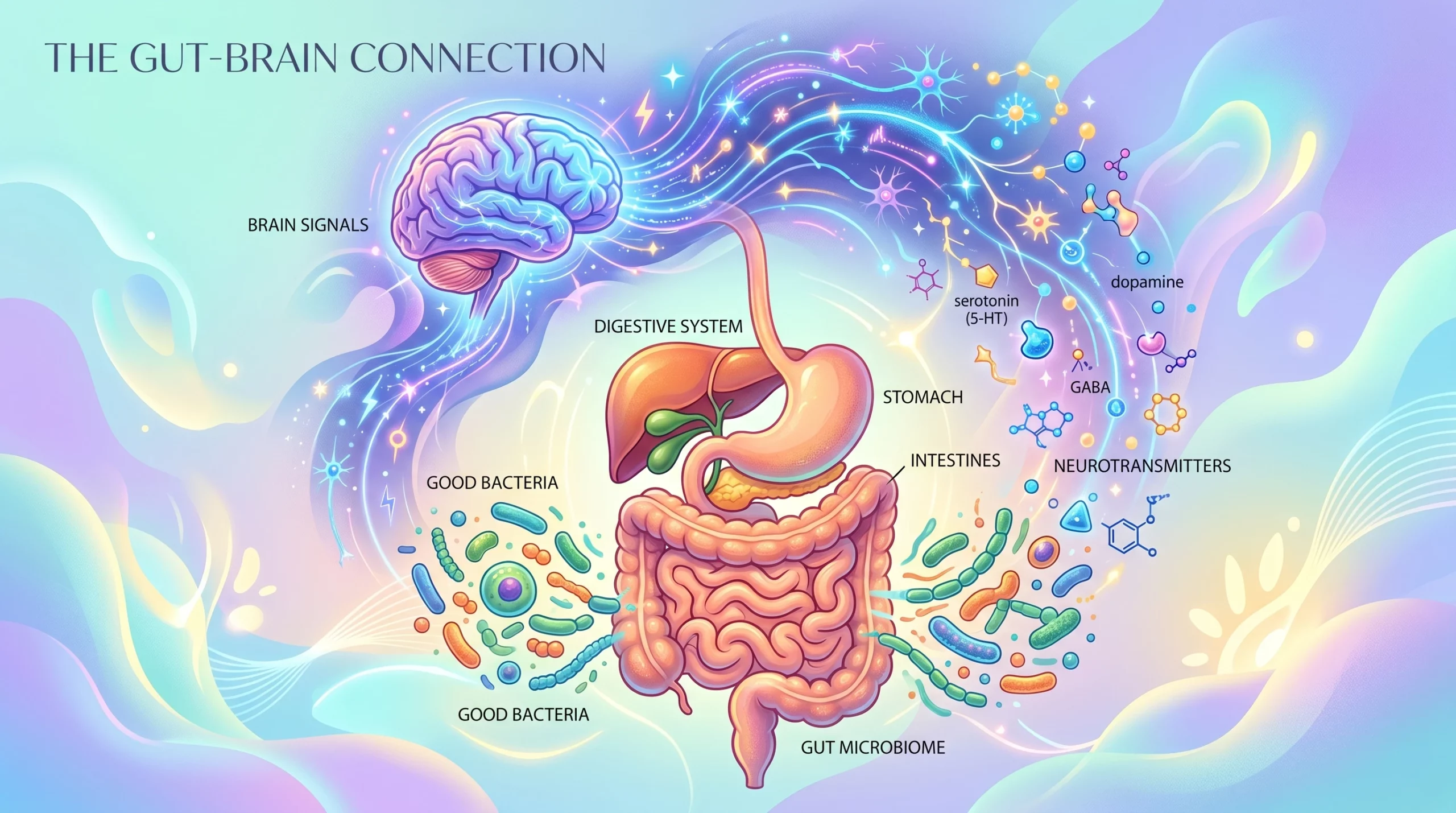
Gut health involves much more than the digestive system. Research shows that the gut and brain communicate constantly through the gut-brain axis, influencing mood, behavior, cognition, and overall well-being. As interest in this connection has grown, many researchers and healthcare professionals have begun exploring whether gut health may play a role in attention deficit hyperactivity disorder (ADHD). While the relationship is still being studied, emerging evidence suggests that the balance of bacteria and other microorganisms in the gut could influence symptoms such as attention, impulsivity, and emotional regulation. Understanding this connection may provide valuable insights into ADHD and support a more comprehensive approach to symptom management.
Understanding the Gut-Brain Connection
The gut and brain are actually in constant communication. This relationship is called the gut-brain axis. It involves nerve, hormonal, and immune signals that travel in both directions, allowing the brain and gut to influence each other’s function. About 100 trillion bacteria, both good and bad, live in the gut, making up what’s known as the gut microbiome. This microbiome can affect brain chemistry, mood, and even behavior by producing neurotransmitters like serotonin and dopamine.
ADHD is a neurodevelopmental condition marked by trouble focusing, impulsivity, and sometimes hyperactivity. Traditionally, genetics and environmental factors were the main focus in understanding ADHD. Now, with growing research in gut health, some scientists believe an imbalanced gut might play a role in these symptoms.
How Gut Health Relates to ADHD
Research on gut health and ADHD is still pretty new, but several studies have shown that people with ADHD often have differences in their gut microbiome compared to people without ADHD.
These differences can mean there’s less diversity or more harmful bacteria. This switch-up can lead to inflammation and changes in the way the body and brain process chemicals. Some researchers think that these gut changes may impact behavior, focus, and even emotional regulation in kids and adults with ADHD.
- Dysbiosis: This is when the balance of gut bacteria is off. Dysbiosis is more common in people with ADHD and may trigger inflammation and disrupt neurotransmitter production.
- Immune System Signals: A large part of the immune system lives in the gut. When bacteria levels are out of whack, it can send stress signals up to the brain, possibly making ADHD symptoms worse.
- Neurotransmitters: The gut microbiome helps produce neurotransmitters such as dopamine, which is closely linked to attention and impulse control. Changes in the gut could therefore influence ADHD symptoms.
What Causes Gut Imbalances in People with ADHD?
Gut health is affected by many things. Diet, antibiotic use, stress, sleep, and genetics can all influence which bacteria are present. In people with ADHD, certain factors might make gut imbalances more likely.
- Diet High in Processed Foods: Many children and adults with ADHD have diets with more sugar and less fiber, which aren’t friendly to the good bacteria in the gut.
- Frequent Antibiotic Use: Antibiotics wipe out both harmful and beneficial bacteria. Long-term or repeated antibiotic use during childhood can reduce gut diversity.
- Chronic Stress: Stress increases inflammation and can alter how the gut and brain communicate.
All of these factors come together to influence gut health, possibly playing into why some people with ADHD notice changes in their symptoms depending on what they eat or how stressed they feel.
Quick Tips for Supporting Gut Health in ADHD
Taking steps to support your gut can be helpful for overall health and possibly for ADHD symptoms as well. Here are some practical ideas I find pretty useful:
- Eat More Fiber: Fiber feeds the good bacteria in your gut. Foods like fruits, vegetables, whole grains, beans, and nuts are excellent sources of fiber.
- Consider Probiotics: Probiotics are live good bacteria. You can get them from foods like yogurt, kefir, sauerkraut, kimchi, or with a supplement. It’s worth checking with a doctor first, especially for kids.
- Cut Down on Processed Sugar: Sugary and processed foods tend to fuel the not-so-friendly bacteria in your gut, so cutting back can help improve the balance.
- Limit Unnecessary Antibiotics: Only take antibiotics when truly needed, and finish any course your doctor prescribes. This helps keep your gut in balance.
- Stay Hydrated: Drinking plenty of water helps keep things moving through the digestive tract, which is important for gut health.
Things to Consider Before Trying Gut Health Strategies for ADHD
While focusing on gut health is a good move in general, it’s important to know that research connecting it to ADHD is still ongoing. I always recommend chatting with a doctor or registered dietitian before making big changes to diet or trying new supplements, especially for kids or anyone on medication for ADHD.
- Medication and Diet: If you or your child takes ADHD medication, talk to your doctor before starting any new supplements or changing the diet dramatically. Some foods or probiotics can interact with medication.
- Individual Results May Vary: Not everyone sees the same benefits from gut health changes. Factors such as age, genetics, and other medical conditions play a part.
- Professional Guidance: A professional can recommend specific probiotic strains, dietary changes, or tests for food sensitivities that might also be contributing to gut problems.
Diet and Gut Health
One of the best changes you can make is adding more variety to your diet. The more types of plant foods you eat, the more different bacteria you encourage in your gut. Try tossing different vegetables into stir-fries or adding seeds and legumes to salads. Even small tweaks over time can add up and have a positive impact.
Probiotics and Prebiotics
Probiotics are live beneficial bacteria, while prebiotics are special types of fiber that feed them. Fermented foods like yogurt, kombucha, and kimchi are full of probiotics. Foods high in prebiotics, like garlic, onions, bananas, and asparagus, help the good bacteria thrive and multiply.
Stress and Sleep
Stress and sleep also significantly impact gut health. Simple stress-reducing habits, such as taking deep breaths, spending time outdoors, or walking in your neighborhood, really help. Sticking to regular sleep routines is another way to keep both your gut and brain in sync, supporting overall wellbeing and potentially helping with ADHD symptoms.
Advanced gut-brain support tips
If you want to take things up a notch in supporting your gut health and possibly your ADHD symptoms, here are a few more ideas to check out:
Check Out Elimination Diets: Some people with ADHD find that certain foods trigger symptoms. With guidance from your healthcare provider, trialing an elimination diet to spot any food sensitivities can provide insight.
Tailor Probiotic Supplements: Some probiotic strains appear to provide greater support for attention and mood, based on early research. Trying out different options with expert supervision lets you see which ones work best for you.
Keep a Food and Symptoms Diary: Writing down meals, snacks, and symptoms can help you track patterns over time. This approach can be especially handy if you suspect certain foods affect focus, mood, or how your gut feels.
Everyday examples of gut health in ADHD daily life
I’ve heard from many people who noticed an uptick in focus and mood when switching to more fiber-rich foods or adding yogurt to their routine. Parents sometimes spot fewer mood swings or tummy troubles when making these kinds of changes, although this doesn’t replace medical treatment.
- Snack Swaps: Swapping out chips for a handful of nuts with fruit is a double win for both gut and brain.
- Simplify Breakfast: Adding ground flaxseed to oatmeal boosts fiber and provides healthy fats, which support both brain function and digestion.
- Friendly Options for All Ages: Kids often love yogurt smoothies, which sneak probiotics into an easy snack.
Frequently Asked Questions
These are questions I get asked a lot about gut health and ADHD:
Question: Can changing my diet really help with ADHD symptoms?
Answer: For some people, eating a more gut-friendly diet has helped with mood, focus, or behavior. The effects are different for everyone.
Question: Do probiotics help with ADHD?
Answer: Early research suggests some probiotic strains may help, but results so far are mixed. If you’re considering probiotics, ask a healthcare provider for advice.
Question: Is it safe to take supplements for gut health if I’m on ADHD medication?
Answer: Most gut health supplements are safe, but it’s still a smart move to chat with your doctor, especially if you take any medicines for ADHD.
Takeaway
Gut health plays a role in general wellbeing and could have a hand in ADHD symptoms for some people. While there’s no miracle cure, simple habits like eating more fiber, enjoying probiotic-rich foods, and reducing stress can boost gut health and may help with day-to-day life with ADHD. Curious minds should keep an eye out as more research comes in, and always team up with healthcare pros when making changes to health routines.
Video: ADHD and bloating? Your gut is screaming #adhd #digestion