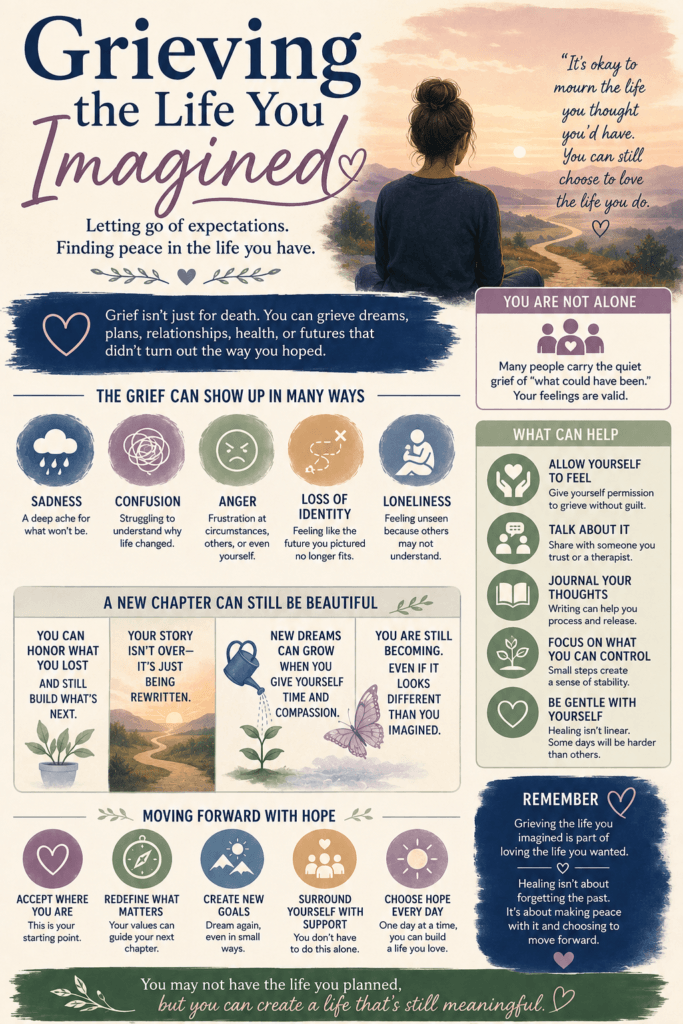
Grieving the life you once imagined is a real and often overlooked form of loss. Many of us develop expectations about our future—our relationships, careers, families, health, or personal goals. When circumstances take life in an unexpected direction, letting go of those hopes can bring sadness, disappointment, anger, and uncertainty. This type of grief is not simply about accepting one difficult event; it involves adapting to a reality that may look very different from what you envisioned. Learning to acknowledge these emotions, seek meaningful support, and develop new goals can help you move forward and create a fulfilling life, even when it is not the life you originally planned.
Understanding the Grief of Lost Expectations
Grieving a future you imagined can be just as real and painful as any other kind of mourning. It might happen after a major change, such as a breakup, the end of a career, a serious illness, or the failure to achieve a big dream. When something upends your plans, the disappointment and sadness feel heavy. What’s super important to realize is that these emotions make sense, even if other people don’t see what’s missing for you.
This kind of grief isn’t always about losing a person. Sometimes it’s about losing the vision of who you were going to become. For me, the hardest part was realizing things wouldn’t play out the way I’d always pictured. There’s a sense of identity that gets tangled up in those plans, so it’s not just the future you’re missing—it’s a part of you that feels lost, too.
The Unique Cycle of This Type of Grief
People often think of grief as something you move through in stages, but grieving an imagined life isn’t always so linear. You might feel hope, then get hit by old sadness out of nowhere, or experience anger and acceptance almost at the same time. It can help to know there’s nothing wrong with bouncing back and forth between these feelings.
Here are some emotions that might pop up:
- Sadness: Feeling down about what will never be, whether it’s a job, a relationship, or life milestones you pictured.
- Jealousy: Seeing people living the life you wanted might sting. That’s a normal response, even though it can feel awkward to admit.
- Anger: Sometimes it seems totally unfair. Anger at circumstances, at others, or at yourself is something many go through.
- Relief (Mixed In): In some cases, there’s a little relief tucked in, maybe a hard path has ended, even if it was one you thought you wanted.
- Anxiety About the Unknown: Losing your plan brings a lot of uncertainty. Not knowing what comes next can feel scary.
I noticed my emotions would flare up around certain reminders: an anniversary, a Facebook update, or even just crossing paths with someone from my old life. Getting blindsided by feelings isn’t unusual when the loss is invisible to others.
Common Triggers: When the Grief Hits Hard
Triggers can be sneaky with this kind of grief. Sometimes the smallest thing can bring back a wave of sadness. Big life events like weddings, graduations, or even holidays remind you of the path you thought you’d be on. For me, watching friends move forward in ways I’d imagined for myself could spark those feelings all over again.
Career setbacks, relationship changes, or a health diagnosis often set this grief in motion. It’s not about being weak; it’s about having to reset your internal GPS when the map you built just doesn’t work anymore.
Practical Ways to Cope With the Loss of a Dream
This type of grief is honestly a lot to carry, but there are ways to handle it that make things more bearable and help you move forward. Here are some ideas that I—and others—have found pretty useful:
- Name Your Grief: Sometimes, just putting a label on what you’re feeling helps. Saying “I’m grieving the future I imagined” can be the first step toward healing.
- Create Space for Your Emotions: Let yourself feel sad, disappointed, or angry. Write in a journal, listen to music, or find another way to let your feelings out without judging them.
- Talk About It: Even if people don’t totally get it, opening up to someone you trust can help you feel less alone. Therapists or support groups can be really helpful, too.
- Notice and Challenge Comparisons: Social media is rough when you’re grieving imagined possibilities. Remind yourself not to compare your behind-the-scenes to someone else’s highlight reel.
- Find Rituals of Closure: Sometimes symbolic acts, like writing a letter to your old future or creating a playlist, can help provide a tangible outlet for your grief.
- Stay Open to New Paths: You might not be ready for silver linings right away, but it’s good to remember that fresh dreams do eventually grow in old soil. It’s okay to dream up something new, even if it looks nothing like you pictured before.
Things to Consider As You Process Your Grief
- This Grief Takes Time: There’s no deadline for feeling better. Some days will be rough, and some will feel surprisingly okay.
- Others Might Not Get It: Since this kind of grief is about things that never were, people might not understand or know what to say. That doesn’t mean your pain isn’t real.
- Your Self-Worth Isn’t Tied to Outcomes: Missing out on something you wanted doesn’t make you less valuable or less worthy.
- Identity Changes: It’s normal to feel lost. When dreams change, so does your sense of who you are. Give yourself space to grow into a new identity, however slowly it happens.
In my own experience, processing these feelings as they come, without pushing them away, has been really helpful. Sometimes talking with others who have faced similar disappointments makes it feel a little lighter, too.
Looking Forward: How to Build a New Future
It’s easy to stay stuck in what might have been, but life keeps moving. When you’re ready, there are real ways to start picturing a future that looks different but still has meaning and joy. Here are some practical steps I found super helpful:
- Set Small Goals: When big dreams disappear, setting smaller, manageable goals lets you gently rebuild your sense of purpose. Even short-term plans can help you get momentum.
- Celebrate Tiny Wins: Give yourself credit for getting through tough days, learning something new, or just showing up for yourself.
- Stay Curious: Try out new hobbies, experiences, or relationships, even if you’re not ready to fully commit. Exploring the unknown can open doors you never saw coming.
- Lean Into Gratitude (When You’re Able): This isn’t about ignoring pain, but when you notice something good, however small, it can make the load a bit lighter.
- Ask for Help: Friends, online communities, or professionals can help keep you moving, especially on days when things feel like too much.
I’ve found that even on days when I didn’t think anything new could grow, little sparks of hope kept showing up in unexpected places. It’s okay to let go of the old plan and start building a fresh one just for you.
Frequently Asked Questions
People I talk to often have the same worries or get stuck at similar points. Here are a few questions that come up a lot:
Question: Why am I so upset about losing something that never existed?
Answer: It’s totally normal! Your dreams and expectations were real to you, and saying goodbye triggers real emotions.
Question: Will I ever stop feeling jealous of others who have the life I wanted?
Answer: These feelings usually fade with time as you build a new vision for your own life. In the meantime, being kind to yourself about these emotions really helps.
Question: How do I explain this kind of grief to other people?
Answer: It can help to say something like: “I’m sad about the future I thought I would have. It’s a different kind of loss, but it feels real to me.”
Moving Forward With Self-Compassion
Grieving the life you thought you’d have is a deeply personal process. Your feelings are valid, your loss matters, and it’s possible (even if it’s slow) to find meaning in a new future. Each person’s adventure will look different, but stepping gently with yourself, staying open, and reaching out for support can make the path easier to walk. Even if the story you’re living now isn’t what you planned, it can still turn into something worth holding on to.
It might also help to check out stories from others who have faced similar missed expectations. Sometimes reading about how others built joy in unexpected ways makes it easier to spot new opportunities.
Video: When Life Doesn’t Go As Planned #fear #grieving