Narcissism is a word that gets tossed around a lot, and understanding where it comes from can make the whole subject much less mysterious. I’ve spent time reading research and hearing people’s experiences, and one big question always comes up: is narcissism something people are born with, or is it mostly picked up from the world around them? In this article, I’m jumping into what experts say, what the science suggests, and sharing some first-hand insights to help you get a better sense of where narcissistic traits might actually come from.
What Actually Is Narcissism?
Narcissism isn’t just about liking yourself a lot or taking too many selfies. Clinically, it refers to a pattern of behaviors and attitudes that includes an inflated sense of self-importance, a craving for admiration, and often a lack of empathy for others. There’s a spectrum: a bit of narcissism can be part of healthy confidence, but the extreme version, known as Narcissistic Personality Disorder (NPD), can create real hardship for both the person and those around them.
Most people show some traits of narcissism at times, especially in certain social media moments, but only a small percentage meet the criteria for NPD. The big question is whether those more extreme versions come from someone’s DNA, their upbringing, or a combination of both.
The Genetics of Narcissism: What Do We Know?
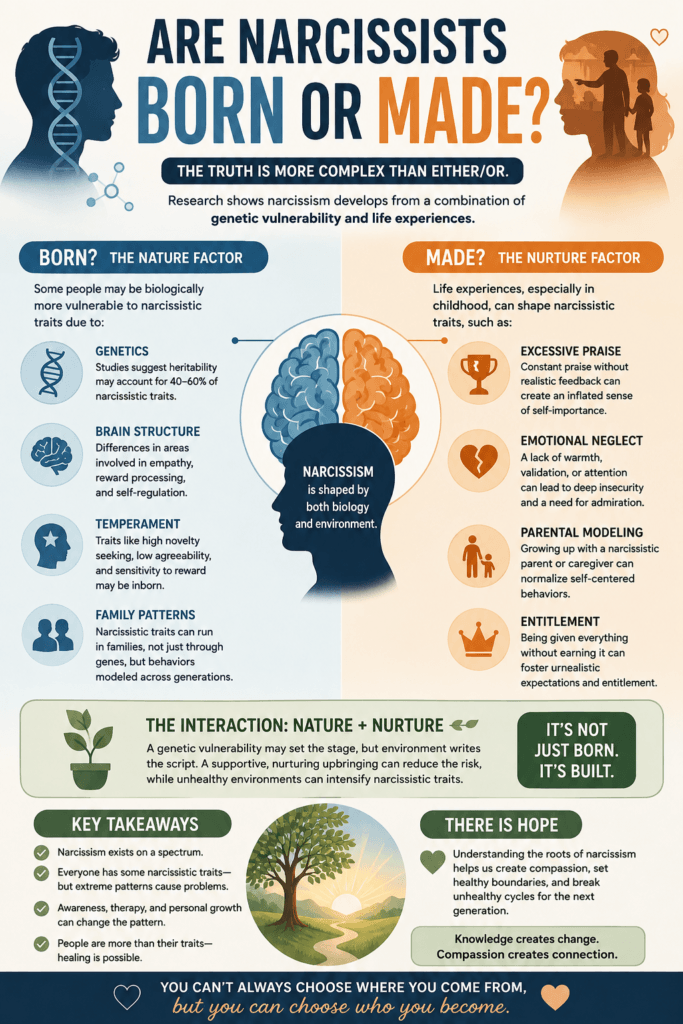
Genetics is where things get interesting. Researchers have dug into family studies and twins to see just how much personality traits, including narcissism, can be inherited. Studies involving identical and fraternal twins are super helpful because identical twins share all the same genes, while fraternal twins only share about half.
Some research shows that there is a genetic component to narcissism; twin studies suggest that between 40% and 60% of the variation in narcissism might be inherited. That’s a pretty big chunk. If you have a close family member (like a parent) with strong narcissistic traits, you could be more likely to show similar behaviors. But there isn’t a single “narcissism gene” to point at; it looks more like a web of different genes that affect things like temperament, emotional control, and how you relate to others.
Keep in mind, though, that even with a genetic link, not everyone with these genetic risks develops full-blown narcissistic tendencies. Genetics loads the gun, but the environment pulls the trigger, as the saying goes.
How Much Does the Environment Shape Narcissism?
Environment is just as important as biology. The way someone is raised, along with early experiences and cultural influences, can push narcissistic traits up or down. A child who grows up with excessive praise and very few boundaries, or, on the flip side, with neglectful or unpredictable parenting, can develop different types of narcissistic traits. Some experts say that both overindulgence and underinvolvement can play a part in different people.
For example, a child who is told that they’re special or better than others every single day, without learning empathy or consequences, may grow into an adult who expects to be the center of attention. On the other hand, someone who’s emotionally neglected might develop what’s called “vulnerable narcissism”—basically, using inflated self-esteem to mask deeper insecurity.
Culture also matters. In societies that reward competition, appearance, and success above all else, narcissistic traits can be more noticeable or even rewarded. In today’s digital age, with its focus on followers and image, this may add fuel to the fire by creating constant feedback loops that intensify self-focus.
Learned Behavior vs. Inherited Traits: Where’s the Line?
I’ve seen a lot of confusion here, so it’s worth breaking down. Learned behavior is something we pick up from those around us—parents, family, friends, and the media. Kids naturally copy what they see, so if narcissistic behaviors are modeled at home, they might pick them up. This doesn’t just happen with obvious behavior; it can happen with things like watching a parent manipulate others or act entitled, and getting the message that that’s how you get ahead in life.
Inherited traits, on the other hand, are the stuff encoded in our DNA: temperament, how easily someone gets upset, how much they crave attention, and so on. These bits nudge someone in a certain direction before there’s any learned behavior at all. What’s really happening for most people is a blend: genes set the stage, and the environment, from family to society, fills in the details. To add another layer, scientists are now looking more closely at epigenetics—the way certain environments can literally “switch on” or “switch off” certain genetic tendencies, leading to behavioral changes even within families.
Spotting Narcissism: How It Shows Up
Sometimes, it’s easy to spot narcissism: a person who always has to be right, doesn’t listen, or gets angry when things don’t go their way. Other times, it’s more subtle; maybe they’re charming and exciting at first but can be cold or dismissive when they don’t get what they want.
- Grandiosity: Believing they’re special or more important than others
- Attention-seeking: Needing constant praise and validation
- Lack of empathy: Difficulty noticing or caring about others’ feelings
- Manipulation: Using others for their own needs
This mix of genes and experience can make narcissism tough to spot, and even tougher to address, especially in close relationships. Narcissistic traits can blend into everyday behavior, and because many people with these traits are also socially skilled, they can hide their more difficult sides until they are under stress or challenged.
Big Myths About Narcissism
There are a bunch of myths that swirl around this topic, so it helps to clear a few up:
- Myth: Narcissists are always confident. Actually, many are covering up deep insecurities. That’s why they can swing from bragging to sulking.
- Myth: Narcissism is caused by parents alone. While parenting plays a role, it’s not the whole story. Many people with supportive parents still get narcissistic traits from temperamental differences or outside influences.
- Myth: Narcissists can’t change. Change is challenging, but not impossible. It takes consistent self-awareness and work, usually with professional help. Over time, some people do tone down their narcissistic patterns, especially if they genuinely want to build stronger connections and see a reason to try.
Everyday Examples: How Narcissism Starts and Grows
I’ve noticed that people develop narcissistic patterns in all sorts of ways. For example, a friend of mine grew up in a household where only “exceptional” achievements were celebrated, while ordinary efforts were barely mentioned. As an adult, he craves admiration and gets really let down by normal feedback—even though he’s successful, nothing ever feels “enough.” Another person I know had parents who struggled with their own self-esteem and modeled defensive, grandiose behavior. She ended up copying those coping strategies as a teen, turning on the charm but struggling with close friendships.
Real-life stories like these show how a mix of early influences and personal temperament can push someone toward narcissistic patterns. Not every kid in the same family turns out the same, but the mixture of inherited temperament and what they experience every day shapes how they see themselves and others. Family history, culture, and even short-term crises can all play a part in the development of these traits.
Challenges in Understanding Narcissism: It’s Not an Exact Science
The truth is, science hasn’t found all the answers yet. Narcissism is a personality trait, not a disease you can diagnose with a blood test. Both genetics and environment interact in ways that are hard to untangle. What researchers do agree on is that both matter—a lot.
Diagnosis can be tough. Sometimes, traits that seem narcissistic might just be strong self-confidence or a temporary reaction to stress. And in other cases, people develop these traits as a shield against deeper pain or instability, not just because of genes or a single parental mistake. Plus, since narcissism sits on a spectrum, it can be hard even for mental health professionals to spot where healthy confidence ends and a pattern of harmful narcissism begins.
Pitfalls and Common Questions About Narcissism
Here are some things that come up often in conversations:
- Is it possible to “grow out of” narcissism? Milder traits can mellow with life experience, good therapy, and self-awareness. Deep-seated patterns, though, usually need more support to change.
- Can you prevent narcissism? Teaching empathy, helping kids handle disappointment, and modeling healthy boundaries can help keep narcissism in check. There’s no guaranteed way, but positive parenting and balanced feedback make a difference.
- Is narcissism always bad? Not always. Sometimes a little self-focus helps people succeed, protect themselves, or recover from setbacks. It only becomes a problem when it hurts relationships and keeps someone from growing. Many successful leaders or artists show a dash of narcissism that helps them push boundaries and take risks.
Key Takeaways: Finding Balance Between Nature and Nurture
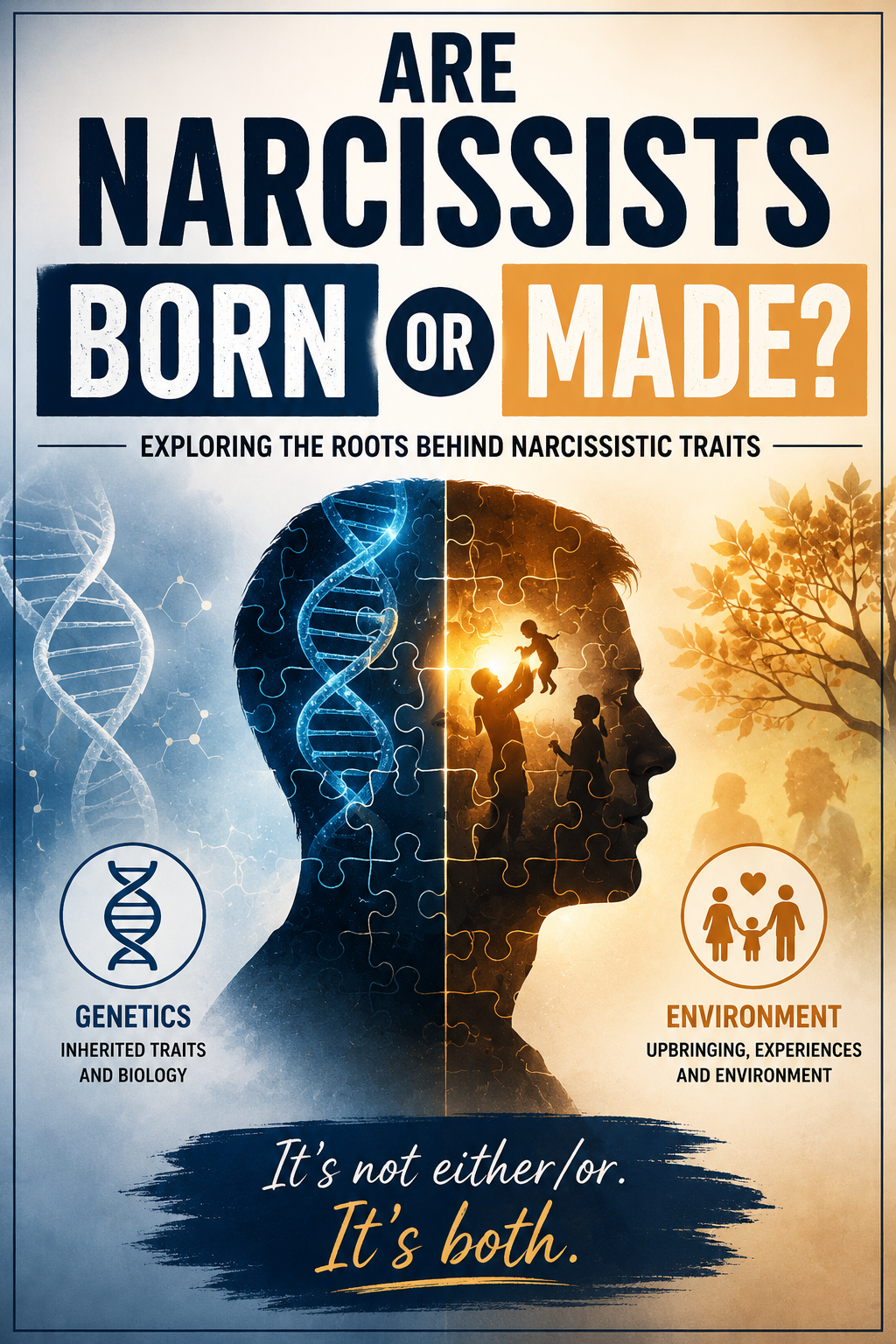
I’ve learned through both research and real life that the story of narcissism is more about “both/and” than “either/or.” Genetics gives some people a head start on certain personality traits, but the environment, especially early experiences, parenting, and culture, shapes how those traits manifest in day-to-day life. While nobody can control their DNA, everyone can make choices about how they treat others and seek help if narcissistic patterns start causing trouble.
For families, being aware of both sides means not blaming yourself for every quirk or difficulty, but also not giving up on positive changes. Empathy, honest support, and clear boundaries are super important for helping everyone grow in healthy directions. Encouraging growth, modeling humility, and giving room for mistakes can help build resilience and emotional balance.
The bottom line: narcissism isn’t set in stone, and understanding its origins is actually the first step in figuring out what to do about it. If you’re curious to dig deeper, checking out books by experts like Dr. Craig Malkin or exploring reputable sites like Psychology Today’s narcissism section can give you more tools for unpacking both the science and real-world impact of this complicated trait.
Video: Are Narcissists Born or Made?