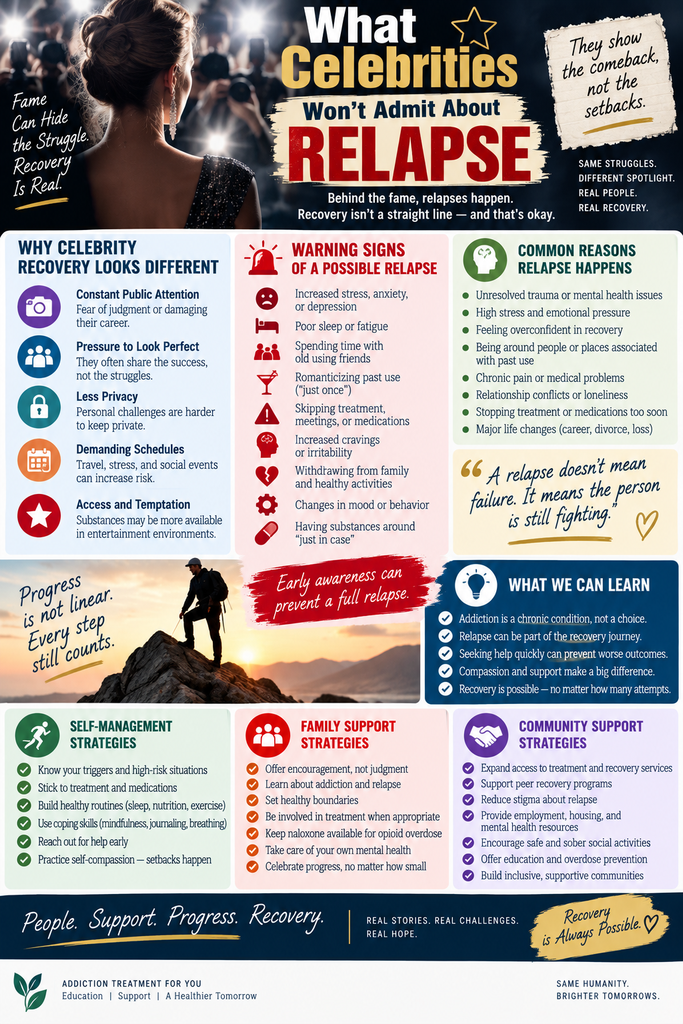
Celebrities often share inspiring stories about overcoming addiction, celebrating sobriety milestones, and rebuilding their lives. Their recovery journeys can encourage millions to seek treatment and believe change is possible. However, behind the public celebrations, addiction recovery may involve challenges that rarely appear in interviews, social media posts, or entertainment headlines.
Relapse, emotional distress, unresolved trauma, and the pressure to maintain a successful public image can complicate recovery. Some celebrities openly discuss these experiences, while others choose to keep their personal health information private.
The reality is that addiction recovery is not always a straight path, and a return to substance use does not erase previous progress.
Understanding the less-publicized challenges of recovery can help individuals develop healthier self-management strategies, encourage families to provide compassionate support, and strengthen community resources that promote long-term recovery.
1. Why Celebrity Recovery Stories Often Leave Out the Difficult Parts
Celebrity recovery stories frequently focus on dramatic turning points, such as entering rehabilitation, achieving sobriety, or making a successful career comeback.
Although these experiences can be meaningful, they do not always reflect the full complexity of substance use disorders.
Recovery may involve ongoing medical treatment, relationship changes, emotional difficulties, and adjustments to daily routines.
Public figures may also face unique challenges involving media attention, professional expectations, and limited privacy.
Challenges That May Remain Outside the Public Eye
- Fear of public judgment: Individuals may worry that discussing a return to substance use will damage their reputation or career.
- Pressure to appear successful: Public celebrations of sobriety may create expectations that recovery should always progress without setbacks.
- Privacy concerns: Celebrities may choose not to disclose medical diagnoses, treatment details, or personal struggles.
- Professional responsibilities: Travel, demanding schedules, and work-related stress may complicate participation in treatment.
- Social environments: Events where alcohol or other substances are present may create additional challenges for some individuals.
- Emotional difficulties: Anxiety, depression, grief, or unresolved trauma may coexist with substance use disorders.
These challenges are not limited to celebrities. Individuals from all backgrounds may experience similar pressures while attempting to maintain recovery.
2. The Reality of Relapse: What Recovery Actually Looks Like
Relapse generally refers to a return to substance use after a period of abstinence or improvement.
However, the term is used differently across treatment programs and research studies. A single episode of substance use does not necessarily indicate a return to the previous severity of a substance use disorder.
For individuals whose recovery goals include reduced harmful use rather than complete abstinence, progress may be measured through improvements in health, functioning, and substance-related consequences.
Why Does Relapse Occur?
Substance use disorders involve changes in brain systems associated with reward, motivation, learning, and behavioral control.
Environmental cues, stress, emotional distress, and exposure to substances may increase vulnerability to renewed use.
Common contributing factors include:
- Exposure to people or environments associated with previous substance use.
- Persistent cravings.
- Untreated mental health conditions.
- Chronic pain or sleep disturbances.
- Relationship conflict.
- Social isolation.
- Interruptions in addiction treatment.
- Reduced access to medications or recovery services.
Relapse does not occur because someone simply lacks willpower.
It reflects a complex interaction of biological, psychological, social, and environmental factors.
A return to substance use should prompt reassessment of the treatment plan rather than automatic assumptions that recovery has failed.
3. Celebrity Recovery Stories: What Public Experiences Can Teach Us
Several celebrities have publicly discussed their experiences with substance use disorders, treatment, and returning to substance use.
Their stories demonstrate that recovery can involve multiple treatment attempts, periods of improvement, and changing personal circumstances.
However, public disclosures provide only a limited view of an individual’s medical history. The reasons behind a person’s relapse should not be assumed unless they have explicitly discussed them.
Robert Downey Jr.: Repeated Treatment and Long-Term Recovery
Actor Robert Downey Jr. experienced substance use problems and legal difficulties during the 1990s and early 2000s.
His history included multiple treatment attempts and periods of incarceration before he established sustained recovery.
He has publicly discussed the importance of personal responsibility, support, and changes in his daily life.
His experience illustrates that repeated treatment attempts do not prevent someone from achieving meaningful long-term recovery.
Demi Lovato: Recovery, Overdose, and Changing Treatment Goals
Singer and actor Demi Lovato has publicly discussed substance use disorders, mental health challenges, and a life-threatening overdose in 2018.
Lovato has also spoken about changing personal approaches to recovery and the importance of ongoing treatment.
Their experience highlights the need for individualized recovery planning and appropriate medical care following an overdose.
It also demonstrates why a person’s treatment goals and recovery experiences should not be reduced to a single public statement or sobriety milestone.
Elton John: Recovery and the Importance of Support
Musician Elton John has publicly discussed his past alcohol and cocaine use and his decision to seek treatment in 1990.
He has described the importance of recovery support and maintaining long-term sobriety.
His experience illustrates how structured treatment, supportive relationships, and continuing recovery practices may contribute to sustained improvement.
Jamie Lee Curtis: Prescription Opioid Addiction and Recovery
Actor Jamie Lee Curtis has publicly discussed developing an opioid addiction following treatment for pain after a cosmetic procedure.
She has described recognizing her substance use problem and seeking recovery support.
Her experience highlights the importance of prescription medication safety, early recognition of problematic use, and professional treatment.
These public experiences illustrate different aspects of recovery. They do not mean every celebrity follows the same path or faces the same challenges.
4. Self-Management Strategies: Recognizing and Responding to Relapse Risks
Self-management involves understanding personal risk factors, developing healthy coping strategies, and remaining engaged in appropriate treatment.
For individuals recovering from addiction, these strategies can help reduce the likelihood of returning to harmful substance use.
1. Identify Personal Triggers
Triggers are internal or external experiences that may increase cravings or the urge to use substances.
Common triggers include:
- Emotional distress.
- Social situations involving alcohol or drugs.
- Conflict within relationships.
- Physical pain.
- Sleep deprivation.
- Loneliness or boredom.
- Exposure to environments associated with previous substance use.
Keeping a journal or working with a counselor may help individuals recognize patterns and develop personalized coping strategies.
2. Develop a Relapse Response Plan
A relapse response plan provides clear steps for addressing cravings or a return to substance use.
An individualized plan may include:
- Identifying early warning signs.
- Contacting a healthcare professional or recovery support person.
- Reviewing coping strategies.
- Reducing exposure to high-risk situations.
- Scheduling additional counseling or treatment appointments.
- Reassessing medications for addiction treatment when appropriate.
For individuals recovering from opioid use disorder, access to naloxone is particularly important because overdose risk may increase after a period of reduced opioid exposure.
3. Maintain Consistent Treatment
Substance use disorders may require ongoing care, particularly when symptoms are severe or recurrent.
Treatment options may include:
- Individual or group counseling.
- Medications for opioid or alcohol use disorder.
- Treatment for co-occurring mental health conditions.
- Peer recovery support.
- Continuing care and periodic reassessment.
For opioid use disorder, medications such as buprenorphine and methadone can reduce cravings, withdrawal symptoms, and overdose risk.
Discontinuing effective medication treatment without appropriate medical guidance may increase the risk of returning to opioid use.
4. Address Emotional and Mental Health Needs
Anxiety, depression, trauma-related symptoms, and other mental health conditions can complicate addiction recovery.
Integrated treatment can help individuals address substance use and mental health concerns simultaneously.
Helpful approaches include:
- Cognitive behavioral therapy.
- Trauma-informed counseling when appropriate.
- Stress-management techniques.
- Consistent sleep routines.
- Regular physical activity.
- Maintaining supportive social relationships.
5. Practice Self-Compassion
Shame and harsh self-criticism may discourage individuals from seeking help after returning to substance use.
Self-compassion involves recognizing difficulties without ignoring personal responsibility.
A helpful response includes acknowledging what happened, identifying immediate safety concerns, contacting appropriate support, and adjusting the recovery plan.
A setback does not erase the progress someone has already made.
5. Family Support Strategies: Helping Loved Ones After a Relapse
Family members may experience fear, disappointment, anger, or uncertainty when someone returns to substance use.
These reactions are understandable, particularly when previous substance use has caused significant health, financial, or relationship difficulties.
However, responses based primarily on punishment, humiliation, or threats may discourage open communication and engagement in treatment.
Families can provide compassionate support while maintaining appropriate boundaries.
1. Respond With Concern Rather Than Judgment
When a loved one returns to substance use, families can focus first on immediate safety and access to appropriate care.
Helpful strategies include:
- Asking whether the individual is physically safe.
- Encouraging medical assessment when necessary.
- Listening without immediately assigning blame.
- Avoiding arguments while the person is intoxicated.
- Encouraging contact with an addiction treatment professional.
2. Establish Healthy Boundaries
Supporting recovery does not require accepting behavior that threatens personal safety or financial stability.
Boundaries may include:
- Refusing to ride with someone who is impaired.
- Establishing expectations regarding substance use within the home.
- Declining financial assistance that directly facilitates harmful substance use.
- Protecting children from unsafe situations.
- Encouraging treatment while maintaining respectful communication.
3. Learn About Overdose Prevention
Families affected by opioid use disorder should understand that overdose risk can increase after a period of abstinence because opioid tolerance may decrease.
Important safety measures include:
- Keeping naloxone accessible.
- Learning how to recognize an opioid overdose.
- Calling emergency services immediately when an overdose is suspected.
- Administering naloxone when indicated.
- Remaining with the individual until emergency personnel arrive.
Naloxone can reverse an opioid overdose but does not replace emergency medical care.
4. Participate in Family Counseling
Family therapy may help relatives address communication difficulties, rebuild trust, and establish realistic expectations about recovery.
Family members may also benefit from individual counseling or peer support programs.
5. Protect Caregiver Well-Being
Supporting someone with addiction can contribute to emotional exhaustion and chronic stress.
Families should maintain their own healthcare routines, friendships, personal interests, and support systems.
A loved one’s recovery should not depend on family members sacrificing their own physical or emotional health.
6. Community Support Strategies: Making Recovery More Accessible
Recovery depends on more than individual behavior.
Access to healthcare, stable housing, employment, transportation, and supportive relationships can affect treatment engagement and long-term outcomes.
Celebrities may have access to private treatment programs and specialized healthcare, while many individuals face significant financial and geographic barriers.
Community-based resources can help reduce these differences.
1. Expand Access to Evidence-Based Treatment
Community treatment programs should provide timely access to:
- Medical assessment and withdrawal management when necessary.
- Medications for opioid and alcohol use disorders.
- Individual and group counseling.
- Integrated mental health treatment.
- Continuing care and recovery planning.
- Overdose prevention education.
Treatment should be individualized and accessible regardless of income, insurance status, or previous treatment history.
2. Strengthen Peer Recovery Support
Peer recovery specialists provide guidance based on lived experience with substance use disorders and recovery.
They may help individuals navigate treatment systems, establish recovery goals, and develop supportive relationships.
Community resources include:
- SMART Recovery.
- Alcoholics Anonymous.
- Narcotics Anonymous.
- Recovery community organizations.
- Peer recovery coaching programs.
Participation should reflect individual preferences and treatment needs.
3. Reduce Stigma Surrounding Relapse
Stigma can discourage individuals from discussing substance use, seeking treatment, or returning to care after a setback.
Community education should emphasize that substance use disorders are treatable medical conditions and that treatment may require ongoing adjustments.
Relapse should not automatically result in exclusion from healthcare, housing, or recovery services.
4. Address Social Determinants of Health
Housing instability, unemployment, transportation difficulties, and limited access to healthcare can complicate recovery.
Community programs can support individuals through:
- Affordable treatment services.
- Recovery housing.
- Employment assistance.
- Transportation programs.
- Food and housing resources.
- Family support services.
- Mental health counseling.
Addressing these practical needs can help individuals remain engaged in treatment and improve overall quality of life.
7. What Celebrity Recovery Stories Often Leave Out
Public recovery narratives often focus on dramatic transformations rather than the everyday work of maintaining recovery.
However, several important aspects deserve greater attention.
Recovery May Require More Than One Treatment Attempt
Some individuals achieve sustained recovery after their first treatment experience, while others need additional treatment or changes to their care plan.
Repeated treatment does not mean someone is incapable of recovery.
Sobriety Does Not Automatically Resolve Every Problem
Stopping substance use may improve health and functioning, but individuals may still need to address relationship difficulties, financial problems, trauma, chronic pain, or co-occurring mental health conditions.
Recovery involves more than the absence of substance use.
Financial Resources Can Influence Treatment Access
Celebrities may have access to private rehabilitation facilities, flexible schedules, and specialized healthcare.
Individuals with limited financial resources may face waiting lists, insurance restrictions, transportation barriers, and difficulties taking time away from employment.
Improving access to community treatment is essential to reducing these barriers.
Recovery Goals May Change Over Time
Some individuals define recovery through complete abstinence, while others initially focus on reducing harmful substance use and improving health.
For certain substance use disorders, abstinence may be an important treatment goal, particularly when continued use creates substantial medical or safety risks.
Treatment should be individualized and guided by evidence-based care.
Privacy Is Part of Recovery
Public figures are not obligated to disclose every detail of their medical treatment or personal experiences.
Respecting privacy can reduce unnecessary speculation and allow individuals to make health decisions without public pressure.
8. Lessons About Relapse and Long-Term Recovery
Celebrity recovery stories can encourage people to seek help, but they should not be treated as universal models of addiction treatment.
Recovery outcomes depend on individual circumstances, clinical needs, access to healthcare, and available support.
Key Takeaways
1. Relapse does not erase previous recovery progress.
A return to substance use may indicate that additional treatment or adjustments to the recovery plan are necessary.
2. Addiction treatment should be individualized.
Different substance use disorders require different medical and behavioral treatment approaches.
3. Mental health and addiction should be addressed together.
Integrated care can help individuals manage co-occurring conditions that complicate recovery.
4. Family support can strengthen treatment engagement.
Compassionate communication, healthy boundaries, and practical assistance can support recovery.
5. Community resources matter.
Affordable healthcare, peer support, housing, and employment services can improve access to treatment and recovery opportunities.
6. Overdose prevention is essential.
Individuals returning to opioid use after a period of abstinence may face increased overdose risk because of reduced tolerance.
7. Recovery is more than a sobriety milestone.
Meaningful recovery may include improvements in physical health, emotional stability, relationships, independence, and quality of life.
Conclusion
Celebrity recovery stories often highlight sobriety milestones, personal transformations, and professional comebacks. However, the less-publicized realities of addiction recovery may include cravings, emotional distress, treatment adjustments, relationship difficulties, and periods of renewed substance use.
These experiences are not unique to public figures. People from all backgrounds may face similar challenges as they work toward healthier lives.
Relapse does not erase previous progress, but it should be taken seriously as an opportunity to reassess safety, treatment needs, and available support.
Effective recovery involves more than personal determination. Evidence-based treatment, healthy self-management strategies, compassionate family involvement, and accessible community resources can help individuals reduce substance-related harm and improve long-term well-being.
For those experiencing a return to substance use, seeking help promptly can be an important step toward renewed stability and continued recovery.
Need Help With Addiction or Relapse?
If you or someone you love is struggling with substance use or experiencing a return to alcohol or drug use, confidential assistance is available.
SAMHSA National Helpline: 1-800-662-HELP (4357)
Treatment Locator: FindTreatment.gov
988 Suicide & Crisis Lifeline: Call or text 988 for immediate emotional support during a mental health or substance-related crisis.
For additional education about addiction treatment, relapse prevention, family support, and recovery strategies, visit Addiction Treatment For You.
Frequently Asked Questions
Here are some common questions:
1. Why do some celebrities hide their addiction relapses?
Some celebrities may choose not to disclose a return to substance use because of concerns about public judgment, career consequences, privacy, or the effects on their families. Public figures often face intense media attention, which can make it difficult to discuss personal health challenges.
However, not all celebrities conceal relapse. Many have openly shared their experiences to encourage others to seek treatment and reduce stigma surrounding addiction.
2. Is relapse a normal part of addiction recovery?
Relapse can occur during addiction recovery, but it is not inevitable or a required stage of recovery.
Substance use disorders can involve periods of improvement followed by renewed substance use. A return to substance use may indicate that additional treatment, support, or adjustments to the recovery plan are necessary.
Relapse does not erase previous recovery progress, but it should be taken seriously because it can involve significant health risks.
3. Why do successful celebrities experience addiction relapse?
Professional success, financial stability, and public recognition do not eliminate the biological, psychological, or environmental factors associated with substance use disorders.
Some individuals may experience persistent cravings, emotional distress, sleep disturbances, chronic pain, or exposure to environments associated with previous substance use.
Celebrities may also encounter demanding schedules and limited privacy. However, the reasons behind any particular person’s relapse should not be assumed without reliable information.
4. Does relapse mean addiction treatment has failed?
No. A return to substance use does not automatically mean that previous treatment was ineffective.
Substance use disorders may require ongoing care and periodic adjustments to treatment.
A relapse may indicate the need to reassess medication treatment, counseling, mental health concerns, environmental triggers, or available support.
For individuals with opioid use disorder, promptly reconnecting with evidence-based treatment is particularly important because returning to opioid use after a period of abstinence can increase overdose risk.
5. What are the early warning signs of a possible relapse?
Warning signs vary among individuals but may include:
- Increasing cravings or urges to use substances.
- Withdrawing from supportive relationships.
- Missing counseling sessions or treatment appointments.
- Returning to environments associated with previous substance use.
- Experiencing worsening sleep or emotional distress.
- Romanticizing previous substance use.
- Discontinuing prescribed addiction treatment without medical guidance.
- Making plans to obtain alcohol or drugs.
These signs do not necessarily mean that relapse will occur. They indicate that additional support or reassessment may be helpful.
6. Can emotional stress trigger a relapse?
Yes. Emotional stress can increase vulnerability to renewed substance use in some individuals.
Relationship difficulties, grief, financial problems, professional pressure, and other stressful experiences may increase cravings or interfere with healthy coping strategies.
However, stress alone does not cause every relapse. Substance use disorders involve complex interactions among biological, psychological, social, and environmental factors.
Developing healthy coping strategies and maintaining access to treatment can help individuals respond to stress without returning to harmful substance use.
7. Why is relapse particularly dangerous for people recovering from opioid addiction?
After a period of reduced opioid use or abstinence, the body’s tolerance to opioids may decrease.
If someone returns to using the same amount they previously tolerated, they may experience life-threatening respiratory depression or overdose.
The unpredictable potency of illicitly manufactured fentanyl and the possibility of contamination in the unregulated drug supply can further increase overdose risk.
Individuals at risk should have access to naloxone, receive overdose prevention education, and be offered evidence-based treatment, including buprenorphine or methadone when appropriate.
8. Can someone relapse after many years of sobriety?
Yes. A return to substance use can occur after months or years of abstinence.
Major life changes, untreated mental health conditions, exposure to substances, and other factors may contribute to renewed use.
However, long-term recovery is achievable, and many individuals maintain sustained improvement without experiencing relapse.
Continuing care, supportive relationships, and access to treatment can help individuals maintain recovery over time.
9. Does having money make addiction recovery easier?
Financial resources can improve access to private treatment facilities, specialized healthcare, transportation, and flexible treatment schedules.
However, financial stability does not eliminate cravings, emotional distress, or other factors associated with substance use disorders.
Individuals with limited financial resources may face additional barriers, including insurance restrictions, treatment costs, transportation difficulties, and limited availability of local services.
Recovery outcomes depend on multiple factors, not financial resources alone.
10. How can celebrities influence public attitudes toward relapse?
When celebrities voluntarily discuss their experiences with addiction and recovery, they may help reduce stigma and encourage others to seek professional treatment.
Public recovery stories can also demonstrate that substance use disorders affect people from different socioeconomic and professional backgrounds.
However, celebrity experiences should not be treated as universal models of recovery.
Treatment should be individualized according to each person’s clinical needs, circumstances, and preferences.
11. How can individuals prevent relapse during addiction recovery?
Relapse prevention involves recognizing personal risk factors, maintaining appropriate treatment, and developing strategies for responding to cravings or emotional distress.
Helpful approaches include:
- Following an individualized addiction treatment plan.
- Continuing prescribed medications when appropriate.
- Attending counseling or recovery support meetings.
- Identifying personal triggers.
- Developing healthy sleep and stress-management routines.
- Maintaining supportive relationships.
- Creating a plan for responding to cravings or renewed substance use.
For opioid use disorder, medications such as buprenorphine and methadone can substantially reduce overdose risk and support treatment retention.
12. What should someone do immediately after a relapse?
The first priority is ensuring physical safety.
If someone has returned to substance use, helpful steps include:
- Seeking emergency medical assistance if overdose or severe intoxication is suspected.
- Contacting a healthcare professional or addiction treatment provider.
- Avoiding further substance use while intoxicated.
- Reconnecting with supportive individuals.
- Reviewing possible contributing factors without self-blame.
- Developing or adjusting an individualized treatment plan.
Individuals with alcohol or benzodiazepine dependence should seek medical guidance before abruptly stopping use because withdrawal can cause serious complications, including seizures.
A return to substance use is an opportunity to reassess treatment needs and reconnect with appropriate care.
13. How can families support a loved one after a relapse?
Families can provide emotional encouragement while maintaining boundaries that protect everyone’s safety and well-being.
Helpful strategies include:
- Responding with concern rather than humiliation or blame.
- Encouraging prompt medical assessment.
- Supporting treatment appointments.
- Learning about overdose prevention.
- Maintaining respectful communication.
- Establishing healthy financial and household boundaries.
- Participating in family counseling when appropriate.
Family members should also seek support for their own emotional and physical health.
14. What should families avoid doing when someone relapses?
Families should avoid behaviors that increase immediate safety risks or discourage engagement in treatment.
Examples include:
- Shaming or humiliating the individual.
- Arguing while the person is intoxicated.
- Providing money when there is a clear risk it will be used to purchase substances.
- Ignoring signs of overdose or severe withdrawal.
- Attempting to manage dangerous withdrawal symptoms without medical assistance.
- Assuming that relapse means the individual is incapable of recovery.
Families can maintain appropriate boundaries while encouraging access to evidence-based treatment.
15. Can relapse occur even when someone is taking addiction medication?
Yes. Some individuals experience renewed substance use while receiving medication treatment.
This does not automatically mean that medication is ineffective.
A healthcare professional may need to reassess medication dosage, treatment adherence, co-occurring conditions, or other factors affecting recovery.
For opioid use disorder, continuing appropriate medication treatment after a return to opioid use can be particularly important for reducing overdose risk.
Patients should not independently discontinue prescribed addiction medications because of a relapse.
16. What is the difference between a lapse and a relapse?
A lapse generally refers to a brief episode of substance use following a period of abstinence.
Relapse may refer to a more sustained return to substance use or a previous pattern of problematic use.
However, these terms are not consistently defined across clinical settings and research studies.
A single episode of substance use should still be taken seriously, particularly when opioids or other substances associated with overdose are involved.
The most important consideration is identifying immediate safety concerns and determining whether additional treatment is needed.
17. How can communities reduce the stigma surrounding relapse?
Communities can promote understanding by recognizing substance use disorders as treatable medical conditions rather than moral failures.
Helpful strategies include:
- Providing accurate education about addiction and recovery.
- Encouraging nonjudgmental communication.
- Expanding access to evidence-based treatment.
- Supporting peer recovery programs.
- Providing overdose prevention education and naloxone.
- Addressing barriers involving housing, employment, and transportation.
- Encouraging individuals to return to treatment after renewed substance use.
Reducing stigma can help individuals seek assistance without fear of humiliation or discrimination.
18. What community resources are available for people experiencing relapse?
Several organizations provide addiction treatment referrals, recovery support, and crisis assistance.
SAMHSA National Helpline: 1-800-662-HELP (4357) provides confidential information and treatment referrals.
FindTreatment.gov: Helps individuals locate substance use and mental health treatment services.
SMART Recovery: Provides evidence-informed recovery support and practical coping strategies.
Alcoholics Anonymous and Narcotics Anonymous: Offer peer support for individuals seeking recovery from substance use.
988 Suicide & Crisis Lifeline: Provides immediate support for individuals experiencing emotional distress, suicidal thoughts, or substance-related crises.
For a suspected overdose, call 911 immediately and administer naloxone if opioid exposure is possible.
19. What can ordinary people learn from celebrity relapse stories?
Celebrity recovery experiences demonstrate that substance use disorders can affect individuals regardless of professional success, financial resources, or public recognition.
They also highlight the importance of maintaining access to treatment, developing healthy coping strategies, and seeking assistance when recovery becomes difficult.
However, public stories provide only a limited understanding of an individual’s medical history and treatment experiences.
Recovery should be guided by personal health needs and evidence-based care rather than comparisons with celebrity experiences.
20. What is the most important lesson about celebrity relapse and addiction recovery?
Recovery is not defined by perfection, and a return to substance use does not erase the progress someone has already made.
Although relapse can involve serious medical and emotional consequences, individuals can reconnect with treatment, adjust their recovery plans, and continue working toward improved health.
Self-management strategies, compassionate family involvement, and accessible community resources can support long-term recovery.
Celebrity stories may inspire hope, but meaningful recovery is built through individualized healthcare, supportive relationships, and continued access to appropriate treatment.
The goal is not simply to achieve a public sobriety milestone. It is to improve physical health, emotional well-being, relationships, independence, and overall quality of life.
Video: