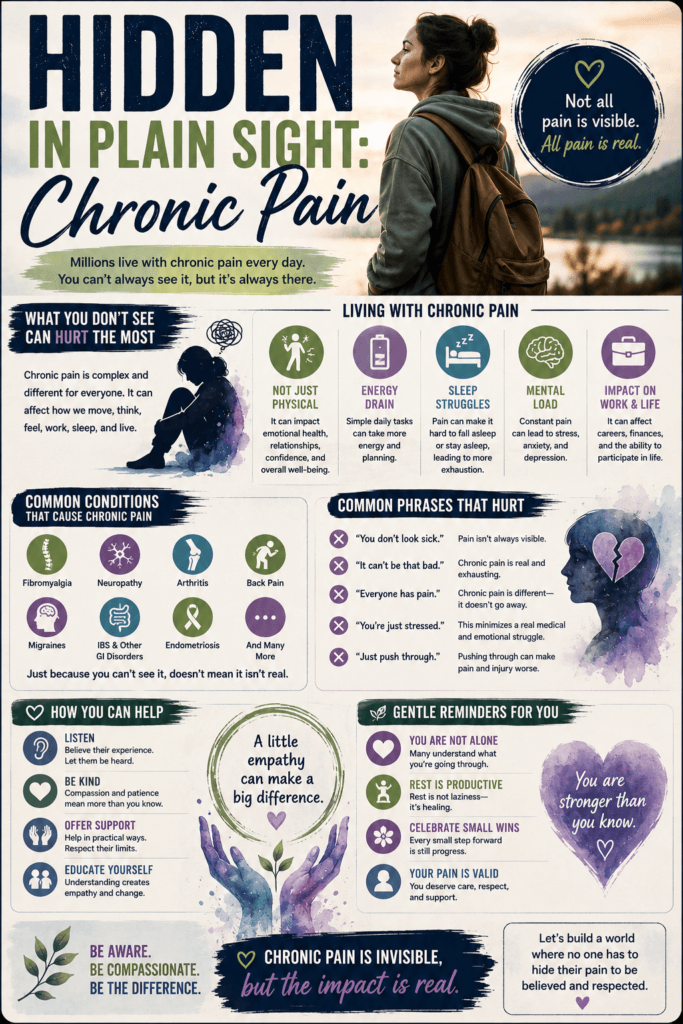
Chronic pain is something that hides really well. It doesn’t show up in the same way for everyone, and a person might look totally fine even when they’re struggling a lot on the inside. I’ve found that people dealing with long-term pain often hear, “But you don’t look sick.” That statement can feel pretty frustrating and isolating. Today, I want to share what hidden chronic pain is really like, why it can be so tricky for others to spot, and how everyone—including friends and family—can better support those living with it.
Understanding Hidden Chronic Pain
Chronic pain usually means pain that sticks around for more than three months, sometimes even for years. The thing with a lot of chronic illnesses, like fibromyalgia, migraines, arthritis, or endometriosis, is that you can’t usually see their symptoms on the outside. Someone might have severe pain, fatigue, or other symptoms, but they won’t have a visible injury, swelling, or anything that grabs attention.
This hidden pain can make daily life really challenging. Tasks that seem easy, like walking, sitting, or even just focusing, can require a lot of effort. People who deal with these symptoms often get really good at masking what they’re feeling to keep up with work, family, or social life. Because their pain isn’t obvious, they might get misunderstood or even judged unfairly.
The Centers for Disease Control and Prevention estimates that about 20% of adults in the U.S. live with chronic pain. This isn’t a small issue, and it affects people of all ages and backgrounds. Some of the most common conditions where pain is hard to spot include nerve damage, back injuries, and conditions like Crohn’s disease or lupus.
When you dig into how these conditions work, you find that pain signals keep firing even when there’s no visible reason. This can be exhausting for the person experiencing it and confusing or even frustrating for those around them who want to help but don’t see any outward signs. As a result, people with hidden pain often become experts at managing their own discomfort quietly, so they can appear “normal” in social situations.
Why People Hide Their Pain
There are lots of reasons why someone might hide their chronic pain. Sometimes it’s just easier to say “I’m fine,” even when they aren’t. Other times, people might feel embarrassed, worried about being a burden, or scared of being labeled lazy or dramatic. Social pressure can play a role, too. If everyone expects you to look or act a certain way, going against that by sharing how much you’re hurting can feel awkward or risky.
Some folks become experts at masking pain because that’s the only way they can hold down a job or take care of family. They might push through symptoms and keep things under wraps until they get home, then crash and need a lot of time to recover.
This pattern often leads to cycles of overexertion followed by intense exhaustion. It’s common for people with chronic pain to “save face” in public, only to pay the price later behind closed doors. This is another reason why chronic pain stays so invisible—because most people only see the good moments, not the rest and recovery that follow.
Invisible Symptoms: What Others Don’t See
Chronic pain doesn’t always just mean “hurting.” Symptoms can be wide-ranging and hard to explain to others who have never been through it:
- Fatigue: This isn’t just being tired. It’s more like dragging yourself through thick mud all day, even after a restful night.
- Cognitive Problems (often called “brain fog”): Trouble remembering things, focusing, or just thinking straight.
- Mood Changes: Pain can make anyone feel irritable, stressed, or even depressed over time.
- Sleep Problems: Many with chronic pain struggle to get comfortable enough to sleep well, which turns into a cycle of even worse pain and fatigue.
There can also be symptoms like dizziness, digestive issues, or sensitivity to light and sound, depending on the underlying condition. All of these can interfere with daily life in big ways.
None of these symptoms leave marks or show on the surface. You might see someone walking around, shopping, or sitting at a desk looking normal, while inside they’re counting the minutes until they can rest or take medication.
Everyday Challenges and Social Myths
Living with chronic pain means facing daily challenges that aren’t always obvious. Even just deciding what to eat, how to get dressed, or whether to join friends for coffee can take a lot of energy and planning. Those who deal with debilitating pain often have to cancel plans at the last minute or take frequent breaks, which can look flaky or unreliable from the outside.
There are also a lot of myths floating around, like the idea that if someone looks healthy or can walk, they’re “faking it.” This kind of thinking is really tough for people who are hurting but want to keep up with normal life. These misunderstandings can leave people feeling isolated and reluctant to share what’s really going on.
Another challenge comes from expectations at work and school. People with hidden pain may struggle to meet deadlines or attend every class, but fear speaking up about their limitations because they don’t want special treatment or to be seen as less capable. This can make it tough to balance self-care with the need to maintain a normal life.
How Chronic Pain Impacts Mental Health
One thing I’ve noticed while talking with people who experience hidden pain is how much their mental health is affected. Always pushing through discomfort and dealing with others’ skepticism creates a lot of stress. Anxiety and depression are more common among people with chronic pain, partly because they deal with so much uncertainty, fatigue, and misunderstanding. If the people around them don’t show support, it can make everything feel even heavier.
Dealing with hidden pain every day and feeling misunderstood can chip away at self-esteem and hopefulness. Some people start to question their own resilience or feel guilty for not “bouncing back” as quickly as others expect. Mental health support, such as counseling or therapy, can help balance the emotional load, along with community or peer support for shared understanding.
Quick Tips for Coping with Hidden Chronic Pain
Managing chronic pain that no one else can see takes lots of trial and error. Here are a few things that help many people I’ve connected with:
- Track Symptoms: Keeping a pain journal can help spot patterns or triggers. It’s also helpful information for doctors.
- Pace Yourself: Taking breaks and setting limits can make a big difference, even if it feels like you’re missing out sometimes.
- Find a Support System: Even having one or two people who “get it” can be really grounding.
- Communicate Needs: If you need to rest or adjust plans, sharing honestly can help avoid misunderstandings.
- Practice self-care: Gentle movement, low-key hobbies, or relaxing activities can help keep stress levels down and mood up.
Other people find mindfulness, meditation, or breathing techniques helpful for managing pain and related anxiety. Staying informed about their conditions through reliable sources also helps them feel equipped and confident in handling new challenges.
Barriers to Getting Help
Getting the right help isn’t always smooth. Sometimes doctors, friends, or coworkers don’t see the pain or don’t fully believe how tough things are. The process of finding a diagnosis for many hidden pain conditions can take years. This can make people feel frustrated and, at times, want to give up on seeking help altogether.
Chronic pain is also really individual. What works for one person—such as a specific medication, physical therapy, or diet change—might not work for another. This means there’s often a lot of experimenting and sometimes disappointment involved.
Health insurance limitations, long appointment wait times, and a lack of compassionate care can add extra stress. Advocating for yourself in medical settings is a skill many pain patients have to learn, which can feel intimidating for those not used to speaking up.
Doctor-Patient Communication
One practical tip: describe symptoms in as much detail as possible and don’t leave anything out, even if it seems unrelated. Using a symptom journal during appointments helps doctors see trends and take complaints more seriously.
It’s a good idea to bring a trusted friend or family member to appointments, if possible, because having someone else hear and remember details can make follow-up care smoother. Remember to ask questions about treatments and side effects, and don’t be afraid to seek a second opinion if something doesn’t feel right.
Tackling Stigma and Raising Awareness
The easiest way to start making things better is to talk openly and listen carefully. Even just believing someone when they say they’re in pain goes a long way. Avoiding assumptions and asking questions can help build better understanding between people who live with chronic pain and those who don’t experience it themselves.
Raising awareness, from conversations with friends to online posts, can challenge old myths and build a stronger community. There are also great online groups, websites, and resources where people share support and advice (for example, the American Chronic Pain Association has many resources).
Local workshops or webinars at community centers and libraries are also places where people can learn more, ask questions, and hear stories from those living with chronic pain. Bringing visibility to these invisible struggles helps lessen the burden, one informed conversation at a time.
Practical Support: How Family and Friends Can Help
Supporting someone dealing with hidden chronic pain doesn’t require grand gestures. Some simple things that can make a huge difference include:
- Believe them when they say they’re hurting, even if you don’t see it.
- Offer help, like running errands or just hanging out without needing to talk about pain.
- Check in regularly to remind someone they aren’t alone.
- Understand that canceled plans or mood changes aren’t personal—they’re part of living with pain.
Encourage rest when it’s needed and be flexible about activities. Let people set their own pace and be a source of encouragement rather than pressure. A kind word or patient ear is sometimes the most valuable support you can give. Sometimes just listening can offer comfort, especially when there are no easy answers to the pain itself.
Real-World Applications: Adapting for Daily Life
I know lots of folks who have made their spaces more comfortable by adding supportive chairs, using heating pads, or investing in gadgets that make things easier. Some workplaces offer adjustable desks or flexible schedules for people with chronic pain, helping them stay employed while managing symptoms.
- Home Modifications: Grab bars, ergonomic tools, or better lighting can make daily routines easier.
- Workplace Support: Flexible hours, remote work, or dedicated rest areas can help maintain productivity and reduce stress.
- Community Resources: Local pain clinics, support groups, and online education can make recovery and adjustment less lonely.
Some communities even offer adaptive exercise classes, which create a safe and inclusive space to move at your own pace. Home delivery services for groceries or apps that assist with reminders and scheduling can reduce physical strain and help people conserve energy for things they enjoy.
Frequently Asked Questions
Some questions come up often from people who are new to the idea of invisible illness or who want to support someone living with it:
Question: What’s the best way to support someone with hidden chronic pain?
Answer: Listen without judging and offer practical help with day-to-day things. Sometimes, a simple check-in text helps more than you’d think.
Question: How can you explain invisible pain to others?
Answer: Using metaphors like “my body has an internal storm going on” or “it feels like a phone battery that never fully charges” can help others grasp the experience.
Question: Are there treatments that work for hidden chronic pain?
Answer: There’s no one-size-fits-all answer. Treatments can include medications, physical therapy, counseling, gentle exercise, or diet adjustments. Working closely with healthcare providers and being patient with the process is helpful.
Living Well with Hidden Pain
Even if you can’t see someone’s pain, their challenges are real. Being open to learning and showing genuine understanding really helps. For anyone living with chronic pain, self-compassion and connecting with others who understand can bring much-needed relief. Everyday adjustments, like rest or using helpful tools, can make a world of difference and let people focus on what matters most to them.
Video: What You Don’t See: The Reality of Chronic Pain