Talking openly about addiction takes courage, especially for celebrities who usually have their private struggles publicized every day. I’ve seen how putting tough moments out there can make a difference for regular people, simply by showing that even the rich and famous can feel lost or overwhelmed by addiction. When stars step up and share their paths to recovery, it helps break the stigma that makes many folks feel alone. In this article, you’ll get a look at some eye-opening stories, the importance of shifting perspectives, practical things I picked up from celebrity stories, and what we can all learn when fame meets recovery.
Why Stigma Still Surrounds Addiction, even for the Famous
Even with countless awareness campaigns out there, addiction is still surrounded by shame and misunderstanding. From what I’ve seen, much of this stigma traces back to old beliefs—that addiction is about weakness or bad choices—when it’s really a health issue like diabetes or asthma. But for celebrities, these challenges get even more intense. Not only do they deal with public scrutiny, but every mistake or relapse shows up in the tabloids. This creates a kind of silence around the topic, where people are afraid to speak up or seek help because they don’t want to be judged.
Media coverage can be harsh, focusing on dramatic headlines rather than on honest stories of struggle and hope. When stars come forward, they receive both encouragement and hurtful comments. Still, when someone in the spotlight breaks their silence, it gives others, celebrity or not, permission to be honest about their own battles with addiction. This is crucial for dismantling the shame that keeps people sick or prevents them from seeking support.
Celebrities Who’ve Battled Addiction: Stories That Inspire
Lots of famous faces have talked openly about their addictions, and a lot of those stories are way more relatable than you might expect. Here are a few examples that really stand out:
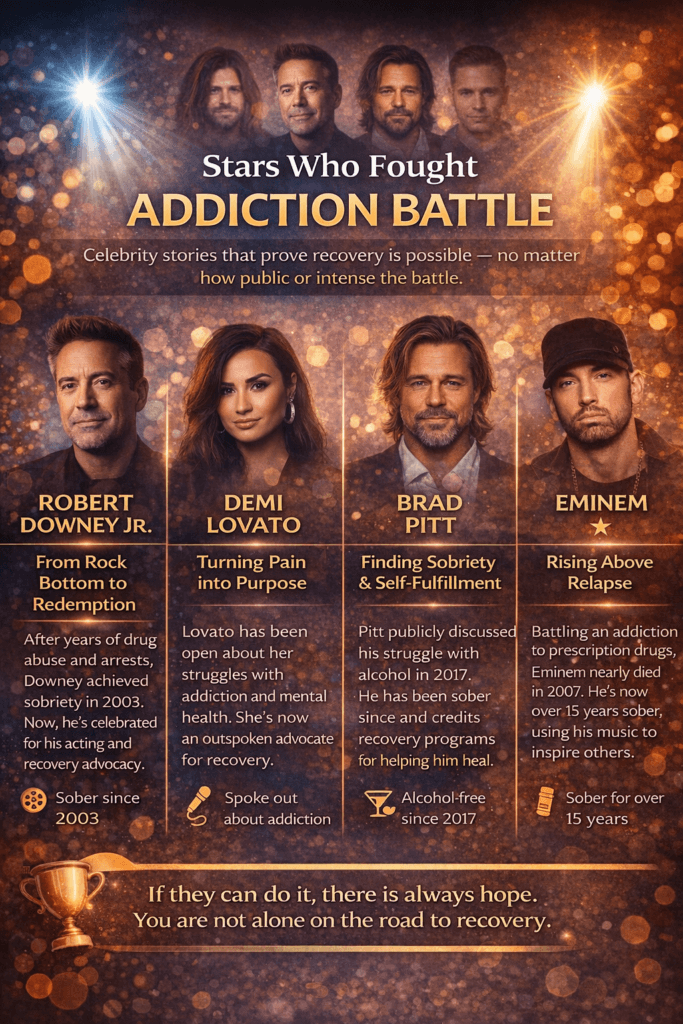
- Robert Downey Jr.: Famous now for blockbusters like Iron Man, Robert Downey Jr. spent years battling substance misuse, run-ins with the law, and repeated rehab stints. He’s always been refreshingly honest about addiction being a complicated, long-term process and credits support networks and therapy for his turnaround. His comeback is proof that careers and lives can be rebuilt after addiction.
- Demi Lovato: Demi’s straightforwardness has helped countless fans, especially younger ones. She’s been upfront about living with addiction, eating disorders, and mental health challenges. Her story shows recovery doesn’t always move in a straight line, and setbacks are a natural part of the process.
- Elton John: Elton John has been candid about how substance use almost cost him everything. He shares that getting clean required making real-life changes. Now, he speaks at recovery events and funds organizations to support others.
- Dax Shepard: Dax Shepard is another celebrity who gets real about his sobriety on his podcast, mentioning frequent relapses and long stretches of being clean. He makes it clear that talking about addiction shouldn’t bring shame.
- Drew Barrymore: Drew grew up as a child star and grappled with addiction at a young age. She’s discussed multiple rehab stints as a teenager and how family support eventually helped her find a stable path.
Stories like these show that addiction isn’t about fame or money, but about real-life challenges, family, and mental health. These stories matter because they remind us that recovery is possible for anyone, and having support can really make a difference.
Changing the Conversation: Why Celebrity Advocacy Matters
When someone everyone recognizes talks directly about addiction, it can reshape the entire public conversation. Suddenly, it’s not just a “tabloid scandal” but also a health issue many people face. I’ve noticed that advocacy by celebrities tends to:
- Kickstart tougher conversations between families, friends, and even employers about what addiction really looks like.
- Encourage people to see addiction as a treatable condition, making it more likely they’ll get or offer help without judgment.
- Highlight the limits of “willpower” language, replacing it with talk of therapy, support programs, and steady progress.
Seeing someone who “has it all” admit to needing help can motivate others who feel stuck or ashamed. Celebrity advocacy also shines a spotlight on rehab programs, hotlines, and mental health resources, making these supports easier to find and less taboo to talk about. In a world where silence isolates, every bit of honest talk from someone in the public eye nudges that boundary and pulls more people in.
Getting Started: Steps Celebrities Have Taken (That Anyone Can Try)
Everyone’s ride toward recovery looks a little different, but there are some practical steps I noticed in celebrity stories that anyone can use:
- Admitting there’s a problem: Some say this is the toughest step. Realizing there are unhealthy patterns, just like Robert Downey Jr. did, is the starting point for getting better.
- Looking for support groups: People like Demi Lovato and Dax Shepard talk openly about the power of group support (like 12-step meetings or group therapy). Sharing your experience with those who understand can make things less lonely.
- Turning to professionals: Nearly every celebrity recovery story involves therapists, counselors, or doctors. Medical help isn’t just for those with fame—community health centers, online platforms, and local agencies are great resources.
- Building new routines: Elton John credits new hobbies and patterns for his long-term recovery. Filling your time with new and healthy activities is really important for keeping your mind and body engaged.
- Accepting the possibility of relapse: Many advocates, like Dax Shepard, remind others that slips can happen. Being gentle with yourself during hard times keeps you from losing momentum.
Additionally, making healthy lifestyle changes, such as focusing on nutrition, establishing an exercise routine, or practicing mindfulness, plays an essential role in maintaining long-term recovery. Taking small, manageable steps can lay the groundwork for lasting change, no matter your background.
Bumps in the Road: Common Challenges (and How Stars Managed Them)
No matter who you are, dealing with addiction usually brings its own set of hurdles. Here are some challenges that pop up a lot in the stories I’ve followed, along with how folks in the spotlight navigate them:
- Staying clean under pressure: Public life is full of stress and temptation. Many stars lean on sober companions or close friends when faced with high-pressure events.
- Coping with public scrutiny: Anyone can relate to feeling judged, not just celebrities. They often create boundaries—like staying away from certain social situations—and make regular use of therapy to help with anxiety and shame.
- Handling relapse: Rather than seeing relapse as a deal-breaker, advocates such as Demi Lovato encourage viewing it as a setback that gives you another chance to try again.
- Talking to loved ones: Recovery is strongest with a support system. Celebrities who’ve shared their ride have mentioned the hard work of rebuilding trust and the need for patience and encouragement from family or friends along the way.
Knowing that public figures work through many of the same problems makes recovery feel more within reach, not just possible for a lucky few. It also reminds us that the need for ongoing support never goes away, even once the headlines fade.
Practical Takeaways: What We Can Learn from Celebrity Recovery Stories
After reading many interviews and memoirs, I noticed a few things pop up again and again in success stories:
- Openness breaks down walls: When celebrities share their lowest moments, it lowers the barrier for everyone to talk about addiction honestly.
- Recovery needs a team: Friends, family, therapists, and peers are all vital for lasting recovery. Going alone rarely leads to long-term success.
- Patience is key: The pace of recovery differs for everyone. Setbacks don’t erase progress; they shape it and make you stronger.
- Education helps: Learning how addiction works, from brain chemistry to environmental factors, builds empathy for both those struggling and the people who care about them.
In addition, keeping up with self-reflection, setting small milestones, and celebrating personal wins can go a long way in making recovery sustainable. Help often comes in unexpected ways, and seeing that reflected in celebrity stories makes it easier to believe your own progress is possible.
Frequently Asked Questions
Question: Does talking publicly about addiction really help reduce stigma?
Answer: Yes, watching familiar faces share their personal stories takes some of the fear and shame away, making it easier for others to be honest and get support.
Question: Have celebrities faced criticism when discussing their sobriety?
Answer: Many celebrities have received support alongside some backlash, but in general, public perception has become more welcoming and open as more stars share their recovery stories.
Question: What resources can everyday people turn to for addiction support?
Answer: There are public hotlines, online forums, community groups, local recovery centers, and mental health apps. These resources are open to everyone, not just those with celebrity status.
What’s Next: Moving Forward Together
Open conversations about addiction, often inspired by celebrities who choose to share their recovery, pave the way for all of us to ask for help, offer support, or rethink old ideas about addiction. No story is too small, and being open might touch someone else’s life. Over time, breaking the stigma doesn’t just change opinions. It grows space for more people to heal without fear or shame.
If you or someone close to you is struggling, reaching out is always a good move. Stumbling upon support networks, checking out others’ stories, and remembering that progress comes in its own time and shape can help keep hope alive. Resources are available, and recovery is possible, no matter where you’re starting from. Remember, just being honest about where you are is one of the biggest steps forward you can take.
Video: These Celebrities Lost Everything to Addiction 😱 #SubstanceAbuse #Celebrity #SobrietyJourney