Trauma can change how a person experiences the world. After surviving childhood abuse, domestic violence, sexual assault, neglect, or other distressing events, even familiar environments may feel unpredictable or unsafe. A sudden noise, an unexpected visitor, or a difficult conversation can trigger emotional responses connected to past experiences.
For trauma survivors, rebuilding a sense of safety is an important part of emotional recovery. However, creating a safe space involves more than finding a quiet room or avoiding stressful situations. It requires developing physical security, emotional stability, healthy relationships, and a supportive environment where individuals feel respected and empowered.
A safe space is not necessarily a place where uncomfortable emotions never occur. Instead, it is an environment where individuals can express themselves without fear of abuse, establish personal boundaries, and access support when they need it.
Through self-management strategies, family involvement, and community resources, trauma survivors can gradually rebuild trust, develop healthier coping mechanisms, and regain a sense of control over their lives.
Healing begins when individuals feel safe, heard, respected, and supported.
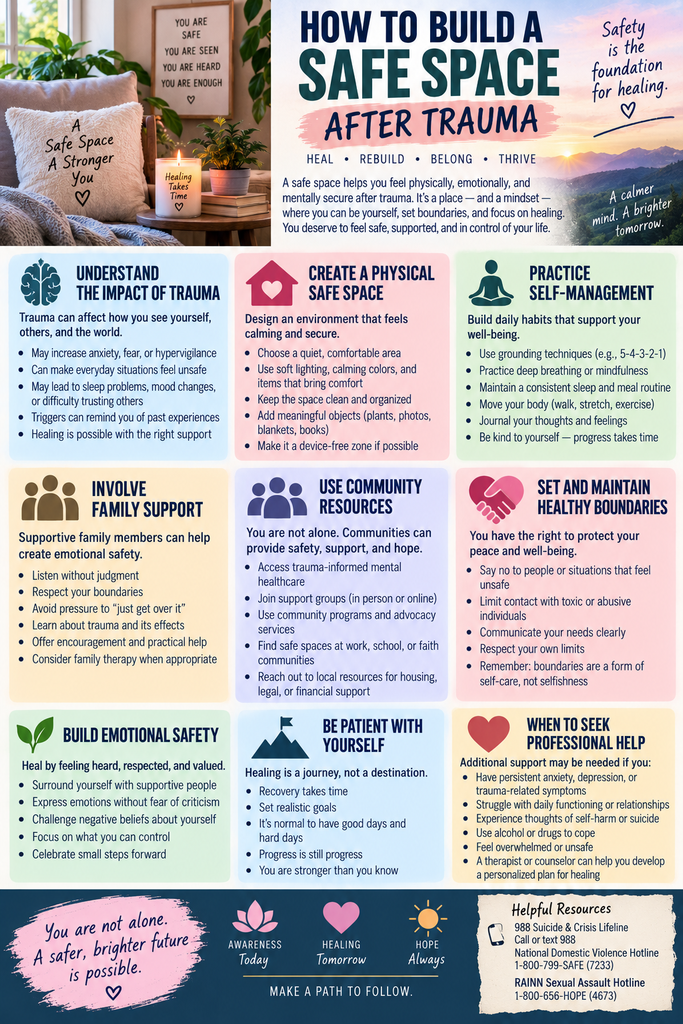
Understanding How Trauma Affects a Person’s Sense of Safety
Trauma occurs when an individual experiences or witnesses an event that overwhelms their ability to cope or threatens their physical or psychological well-being.
Traumatic experiences may include:
- Childhood physical, emotional, or sexual abuse.
- Domestic violence or intimate partner violence.
- Sexual assault or harassment.
- Emotional neglect or abandonment.
- Serious accidents or life-threatening medical events.
- Exposure to community violence.
- Sudden loss of a loved one.
- Bullying, intimidation, or repeated threats.
Not everyone who experiences these events develops long-term psychological difficulties. However, some individuals experience persistent changes in their stress responses, emotional regulation, and ability to trust others.
Why trauma survivors may struggle to feel safe
The brain’s stress-response systems help individuals recognize potential danger and respond to threatening situations.
After trauma, some individuals become more sensitive to environmental cues associated with their experiences.
For example, someone who grew up in a household affected by domestic violence may become distressed when hearing raised voices, even when the current disagreement does not involve physical danger.
This heightened sensitivity is sometimes called hypervigilance.
Common trauma-related responses include:
- Constantly monitoring the environment for potential threats.
- Feeling uncomfortable around unfamiliar people.
- Experiencing intense emotional reactions to unexpected situations.
- Avoiding locations or conversations associated with past trauma.
- Having difficulty relaxing or sleeping.
- Feeling disconnected from others.
- Experiencing emotional numbness or difficulty expressing feelings.
These responses may represent adaptations to earlier threatening environments.
However, when they persist after the danger has passed, they can interfere with relationships, daily functioning, and emotional well-being.
Creating a safe space can help individuals develop a greater sense of predictability and control while they work toward recovery.
What Does a Safe Space After Trauma Look Like?
A safe space is an environment where individuals experience physical protection, emotional respect, personal autonomy, and opportunities for supportive connection.
It may be a bedroom, home, therapist’s office, support group, workplace, or another setting where a person feels comfortable and secure.
However, safety is not determined by physical surroundings alone.
A beautifully decorated room may still feel unsafe if someone fears criticism, intimidation, or unwanted contact.
Likewise, a simple environment can provide meaningful comfort when it includes respectful relationships and predictable routines.
Four essential components of a trauma-informed safe space
1. Physical safety
The environment is free from immediate threats, violence, intimidation, and unwanted physical contact.
2. Emotional safety
Individuals can express their feelings without being mocked, threatened, humiliated, or punished for them.
3. Personal autonomy
People have appropriate control over their bodies, belongings, personal information, and decisions.
4. Supportive relationships
Trusted individuals demonstrate consistency, respect boundaries, and provide assistance without creating additional pressure.
These components work together to create an environment that supports emotional recovery.
Self-Management Strategies: Creating Your Personal Safe Space
Self-management involves developing practical skills to recognize emotional triggers, regulate stress responses, and maintain healthier daily routines.
For trauma survivors, self-management can also involve creating a physical environment that promotes comfort, predictability, and personal control.
Create a calming physical environment
A personal safe space does not need to be expensive or elaborate.
It may be a quiet corner of a bedroom, a comfortable chair near a window, or another location where an individual can relax without unnecessary interruptions.
Consider incorporating:
- Comfortable seating, blankets, or pillows.
- Soft lighting or access to natural light.
- Calming colors and familiar objects.
- Plants, artwork, or photographs associated with positive memories.
- Headphones or gentle background music.
- A journal, book, or other relaxing activity.
- Easy access to water and other basic necessities.
Personal preferences are important.
Some individuals find dim lighting relaxing, while others feel safer in brightly lit environments. Certain sounds, scents, or objects may be comforting to one person but triggering to another.
The goal is to create an environment that feels comfortable and manageable for the individual rather than following a universal design.
Establish predictable daily routines
Trauma can disrupt a person’s sense of stability and control.
Consistent routines may help reduce uncertainty and create a greater sense of predictability.
Helpful strategies include:
- Maintaining regular sleep and wake times.
- Eating meals at consistent intervals.
- Scheduling time for physical activity.
- Establishing a relaxing bedtime routine.
- Setting aside time for hobbies and enjoyable activities.
- Planning breaks during demanding workdays.
- Creating a manageable schedule for household responsibilities.
Routines should provide structure without becoming rigid rules that create additional stress.
Flexibility is important because unexpected events are a normal part of daily life.
Learn to Recognize and Manage Emotional Triggers
Trauma-related triggers are situations, memories, sensory experiences, or interpersonal interactions that produce distress associated with earlier traumatic events.
Triggers vary considerably between individuals.
For example, a survivor of domestic violence may become distressed when someone raises their voice, while a survivor of childhood neglect may experience intense anxiety when a trusted person becomes emotionally unavailable.
How to identify personal triggers
Start by noticing situations that produce unusually strong emotional or physical responses.
Common warning signs include:
- Rapid heartbeat or shallow breathing.
- Muscle tension or trembling.
- Sudden feelings of fear or anger.
- Difficulty concentrating.
- An urge to escape or withdraw.
- Feeling disconnected from the present moment.
Keeping a journal may help identify patterns between particular situations and emotional responses.
However, individuals should not feel pressured to document traumatic memories in detail if doing so increases distress.
Practice grounding techniques
Grounding techniques can help individuals redirect their attention toward the present moment when they experience overwhelming emotions or trauma-related memories.
One commonly used approach is the 5-4-3-2-1 grounding exercise.
Identify:
- Five things you can see.
- Four things you can physically feel.
- Three things you can hear.
- Two things you can smell.
- One thing you can taste.
This exercise encourages attention to the immediate environment rather than distressing memories.
Other helpful techniques may include controlled breathing, placing both feet firmly on the floor, holding a comforting object, or describing the current surroundings.
Grounding techniques do not eliminate trauma, but they may help individuals manage acute emotional distress.
If a technique increases anxiety or dissociation, stop using it and consider an alternative with guidance from a mental health professional.
Establish Healthy Boundaries to Protect Emotional Safety
Personal boundaries are an important part of creating a safe space after trauma.
Individuals who experienced childhood abuse, coercion, or emotionally harmful relationships may have learned that expressing personal needs could lead to conflict or punishment.
As adults, they may struggle to say no, ask for privacy, or recognize when someone is violating their boundaries.
Developing healthier boundaries can help restore a sense of autonomy and personal control.
Examples of healthy boundaries
Physical boundaries
Individuals have the right to decide who touches them and when physical contact is welcome.
Emotional boundaries
People can decline conversations that feel overwhelming or involve repeated criticism, intimidation, or manipulation.
Time boundaries
Individuals can limit social interactions and reserve time for rest, treatment, or personal activities.
Privacy boundaries
Trauma survivors can decide whether, when, and with whom they share details about their experiences.
Practical ways to communicate boundaries
Helpful statements may include:
- “I need some time alone before continuing this conversation.”
- “Please ask before touching or hugging me.”
- “I am not comfortable discussing that experience right now.”
- “I would prefer to talk about this when we are both calm.”
- “I appreciate your concern, but I need to make this decision myself.”
Healthy boundaries should be communicated respectfully whenever possible.
However, individuals experiencing ongoing abuse or coercion may need additional safety planning before attempting to establish boundaries with someone who could respond aggressively.
A safe space allows individuals to express their needs without fear of punishment or retaliation.
Emotional Safety: Learning to Trust Yourself Again
Trauma can affect how individuals interpret their emotions, evaluate their decisions, and perceive their personal worth.
Some survivors develop persistent feelings of shame, guilt, or self-doubt.
Others may struggle to recognize their needs because they have spent years prioritizing others’ emotional reactions.
Rebuilding emotional safety involves developing greater self-awareness and learning to respond to difficult emotions with compassion rather than criticism.
Practice self-compassion
Self-compassion involves treating yourself with the same understanding and respect you would offer someone else experiencing emotional pain.
Helpful practices include:
- Recognizing that trauma responses are not signs of personal weakness.
- Avoiding self-blame for abuse or violence committed by others.
- Allowing yourself to experience emotions without immediately judging them.
- Acknowledging progress without expecting immediate recovery.
- Recognizing that needing support does not diminish personal independence.
For individuals recovering from childhood abuse, challenging negative beliefs about personal worth may be an important part of treatment.
Develop emotional regulation skills
Emotional regulation involves recognizing feelings and responding to them in ways that support well-being.
Practical strategies include:
- Taking a brief break when emotions become overwhelming.
- Practicing controlled breathing or relaxation exercises.
- Engaging in regular physical activity.
- Maintaining consistent sleep habits.
- Expressing emotions through writing, art, or music.
- Discussing difficult feelings with a trusted individual.
These strategies may help manage everyday emotional distress.
However, persistent trauma-related symptoms may require professional mental health treatment.
Family Support Strategies: Creating a Trauma-Informed Home
Family members can play an important role in helping trauma survivors develop a greater sense of emotional security.
However, family involvement should prioritize safety, respect, and the survivor’s personal preferences.
Not every family relationship is supportive, and individuals should never be pressured to maintain contact with someone who has abused or threatened them.
Listen without judgment
One of the most important ways families can provide emotional safety is by listening without minimizing or dismissing a survivor’s experiences.
Helpful responses include:
- “Thank you for trusting me enough to share this.”
- “I believe you.”
- “What happened was not your fault.”
- “You deserve to feel safe.”
- “How can I support you right now?”
Family members should avoid demanding detailed explanations or pressuring individuals to discuss traumatic experiences before they are ready.
Respect personal boundaries
Trauma survivors may need additional control over their personal space, physical contact, and emotional interactions.
Families can demonstrate respect by:
- Asking permission before initiating physical contact.
- Knocking before entering private spaces.
- Avoiding unexpected visitors when possible.
- Respecting requests for quiet time.
- Allowing individuals to decline emotionally difficult conversations.
- Avoiding pressure to forgive or reconcile with an abusive relative.
These behaviors help establish predictability and reinforce personal autonomy.
Create consistent and respectful communication
Families can reduce unnecessary emotional stress by setting clear communication expectations.
Helpful approaches include:
- Avoiding threats, intimidation, and verbal abuse.
- Discussing disagreements without personal attacks.
- Taking breaks when conversations become heated.
- Communicating changes in household routines when possible.
- Following through on commitments.
- Acknowledging mistakes and taking responsibility for harmful behavior.
Consistency can help rebuild trust, particularly for individuals who grew up in unpredictable environments.
Consider family therapy when appropriate
Family therapy may help relatives improve communication, understand trauma-related responses, and develop healthier relationship patterns.
However, joint therapy involving an abusive family member may be inappropriate when violence, coercion, or intimidation is ongoing.
Individual safety and professional guidance should take priority.
Community Support Strategies: Building Safety Beyond the Home
A person’s sense of safety is influenced not only by their home environment but also by their workplace, school, healthcare system, and broader community.
Trauma survivors may experience additional stress when they encounter discrimination, financial instability, unsafe housing, or limited access to mental healthcare.
Community resources can help address these challenges while creating opportunities for supportive social connection.
Expand access to trauma-informed mental healthcare
Trauma-informed care recognizes that past traumatic experiences may influence how individuals respond to healthcare environments, interpersonal interactions, and treatment recommendations.
Healthcare organizations can create safer environments by:
- Explaining procedures before initiating physical examinations.
- Asking permission before physical contact.
- Respecting patient privacy and confidentiality.
- Offering choices when clinically appropriate.
- Avoiding unnecessary requests to repeat traumatic experiences.
- Providing access to qualified mental health professionals.
- Establishing clear procedures for responding to emotional distress.
Trauma-informed care emphasizes safety, trust, collaboration, empowerment, and respect for individual choice.
Develop supportive community spaces
Community organizations can provide environments where individuals feel connected and respected.
Examples include:
- Trauma survivor support groups.
- Community mental health centers.
- Peer recovery programs.
- Domestic violence shelters.
- Sexual assault survivor advocacy organizations.
- Community wellness and recreation programs.
- Faith-based support services when aligned with individual preferences.
These resources may help reduce isolation and improve access to practical assistance.
Create safer workplaces and schools
Workplaces and educational institutions can support trauma survivors by developing policies that promote respectful communication and protect individuals from harassment or intimidation.
Helpful strategies include:
- Establishing clear anti-harassment policies.
- Providing confidential reporting procedures.
- Offering access to counseling or employee assistance programs.
- Training staff to recognize and respond appropriately to trauma-related distress.
- Allowing reasonable flexibility when appropriate.
- Promoting respectful conflict resolution.
Creating safer environments benefits both trauma survivors and the broader community.
Building a Safe Space During Addiction Recovery
Trauma and substance use disorders can occur together, although not everyone who experiences trauma develops an addiction.
Some individuals may use alcohol or drugs to temporarily manage painful memories, anxiety, emotional numbness, or sleep disturbances.
However, substance use can worsen emotional regulation, disrupt sleep, and increase the risk of developing a substance use disorder.
For individuals recovering from addiction, creating a safe environment may involve addressing both trauma-related symptoms and substance-related triggers.
Self-management strategies during addiction recovery
Helpful approaches include:
- Identifying emotional and environmental triggers associated with substance use.
- Developing a personalized relapse prevention plan.
- Maintaining consistent sleep, nutrition, and exercise routines.
- Practicing grounding techniques when cravings or trauma-related distress occur.
- Attending scheduled treatment appointments.
- Taking prescribed medications as directed.
- Establishing boundaries with individuals who encourage substance use.
- Developing a plan for responding to cravings or potential relapse.
Individuals receiving medication treatment for opioid or alcohol use disorders should continue their prescribed treatment unless changes are recommended by their healthcare professional.
Family support during addiction recovery
Families can help create a recovery-supportive environment by:
- Encouraging treatment without shame or criticism.
- Avoiding threats or emotionally harmful communication.
- Respecting the individual’s privacy and treatment decisions.
- Supporting healthy daily routines.
- Learning about the relationship between trauma and substance use.
- Maintaining appropriate personal boundaries.
- Participating in family education or counseling when appropriate.
Family support should not involve controlling every aspect of the individual’s recovery.
The goal is to encourage safety, accountability, and personal autonomy.
Community support during addiction recovery
Community organizations can strengthen recovery by providing access to:
- Evidence-based addiction treatment.
- Trauma-informed mental healthcare.
- Medication treatment for substance use disorders.
- Peer recovery support.
- Stable housing and employment assistance.
- Transportation to healthcare appointments.
- Community-based recovery programs.
Integrated treatment can help individuals address trauma-related symptoms and substance use problems together rather than treating them as entirely separate concerns.
When a Safe Space Is Not Enough: Recognizing the Need for Professional Help
Creating a safe environment can support trauma recovery, but environmental changes and self-management strategies may not fully address persistent trauma-related symptoms.
Some individuals experience significant distress even when they are no longer exposed to the original traumatic situation.
Professional treatment may be appropriate when symptoms interfere with relationships, employment, sleep, or daily functioning.
Signs that additional support may be needed
Consider seeking professional evaluation if you experience:
- Persistent nightmares or intrusive traumatic memories.
- Frequent panic attacks or intense anxiety.
- Severe emotional distress during ordinary interactions.
- Avoidance that significantly limits daily activities.
- Persistent depression or hopelessness.
- Difficulty maintaining relationships.
- Increased reliance on alcohol or drugs to manage emotions.
- Thoughts of self-harm or suicide.
A qualified mental health professional can assess symptoms and recommend an individualized treatment plan.
Evidence-based treatment options
Depending on the individual’s symptoms and clinical needs, treatment may include:
- Trauma-focused cognitive behavioral therapy.
- Cognitive processing therapy.
- Prolonged exposure therapy.
- Eye movement desensitization and reprocessing (EMDR).
- Treatment for co-occurring depression or anxiety.
- Integrated treatment for trauma and substance use disorders.
A trauma-informed therapist can also help individuals gradually develop confidence in navigating situations that feel uncomfortable but are not objectively dangerous.
The goal of recovery is not to avoid every possible reminder of trauma. It is to develop the skills, support, and confidence needed to live more freely and safely.
A Practical Seven-Day Plan for Creating a Safe Space After Trauma
Building a safe space does not have to happen all at once.
Small, manageable changes can help individuals feel more stable and in control.
The following seven-day plan provides a starting point.
Day 1: Identify what helps you feel safe
Reflect on the environments, people, and activities that provide comfort.
Write down three things that help you feel calm and three situations that tend to increase emotional distress.
Avoid forcing yourself to revisit traumatic memories.
Day 2: Create a calming physical environment
Choose a location where you can relax without unnecessary interruptions.
Add comforting objects, adjust the lighting, and organize the space to match your personal preferences.
Day 3: Establish one healthy boundary
Identify a boundary that would improve your emotional well-being.
Practice communicating it clearly and respectfully in a safe relationship.
Day 4: Practice a grounding technique
Choose a grounding exercise that feels comfortable.
Practice it during a calm moment, so it becomes more familiar before you need it during emotional distress.
Day 5: Connect with a supportive person
Reach out to a trusted friend, family member, therapist, or support group.
You do not need to discuss traumatic experiences to benefit from supportive social connection.
Day 6: Develop a predictable daily routine
Choose one manageable routine, such as maintaining a consistent bedtime, taking a daily walk, or scheduling time for relaxation.
Day 7: Review your progress
Reflect on which changes improved your sense of comfort and which strategies were less helpful.
Consider whether additional support from a mental health professional would be beneficial.
Recovery does not follow a fixed timeline. Individuals can adapt this plan according to their needs and circumstances.
What Does Long-Term Emotional Safety Look Like?
Building a safe space after trauma is an ongoing process rather than a single achievement.
As individuals develop healthier coping skills and supportive relationships, they may feel more confident in their ability to manage stressful situations.
Signs of progress may include:
- Feeling more comfortable expressing personal needs.
- Recognizing emotional triggers without becoming overwhelmed.
- Establishing and maintaining healthy boundaries.
- Developing greater trust in supportive relationships.
- Experiencing fewer disruptions from trauma-related symptoms.
- Feeling more confident making personal decisions.
- Participating in meaningful activities without excessive avoidance.
- Seeking assistance when additional support is needed.
Progress may occur gradually, and temporary increases in distress do not necessarily mean that recovery has failed.
Long-term emotional safety involves learning to recognize genuine danger while building confidence in managing everyday uncertainty and emotional discomfort.
Conclusion: Creating a Safe Space Is an Important Step Toward Healing
Building a safe space after trauma involves more than creating a comfortable physical environment. It requires establishing emotional security, healthy boundaries, predictable routines, and relationships built on respect and trust.
Self-management strategies can help individuals recognize triggers, regulate emotions, and develop greater personal autonomy. Families can support recovery through compassionate communication, consistent behavior, and respect for individual boundaries. Communities can strengthen these efforts by providing trauma-informed healthcare, supportive services, and environments that prioritize safety and dignity.
For individuals recovering from both trauma and addiction, a safe environment can also support treatment engagement, healthier coping strategies, and long-term recovery.
Most importantly, creating a safe space does not mean avoiding every uncomfortable situation or eliminating all emotional distress.
It means creating an environment where individuals feel protected, can express their needs, make informed choices, and gradually rebuild confidence in themselves and the world around them.
Healing takes time, and every step toward greater safety, stability, and self-compassion matters.
Resources for Trauma Survivors
If you or someone you know is experiencing trauma-related distress, domestic violence, or a mental health crisis, confidential support is available.
988 Suicide & Crisis Lifeline: Call or text 988 for immediate mental health crisis support.
National Domestic Violence Hotline: Call 1-800-799-SAFE (7233) for confidential assistance, safety planning, and information about local resources.
RAINN National Sexual Assault Hotline: Call 800-656-HOPE (4673) for support related to sexual assault.
SAMHSA National Helpline: Call 1-800-662-HELP (4357) for information about mental health and substance use treatment services.
If someone is in immediate danger, call 911.
Frequently Asked Questions
Here are some common questions:
1. What is a safe space after trauma?
A safe space after trauma is an environment where individuals feel physically protected, emotionally supported, and respected. It may be a bedroom, home, therapist’s office, support group, or another setting that promotes comfort and stability.
A safe space allows individuals to express their emotions, establish personal boundaries, and make decisions without fear of abuse, intimidation, or judgment.
The goal is to create an environment that supports emotional healing, personal autonomy, and a greater sense of security.
2. Why is creating a safe space important for trauma recovery?
Trauma can affect how individuals perceive danger, regulate emotions, and respond to stressful situations. Some survivors experience hypervigilance, anxiety, sleep disturbances, or difficulty trusting others.
Creating a safe space can help reduce unnecessary stress, establish predictable routines, and provide opportunities to practice healthy coping strategies.
Although a supportive environment cannot eliminate trauma-related symptoms, it can strengthen emotional stability and complement professional treatment.
3. How can I create a safe space at home after experiencing trauma?
Start by identifying a place where you feel comfortable and can control your surroundings.
Helpful strategies include:
- Choosing a quiet, comfortable area.
- Using lighting and colors that promote relaxation.
- Adding familiar objects, plants, books, or photographs.
- Reducing unnecessary noise and interruptions.
- Establishing predictable daily routines.
- Creating boundaries around privacy and personal space.
Your safe space should reflect your individual needs rather than follow a specific design.
4. Does a safe space have to be a physical location?
No. A safe space can also involve emotional security, supportive relationships, and healthy coping strategies.
For example, a trusted friend, support group, or therapist may provide an environment where you feel comfortable discussing difficult emotions.
Some individuals also develop an internal sense of safety through grounding techniques, mindfulness, self-compassion, and emotional regulation skills.
However, psychological coping strategies cannot replace physical protection when someone is experiencing ongoing abuse or violence.
5. How does childhood trauma affect a person’s sense of safety?
Childhood trauma can influence how the brain and body respond to perceived threats. Children exposed to abuse, neglect, or unpredictable environments may develop heightened sensitivity to conflict or unfamiliar situations.
As adults, some survivors may struggle to trust others, set boundaries, or feel comfortable in relationships.
Supportive environments, consistent relationships, and appropriate mental health treatment can help individuals develop a greater sense of safety over time.
Self-Management and Emotional Safety
6. What self-management strategies can help create emotional safety after trauma?
Self-management strategies can help individuals recognize emotional triggers, regulate stress responses, and develop healthier coping mechanisms.
Helpful approaches include:
- Practicing mindfulness and grounding exercises.
- Maintaining consistent sleep and meal routines.
- Engaging in regular physical activity.
- Identifying situations that trigger emotional distress.
- Establishing healthy personal boundaries.
- Practicing self-compassion.
- Seeking professional mental health treatment when needed.
These strategies can support recovery but should not replace professional care when trauma symptoms significantly interfere with daily functioning.
7. What are trauma triggers, and how can I manage them?
Trauma triggers are situations, memories, sensory experiences, or interpersonal interactions that produce emotional or physical responses associated with earlier traumatic events.
Common triggers may include raised voices, unexpected physical contact, particular locations, or situations involving perceived rejection.
Helpful strategies include recognizing early warning signs, practicing grounding techniques, and identifying whether the current situation presents an actual threat.
A trauma-informed therapist can help individuals develop personalized strategies for managing triggers without relying entirely on avoidance.
8. What grounding techniques can help me feel safer after trauma?
Grounding techniques encourage individuals to focus on the present moment when they experience overwhelming emotions or distressing memories.
One commonly used method is the 5-4-3-2-1 grounding exercise, which involves identifying five things you can see, four things you can feel, three things you can hear, two things you can smell, and one thing you can taste.
Other techniques include placing both feet firmly on the floor, describing your surroundings, holding a comforting object, or practicing slow breathing.
Choose techniques that feel comfortable. If an exercise increases distress, stop and consider another approach.
9. How can I establish healthy boundaries after experiencing trauma?
Healthy boundaries involve communicating your needs and deciding what behaviors you are willing to accept in relationships.
Examples include asking others to respect your privacy, requesting permission before physical contact, declining emotionally overwhelming conversations, and limiting contact with individuals who repeatedly violate your boundaries.
Boundaries should prioritize personal safety and emotional well-being.
If someone responds to boundaries with threats or violence, seek professional guidance and consider developing a safety plan before attempting further confrontation.
10. Can mindfulness and meditation help trauma survivors feel safer?
Mindfulness and meditation may help some individuals improve emotional awareness, reduce stress, and develop healthier responses to distressing thoughts.
However, traditional meditation practices may increase anxiety, intrusive memories, or dissociation in certain trauma survivors.
Trauma-sensitive approaches may involve shorter exercises, keeping the eyes open, focusing on external surroundings, or practicing gentle movement.
A qualified mental health professional can help determine which techniques are appropriate for an individual’s symptoms and preferences.
Family Support and Healthy Relationships
11. How can family members help create a safe space for trauma survivors?
Family members can support trauma recovery by providing consistent, respectful, and emotionally supportive relationships.
Helpful approaches include:
- Listening without judgment.
- Respecting personal boundaries.
- Avoiding threats, intimidation, or verbal abuse.
- Asking permission before physical contact.
- Allowing individuals to discuss traumatic experiences at their own pace.
- Encouraging professional treatment when appropriate.
Family support should focus on creating safety rather than pressuring survivors to forgive, reconcile, or disclose painful memories.
12. What should I say to someone who has experienced trauma?
Supportive communication involves acknowledging the person’s experiences without minimizing their feelings or attempting to control their recovery.
Helpful statements include:
- “Thank you for trusting me enough to share this.”
- “What happened was not your fault.”
- “I believe you.”
- “You deserve to feel safe.”
- “How can I support you right now?”
Avoid statements such as “Just move on” or “Everything happens for a reason,” which may unintentionally dismiss the person’s emotional experience.
13. How can couples create emotional safety after one partner experiences trauma?
Couples can develop emotional safety through respectful communication, consistent behavior, and mutual understanding.
Helpful strategies include discussing personal boundaries, asking permission before physical intimacy, avoiding threatening behavior, and respecting requests for emotional space.
Partners should recognize that trauma-related responses may require patience and professional support.
Couples counseling may be helpful when both partners can participate safely and voluntarily. However, joint therapy may be inappropriate when abuse, intimidation, or coercive control is ongoing.
14. Should trauma survivors avoid people who remind them of past experiences?
Individuals should prioritize their safety and establish appropriate boundaries with people who engage in abusive, threatening, or harmful behavior.
However, avoiding every person or situation associated with past trauma may reinforce fear and limit daily functioning.
A trauma-informed therapist can help individuals distinguish genuine danger from situations that feel threatening because of earlier experiences.
Gradual, supported engagement with objectively safe situations may help reduce trauma-related avoidance.
15. Is forgiveness necessary to create emotional safety after trauma?
No. Forgiveness is a personal choice and is not required for emotional healing.
Trauma survivors can establish healthy boundaries, develop supportive relationships, and improve their emotional well-being without forgiving or reconciling with someone who harmed them.
Recovery should prioritize personal safety, autonomy, and the individual’s emotional needs.
Community Support and Professional Treatment
16. How can communities create safe spaces for trauma survivors?
Communities can support trauma survivors by providing accessible mental healthcare, confidential support services, and environments that promote respect and personal safety.
Important resources include trauma-informed healthcare facilities, survivor support groups, domestic violence shelters, sexual assault advocacy organizations, and community mental health programs.
Schools and workplaces can also establish clear anti-harassment policies, confidential reporting procedures, and access to appropriate support services.
17. What is trauma-informed care?
Trauma-informed care is an approach that recognizes how traumatic experiences may influence a person’s emotional responses, relationships, and interactions with healthcare professionals.
It emphasizes physical and emotional safety, trust, collaboration, empowerment, and respect for personal choice.
For example, a trauma-informed healthcare professional may explain a procedure before beginning, ask permission before physical contact, and offer appropriate choices during treatment.
The goal is to provide care that minimizes unnecessary distress while supporting dignity and autonomy.
18. Can support groups help trauma survivors feel safer?
Yes. Support groups can give survivors opportunities to connect with others who have experienced similar challenges.
Potential benefits include reduced isolation, emotional validation, increased awareness of available resources, and opportunities to develop supportive relationships.
However, not every support group is appropriate for every individual. Some survivors may prefer individual therapy or smaller peer support settings.
Support groups should emphasize confidentiality, respectful communication, and voluntary participation.
19. When should someone seek professional help after trauma?
Professional mental health support may be beneficial when trauma-related symptoms interfere with sleep, relationships, employment, or daily functioning.
Warning signs include persistent nightmares, intrusive memories, panic attacks, severe anxiety, depression, emotional numbness, or increased reliance on alcohol or drugs to manage distress.
A qualified mental health professional can evaluate symptoms and recommend an individualized treatment plan.
Individuals experiencing thoughts of suicide or self-harm should seek immediate crisis support.
20. What types of therapy can help someone feel safer after trauma?
Evidence-based treatments for trauma-related conditions may include trauma-focused cognitive behavioral therapy, cognitive processing therapy, prolonged exposure therapy, and eye movement desensitization and reprocessing (EMDR).
Treatment may help individuals process traumatic experiences, reduce distressing symptoms, improve emotional regulation, and develop greater confidence in navigating everyday situations.
The appropriate treatment depends on the individual’s symptoms, diagnosis, preferences, and clinical needs.
Trauma, Addiction, and Long-Term Recovery
21. How can creating a safe space support addiction recovery?
A supportive environment can help individuals recovering from addiction reduce exposure to substance-related triggers, develop healthier coping strategies, and maintain treatment engagement.
Helpful approaches include establishing predictable routines, developing a relapse prevention plan, maintaining supportive relationships, and accessing evidence-based addiction treatment.
For individuals experiencing both trauma-related symptoms and substance use disorders, integrated treatment can address both conditions while supporting emotional stability and long-term recovery.
22. Can an unsafe environment increase the risk of relapse?
An environment involving ongoing violence, intimidation, severe stress, or frequent exposure to substance use may increase relapse vulnerability for some individuals.
However, relapse is influenced by multiple biological, psychological, and environmental factors.
Creating a safer environment, developing coping strategies, and maintaining access to treatment can help reduce risk.
Relapse should not be interpreted as a personal failure. It may indicate that an individual’s treatment plan or support needs should be reassessed.
23. How can I create a safe space if I cannot leave an abusive environment?
If you are experiencing ongoing abuse, prioritize physical safety rather than relying exclusively on emotional coping strategies.
Consider contacting a domestic violence organization for confidential safety planning and information about available resources.
A safety plan may include identifying trusted contacts, preparing essential documents, arranging emergency transportation, and identifying a safe location to go if danger escalates.
Avoid confronting an abusive person or making changes that could increase your immediate risk without considering your circumstances.
If your phone or internet activity may be monitored, consider using a safer device when seeking assistance.
24. How long does it take to feel safe again after trauma?
There is no universal timeline for trauma recovery.
Some individuals experience improvement over several weeks or months, while others require longer periods of treatment and support.
Recovery depends on factors such as the nature of the trauma, ongoing safety, available support, co-occurring mental health conditions, and access to appropriate treatment.
Progress may involve gradually experiencing fewer trauma-related symptoms, developing healthier relationships, and feeling more confident managing everyday situations.
25. What is the most important step in building a safe space after trauma?
The most important starting point is identifying what physical and emotional safety means for your individual circumstances.
For someone experiencing ongoing violence, immediate protection and safety planning may be the priority. For another person, establishing boundaries, developing supportive relationships, or seeking trauma-focused treatment may be the appropriate first step.
A safe space is not about eliminating every uncomfortable emotion. It is about creating an environment where you can feel protected, express your needs, make informed choices, and gradually rebuild confidence in yourself and others.
Where Can Trauma Survivors Find Help?
If you or someone you know is experiencing trauma-related distress, domestic violence, or a mental health crisis, confidential support is available.
988 Suicide & Crisis Lifeline: Call or text 988 for immediate mental health crisis support.
National Domestic Violence Hotline: Call 1-800-799-SAFE (7233) for confidential assistance, safety planning, and information about local resources.
RAINN National Sexual Assault Hotline: Call 800-656-HOPE (4673) for support related to sexual assault.
SAMHSA National Helpline: Call 1-800-662-HELP (4357) for information about mental health and substance use treatment services.
If someone is in immediate danger, call 911.
Remember: Healing from trauma is possible. Building a safe space is an important step toward developing emotional stability, healthier relationships, and a stronger sense of personal control.
Video: