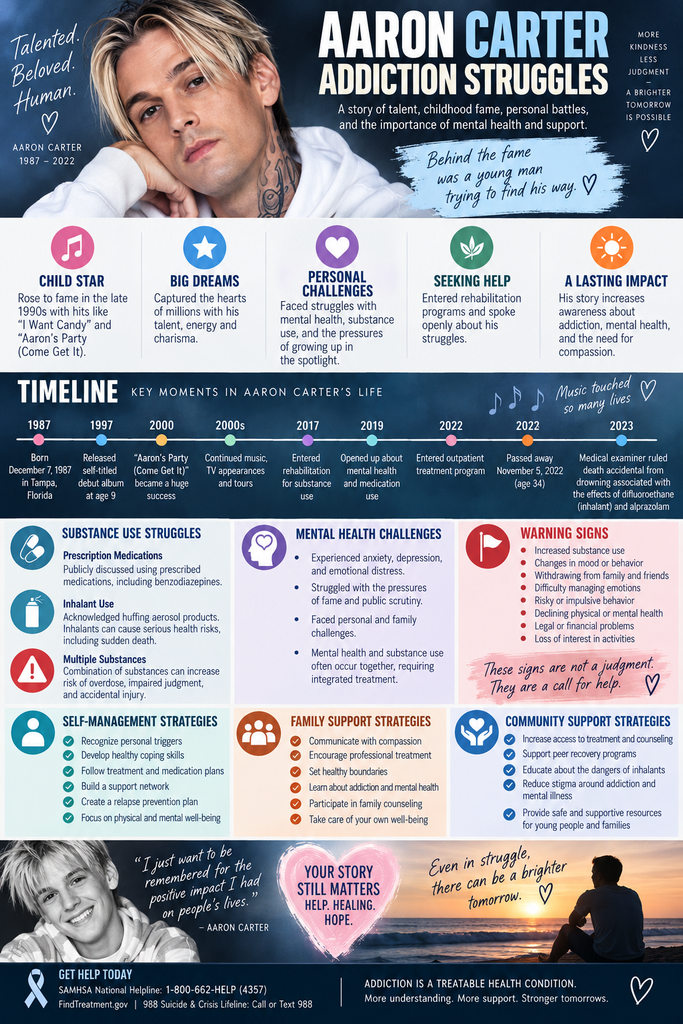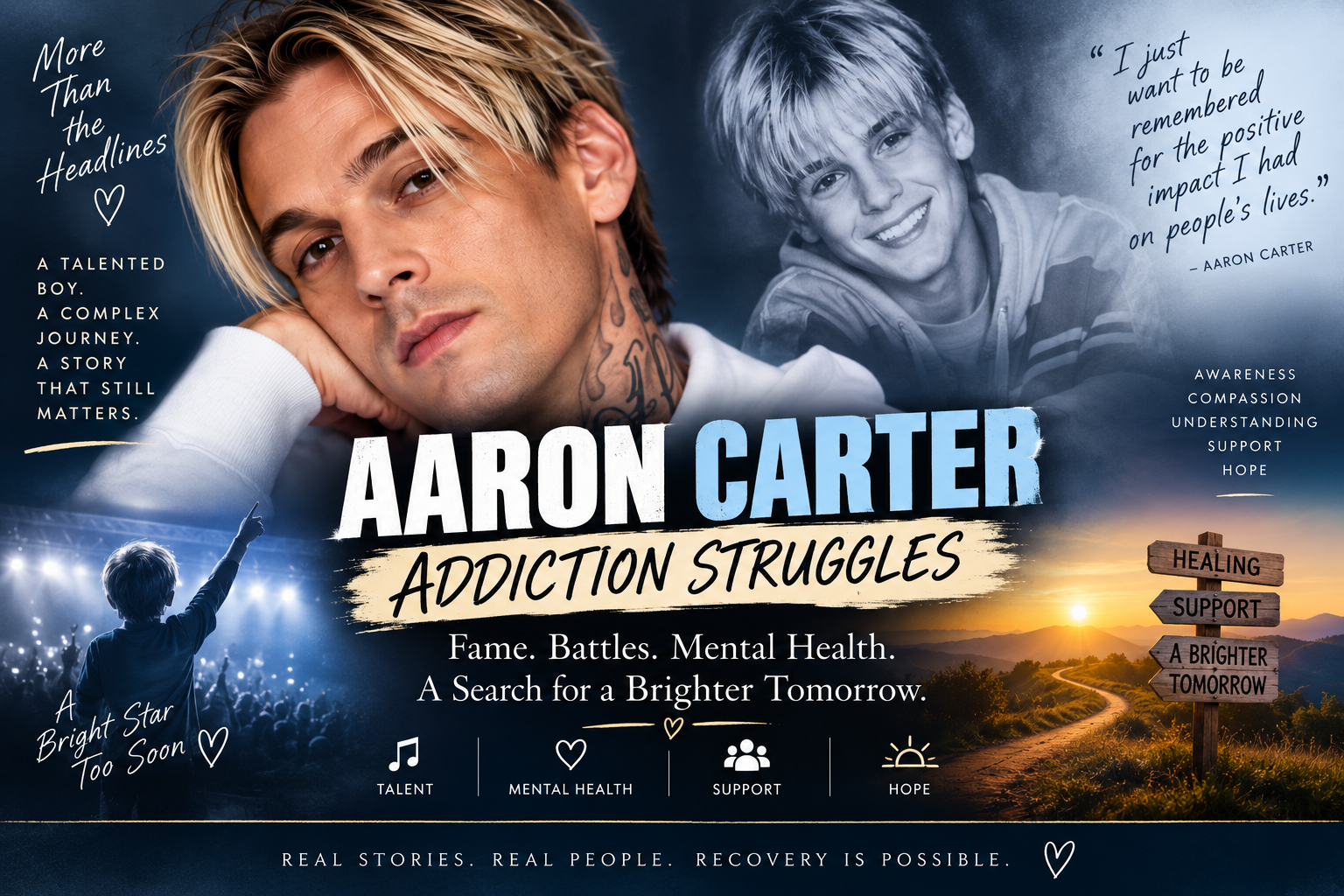
Aaron Carter was a talented singer and entertainer who rose to fame as a child star in the late 1990s. Known for popular songs such as I Want Candy and Aaron’s Party (Come Get It), he captured the attention of millions of young fans worldwide. However, behind his early success, Carter experienced significant personal challenges involving substance use, mental health difficulties, family conflicts, and the pressures of growing up in the entertainment industry.
Throughout his adult life, Carter publicly discussed his struggles with prescription medications, inhalant use, and emotional distress. He also sought professional treatment and participated in rehabilitation programs. Despite these efforts, his life ended tragically on November 5, 2022, at the age of 34.
His death was ruled accidental, with the medical examiner identifying drowning associated with the effects of difluoroethane, an inhalant, and alprazolam, a prescription benzodiazepine.
Aaron Carter’s story provides an opportunity to examine the complex relationship between addiction, mental health, childhood fame, and personal relationships. It also highlights the importance of early intervention, evidence-based treatment, compassionate family involvement, and accessible community resources.
Understanding his experiences can help individuals and families recognize the warning signs of substance use disorders and develop strategies that support recovery.
Aaron Carter’s Rise to Fame and Early Personal Challenges
Aaron Carter was born on December 7, 1987, in Tampa, Florida. He began performing at a young age and released his self-titled debut album in 1997.
His second album, Aaron’s Party (Come Get It), released in 2000, established him as a popular teenage performer.
As the younger brother of Backstreet Boys member Nick Carter, Aaron grew up in a family closely connected to the entertainment industry.
His early career included music recordings, television appearances, and international performances.
Although childhood fame provided extraordinary professional opportunities, Carter later discussed the emotional difficulties he experienced while growing up in the public eye.
He also experienced financial difficulties, family disagreements, and challenges maintaining personal relationships.
How childhood fame may affect emotional development
Children working in the entertainment industry may face circumstances that differ significantly from those of their peers.
Potential challenges include:
- High performance expectations: Young performers may experience pressure to maintain professional success.
- Limited privacy: Personal experiences and family disagreements may become public.
- Disrupted routines: Travel, performances, and professional commitments may interfere with ordinary childhood activities.
- Financial responsibilities: Young entertainers may face complicated financial arrangements before developing adult decision-making skills.
- Identity development: Individuals who become famous during childhood may struggle to separate their personal identity from their public image.
- Social isolation: Professional demands may limit opportunities to develop stable friendships and supportive relationships.
These circumstances do not automatically lead to addiction or mental health disorders.
However, they demonstrate why young performers benefit from stable caregiving, appropriate boundaries, mental health support, and opportunities to develop an identity outside their professional careers.
Aaron Carter’s Substance Use and Addiction Struggles
Aaron Carter publicly discussed difficulties involving prescription medications and inhalant use.
His substance-related challenges became increasingly visible through interviews, television appearances, and public statements.
In 2017, Carter entered a rehabilitation program after concerns emerged about his physical health and substance use.
He later discussed his use of prescription medications and the importance of receiving professional assistance.
In 2019, Carter appeared on the television program The Doctors, where he discussed his mental health and medication use.
He also acknowledged a history of inhalant use, including huffing aerosol products.
His experiences illustrate how substance use can involve multiple substances and how treatment may become more complicated when mental health concerns occur simultaneously.
A. Prescription medication misuse
Prescription medications can be essential for treating legitimate medical and psychiatric conditions.
However, certain medications, particularly benzodiazepines and other sedatives, can cause physical dependence, impaired coordination, and dangerous interactions with other substances.
Carter publicly discussed taking several prescribed medications for mental health concerns.
It is important to distinguish medically supervised medication use from misuse or addiction. Taking prescribed psychiatric medications does not automatically indicate that someone has a substance use disorder.
Potential warning signs of prescription medication misuse
- Taking medication in larger amounts than prescribed.
- Using another person’s prescription medication.
- Combining sedatives with alcohol or other substances without medical guidance.
- Continuing to use medication despite serious negative consequences.
- Experiencing difficulty controlling medication use.
- Seeking additional prescriptions without informing the treating clinician about existing medications.
Individuals concerned about prescription medication use should consult a qualified healthcare professional.
Benzodiazepines should not be abruptly discontinued after prolonged use because withdrawal can cause serious complications, including seizures.
Inhalant use and its dangers
One of the most concerning aspects of Aaron Carter’s substance use history involved inhalants.
Inhalant use refers to deliberately breathing chemical vapors to produce intoxicating effects.
Certain household and industrial products contain chemicals that can rapidly affect the central nervous system.
Difluoroethane, the substance identified in Carter’s toxicology findings, is a chemical commonly used as a propellant in some aerosol products.
Health risks associated with inhalant use
Inhalant exposure can cause:
- Dizziness, confusion, and impaired coordination.
- Loss of consciousness.
- Dangerous changes in heart rhythm.
- Reduced oxygen availability.
- Neurological injury.
- Respiratory complications.
- Sudden death.
Serious complications can occur even after a single episode of inhalant use.
Combining inhalants with sedating medications may further increase the risk of impaired consciousness and accidental injury.
Individuals experiencing recurrent inhalant use should receive a comprehensive medical and addiction assessment.
Aaron Carter’s Mental Health Challenges
Aaron Carter publicly discussed experiencing mental health difficulties during his adult life.
In 2019, he spoke about receiving psychiatric diagnoses and taking medications for mental health conditions.
He also discussed the emotional effects of family conflict, public criticism, and difficulties in his personal relationships.
However, public interviews and media reports cannot establish the complete nature of an individual’s psychiatric history.
Mental health diagnoses should be based on comprehensive clinical evaluations rather than public behavior or media speculation.
Understanding co-occurring mental health and substance use disorders
Substance use disorders and mental health conditions frequently occur together.
This is known as a co-occurring disorder or dual diagnosis.
Possible interactions include:
- Using substances to temporarily manage emotional distress.
- Experiencing worsening psychiatric symptoms during substance use or withdrawal.
- Difficulty maintaining medication adherence.
- Increased impulsivity or impaired judgment during intoxication.
- Social isolation and relationship difficulties.
- Challenges participating consistently in treatment.
Although substance use may temporarily reduce uncomfortable emotions, it can also worsen mental health symptoms over time.
Why integrated treatment matters
Individuals experiencing both mental health and substance use disorders may benefit from coordinated treatment that addresses both conditions.
Treatment may include:
- Comprehensive psychiatric and addiction assessments.
- Medication management and monitoring.
- Cognitive behavioral therapy.
- Motivational interviewing.
- Trauma-informed counseling when clinically appropriate.
- Family therapy.
- Relapse prevention planning.
- Ongoing outpatient or residential treatment based on individual needs.
Treating substance use without addressing significant mental health concerns may leave important recovery needs unmet.
Likewise, psychiatric treatment should include assessment of substance use when clinically indicated.
Aaron Carter’s Attempts to Seek Treatment
Aaron Carter sought professional assistance for substance-related and mental health concerns during his adult life.
In 2017, he entered a rehabilitation program and subsequently discussed improvements in his physical health.
He also participated in professional evaluations and publicly discussed efforts to address his substance use.
In 2022, Carter reported entering an outpatient rehabilitation program.
His treatment history demonstrates that individuals may seek assistance multiple times while experiencing ongoing challenges.
Understanding recovery as an ongoing process
Addiction recovery is not always a straightforward progression from substance use to permanent abstinence.
Some individuals experience periods of improvement followed by a return to substance use.
Others require changes in treatment intensity, medication management, or recovery support.
Factors that may complicate recovery include:
- Untreated or inadequately managed mental health symptoms.
- Limited access to consistent healthcare.
- Exposure to environments associated with substance use.
- Relationship conflicts.
- Social isolation.
- Difficulty maintaining daily routines.
- Inadequate follow-up after treatment.
Returning to substance use should prompt reassessment of the treatment plan rather than shame or punishment.
For individuals using inhalants, opioids, sedatives, or multiple substances, a return to use may carry immediate and potentially fatal risks.
Self-Management Strategies: Building a Foundation for Recovery
Aaron Carter’s experiences highlight the importance of developing practical self-management strategies alongside professional addiction treatment.
Self-management involves recognizing personal vulnerabilities, identifying triggers, and developing healthier responses to emotional distress.
It also requires knowing when you need additional medical or psychological support.
Recognize personal triggers
Triggers are experiences, emotions, or environments that increase the desire to use substances.
Common triggers include:
- Anxiety and emotional distress.
- Relationship conflicts.
- Loneliness and social isolation.
- Insomnia.
- Financial stress.
- Exposure to substances or environments associated with previous use.
- Feelings of rejection or criticism.
Self-management strategies
- Keep a journal documenting cravings and emotional changes.
- Identify situations associated with previous substance use.
- Develop a plan for managing stressful interactions.
- Avoid environments that encourage substance use.
- Contact a trusted person when cravings become difficult to manage.
- Discuss persistent triggers with an addiction counselor.
Recognizing triggers allows individuals to prepare healthier responses before cravings become overwhelming.
Develop healthy coping mechanisms
Some individuals use substances to escape uncomfortable emotions or temporarily reduce psychological distress.
Developing alternative coping mechanisms can help reduce reliance on substances.
Healthy coping strategies include:
- Practicing mindfulness and relaxation exercises.
- Participating in regular physical activity.
- Maintaining consistent sleep and wake times.
- Engaging in creative activities such as music, writing, or painting.
- Spending time outdoors.
- Establishing supportive social relationships.
- Attending counseling or peer recovery meetings.
Creative expression may provide an emotional outlet for individuals who find it difficult to communicate their feelings directly.
However, hobbies and lifestyle changes should complement professional treatment rather than replace it when a substance use disorder is present.
Prioritize medication safety
Individuals receiving treatment for psychiatric conditions should understand the benefits, risks, and potential interactions of their prescribed medications.
This is particularly important when medications have sedating effects.
Medication safety strategies
- Take medications only as prescribed.
- Inform healthcare providers about all prescription medications, over-the-counter products, and substances being used.
- Avoid combining sedating medications with alcohol or other substances without medical guidance.
- Discuss persistent sedation, confusion, or other adverse effects with the prescribing clinician.
- Use one pharmacy when possible to facilitate medication interaction screening.
- Attend scheduled medication management appointments.
- Never abruptly discontinue benzodiazepines after prolonged use without medical supervision.
Medication safety should be part of an individualized treatment plan.
Create a relapse prevention and emergency safety plan
A written recovery plan can help individuals respond to cravings, emotional distress, or a return to substance use.
Important components include:
- Identifying early warning signs.
- Maintaining contact information for treatment providers.
- Developing strategies for managing cravings.
- Scheduling regular counseling appointments.
- Identifying trusted individuals who can provide support.
- Establishing a plan for obtaining urgent medical assistance.
- Reviewing the plan after any return to substance use.
Individuals with a history of inhalant use should understand that sudden cardiac complications and loss of consciousness can occur without warning.
If someone collapses, becomes unresponsive, or develops difficulty breathing after inhalant exposure, call emergency services immediately.
Family Support Strategies: Helping a Loved One With Addiction
Aaron Carter’s public experiences included complicated family relationships and disagreements.
Although the complete circumstances of his family relationships are private, his story provides an opportunity to discuss how families can support loved ones experiencing addiction and mental health difficulties.
Family involvement can improve communication, encourage participation in treatment, and provide emotional stability.
However, family members should not be expected to control another person’s recovery.
Encourage compassionate communication
Individuals experiencing addiction may feel ashamed, defensive, or reluctant to discuss their substance use.
Family members can create a more supportive environment by approaching conversations with empathy and respect.
Helpful communication strategies
- Express concern about specific behaviors rather than criticizing the person’s character.
- Listen without immediately interrupting or assigning blame.
- Ask about emotional and practical needs.
- Encourage honest discussions about substance use.
- Recognize efforts to seek treatment.
- Avoid public criticism or humiliation.
For example, a family member might say:
“I care about your health and safety. I’m concerned about your substance use, and I want to help you find support.”
Compassionate communication does not require ignoring dangerous behavior.
It involves addressing concerns while preserving the individual’s dignity.
Establish healthy boundaries
Family members may struggle to balance emotional support with the need to protect themselves and others.
Healthy boundaries can reduce conflict and promote accountability.
Examples include:
- Refusing to provide money specifically intended for substance purchases.
- Avoiding participation in unsafe or illegal activities.
- Establishing expectations regarding respectful communication.
- Protecting children from unsafe environments.
- Encouraging professional treatment rather than attempting to manage severe addiction independently.
- Seeking outside assistance when safety concerns arise.
Boundaries should be communicated clearly and consistently.
They should not be used as punishment or as a substitute for emergency medical care.
Participate in family counseling
Addiction can affect the entire family system.
Family members may experience anxiety, resentment, guilt, emotional exhaustion, or difficulties rebuilding trust.
Family counseling provides a structured environment to address these concerns.
Potential benefits include:
- Improving communication.
- Establishing realistic expectations.
- Addressing unresolved conflicts.
- Developing healthier boundaries.
- Learning about addiction and mental health conditions.
- Identifying ways to support treatment participation.
- Rebuilding trust when appropriate.
Family therapy is not suitable for every situation, particularly when there are unresolved safety concerns or abusive relationship dynamics.
Treatment should prioritize the safety and autonomy of everyone involved.
Support recovery without neglecting personal well-being
Family members may become so focused on a loved one’s addiction that they neglect their own physical and emotional health.
Maintaining personal well-being is essential.
Family self-care strategies
- Seek individual counseling when needed.
- Participate in family support groups.
- Maintain friendships and personal interests.
- Establish realistic expectations about recovery.
- Avoid assuming responsibility for every decision the individual makes.
- Develop an emergency plan for situations involving intoxication, overdose, or other immediate dangers.
Families can provide meaningful support while recognizing that recovery ultimately requires the individual’s participation and appropriate professional care.
Community Support Strategies: Improving Access to Addiction Treatment
Aaron Carter’s experiences illustrate the importance of accessible treatment, ongoing recovery support, and coordinated mental health services.
Community organizations can help individuals and families obtain professional assistance while reducing the isolation and stigma associated with addiction.
Expand access to integrated addiction and mental health treatment
Individuals experiencing co-occurring substance use and psychiatric conditions may require coordinated medical and psychological care.
Community strategies include:
- Expanding access to addiction medicine specialists.
- Providing integrated mental health and substance use treatment.
- Increasing the availability of outpatient counseling.
- Supporting residential treatment when clinically indicated.
- Offering telehealth services for individuals facing transportation or geographic barriers.
- Improving continuity of care following hospitalization or rehabilitation.
- Providing affordable treatment options for uninsured or underinsured individuals.
Treatment should be individualized and based on a comprehensive assessment.
Encourage peer recovery support
Peer recovery programs provide opportunities for individuals to connect with others who have experienced substance use problems.
These programs can help reduce isolation and provide practical strategies for maintaining recovery.
Community resources include:
Narcotics Anonymous (NA)
A peer support fellowship for individuals seeking recovery from substance use problems.
SMART Recovery
A mutual support program that uses practical, evidence-informed strategies to help individuals manage addictive behaviors.
Recovery Community Organizations
Local organizations that provide peer support, recovery coaching, education, and connections to treatment services.
Family support groups
Organizations such as Nar-Anon offer support for relatives and friends affected by another person’s substance use.
Peer support can complement professional treatment but should not replace necessary medical or psychiatric care.
Improve awareness of inhalant-related risks
Inhalant use may receive less public attention than alcohol, opioids, or other commonly discussed substances.
However, inhalants can cause severe medical complications, including sudden cardiac death.
Community education should address the dangers of intentionally inhaling chemical vapors and the importance of recognizing substance use problems early.
Prevention strategies include:
- Providing age-appropriate substance use education.
- Teaching parents and caregivers to recognize warning signs.
- Encouraging early evaluation when inhalant use is suspected.
- Improving access to adolescent and adult addiction treatment.
- Promoting safe storage of potentially hazardous household products.
- Training community members to recognize medical emergencies.
Prevention efforts should focus on education and safety rather than fear-based messaging or public humiliation.
Reduce stigma surrounding addiction and mental illness
Individuals experiencing substance use disorders may avoid treatment because they fear judgment, discrimination, or damage to their reputation.
For public figures, media attention may raise additional privacy concerns.
Communities can promote treatment engagement by encouraging respectful discussions about addiction and mental health.
Stigma reduction strategies
- Use person-first language, such as “person with a substance use disorder.”
- Avoid defining individuals solely by their addiction history.
- Provide accurate information about treatment and recovery.
- Encourage confidential access to healthcare services.
- Challenge stereotypes about mental illness.
- Support recovery-oriented community programs.
- Respect the privacy and dignity of individuals seeking treatment.
Aaron Carter’s life demonstrates why discussions about addiction should acknowledge a person’s humanity rather than focusing exclusively on their most difficult moments.
Understanding Aaron Carter’s Death and the Risks of Combining Substances
Aaron Carter was found unresponsive in a bathtub at his home in Lancaster, California, on November 5, 2022.
He was 34 years old.
In April 2023, the Los Angeles County Medical Examiner determined that his death resulted from drowning associated with the effects of difluoroethane and alprazolam.
The manner of death was ruled accidental.
Difluoroethane is a chemical used in certain aerosol products. When intentionally inhaled, it can cause dangerous effects on the heart, brain, and respiratory system.
Alprazolam, commonly known by the brand name Xanax, is a benzodiazepine prescribed for certain anxiety and panic disorders.
It can cause sedation, impaired coordination, and reduced alertness.
The combined effects of these substances can create serious safety risks.
Important medical lessons
Aaron Carter’s death highlights several concerns relevant to substance use prevention and treatment.
- Inhalants can cause life-threatening complications even after a single episode of use.
- Sedating medications may increase the risk of accidental injury, particularly when combined with other impairing substances.
- Loss of consciousness while bathing or swimming can result in drowning.
- Individuals experiencing recurrent substance use should receive comprehensive medical and psychiatric assessments.
- A history of substance use involving multiple substances requires careful evaluation of drug interactions and emergency risks.
An overdose or other substance-related medical emergency requires immediate medical attention.
Naloxone can reverse opioid-related respiratory depression, but it does not reverse the effects of inhalants or benzodiazepines alone. Emergency medical care remains essential.
Important Lessons From Aaron Carter’s Addiction Struggles
Aaron Carter’s experiences provide several important lessons about addiction, mental health, and recovery.
1. Childhood success does not guarantee emotional stability.
Early fame may create unique developmental and social challenges. Young performers benefit from stable relationships, appropriate boundaries, and access to mental health support.
2. Mental health and substance use should be evaluated together.
Co-occurring psychiatric and substance use conditions may require integrated treatment that addresses both concerns.
3. Prescription medications require careful monitoring.
Certain medications can cause dependence, sedation, and dangerous interactions when combined with other substances.
4. Inhalant use can have fatal consequences.
Intentional inhalation of chemical vapors can cause sudden cardiac complications, loss of consciousness, and accidental injury.
5. Seeking treatment is an important step toward recovery.
Professional addiction treatment can help individuals develop healthier coping mechanisms, manage cravings, and address underlying health concerns.
6. Recovery support should continue beyond rehabilitation.
Ongoing counseling, medication management, peer support, and relapse prevention planning can help individuals maintain progress after completing an initial treatment program.
7. Families need support, too.
Family members can provide encouragement while maintaining healthy boundaries and protecting their own emotional well-being.
8. Addiction should not define a person’s entire life.
Aaron Carter’s musical achievements, personal relationships, and experiences deserve recognition beyond his struggles with substance use.
Conclusion: Remembering Aaron Carter and the Importance of Compassionate Addiction Care
Aaron Carter’s life was marked by early musical success, public recognition, personal challenges, and repeated efforts to address substance use and mental health concerns. His experiences demonstrate how addiction can affect individuals regardless of their professional achievements, financial resources, or public image.
His struggles with prescription medications and inhalants highlight the importance of recognizing substance-related risks, seeking professional treatment, and addressing co-occurring mental health conditions.
For individuals experiencing addiction, self-management strategies such as identifying triggers, developing healthy coping mechanisms, maintaining medication safety, and creating a relapse prevention plan can support recovery.
Families can contribute through compassionate communication, appropriate boundaries, encouraging professional treatment, and attending to their own emotional well-being.
Communities can strengthen recovery opportunities by improving access to integrated addiction and mental health services, supporting peer recovery programs, increasing awareness of inhalant-related dangers, and reducing stigma.
Although Aaron Carter’s life ended tragically, his experiences provide an opportunity to encourage earlier intervention, safer substance use prevention practices, and greater understanding of the challenges individuals face during recovery.
Addiction is a treatable health condition, and every individual deserves access to compassionate, evidence-based care. Recovery is not about achieving perfection; it is about receiving the support, treatment, and opportunities needed to build a healthier future.
Addiction Treatment and Crisis Resources
If you or someone you love is struggling with substance use, confidential assistance is available.
SAMHSA National Helpline: 1-800-662-HELP (4357). Provides free, confidential treatment referrals and information about substance use and mental health services.
FindTreatment.gov: Helps individuals locate addiction and mental health treatment facilities throughout the United States.
988 Suicide & Crisis Lifeline: Call or text 988 for immediate emotional support during a mental health or substance-related crisis.
Emergency medical assistance: Call 911 if someone is unconscious, has difficulty breathing, experiences seizures, or develops other life-threatening symptoms following substance use.
Frequently Asked Questions
Here are some common questions:
1. What substances did Aaron Carter struggle with?
Aaron Carter publicly discussed difficulties involving prescription medications and inhalant use. He acknowledged using aerosol products to become intoxicated and sought professional treatment for substance-related concerns.
His substance use history also involved prescription medications, including benzodiazepines, which can cause sedation, physical dependence, and dangerous interactions with other substances.
Carter’s experiences highlight the importance of recognizing problematic substance use and seeking professional assistance before serious medical complications occur.
2. Did Aaron Carter struggle with prescription drug addiction?
Aaron Carter publicly discussed his use of prescription medications for mental health conditions and concerns surrounding his medication use.
During his 2019 appearance on The Doctors, he discussed taking several psychiatric medications and undergoing a professional evaluation.
It is important to distinguish appropriate prescription medication use from misuse or addiction. Taking medication for a diagnosed psychiatric condition does not automatically indicate a substance use disorder.
However, certain medications, particularly benzodiazepines, can cause physical dependence and dangerous interactions when combined with other substances.
3. What is inhalant addiction, and how did it affect Aaron Carter?
Inhalant use involves deliberately breathing chemical vapors to produce intoxicating effects.
Aaron Carter publicly acknowledged a history of inhaling aerosol products, commonly referred to as huffing.
Inhalant use can cause serious medical complications, including irregular heart rhythms, neurological injury, loss of consciousness, and sudden death.
Repeated inhalant use may develop into inhalant use disorder, characterized by difficulty controlling use despite harmful consequences.
Carter’s death was associated with the effects of difluoroethane, an inhalant, and alprazolam, a prescription benzodiazepine.
4. Did childhood fame contribute to Aaron Carter’s addiction struggles?
Aaron Carter became internationally famous at a young age and spent much of his childhood working in the entertainment industry.
He later discussed the emotional difficulties associated with fame, family relationships, and public scrutiny.
Childhood fame may expose individuals to unusual pressures, including demanding professional schedules, limited privacy, financial responsibilities, and difficulties developing an identity outside their public image.
However, it is not possible to determine that childhood fame directly caused Carter’s substance use problems.
Addiction develops through complex interactions involving biological, psychological, social, and environmental factors.
5. Did Aaron Carter experience mental health problems?
Yes. Aaron Carter publicly discussed experiencing mental health difficulties and receiving psychiatric treatment.
In 2019, he spoke about several reported psychiatric diagnoses during an appearance on The Doctors.
However, public statements and television appearances cannot fully establish an individual’s psychiatric history.
Mental health conditions and substance use disorders frequently occur together, making comprehensive assessment and coordinated treatment important.
6. How are mental health disorders and addiction connected?
Mental health conditions and substance use disorders can influence one another.
Some individuals use substances to temporarily manage anxiety, depression, insomnia, or emotional distress.
However, substance use may worsen psychiatric symptoms, interfere with prescribed medications, and create additional physical and psychological complications.
Individuals experiencing both conditions may benefit from integrated treatment that addresses mental health and substance use simultaneously.
Treatment may include psychiatric evaluation, medication management, psychotherapy, addiction counseling, and ongoing recovery support.
7. Did Aaron Carter seek professional addiction treatment?
Yes. Aaron Carter sought professional treatment for substance-related concerns during his adult life.
In 2017, he entered a rehabilitation program and later discussed improvements in his physical health.
He also publicly reported participating in outpatient rehabilitation in 2022.
His treatment history illustrates that recovery may involve multiple treatment episodes and ongoing adjustments to an individual’s care plan.
Seeking additional treatment should be viewed as an opportunity to address changing needs rather than as a personal failure.
8. Did Aaron Carter overcome his addiction?
Aaron Carter made public efforts to address his substance use and mental health difficulties, including participating in rehabilitation programs.
However, his complete treatment history and recovery status were not publicly documented.
His death in 2022 demonstrates the serious risks associated with inhalant use and sedating medications, but it should not be used to define his entire recovery journey.
Addiction recovery is an individualized process that may involve periods of improvement, setbacks, and continued treatment.
Aaron Carter’s Death and Substance-Related Health Risks
9. What caused Aaron Carter’s death?
Aaron Carter died on November 5, 2022, at the age of 34.
He was found unresponsive in a bathtub at his home in Lancaster, California.
The Los Angeles County Medical Examiner determined that his death resulted from drowning associated with the effects of difluoroethane and alprazolam.
Difluoroethane is a chemical used in certain aerosol products, while alprazolam is a prescription benzodiazepine commonly known by the brand name Xanax.
His death was ruled accidental.
10. Can inhalant use cause sudden death?
Yes. Inhalants can cause life-threatening medical complications, even after a single episode of use.
Certain inhaled chemicals can interfere with normal heart function and trigger dangerous cardiac arrhythmias.
Other complications include:
- Loss of consciousness.
- Respiratory impairment.
- Neurological injury.
- Seizures.
- Accidental injuries.
- Sudden cardiac arrest.
Individuals experiencing inhalant-related symptoms such as collapse, difficulty breathing, chest pain, or altered consciousness require immediate emergency medical assistance.
11. Why is combining inhalants with benzodiazepines dangerous?
Inhalants and benzodiazepines can both impair alertness, coordination, and consciousness.
Using these substances together may increase the risk of severe impairment, accidental injury, and potentially fatal complications.
Benzodiazepines can also produce dangerous sedation when combined with alcohol, opioids, or other central nervous system depressants.
Individuals should inform their healthcare providers about all prescription medications, over-the-counter products, and substances they use.
12. Could Aaron Carter’s death have been prevented?
The exact circumstances surrounding an individual’s death are complex, and it is not possible to determine with certainty whether a specific intervention would have prevented Aaron Carter’s death.
However, his case highlights several important prevention strategies, including early identification of substance use problems, comprehensive medical evaluation, medication safety, and access to ongoing addiction treatment.
Individuals with a history of inhalant use or polysubstance use may benefit from individualized treatment plans that address both substance use and co-occurring mental health concerns.
Self-Management and Addiction Recovery
13. What are the warning signs of substance use disorder?
Substance use disorders can develop gradually, and early symptoms may be difficult to recognize.
Common warning signs include:
- Difficulty controlling substance use.
- Strong cravings or urges to use substances.
- Continuing substance use despite negative consequences.
- Neglecting personal or professional responsibilities.
- Withdrawing from family members and friends.
- Experiencing changes in mood, sleep, or behavior.
- Repeated unsuccessful attempts to reduce or stop substance use.
- Spending increasing amounts of time obtaining, using, or recovering from substances.
A qualified healthcare professional can determine whether these symptoms meet the diagnostic criteria for a substance use disorder.
14. What self-management strategies can help someone struggling with addiction?
Self-management involves recognizing personal triggers, developing healthier coping mechanisms, and maintaining consistent recovery routines.
Helpful strategies include:
- Identifying situations that increase cravings.
- Participating in professional addiction treatment.
- Establishing regular sleep and meal schedules.
- Practicing stress-management techniques.
- Maintaining supportive relationships.
- Avoiding environments associated with previous substance use.
- Developing a written relapse prevention plan.
- Seeking medical assistance when withdrawal symptoms or cravings become difficult to manage.
Self-management strategies should complement professional treatment rather than replace it when medical or psychiatric care is necessary.
15. How can someone manage cravings during addiction recovery?
Cravings are common during recovery and do not necessarily indicate that an individual will return to substance use.
Helpful coping strategies include practicing mindfulness, engaging in physical activity, changing environments, and contacting a trusted support person.
Individuals may also benefit from identifying emotional triggers and developing alternative responses to stress.
When cravings become persistent or difficult to control, addiction counseling and other evidence-based treatments can provide additional support.
16. Why is medication safety important during addiction recovery?
Some individuals experiencing addiction also require prescription medications for legitimate medical or psychiatric conditions.
Certain medications, particularly benzodiazepines and other sedatives, can cause physical dependence, impaired coordination, and dangerous interactions with other substances.
Medication safety strategies include taking medications as prescribed, informing healthcare providers about all substances being used, and attending regular medication management appointments.
Individuals taking benzodiazepines regularly should not abruptly discontinue them without medical guidance because withdrawal can cause serious complications, including seizures.
17. What should someone do after returning to substance use during recovery?
Returning to substance use may indicate that an individual’s treatment plan requires additional support or modification.
Helpful steps include contacting a healthcare provider, identifying contributing triggers, and reviewing the existing relapse prevention plan.
Individuals should also seek immediate medical attention when substance use involves inhalants, severe sedation, difficulty breathing, or other potentially life-threatening symptoms.
A return to substance use does not mean that future recovery is impossible.
However, certain substances can cause fatal complications even after a single episode, making timely medical assessment essential.
Family Support Strategies
18. How can families support a loved one struggling with addiction?
Families can provide meaningful support through compassionate communication, encouraging professional treatment, and setting appropriate boundaries.
Helpful approaches include:
- Listening without judgment.
- Expressing concern about specific behaviors.
- Encouraging medical and psychiatric evaluation.
- Offering assistance with treatment appointments.
- Supporting healthy daily routines.
- Learning about substance use disorders.
- Recognizing positive recovery efforts.
- Seeking family counseling when appropriate.
Family members should also protect their own emotional well-being and recognize that they cannot independently control another person’s recovery.
19. How can family conflict affect addiction recovery?
Family conflict may contribute to emotional distress and create additional challenges during addiction recovery.
Repeated arguments, criticism, and unresolved relationship difficulties can increase stress and interfere with supportive communication.
However, family conflict should not automatically be considered the cause of an individual’s substance use disorder.
Family counseling may help improve communication, establish healthy boundaries, and address relationship difficulties.
When relationships involve abuse or serious safety concerns, individual support and safety planning should take priority.
20. What should family members avoid when helping someone with addiction?
Family members should avoid using shame, humiliation, threats, or personal attacks to encourage treatment.
They should also avoid behaviors that directly facilitate dangerous substance use, such as providing money specifically intended for substance purchases.
However, maintaining boundaries should not involve withholding essential medical assistance or abandoning someone during an emergency.
Families can offer compassionate support while establishing clear expectations regarding safety and respectful behavior.
21. How can families recognize an inhalant-related medical emergency?
Warning signs of a possible inhalant-related emergency include:
- Sudden collapse or loss of consciousness.
- Difficulty breathing.
- Chest pain or irregular heartbeat.
- Seizures.
- Severe confusion or unresponsiveness.
- Significant changes in coordination or alertness.
If someone develops these symptoms after suspected inhalant exposure, call 911 immediately.
Move the individual away from the source of exposure if it is safe to do so, and follow instructions from emergency responders.
Do not attempt to manage a severe inhalant-related medical emergency at home.
Community Support and Addiction Prevention
22. What community resources are available for individuals struggling with addiction?
Community resources can provide professional treatment, emotional support, and practical assistance.
Available options include:
SAMHSA National Helpline: Provides confidential treatment referrals and information about substance use and mental health services.
Narcotics Anonymous: Offers peer support for individuals seeking recovery from substance use problems.
SMART Recovery: Provides practical strategies for managing addictive behaviors and maintaining recovery.
Community mental health centers: Offer psychiatric evaluation, counseling, and other behavioral health services.
Outpatient addiction treatment programs: Provide individualized treatment while allowing individuals to continue living in their communities.
Different individuals may benefit from different combinations of professional treatment and peer support.
23. How can communities help prevent inhalant use among young people?
Community prevention programs can help young people understand the medical risks associated with inhalant use.
Effective strategies include:
- Providing age-appropriate substance use education.
- Encouraging open communication between parents and children.
- Teaching caregivers to recognize possible warning signs.
- Improving access to adolescent mental health services.
- Promoting safe storage of potentially hazardous household products.
- Offering healthy recreational and social activities.
- Encouraging early professional evaluation when substance use is suspected.
Prevention efforts should emphasize accurate information, safety, and supportive intervention rather than fear-based messaging.
24. How can communities reduce stigma surrounding addiction and mental illness?
Communities can reduce stigma by promoting accurate information about substance use disorders and encouraging respectful conversations about mental health.
Using person-first language, supporting confidential treatment services, and avoiding negative stereotypes can help individuals feel more comfortable seeking assistance.
Public education should emphasize that addiction is a treatable health condition and that recovery may require ongoing medical, psychological, and social support.
Aaron Carter’s experiences demonstrate the importance of recognizing individuals as people rather than defining them solely by their substance use history.
25. What can Aaron Carter’s addiction struggles teach us about recovery?
Aaron Carter’s experiences highlight the complex relationship between substance use, mental health, personal relationships, and the pressures associated with public life.
His history demonstrates the importance of recognizing problematic substance use, obtaining professional treatment, and addressing co-occurring psychiatric concerns.
His death also emphasizes the potentially fatal risks associated with inhalant use and combining substances that impair consciousness.
His story provides an opportunity to encourage earlier intervention, compassionate family support, and improved access to evidence-based addiction treatment.
Most importantly, Aaron Carter’s life reminds us that a person’s addiction struggles should never overshadow their humanity, accomplishments, or need for compassionate care.
Where Can Someone Find Help for Addiction?
If you or someone you love is experiencing substance use problems, professional assistance is available.
SAMHSA National Helpline: Call 1-800-662-HELP (4357) for free, confidential treatment referrals and information.
FindTreatment.gov: Locate substance use and mental health treatment facilities throughout the United States.
988 Suicide & Crisis Lifeline: Call or text 988 for immediate emotional support during a mental health or substance-related crisis.
Emergency Medical Assistance: Call 911 if someone is unconscious, experiencing difficulty breathing, having seizures, or showing other signs of a life-threatening medical emergency.
Final Thoughts
Aaron Carter’s addiction struggles illustrate the importance of addressing substance use and mental health concerns through comprehensive, individualized treatment.
His experiences also demonstrate why family involvement, medication safety, relapse prevention planning, and accessible community resources are essential components of addiction care.
Although his life ended tragically, his story can help increase awareness of inhalant-related dangers and encourage individuals experiencing substance use problems to seek assistance.
Recovery is possible, and every individual deserves compassionate support, evidence-based treatment, and the opportunity to build a healthier future.
Video: The price of early fame is higher than you think #aaroncarter #mentalhealth #shorts