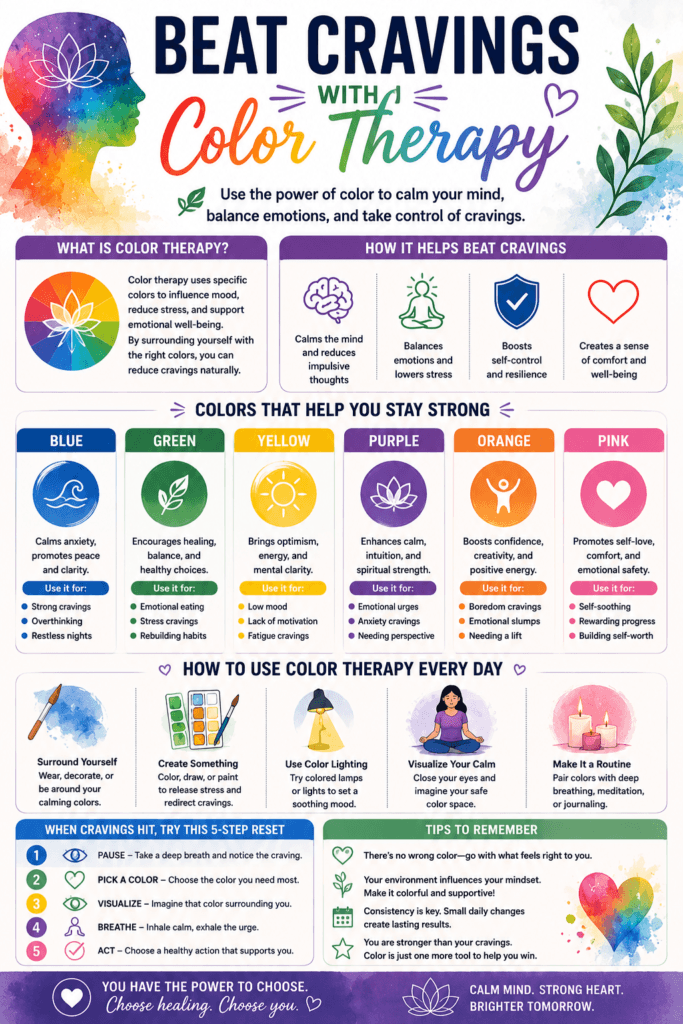
Color therapy, sometimes called chromotherapy, blends science and creativity by using colors to influence moods, energy, and even cravings. I’ve come across plenty of stories where changing lighting or adding color cues made a difference for someone trying to beat a stubborn craving. If you’ve ever felt drawn to a certain snack because it looked just too tempting or noticed your appetite shrink in a room painted a specific shade, you’ve experienced a bit of this already. I’m excited to walk you through how color therapy can help manage cravings and encourage healthier habits.
Color Therapy Basics: How It Affects Cravings
Colors can do much more than decorate a room or jazz up an outfit. Research and real-life experiences suggest that certain colors impact hunger, alertness, cravings, and even satisfaction levels with food. Color therapy taps into this connection and encourages using colors in your environment, wardrobe, or routines to help control impulses, especially those linked to eating.
Understanding how color affects appetite offers some insights into why you might always want dessert at a certain restaurant or why you snack more in one place than another. For example, reds and yellows are known to stimulate appetite (think of famous fast-food logos), while blues and greens can have the opposite effect by helping to calm cravings.
Studies published in journals such as Appetite and the Journal of Environmental Psychology show that people unconsciously respond to color cues. If the idea of color changing your craving levels sounds a bit wild, it’s worth noting that marketing, restaurants, and food brands have leaned on these color tricks for decades to boost sales and make products more appealing.
Getting Started: Simple Ways to Use Color Therapy Every Day
Changing your color environment doesn’t mean you need to repaint your whole kitchen or change your wardrobe overnight. There are plenty of simple tweaks that can make a meaningful impact without a total lifestyle overhaul.
- Tableware and Kitchen Accessories: Swapping out bright red plates for blue or green ones is a tiny change that can help curb overeating during meals.
- Lighting Choices: Soft, cool, blue-toned lighting can make cravings less intense, while warm, yellow lighting may spark appetite. Simple bulbs or LED strips can do the trick.
- Wall Art and Decor: Placing calming color-themed art (think green fields, blue water) in eating areas can signal your brain to slow down or feel satisfied sooner.
- Digital Spaces: Changing backgrounds or themes on your phone and computer to cool colors can help when digital snacking (like late-night ordering) is an issue.
It’s pretty handy that these changes are not expensive or complicated. I started by switching my go-to snack bowl from red to green and was genuinely surprised by my reduced urge to refill it constantly. In fact, even the color of kitchen towels or the apron you wear can subtly prompt your mind to slow down or speed up when it comes to snacking.
Quick Guide: Color Therapy Tricks That Curb Cravings
Turning color insights into real-life habits makes color therapy way more effective. Here’s a quick rundown of some practical steps I’ve found super useful:
- Pick Blue Plates or Bowls: Blue is one of the least appetizing colors for most people. Eating off blue dishware can help you feel content with smaller servings.
- Try Green Table Decor: Green, found in nature, helps create a sense of fullness and satisfaction, possibly because it reminds us of healthy, balanced foods.
- Avoid Red and Orange in Eating Spaces: These colors naturally boost appetite and energy, which isn’t always ideal if you tend to snack mindlessly.
- Use Blue Light for Night Cravings: Cool blue lighting in the kitchen or living room sets a calm, “off-hours” vibe and reduces snack runs after dark.
- Add Calming Color Rituals: Wearing blue or green while preparing meals, or visualizing a calming color before reaching for a snack, can reinforce a sense of control.
Testing out these ideas is easy, and you can adapt them to suit your needs. Even something as simple as a blue mug for evening tea can make a difference if cravings hit hardest at night. You might also try blue or green tablecloths for special occasions where overindulgence is likely.
What to Think About Before Relying on Color Therapy
Color therapy isn’t a magic fix. Like any lifestyle tool, it works best as part of a broader, thoughtful strategy for managing cravings. Here are a few hurdles I’ve noticed and what helps address them:
- Personal Color Preferences: Colors can evoke unique emotional responses shaped by culture, personal history, or even just favorite shades. If blue brings up negative feelings for you, try other calming shades like teal or cool gray.
- Mixed Lighting in Shared Spaces: If you live with others, not everyone will love the same colors. Portable items like placemats or LED strips can help you create a “zone” just for you.
- Temporary Effect: The impact of color therapy can wear off as you get used to new surroundings. Switching up shades or moving decor around every few weeks helps keep things fresh and effective.
- Expectation vs. Reality: Don’t expect color therapy to erase cravings overnight. Pairing it with stress management, mindful eating, and healthy distractions makes it much more powerful.
Personal Color Preferences
I’ve found it’s best to focus on the color that actually soothes you, not just the ones recommended in studies. For example, turquoise really helps me focus and not snack while working, even though it isn’t on “official” lists.
Shared Spaces and Flexibility
If you eat or snack in a shared kitchen or living room, using small, portable accents like placemats, napkins, or a water bottle in your preferred color is a practical workaround that doesn’t bother housemates or family.
Keeping Things Effective
Switching up color cues from time to time, or using a rotation of two or more colors, keeps your brain from totally tuning them out. I rotate blue and green bowls on a monthly schedule and add in a cool gray if I’m feeling burned out on color.
Extra Tips: Using Color Therapy Alongside Other Strategies
Clever use of color makes more sense when blended with other craving-busting techniques. Here are a few ways I mix it up:
Pair Color and Mindfulness: Slow meals down with blue or green table settings, and add a breathing exercise to keep eating paced and stress low.
Combine Color With Healthy Snacks: Fill a cool-toned bowl with crunchy veggies. You’re more likely to reach for them if the setting is calming instead of exciting.
Integrate Color into Routine: Use a color that signals “pause and check in” with yourself. For example, place a blue sticky note or charm on your snack drawer as a subtle reminder to ask if you’re really hungry.
Where Color Therapy Shows Up in Real Life
I’ve seen color therapy used in a few surprising places beyond the home. Spas and yoga studios swear by light therapy lamps for soothing moods. Hospitals often use calming color schemes to help patients feel at ease, which can also help with appetite control in certain settings. Some fitness centers use energetic color accents in workout areas but keep lounges in cooler hues to discourage snacking on sugary drinks or snacks post-workout.
- Restaurants: Ever notice high-energy colors in fast-casual places and softer colors in fancier spots? This is on purpose to influence your appetite and length of stay.
- Packaging: Even healthy foods sometimes borrow these color tricks to look more attractive or satisfying. It’s not a bad idea to be aware of how this can affect your choices at the store.
- Workspaces: Digital wallpapers and backgrounds in soft tones can reduce mindless munching during long desk work periods.
Hotels and airlines are also adopting these techniques. Lounges often use blues and pastels to help travelers relax and avoid mindless snacking. Schools in some countries use color cues at mealtimes to encourage healthier eating habits among students.
Questions I Hear a Lot About Color Therapy and Cravings
Curious about how color therapy actually works in practice? Here are some questions I get from readers and friends:
Does everyone react the same way to colors?
Answer: No, people’s cultural backgrounds, personal experiences, and even individual tastes shape how they respond. Blue is calming for many, but not all; so personalizing is key.
Do you have to use only cool colors to beat cravings?
Answer: Not at all. Some people benefit from calming neutral shades like taupe or light gray, or even gentle pastels. It’s more about what helps you feel relaxed and satisfied.
How long until color therapy works for curbing cravings?
Answer: Some changes feel immediate, but for most folks, consistency over a week or two shows the best results. The key is to make the color switch a seamless, low-stress part of your routine.
Why Color Therapy Makes Sense for Craving Control
Color therapy stands out mainly because it’s easy, accessible, and doesn’t require drastic changes. I keep a blue water bottle on my desk and use green plates for dinner when I know I’ll be tempted to have seconds. The direct, subtle reminders of color are enough to slow me down and help me make better choices.
If you’re aiming to cut cravings, it’s worth checking out a few color tweaks at home, at work, and even on your devices. Over time, you’ll see which shades help you keep your cool when temptation hits. Blending color therapy with mindful habits and smart routines makes it way easier to handle cravings, one meal or snack at a time. Try tracking your reactions to different colors each week, noting any cravings or patterns, to spot what really works for you.
Video: The Unexpected Color Trick That Works #cravings #psychology #hack