Nighttime anxiety often sneaks up just when I want to wind down and get some well-deserved rest. My mind races with worries, unfinished tasks, or random thoughts, making sleep feel miles away. If you’ve ever experienced this, you know how tough it can be to settle your thoughts at night. I’ve put together my favorite strategies for calming that late-night anxiety—these tips can help turn down the mental noise so you can track down more peace after the sun sets.
Understanding Why Anxiety Feels Worse at Night
Anxiety that shows up after dark can feel intense, even if the worries themselves seem small during the day. I’ve noticed it—the same problem that looked minor over breakfast can become a monster by bedtime. There’s a good reason for this. Nighttime brings stillness and a break from daytime distractions, which lets anxious thoughts come to the forefront. Without work, school, or social buzz to focus on, the mind has space to replay mistakes, stress about tomorrow, and spin out of control about things beyond my reach.
According to research from the Sleep Foundation, anxiety and sleep are closely linked. When you’re anxious, your body stays on high alert, making it hard to relax and start the sleep process. Lack of sleep then pumps up anxious feelings, so it’s easy to get stuck in a frustrating cycle.
First Steps: Creating a Calming Nighttime Routine
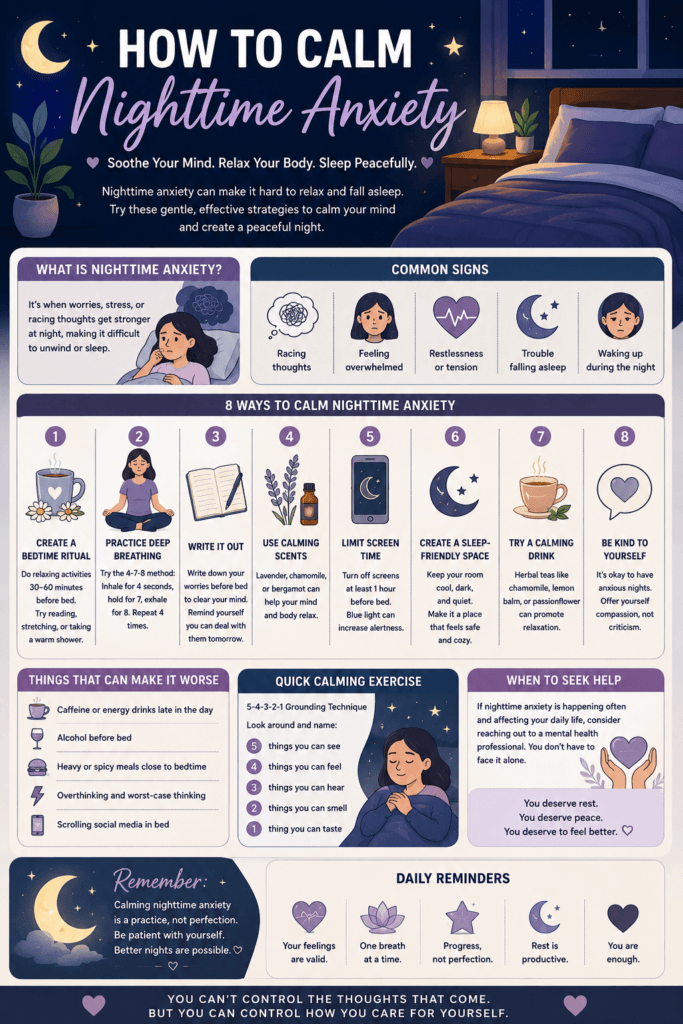
One thing that really helps me manage nighttime anxiety is sticking to a predictable bedtime routine. Routines let the brain and body know it’s time to slow down. Here are a few simple things I’ve found useful for easing into sleep:
- Dim the Lights: Lower the lighting about an hour before bed. Soft, warm lights encourage melatonin production, which helps trigger sleepiness.
- Avoid Caffeine and Sugar: Skipping late afternoon coffee or sweets is key—caffeine and sugar can linger in your system and make relaxation harder later on.
- Power Down Screens: I set my phone aside and steer clear of TV for at least 30 to 60 minutes before bed. Blue light confuses your internal clock, so I turn to reading or quiet music instead.
- Warm Shower or Bath: Stepping out of a warm shower helps cool your body and signals it’s time to wind down, giving anxious feelings a chance to ease up.
Working these habits into my evening routine definitely takes some practice, but it really sets the stage for a less anxious night.
Breathing Techniques and Mindful Relaxation
When anxiety feels like it’s spinning out of control, breathing exercises have become my go-to tool. Focusing on breathing helps take my attention off runaway thoughts and cools down the body’s stress response. Here are some practical options:
- 478 Breathing: Breathe in through your nose for 4 seconds, hold for 7 seconds, and breathe out slowly for 8 seconds. I repeat this four or five times until I notice my heart rate slowing down.
- Progressive Muscle Relaxation: This classic trick involves tensing and then slowly releasing each muscle group, starting with your toes and going up. By the time I reach my face and jaw, I’m usually feeling calmer.
- Body Scan: Pay close attention to each area of your body, noting any tension and gently letting it go on each breath. Guided audio can help (lots of free options exist online, including Calm and Headspace).
Mindfulness meditation isn’t about stopping your thoughts—it’s about noticing them without judgment or worry. I sometimes label a thought, like “work worry” or “random memory.” Surprisingly, this makes letting go much easier.
Cognitive Strategies for Nighttime Worries
Trying to solve every problem right before bed usually backfires for me. Instead, I’ve leaned on some cognitive tricks:
- Set a Worry Time: Choose a 10- to 15-minute window earlier in the evening just to write down or focus on your worries. When anxious thoughts sneak in at night, remind yourself you’ve covered them and can come back to them tomorrow—or during your next “worry time.”
- Journaling: Writing my worries on paper helps “offload” my mind. Sometimes I jot down what I’d tell a friend if they had my problem—this puts things in perspective.
- Challenge Anxious Thoughts: I ask myself, “Can I control this? Is it likely, or is my mind jumping to the worst?” A basic self-check often tones down runaway assumptions.
Cool Tools for Sleep: Music, Scents, and Gadgets
If I’m still struggling to nod off, I use a few simple sleep-friendly tools. I gravitate toward low-tech options that fit easily into any evening ritual:
- White Noise Machines: Consistent background noise helps mask small sounds that can keep me on edge. Apps and basic devices are perfect for this.
- Soothing Playlists: Relaxing music, nature sounds, or calming meditations can all help slow down racing thoughts.
- Essential Oils (lavender): A little lavender oil on my pillow or in a diffuser sets a peaceful mood across the room.
- Weighted Blankets: The even pressure of a weighted blanket can make anxious thoughts fade and help keep me from tossing and turning.
Things to Keep in Mind: Avoiding Common Nighttime Anxiety Traps
Not every trick works for every person, but there are a few things worth steering clear of to make peaceful sleep easier. Some classic anxiety traps I keep an eye out for include:
- Doomscrolling: Checking news or social media in bed almost always raises my stress. If you’re tempted, stash your phone in another room or use an old-fashioned alarm clock instead.
- Problem Solving at Midnight: I sometimes catch myself planning out big fixes once I’m in bed. Reminding myself that late-night solutions aren’t usually my best helps break the cycle.
- Lying Awake Too Long: After 20 to 30 minutes awake, it helps to get up and stretch or read in dim light until sleepiness returns. Doing this keeps my bed a place for rest, not stress.
Long-Term Strategies for Lowering Overall Anxiety
Getting through a tough night is one thing, but changing my daily habits has made a real difference in keeping anxiety from spiking after dark. Here are some longer-term changes that have helped me:
- Regular Exercise: Even a brisk daily walk helps burn off nervous energy. Exercise helps not only with sleep but also with balancing my mood all day.
- Consistent Eating Patterns: Sticking to regular, well-balanced meals keeps my energy steady and cuts down on late-night sugar dips, which sometimes make anxiety worse.
- Talking About It: Sharing my worries with friends, family, or a therapist makes them feel less overwhelming. You can connect with a therapist through online resources like Psychology Today.
- Consistent Sleep and Wake Times: Going to bed and waking up at the same times helps set my body clock and makes it easier to fall asleep.
If anxiety is severe or starts to really mess with your daily life and sleep, it’s a good idea to connect with a mental health professional for extra help.
Frequently Asked Questions
I get a lot of questions about nighttime anxiety. Here are a few that come up the most:
How can I fall asleep faster when my mind keeps racing?
Slow, deep breaths and relaxing each part of your body really help. Keeping a notepad by your bed for last-minute thoughts can help clear your mind as well.
Why do my worries always seem bigger at night?
Usually, it’s because nighttime is quiet and there are fewer distractions. That gives worries more room to grow. Setting up a wind-down routine and saving problem-solving for daylight hours usually helps a lot.
Are sleep aids or medications a safe option for nighttime anxiety?
If nighttime anxiety is ongoing, talk with your doctor before trying medication or sleep aids. While short-term use can be okay, addressing the root cause and building healthy habits is a much better bet for the long run.
Sleep-Friendly Habits Make a Difference
Nighttime anxiety is tough, but you don’t have to just accept it. Small changes to your nightly routine, some good breathing or mindfulness tricks, and managing your overall stress during the day can all help your mind settle down when bedtime comes around. Over time, your mind gets used to bedtime as a calm, safe space rather than an anxiety zone.
Try out a few options and see what helps—remember, you’re not alone. Lots of people deal with nighttime anxiety, and help is always available if you need support.
Video: This Simple Trick Stops Racing Thoughts Fast #anxietyrelief #sleepbetter #stressrelief