Addiction isn’t just about the substance or behavior—it’s deeply tied to human attachment, loyalty, and the need for connection. Many people struggle to understand why letting go feels so difficult, even when the consequences are severe. Looking at addiction through the lens of attachment and loyalty helps explain why breaking free can feel overwhelming. Recovery, then, isn’t only about stopping the behavior—it’s also about learning healthier ways to feel connected, secure, and supported, even in the face of life’s uncertainties.
Understanding Attachment and Its Role in Addiction
Attachment starts way back in childhood and plays a big role in how we relate to other people, and surprisingly, how we act around addictive behaviors or substances. People create attachment styles based on early relationships. If you’ve felt safe, valued, or heard by caregivers, you’re more likely to form healthy bonds later. If things were shaky, maybe emotionally distant, chaotic, or unpredictable, it could set the stage for seeking comfort somewhere else.
Those unmet emotional needs, or feelings of loneliness and insecurity, can steer people toward substances or compulsive behaviors. It’s not unusual for someone to feel like drugs, alcohol, or gambling really “get” them, especially if human relationships have let them down. The attachment isn’t just to a substance, but also to the comfort and predictability it brings in stressful times.
- Secure Attachment: Usually leads to healthier coping strategies and more satisfying social connections.
- Anxious Attachment: Might result in clinging to people or behaviors that don’t help, including addictive patterns.
- Avoidant Attachment: Can mean shying away from help, support, or facing emotions, and leaning into addictive habits instead.
How Loyalty Develops in the Cycle of Addiction
Loyalty is often seen in close friendships, partnerships, or family ties. But in addiction, that sense of loyalty can show up and not always in helpful ways. Sometimes, it becomes a kind of commitment to the substance or habit itself; it can also play out in relationships with people who use together, or even in loyalty to certain routines or rituals.
This loyalty gets reinforced over time. Maybe it’s the group of friends who gather to drink each weekend, or the sense of identity wrapped up in the behavior. Stepping away doesn’t feel like quitting a bad habit; it can feel more like betraying a friend or a part of yourself, especially if it’s the main source of comfort or belonging you’ve known. I’ve heard people say things like “Drinking is just what we do in my family” or “My routine keeps me sane,” which highlight how deep this loyalty can run.
- Peer Bonds: Friendships can reinforce addictive habits, making them harder to break without risking social exclusion.
- Rituals: Repeated rituals create a sense of comfort and predictability, almost like a security blanket.
- Shared Trauma: Sometimes, loyalty isn’t about the habit, but about feeling understood by others with the same struggles.
The Cycle of Addiction Explained
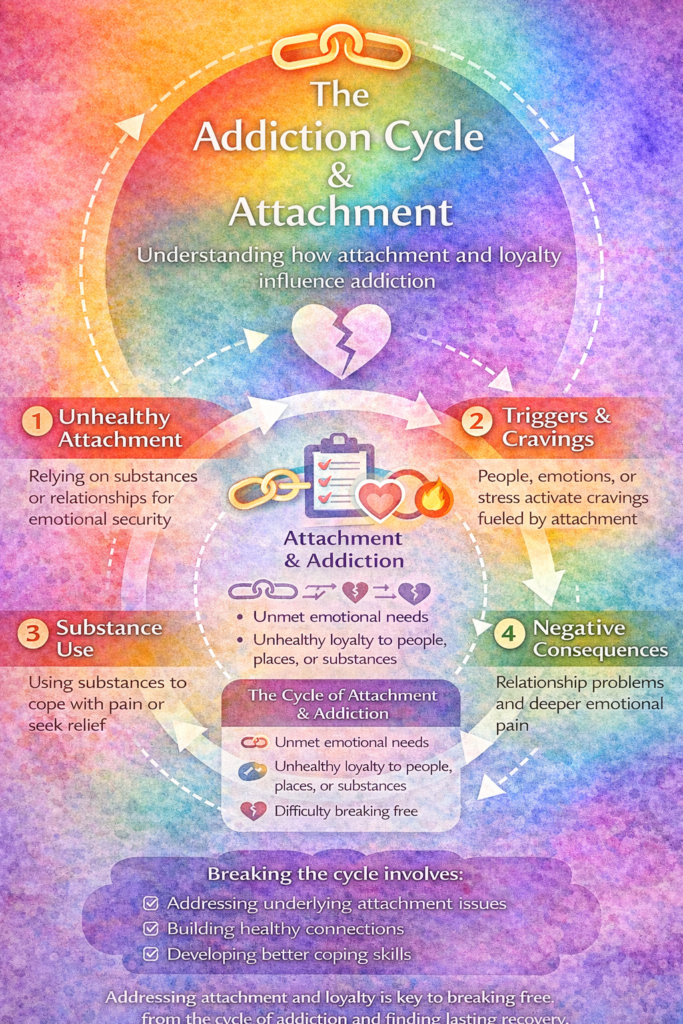
Addiction works in a cycle; one that’s partly physical, but just as much emotional and psychological. Here’s how things usually flow:
- Trigger or Stress: Something stressful or emotionally intense happens. These could be arguments, loneliness, anxiety, or disappointment.
- Craving Relief: The brain looks for a way out, often reaching for familiar comfort, whether it’s a substance or behavior.
- Temporary Escape: Using the substance or repeating the behavior feels good (at least for a while) and offers relief.
- Guilt and Consequences: The after-effects creep in: guilt, shame, health issues, or damaged relationships.
- Isolation and Distress: These feelings make a person want comfort again, returning to step one. The loop repeats.
Attachment and loyalty influence every turn of this cycle. When someone feels like the addictive habit or group is their only safe place, it becomes much tougher to break the pattern. The behavior starts to feel not just necessary, but deserved, almost like a reward for putting up with difficult emotions.
This cycle is further complicated by the chemistry of addiction, where the brain’s reward system gets hijacked. Dopamine surges reinforce the behavior, making it physically and emotionally harder to stop. Over time, the search for relief and comfort becomes a learned response, as familiar and ingrained as any friendship or family bond. This is why cutting the ties of addiction demands more than just willpower—it requires new attachments for lasting change.
Challenges in Breaking Attachment and Loyalty towards Addiction
Getting out of addiction isn’t only about managing withdrawal or resisting cravings. The real challenge lies in breaking those old loyalties and building new, healthier attachments. Think of someone who’s always smoked as a way to cope with stress; quitting means losing their go-to comfort. For others, cutting down can mean risking relationships or switching up their whole sense of self. That’s a huge emotional risk.
- Fear of Losing Belonging: Stepping away from a group, even a harmful one, can bring anxiety about being alone.
- Sense of Identity: Habits and routines often get wrapped up in who a person feels they are.
- Emotional Numbness: Addiction sometimes masks pain. Facing that pain alone can be overwhelming.
In my experience, the fear of losing comfort or connection is what pulls people back, even after a period of being clean or sober. The cycles often repeat not because someone lacks willpower, but because they’re searching for that lost sense of security. This insecurity often blurs the line between dependency on the habit and a craving to belong, making it even tougher to take steps toward recovery. Recognizing this emotional risk is critical.
Building Healthy Attachments for Recovery
Recovery gets easier when a person finds new ways to feel connected and safe. This is where healthy relationships, support groups, or even pets can make a big difference. Building trust takes time, but it’s crucial for rewiring the brain’s old habits and beliefs. Therapy can help, especially approaches like attachment-based therapy or group support, which focus on helping people form secure bonds. Peer mentors, community activities, and volunteering can also provide a sense of purpose and belonging outside the sphere of addiction.
Some practical steps that support healthy attachment in recovery include:
- Joining recovery groups where people are supportive and accepting
- Spending more time with non-using friends or family
- Finding new routines that add structure and comfort, like exercise, hobbies, or creative outlets
- Practicing self-compassion and letting go of guilt about setbacks
Small wins, such as sticking to a morning walk or calling someone for support instead of using, build confidence and a sense of belonging over time. It’s not always a smooth adventure, but every positive attachment helps break the old cycle bit by bit. Remember, building these relationships and new sources of comfort is a gradual process; setbacks are part of that journey, so patience is key.
Common Questions About Attachment and Addiction
People often have lots of questions about how attachment and loyalty play into addiction. Here are a few I hear most often:
Question: Why do some people seem to get “attached” to their addiction?
Answer: Addiction often fills a gap where healthy attachment to people or routines hasn’t worked out. The sense of security and predictability becomes addictive itself, not just the substance or act. This emotional comfort is powerful and can keep someone stuck in the cycle far longer than they’d like.
Question: Can loyalty to friends really make addiction harder to break?
Answer: Social bonds are powerful. If drinking, using, or gambling is a big part of your social life, breaking those patterns can feel like losing your tribe. Finding new connections is really important for lasting recovery, and it may help to gradually widen your circle to include supportive or sober peers. This step takes courage, but it’s part of building a new life.
Question: Are there ways to build attachments that help prevent relapse?
Answer: Absolutely. Focusing on healthy, supportive relationships, joining groups with positive values, and creating new daily routines all help strengthen attachment to sobriety, not just avoidance of old habits. Having people and passions you care about lessens the appeal of going back to the old way of life.
Practical Strategies for Creating Lasting Change
Moving past addiction isn’t just about saying no. It’s about saying yes to new opportunities for comfort and connection. What’s helped me and others I know is a mix of planning, support, and a willingness to notice small changes, even when progress feels slow. Here are a few practical ideas:
- Build a Toolbox: Keep practical strategies handy, like a list of people to call, self-soothing activities, or feel-good playlists for hard moments.
- Stay Consistent: New routines feel awkward at first, but time and repetition matter. Every day spent building something healthy helps break attachment to the old cycle.
- Reach Out: Talk to those who get it, whether that’s a group, a counselor, or a supportive friend.
- Celebrate Progress: Even tiny improvements count. Recovery isn’t all-or-nothing, so tracking small steps can keep motivation strong.
The key is swapping old forms of loyalty for new ones that actually feel good and do lasting good. Recovery builds on connection, sometimes slowly, but always adding up to something better and way more sustainable. Keep stepping forward, and with enough time, the sense of security and belonging you once searched for in addiction can be found in new, healthier places that support a stronger, more meaningful life.
Video: This Is Why You’re Stuck in the Cycle #psychology #attachment