If you’ve ever felt confused about the differences between schizoaffective disorder and bipolar disorder, you’re in good company. These two mental health conditions often share overlapping symptoms, and figuring out what sets them apart can be tricky, even for professionals. Over the years, I’ve read up on both, and I’ve noticed how much these distinctions matter for treatment and daily life. I put together this guide to give you a clearer look at schizoaffective vs. bipolar disorder, what they look like, and why understanding these differences really matters.
What Are Schizoaffective and Bipolar Disorders?
Both schizoaffective disorder and bipolar disorder are mental health conditions that affect mood, thinking, and behavior, but they show up in different ways. Getting a handle on each one makes it much easier to spot the differences and sets the stage for the best treatment. Mental health care has evolved as understanding of these disorders has grown, so getting an accurate picture is key to managing your wellbeing.
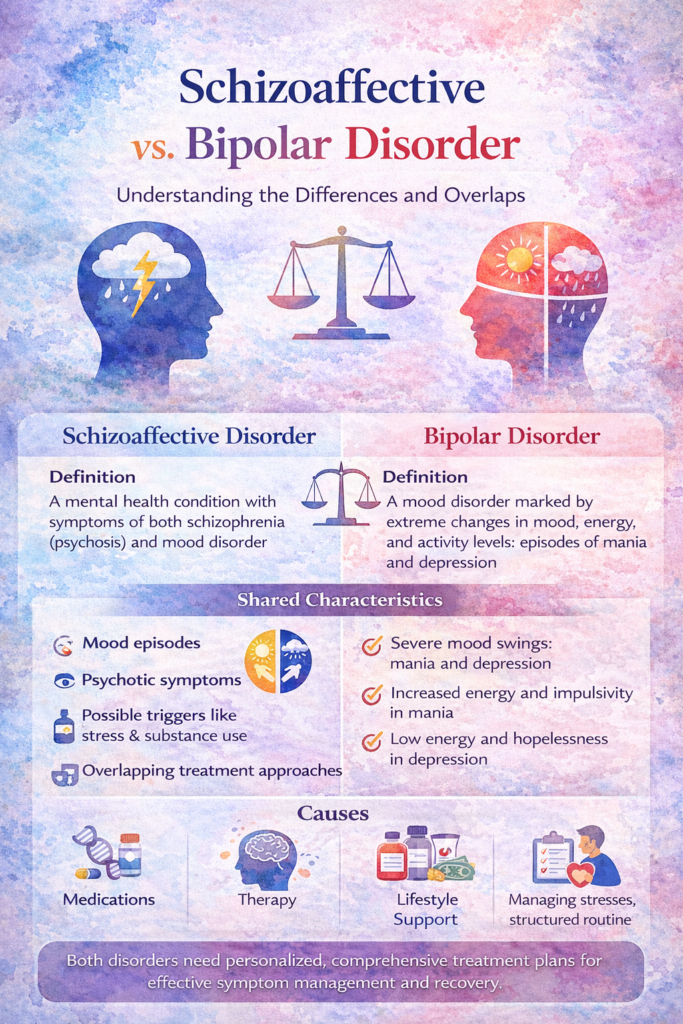
Schizoaffective disorder combines features of schizophrenia, such as hallucinations or delusions, with mood problems, usually in the form of depression or mania. That mix is what really sets it apart. People with schizoaffective disorder often have periods when their mood seems really affected and, separately or at the same time, periods when their thinking and perception get distorted. There are two main types of schizoaffective disorder: the bipolar type, which includes episodes of mania and depression, and the depressive type, which includes major depressive episodes along with psychosis.
Bipolar disorder mainly involves big shifts in mood. People with bipolar disorder experience episodes of mania (feeling really “up,” energetic, or irritable) and depression (feeling “down,” low-energy, or hopeless). While it’s primarily about mood, during severe episodes, people might also have some psychotic symptoms, like hallucinations or delusions. However, these usually occur only during mood episodes, not during stable mood. Bipolar disorder is further classified into Bipolar I (at least one manic episode), Bipolar II (hypomanic and depressive episodes), and cyclothymic disorder (frequent, less severe mood swings).
Key Symptoms and How They Overlap
Both conditions share some similar features, which is why people often mix them up. Here’s a quick breakdown of the main symptoms and where people might get confused:
- Mania: Elevated mood, risky behavior, little need for sleep. Happens in both bipolar disorder and schizoaffective disorder (bipolar type).
- Depression: Low mood, loss of energy, sleep changes, and hopelessness. Shows up in both conditions and can be just as disabling as mania or psychosis.
- Psychosis: Hallucinations (seeing or hearing things others don’t), delusions (false, fixed beliefs), disorganized thinking. Core in schizoaffective disorder, but can appear in bipolar disorder during mood episodes.
- Disorganized Behavior: Trouble with organization, daily life, and motivation. More common in schizoaffective disorder, especially during psychotic episodes.
What makes schizoaffective disorder really stand out is that psychotic symptoms sometimes pop up even when the mood is stable, not just during highs or lows. In bipolar disorder, the psychosis is almost always tied to a mood episode. In day-to-day life, this difference means treatment and coping strategies can diverge quite a bit for each disorder.
History and How We Got Here
Both conditions have been described in psychiatry for more than a century, but our understanding continues to evolve. Schizoaffective disorder first appeared as a diagnosis to capture people who seemed to fall between schizophrenia and mood disorders. Before that, people were often misdiagnosed, and treatment didn’t always match what they actually needed, so outcomes varied widely.
Bipolar disorder, which used to be called “manic depression,” has a much longer history under several names across different cultures. The big breakthrough came when researchers realized some people had periods of both high and low mood, not just chronic depression. This led to more tailored treatment, with new medications and support systems helping manage the cycles people face.
These days, professionals rely on the Diagnostic and Statistical Manual of Mental Disorders (DSM-5) to outline the key features that help distinguish these conditions. Even with the guidelines, it’s not always clear-cut; doctors need to look closely at symptoms, timing, and patterns to make sure the label fits.
How Diagnosis Works
Getting a diagnosis of schizoaffective or bipolar disorder usually starts with a thorough mental health evaluation. A psychiatrist or mental health provider will look at:
- History of mood swings and any distinct periods of high or low mood
- Timing and type of psychotic symptoms, and whether these occur alongside mood changes
- Family history of mental illness, since genetics can play a role
- Observations from close friends or family, as loved ones might notice symptoms that the individual doesn’t
- Medical causes (sometimes a physical illness or medication can cause similar symptoms)
What I’ve seen is that schizoaffective disorder is diagnosed when psychotic symptoms last for at least two weeks without any significant mood symptoms showing up. With bipolar disorder, the psychotic symptoms are always tied to either mania or depression. If it’s not clear, an accurate diagnosis might take some time. Sometimes it requires months or years of observation, with regular updates to the treatment plan as more information surfaces. Honest conversations with care providers and keeping a journal of symptoms can help clarify the situation over time.
Everyday Life and Challenges
Living with schizoaffective or bipolar disorder brings unique daily challenges. Symptoms can impact work, school, relationships, and self-care. Here’s what stands out in my experience and from speaking with others:
Mood Management
Bipolar disorder is mostly about keeping mood swings in check and not letting highs or lows take over. For a lot of people, routines, medication, and healthy habits help even things out. Stress or missed medication can quickly lead to a new mood episode. Schizoaffective disorder adds another layer because psychotic symptoms can pop up even when the mood seems fine, making day-to-day life unpredictable sometimes. This unpredictability means people might need more support to stay on track and feel stable in their everyday routines.
Social Support
Support from family, friends, or peer groups helps people stay on track with treatment and avoid relapses. Both conditions can sometimes lead to social withdrawal, but support reduces isolation. Finding others facing similar struggles can be really helpful for sharing tips and encouragement. Support groups, whether in person or online, offer a space to talk about challenges and celebrate progress.
Work and School
Both schizoaffective and bipolar disorders can interrupt jobs or school, especially during episodes. Focusing on work, keeping organized, or even just showing up every day can get tough. Flexible schedules, understanding supervisors, and academic accommodations (like extra time for assignments) ease some of the hurdles. In some cases, career changes or part-time schedules may be needed to better fit individual needs, and building a network of supportive colleagues or mentors can make it much easier to succeed.
What To Know About Treatment
Treatment plans are unique for each person, but there are some common themes. Choosing the right treatment can make symptoms a lot more manageable and improve long-term quality of life.
- Medication: Mood stabilizers, antipsychotics, and antidepressants are often used together. Sometimes both mood and psychosis need to be addressed, especially for schizoaffective disorder. Doctors may need to tweak dosages or switch meds to get things just right, and regular follow-up appointments are important for staying on track.
- Therapy: Cognitive behavioral therapy (CBT), supportive therapy, and psychoeducation all help people learn to spot early warning signs and cope with stress. Learning new coping skills and understanding how the brain works can help people take charge of their recovery journey.
- Lifestyle: Regular sleep, routines, healthy eating, and exercise all keep symptoms under control. Skipping self-care or healthy habits can lead to more mood swings or relapses. For many people, creative activities or mindfulness can also play a valuable part in maintaining balance and reducing stress.
- Social Services: Help with finding housing, maintaining employment, and managing daily life is sometimes needed, especially when symptoms are severe or there’s little family support. Coordination between mental health professionals and social services can smooth the way for daily living.
For anyone facing these conditions, it’s really important to work with a mental health professional for a treatment plan that fits their unique needs. Medication or therapy that works for one person might not work for someone else, so it can take some trial and error to get things right. Keeping an open dialogue with your provider and asking lots of questions can help you track down the best plan for you.
Challenges and Things To Watch For
Managing either disorder can mean facing some pretty tough challenges, especially during the early stages of figuring out what’s going on. These are a few to watch out for based on what I’ve learned from both personal and secondhand experience:
- Misdiagnosis: Schizoaffective disorder can look like severe bipolar disorder or schizophrenia. This means it sometimes takes time (and a few different doctors) to get the right diagnosis. Always double-check and seek a second opinion if something doesn’t feel right.
- Stigma: Both conditions often come with stigma (misunderstandings, judgment, or discrimination). Openness and education help break that down over time, and sharing stories can help others see mental health in a new light.
- Side Effects: Medications can cause side effects, so keeping doctors in the loop about any changes is key. Sometimes it takes several adjustments to find the best balance between symptom control and minimal side effects.
- Relapse: For both conditions, skipping medication or big changes in routine can cause symptoms to return. Building good habits early on and having a relapse prevention plan in place make things a lot easier in the long run. Many people keep emergency contact lists and lists of warning signs handy so they can get help quickly if things slide off track.
Real-Life Examples and Personal Stories
I’ve heard from people with both bipolar disorder and schizoaffective disorder, and these differences really do matter for treatment and daily life. Someone with bipolar disorder might only experience disorganized thinking or paranoia during manic or depressive episodes, while a person with schizoaffective disorder could have those symptoms even when their mood seems fine. Knowing which condition you have makes it much easier to approach treatment, find the right meds, and plan for the future.
Living with either condition calls for finding new ways to cope, seeking support, and, sometimes, learning to talk about your journey openly with others. It’s not always easy, but many people have found stability and happiness with the right mix of treatment and understanding. Helpful mental health websites like NAMI and Mayo Clinic offer solid, trustworthy guides for anyone looking for more info or support. Connecting with others and reading real-life experiences online or in books can shine a light on both the challenges and the hope involved with these conditions.
FAQs About Schizoaffective vs. Bipolar Disorder
Here are a few questions that come up pretty often:
Question: Can someone have both schizoaffective disorder and bipolar disorder?
Answer: Usually, a person is diagnosed with one or the other, depending on the main pattern of symptoms. Schizoaffective disorder covers both mood and psychotic features outside of mood episodes, so it basically includes parts of both but gets its own name.
Question: Do both conditions require lifelong treatment?
Answer: Both schizoaffective and bipolar disorders are considered long-term conditions. Most people continue some form of treatment (medication, therapy, or both) to keep things steady. Life events or stress can trigger relapses without ongoing care.
Question: What should I do if I think someone has symptoms of either condition?
Answer: Encouraging professional help is super important. Suggest seeing a mental health provider or reaching out to local support services, especially if symptoms start to affect daily life or safety. Offer to help find resources or go along to appointments if the person is open to it.
Getting Help and Moving Forward
If you think you or someone you know could be dealing with either schizoaffective or bipolar disorder, getting in touch with a mental health professional is a solid first step. Early support, a good diagnosis, and the right treatment make a huge difference over time. The best outcomes come from being proactive, learning all you can, and building a real support system. There are lots of people and resources out there ready to help, so reaching out can make the road ahead feel a whole lot more hopeful and less overwhelming.
Video: Understanding Schizoaffective vs Bipolar #mentalhealthmatters #psychology