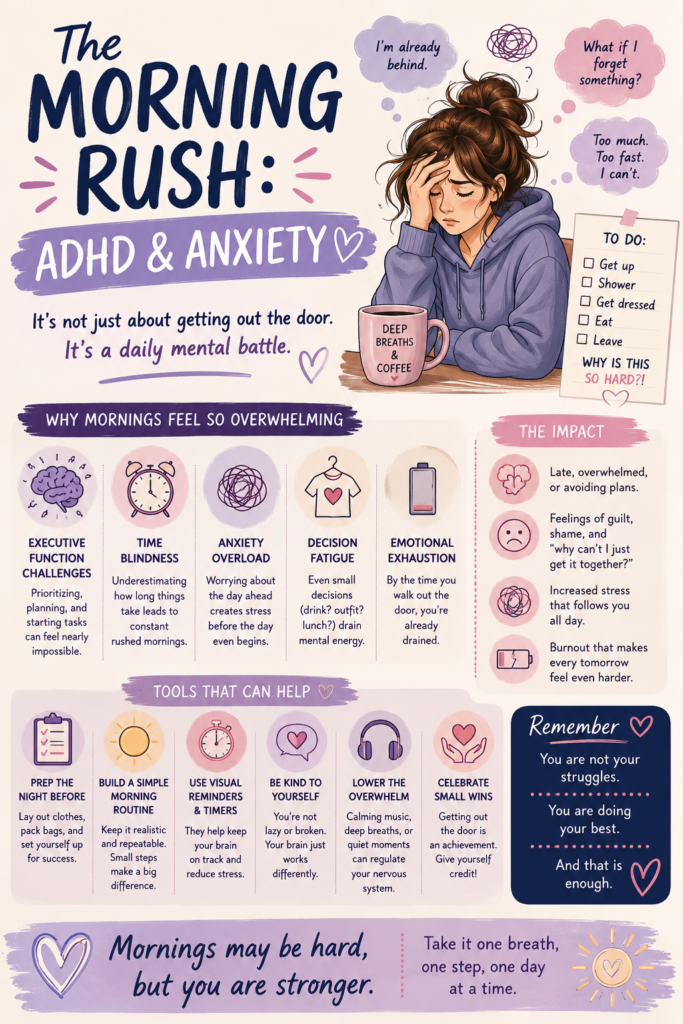
Waking up with both ADHD and anxiety can feel like you’re starting the day with a dozen browser tabs open, each one blaring a different alarm. If you’ve ever found yourself scrambling just to get out the door in the morning, you’re definitely not alone. Juggling forgetfulness, racing thoughts, and that tension in your chest isn’t just tough—it’s draining. I know what it’s like to look at the clock, realize the past thirty minutes slipped away, and you haven’t even put on socks yet. Here’s my take on how ADHD and anxiety join forces to turn mornings into a wild ride, along with what truly helps when the pressure’s on.
Why Mornings Are So Hard with ADHD and Anxiety
Getting ready in the morning is already tricky for plenty of people. Add ADHD and anxiety to the mix, and it becomes its own special brand of chaos. With ADHD, your mind is easily pulled in different directions, time seems to vanish, and even simple routines become confusing. Anxiety keeps you worrying about being late or forgetting something, turning small obstacles into major stressors.
This stress before breakfast can drain your energy for the rest of the day. The ADHD brain often wakes up feeling groggy, slow to get moving, or gets sidetracked by whatever’s left lying around—whether it’s an old coffee mug or a pile of papers. Anxiety? That’s the background murmur insisting that if you don’t hurry, disaster will strike. This combination means your morning isn’t just about making coffee and hunting for matching shoes. It’s about dodging mini-disasters and trying to ward off that growing sense of dread as the clock keeps ticking.
How ADHD Shows Up in Morning Routines
Getting out the door can feel like an endless obstacle course for your mind. My mornings are riddled with classic ADHD moments, including:
- Time Blindness: Losing track of time so that ten minutes vanish before you know it—no matter what the clock reads.
- Poor Working Memory: Forgetting what you came into a room to get. Was it your phone? Your wallet? Good luck remembering.
- Distraction: Pausing to tidy up a spill, reply to a random message, or get lost scrolling social media before you’ve even brushed your teeth.
- Task Initiation Woes: Struggling to get started on the must-do steps, like getting dressed or assembling lunch.
Even with the best intentions, these symptoms can easily lead you to miss key steps or repeat things you already did (yes, I checked the stove again this morning).
The Anxiety Effect: More Than Just Nervousness
Anxiety ramps up the pressure and is impossible to ignore. In my own hectic mornings, my mind swarms with thoughts like:
- Catastrophizing: Worrying that being late even once will ruin your whole career or let down your friends.
- Perfectionism: Feeling like everything must go exactly right, or disaster will loom.
- Racing Thoughts: Worries jump ahead to what might happen later today or even next week, crowding out focus for the present moment.
This constant inner chatter slows down each step of your routine. ADHD may have you wandering off mid-task, but anxiety keeps yanking you back with urgent reminders. The challenge is figuring out how to stop both from completely running your morning.
Strategies That Actually Work for Managing Mornings
Getting a grip on the chaos is a big deal. These practical steps really make a difference in cutting stress when ADHD and anxiety try to take over:
- Prep the Night Before: Lay out clothes, organize your bag, and quickly jot down a list of the next morning’s must-haves. This trims down choices and fog when you’re only half awake.
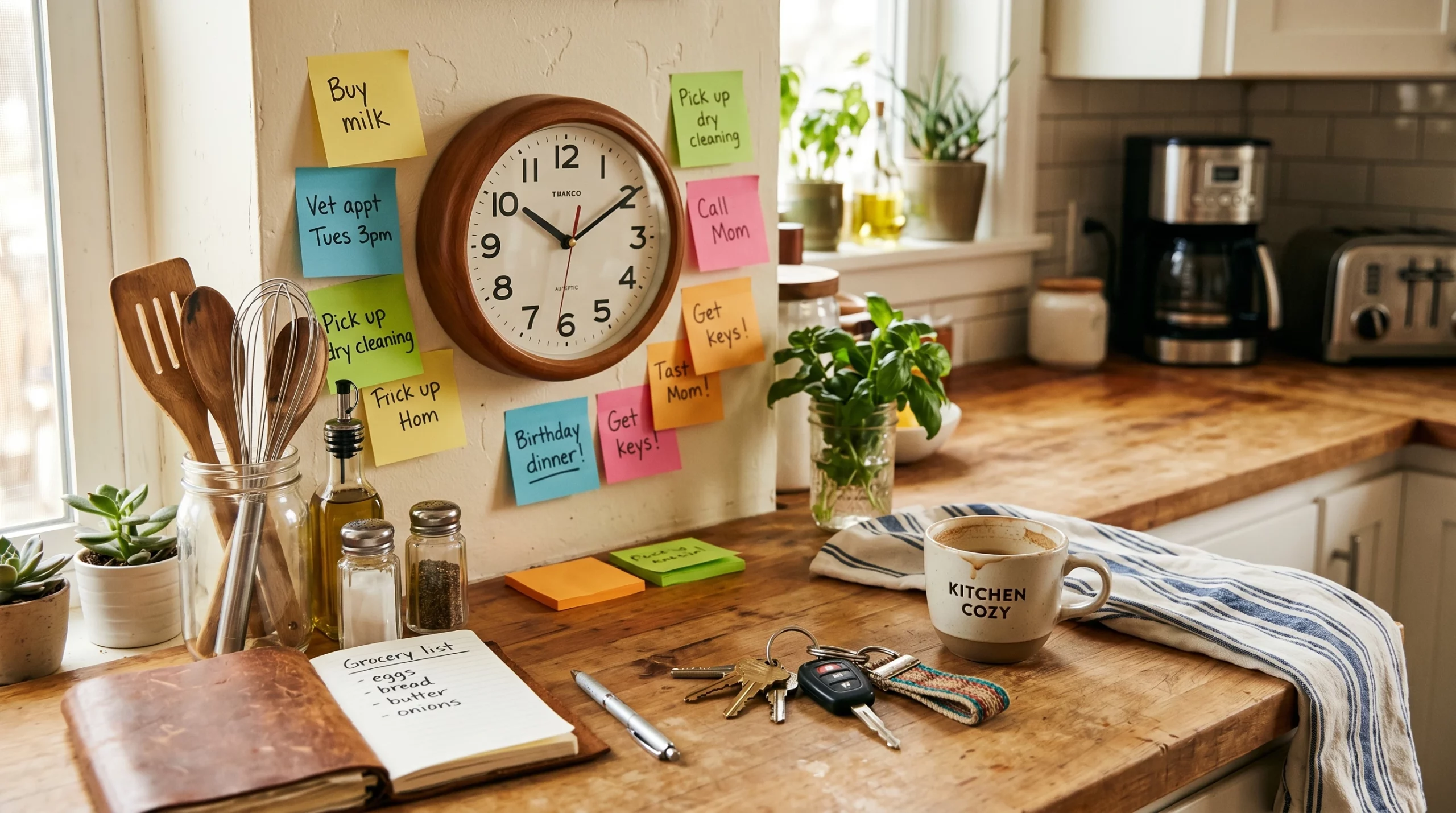
- Visual Reminders: Sticky notes or leaving items right in your way work wonders. “Don’t forget lunch!” Sticking by the door is a game changer for an ADHD brain.
- Timers and Alarms: Multiple alarms for different parts of your routine keep things moving. I set one as a “final warning” to just get out the door already.
- Breaking Down Tasks: Make big steps smaller. Instead of “get dressed,” break it down—find socks, put on pants, grab hoodie. When it’s hard to focus, this is actually a lifesaver.
- Calm the Mind: Give yourself one minute to do a grounding exercise, such as holding a cold drink or stepping outside. This helps reset your brain and calm the anxiety-ADHD back and forth.
Key Items to Have Ready in the Morning
Certain things really help avoid mental chaos (and forgotten stuff) when getting ready. Here’s what’s made my mornings way smoother:
- A Catchall Spot: Keep a bowl or tray near the door for your keys, wallet, and phone—it helps avoid frantic searches. No more lost items tripping you up.
- A Checklist: Whether on your phone or a sticky note, list out all the steps you need. Checking each one gives you a sense of progress, which seriously lifts your spirits.
- Medication Reminders: Use alarms, pillboxes, or sticky notes. Whatever helps you remember your medication when time is tight.
- Quick Snacks: Sling a granola bar or fruit in your bag so you’re not forced to skip breakfast when on the run.
Common Roadblocks and How to Get Around Them
Even with decent routines in place, some obstacles keep showing up. Here’s how I’ve managed some of the biggest:
Getting Overwhelmed by Too Much at Once
When every task feels urgent, freezing in place is almost a given. Break things down—“put on shoes” or “grab lunch” and you get moving. Sometimes just starting one tiny step shrinks that mental pile.
Stuck on Details
Obsessing over picking the perfect outfit or finding the exact right pen can eat up all your time. I keep a go-to outfit ready for those mornings—plain, but it works every single time. Deciding “good enough” is actually a major win.
Always Running Behind Schedule
Penciling in a 10-minute cushion, or “buffer,” helps reduce last-minute panic. Telling myself to aim for the door ten minutes sooner than needed often saves the day when random distractions pop up, as they always seem to.
Practical Ways to Support Yourself (and Your Family)
If someone in your house has ADHD or anxiety—or both—it affects everyone. Even if it’s just you, treating your future self like a buddy actually helps. Here’s what I’ve seen work:
- Clear Communication: Be open if you share a space. Talk about what helps or what’s tough. For example, “Can you remind me once, not ten times?” avoids frustration.
- Low-Pressure Encouragement: Celebrate your small victories. Got out the door on time even once this week? High five yourself.
- Less Stressy Routines: A short playlist you love in the morning or getting your bag packed the night before can make things feel less overwhelming and more manageable.
Real-Life Applications: Examples I Swear By
- Sticky Note Command Center: Bright reminders by the coffee pot, like “Lunch in the fridge!”—I forget otherwise, guaranteed.
- Phone Alarms for Everything: Several alarms aren’t overkill if they keep you from missing important things. One for “start getting ready,” one for “put on shoes,” one for “time to go.”
- Doorway Stash: Put everything—even returns or insurance paperwork—by the exit. Anything out of sight usually just gets left behind.
Frequently Asked Questions About ADHD, Anxiety, and Mornings
Question: Why do I feel anxious even when I’m just getting ready for the day?
Answer: Anxiety ramps up when you have a history of running late or forgetting stuff—especially with distractible brains. That’s pretty common for those with ADHD. Small changes in your routine and a few reminders can help ease those worries.
Question: What’s the best strategy to remember all my stuff?
Answer: Use visual cues like sticky notes, set drop-off spots for essentials, and stick to simple checklists. These are tried-and-true ways to keep forgetfulness out of the picture—repetition really does the trick!
Question: How can I avoid feeling overwhelmed before even leaving the house?
Answer: Prep what you can the night before and break every step into small actions. Even five minutes of deep breathing or stepping outside quickly can bring your stress down and reset your brain for the day ahead.
Key Takeaways for Morning Success with ADHD and Anxiety
Mornings with ADHD and anxiety don’t have to ruin the rest of your day. When you figure out routines and tools that really work for your unique quirks, it goes a long way. Little things like prepping ahead, setting reminders everywhere, and breaking big tasks into tiny steps create long-term positive change. Not every morning will go perfectly—but with the right support and a flexible mindset, you can turn daily chaos into a routine that actually works. Taking it one step at a time is always good enough.
Video: Organized vs ADHD brain at 7 am #ADHD #Relatable