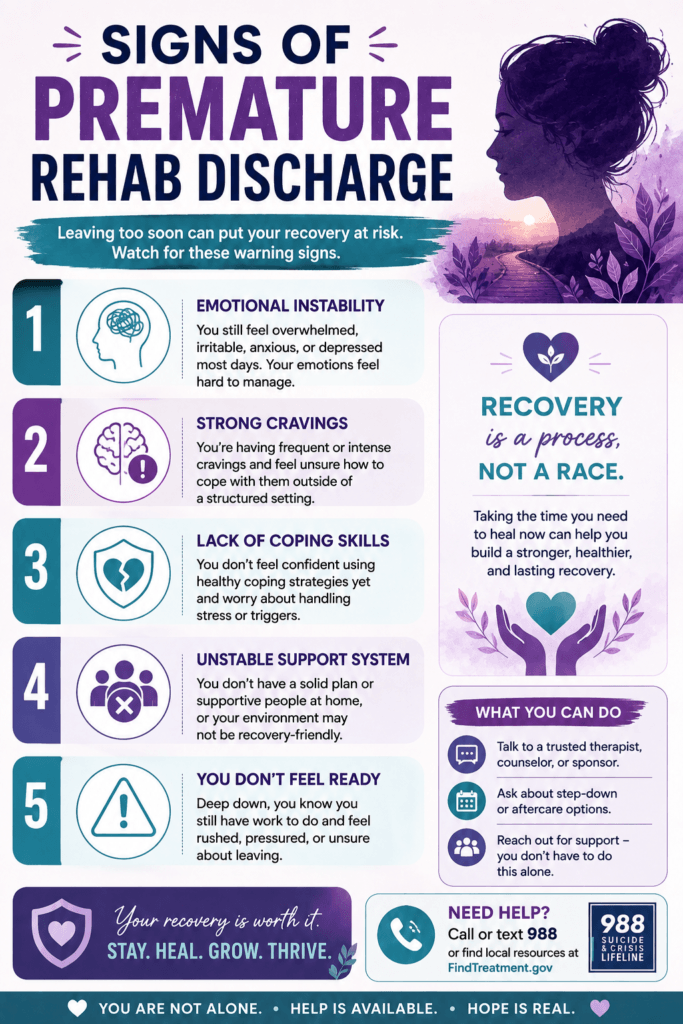
Leaving rehab early can throw off a recovery adventure, even when everything looks fine on the surface. Behind the scenes, there could be warning signs that indicate a discharge is happening too soon. In my experience talking with people in recovery and professionals who work in treatment centers, getting this timing right is really important. Here’s what to watch for if you or someone you care about has finished rehab and things just don’t seem to be adding up.
Why Early Discharge from Rehab Happens
Insurance limitations, personal or family pressure, feeling “good enough,” or even misunderstanding progress can all lead to early discharge from rehab. Sometimes, people feel a boost after detox or early treatment and believe they’re ready to return to their regular lives. Rehab programs aim to create a strong foundation, but leaving before the main work is done often increases relapse risk. Talking honestly with the treatment team and reviewing discharge readiness can help. Still, there are times when people leave before the plan says they should.
5 Warning Signs Rehab Discharge Was Too Early
Getting familiar with common warning signs helps with catching problems early, before a slip turns into a full relapse. Here are five signs I’ve noticed that usually mean rehab discharge was a bit premature. If you notice any of these, it might be time to seek more support or even reconsider reaching out to your treatment team.
- Persistent Cravings or Obsessive Thoughts
Ongoing cravings or nonstop thoughts about using substances are a strong clue that the recovery work wasn’t finished. It’s completely normal to experience some cravings after rehab. But if these urges don’t fade or show up as obsessive, daily thoughts that affect mood and decision-making, it could mean the main factors driving addiction weren’t handled. This is why extended therapy, support groups, and aftercare are truly important for learning to manage these intense feelings. Remember, acting on these cravings—by using or making risky decisions—shows that more support is needed. - Lack of a Solid Support System
Having a small or absent support network can leave a person feeling isolated and at risk for relapse. A good discharge means a clear aftercare plan. Meetings are lined up, family or friends know how to help, and outpatient counseling is scheduled. When these things aren’t set up, recovery gets harder, and loneliness creeps in fast, making everything feel overwhelming. Support systems are the backbone of long-term recovery; if they aren’t there, it’s worth pausing and getting help. - Poor Coping Skills in Real-World Situations
When someone goes back home and faces stress but falls back on old habits, like anger, avoidance, or risky behavior without much thought, the groundwork for lasting recovery isn’t there yet. Rehab teaches new strategies, but putting them into action outside treatment is the real test. Struggling to navigate challenges, even small ones, suggests that more time or guidance was needed. Being able to adapt and handle stress is essential for staying on track. - Return to Old Environments or Relationships
Jumping back into friendships, routines, or places linked to substance use can set off a relapse. If someone quickly reconnects with old party friends or puts themselves in high-risk situations because they think they’re “good now,” that’s a pretty big sign rehab may have ended too soon. The switch back to old routines is often accompanied by a false sense of readiness, which can cause worry for everyone who cares about their recovery. - Incomplete Mental Health or Medical Follow-Up
Lots of people in recovery deal with co-occurring issues like anxiety, depression, or chronic pain. Leaving rehab before mental and physical health care plans are in place means these core challenges haven’t been addressed. An unfinished discharge plan can leave gaps that put people back at risk or cause them to fall through the cracks without realizing it. Setting up regular appointments and medication refills is a big part of staying healthy and strong in recovery.
What Makes a Good Rehab Discharge?
When discharge goes right, there’s a plan for every step, from housing and ongoing therapy to relapse prevention, peer support, healthy activities, and job or school guidance. In my view, a solid discharge doesn’t just mean checking boxes. It’s about getting personal support, making connections, and really preparing for day-to-day life. Some important things that show someone was ready for discharge include:
- The person understands their triggers and has a plan to manage them.
- There are weekly therapy, support group, or check-in appointments scheduled.
- A safe, supportive living environment is ready upon leaving.
- Medical and mental health follow-ups are scheduled with clear points of contact.
- There’s a written relapse prevention strategy and an emergency plan.
If any of these are missing, I recommend circling back with the treatment team or seeking advice from a recovery coach or counselor. Good planning makes the difference between stumbling and moving forward.
Consequences of Leaving Rehab Too Soon
When a person leaves treatment early, the risk of relapse goes up. According to National Institutes of Health research, people who complete full programs (30, 60, or 90 days) show better long-term progress than those with shorter stays or unplanned discharges. Skipping proper aftercare and support can also lead to:
- Difficulty finding or holding a job because recovery isn’t stable yet.
- Relationship struggles due to a lack of healthy coping or communication skills.
- Increased anxiety or depression as life stress stacks up without enough support.
- Repeat hospital or detox visits if a relapse happens.
While things may feel fine right after leaving, it doesn’t always mean recovery is solid. Long-term stability usually comes from treating the root of addiction, not just removing substances and hoping for the best. It’s normal for progress to be slow, and sticking with the process is key.
How Family and Friends Can Help Spot Early Warning Signs
Supporters play a big role in helping people adjust after rehab, and they’re often the first to notice when things are a little off. Here are a few ways loved ones can spot a misstep early:
- Check if the person is following through on aftercare appointments or avoiding them.
- Watch for emotional changes, like mood swings, withdrawal, or sudden anger. Bring up what’s going on in a caring way.
- Encourage open conversations about cravings, triggers, and struggles without judging.
- Help set up drug-free activities or regular recovery check-ins.
Sometimes, just letting someone know you’re there can be enough for them to share when they’re struggling. If things get dangerous or there’s a clear relapse, reaching out for professional help is the next step. Families can also ask treatment teams for advice on what to look for and whom to contact if concerns arise.
Barriers That Make Discharge Readiness Tougher
There are a few common roadblocks to getting the timing right for discharge. Some of these include:
- Insurance coverage ends before true readiness is reached.
- Pressure from work or family to come home sooner.
- Fear of missing out on life events, jobs, or responsibilities.
- Feeling “cured” or underestimating the power of triggers once back in the real world.
If any of this sounds familiar, it may help to talk with your rehab counselor about options like outpatient therapy, intensive aftercare programs, or sober living setups to bridge the gap until you or your loved one feels truly steady in recovery. Don’t hesitate to reach out—extra help is always better than risking a setback.
Frequently Asked Questions About Rehab Discharge
How long does someone usually stay in rehab?
Most rehab programs last anywhere from a couple of weeks to three months, but there’s no “one-size-fits-all” answer. The more complex the addiction or health needs, the more time is usually needed. Aftercare can last for years, continuing the support even after leaving residential care.
What should I do if I think my loved one left too early?
Share your concerns without judgment. Offer to join them for recovery check-ins, help track down outpatient programs, or contact the rehab facility together. If urgent, reach out to a counselor or crisis hotline right away. Remember, support works best when it’s offered kindly and without pressure.
Are there ways to fix an early discharge?
Absolutely. Reach out for support quickly. Many treatment centers offer readmission, and there are outpatient and peer programs for those who may have left early. Continuing recovery work is always an option, even after an early exit. Checking with insurance for coverage or looking into sliding-scale community programs could open more doors, too.
Extra Tips for a Stronger Recovery After Rehab
Getting back on track is totally doable with the right steps. Here are a few things I suggest for anyone adjusting after an early discharge or just wanting to strengthen recovery:
- Get involved in group therapy, either in person or online, for steady support.
- Set up reminders for medication, therapy, or meetings. Phones are pretty handy for this.
- Start small with daily goals like cooking, exercising, or connecting with a sponsor.
- Keep in touch with trusted friends or family who support your progress.
- Explore new hobbies or routines that fill the time you used to spend on substances.
The more connected and supported someone feels, the easier it is to handle challenges and celebrate progress. No matter what, it’s okay—and encouraged—to ask for help if things start to slip. Even if you feel alone, there are always people and resources out there ready to help. Wrapping up, recovery is not a straight line, and getting help early can make all the difference in building a life you want to live. Stay patient, lean on support, and keep moving forward, one day at a time.
Video: The Hidden Dangers of Premature Discharge #SubstanceUseDisorder #Aftercare