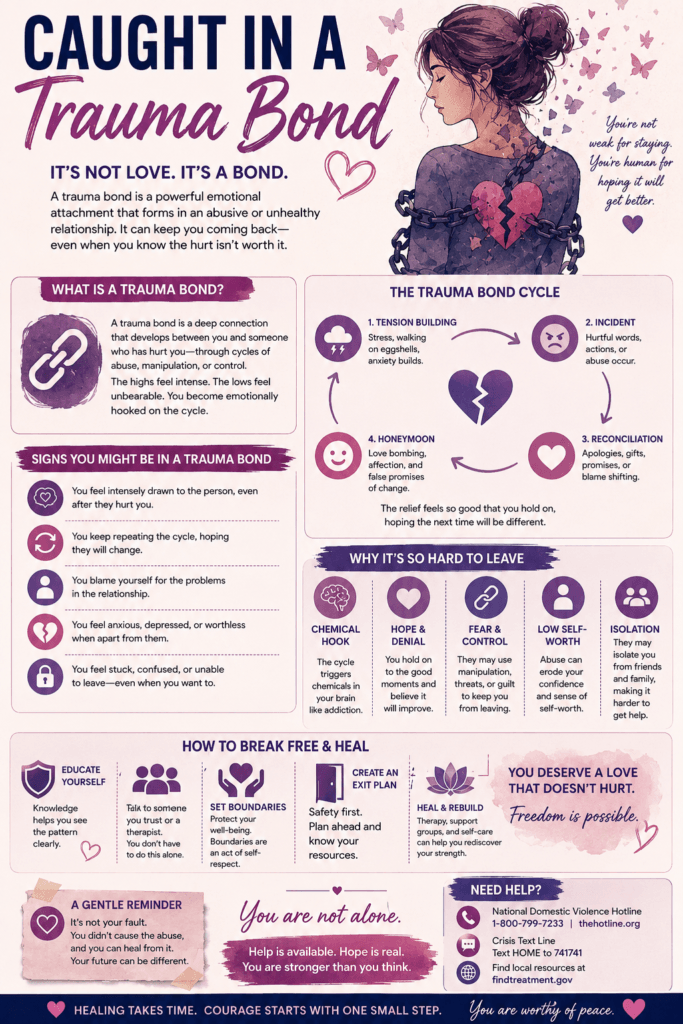
If you’ve ever found yourself drawn back into relationships that make you feel hurt, anxious, or even powerless, you’re definitely not alone. This pattern of returning to someone who has harmed you is often fueled by what’s called trauma bonding. It’s not about weakness or a lack of willpower, but about deep, complicated connections that are hard to break. I’ve seen how trauma bonding can grip people, sometimes for years, before they fully understand what’s going on. Unpacking why this happens can help you spot it and start to reclaim your sense of self.
Understanding Trauma Bonding
The phrase “trauma bonding” gets tossed around in conversation, but the reality is that it’s a pretty tough experience. Trauma bonding shows up when someone forms an emotional attachment to a person who’s repeatedly harmful, usually in a relationship cycle where kindness and cruelty are mixed together. This kind of attachment isn’t restricted to romantic relationships. It pops up in family dynamics, friendships, or even workplaces.
These bonds can be surprisingly strong, and breaking free is rarely as simple as quitting cold turkey. The mix of good moments and painful moments is what keeps people emotionally invested, even when the relationship causes a lot of distress. When small doses of affection or attention break up longer periods of harm, the brain can start to crave that validation like a reward, building up a sort of emotional dependency.
How Trauma Bonds Form
Trauma bonds don’t just pop up overnight. They usually start gradually, when a relationship rapidly intensifies or cycles between closeness and distance. Here’s how the process often unfolds:
- Idealization: At the beginning, things might feel incredible. There’s lots of praise, affection, or attention. It can make the connection seem super strong or even special.
- Devaluation: The affection starts to fade, and criticism, manipulation, or emotional distance shows up. You might start feeling confused or anxious.
- Intermittent Reinforcement: The person who hurt you offers little bits of kindness or approval, pulling you back in and creating a cycle that’s hard to break.
- Dependency: You start seeking out those rare, positive moments, feeling like you need them to feel okay, even if they’re mixed with a lot of pain.
This cycle can keep people stuck even when they logically know that the relationship is unhealthy. Over time, the pattern becomes more familiar than the idea of being free, making it tough to imagine life outside that loop.
Why People Return to Hurtful Relationships
If you’ve experienced trauma bonding, you might wonder why leaving feels almost impossible at times. There are a few reasons this pattern gets so powerful:
- Emotional Rollercoaster: Switching between highs and lows can be addictive. The hope for good times keeps people waiting for the next happy moment.
- Low Self-Worth: Criticism and manipulation can slowly erode your confidence, making it harder to believe you deserve more.
- Fear of Being Alone: Some people stay because they’re afraid of feeling isolated, even when the relationship itself is painful.
- Denial or Minimization: It’s common to downplay the harm, make excuses, or blame yourself rather than place responsibility where it belongs.
This combination of fear, shame, and hope is what often wires trauma bonds so deeply. People can even start doubting their memories of what happened, feeling foggy about what’s real or whether things were “that bad.” That uncertainty can make it even harder to get out.
The Science Behind Trauma Bonding
Understanding the brain chemistry behind trauma bonding can help explain why leaving or even recognizing an unhealthy relationship is so tough. When you get a burst of kindness, your brain releases dopamine, the feel-good messenger. In between, the stress of walking on eggshells triggers the release of cortisol, the stress hormone. Going back and forth between these states creates a biochemical loop that drives craving for the positive moments, making it surprisingly hard to leave.
This kind of psychological conditioning can look a lot like addiction. Just like someone might crave the next high or relief, a person in a trauma-bonded relationship craves those rare moments of warmth, no matter how brief or unpredictable they are. The unpredictability actually makes the cycle stronger because our brains naturally want to figure out how to repeat positive experiences even when they’re scattered among so much pain.
Recognizing Trauma Bonding Patterns
If you’re worried you might be stuck in this cycle, a few red flags usually show up. Here are some signs that you might be experiencing trauma bonding:
- You make excuses for someone’s hurtful behavior or take responsibility for problems that aren’t yours to fix.
- Leaving feels impossible, even if you keep getting hurt.
- You feel anxious or uneasy when you’re not in contact with the other person, but relief or happiness when they reach out, even in small ways.
- Good moments seem extremely meaningful, almost like a reward you’re constantly striving for.
- Loyalty starts to feel like a test, often at the expense of your own needs or boundaries.
It’s totally normal to have mixed feelings about walking away, especially when memories of early affection or kindness are hard to shake. Sometimes, you might even find yourself missing the person right after a painful incident, which just deepens the confusion.
How to Break Free from Trauma Bonds
Moving past trauma bonding is definitely not simple, but with patience, it’s possible. Here are some practical steps that people have found helpful in the recovery process:
- Recognize the Pattern: Just putting a name to what’s happening is a really important first step. Once you know what’s up, you can start to see things more clearly.
- Reach Out for Support: Connecting with friends, family, or support groups can help you remember you’re not alone and that your experience is valid.
- Set Boundaries: This might mean cutting off contact, saying no, or limiting exposure to the person who’s been hurtful. Boundaries help you figure out what feels safe.
- Focus on Self-Care: Doing things that boost your mental and physical health can rebuild your self-worth and calm your nervous system.
- Consider Therapy: Working with a professional who understands trauma can really help you sort through tangled emotions and develop healthier relationship patterns.
Each person’s adventure looks a little different, but everyone benefits from being gentle with themselves during the healing process. Remember, nobody heals perfectly; backslides can happen and are part of the process, not a failure.
Complications and Roadblocks to Healing
Trauma bonding comes with its own set of challenges, and sometimes breaking free can feel like taking two steps forward and one step back. A few things that often trip people up include:
- Guilt or Shame: You might beat yourself up for “not leaving sooner,” but honestly, these bonds are hard to untangle without support.
- Manipulation: The other person may double down if they sense you’re pulling away, promising change or using guilt to draw you back in.
- Grief Over Losing the Relationship: Even a painful relationship can come with real grief, because you’re losing something you hoped would be different.
- Lack of External Support: Not everyone understands trauma bonding, so finding someone who “gets it” is really important. Connecting online or in person with people who have similar experiences is often helpful.
On top of that, healing can feel slow or confusing. Some days you may feel strong, while other days a trigger or memory might pull you right back into self-doubt. That’s why support, patience, and consistent self-care matter so much along the way.
Real Life Examples and Experience
I’ve known people who go through a breakup with someone who’s manipulative, and right when they begin moving on, that person will reach out with a message or gift. This tiny gesture can feel huge, stirring up hope and self-doubt. Suddenly, all the painful memories get overshadowed by the one nice thing, and the cycle starts again.
It’s not just romantic partners, either. Some people have a parent or boss who flips from critical to caring without warning. That unpredictability keeps you scrambling to please them and constantly questioning your own feelings. Realizing you’re stuck in such a cycle is tough. It can be a turning point, though, to recognize that your struggle is common and nothing to be ashamed of.
Frequently Asked Questions
Here are some of the things people most often want to know when it comes to trauma bonding:
Question: How long does a trauma bond last?
Answer: Every situation is unique, but trauma bonds can stick around for months or even years. Recovery happens as you gain support, set boundaries, and develop self-awareness. Sometimes it takes learning about trauma bonding before you even realize what held you in place for so long. Healing can begin once you take that first step, whether by reaching out or reading about others with similar experiences.
Question: Is trauma bonding the same as codependency?
Answer: They’re similar, but not the same. Trauma bonding centers around cycles of abuse mixed with affection, while codependency is more about relying on another person for identity or self-worth. Sometimes they overlap, but recognizing the differences can point you toward specific support or resources.
Question: What helps people recognize trauma bonds?
Answer: Patterns are easier to spot from the outside, so talking with a therapist or trusted friend can help. Learning about trauma bonding is a big step toward recognizing it in your own life. If you feel stuck, try writing down what happens after every interaction; this can shed light on cycles that you might not notice in the moment.
Healing and Moving Forward
Understanding trauma bonding and its effects helps people break free from unhealthy patterns. There’s healing in learning how our brains respond to inconsistency and in challenging the stories we tell ourselves about what we deserve. Progress happens little by little, and surrounding yourself with support gives you room to breathe, heal, and reconnect with who you are outside of the hurt. Over time, those moments of peace and self-trust will outnumber the old triggers.
If you’re working through trauma bonding right now, remember that you don’t have to do it all at once. Small steps, kindness to yourself, and reaching out when you’re ready can help rebuild a sense of safety and hope. Healing is possible, and every step forward counts, no matter how small it seems in the moment.
Video: Why You Can’t Leave #toxicrelationships #emotionalabuse