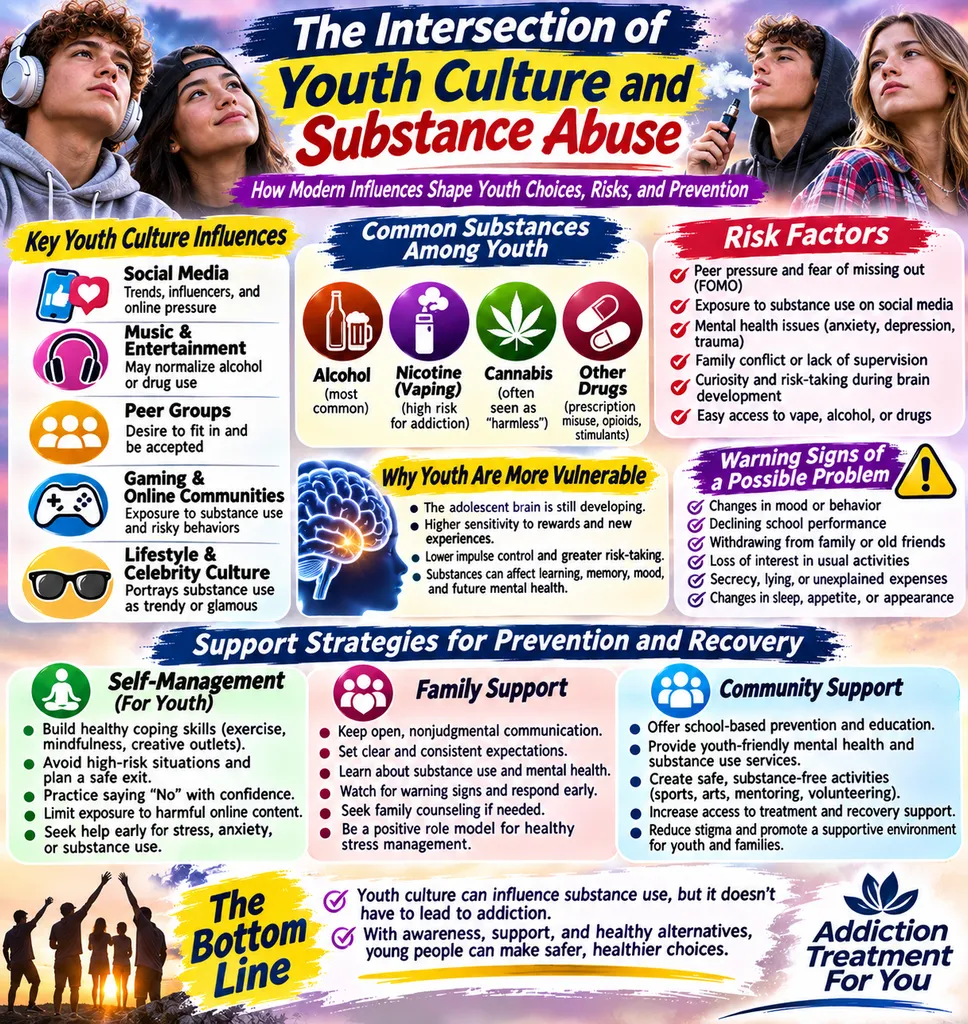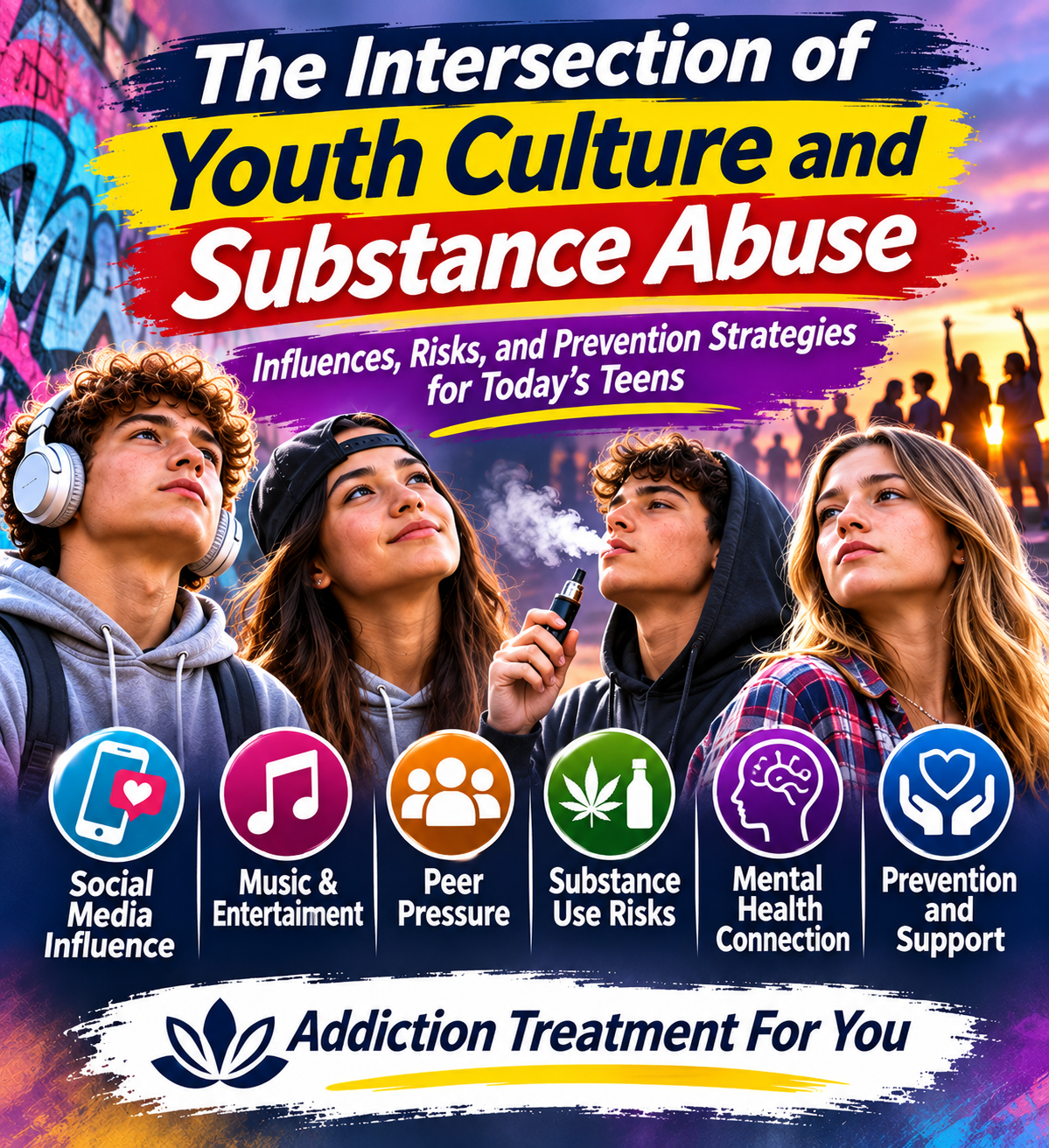
Youth culture plays an important role in shaping how adolescents and young adults develop their identities, establish relationships, and make decisions. Social media, music, fashion, entertainment, peer groups, and online communities influence what young people consider acceptable, exciting, or socially rewarding.
While youth culture encourages creativity, independence, and social connection, certain environments may also normalize alcohol consumption, vaping, cannabis use, and experimentation with other substances.
Adolescents are particularly vulnerable to social influences because their brains are still developing, especially the regions responsible for impulse control, emotional regulation, and long-term decision-making.
However, youth culture does not automatically lead to substance abuse. Supportive friendships, positive role models, cultural identity, family involvement, and meaningful activities can protect young people from developing substance use problems.
Understanding the intersection of youth culture and substance use helps parents, educators, healthcare professionals, and communities identify risks while promoting healthier choices.
This article explores the psychological, social, and cultural factors influencing youth substance use and provides practical self-management, family, and community support strategies.
Understanding Youth Culture and Its Influence on Substance Use
Youth culture includes the shared values, behaviors, interests, and social experiences of adolescents and young adults.
It is shaped by several influences:
- Social media platforms and online communities.
- Music, movies, and entertainment.
- Peer relationships and social expectations.
- Fashion, lifestyle trends, and celebrity culture.
- Gaming and digital environments.
- School and neighborhood experiences.
- Family beliefs and cultural traditions.
These influences can affect how young people perceive substances and whether they consider experimentation risky or socially acceptable.
For example, repeated exposure to videos portraying heavy drinking as entertaining may create the impression that excessive alcohol use is common or harmless.
Similarly, social media content promoting vaping products may minimize concerns about nicotine addiction.
Young people benefit from learning to distinguish entertainment, advertising, and peer expectations from accurate health information.
Social Media: Normalizing Substance Use Through Digital Culture
Social media has become a major influence on adolescent identity and behavior.
Platforms such as TikTok, Instagram, Snapchat, and YouTube expose young people to trends, influencers, advertisements, and peer-generated content.
Some online content portrays alcohol, vaping, or cannabis use as symbols of independence, popularity, relaxation, or social belonging.
How Social Media Can Influence Substance Use
- Social comparison: Teenagers may imitate behaviors they associate with popularity.
- Influencer marketing: Product promotion can make substance use appear desirable.
- Fear of missing out: Young people may feel pressured to participate in risky activities.
- Repeated exposure: Frequent substance-related content may reduce perceived risks.
- Online challenges: Some trends encourage experimentation or dangerous behavior.
- Targeted advertising: Marketing can reinforce favorable attitudes toward substance-related products.
Exposure does not necessarily cause substance use. The relationship is influenced by family circumstances, mental health, peer behavior, and individual vulnerabilities.
Self-Management Strategies
Young people can protect themselves by:
- Unfollowing accounts that encourage risky substance use.
- Questioning whether online content accurately represents real-life consequences.
- Setting boundaries around social media use.
- Following credible health education accounts.
- Discussing concerning online trends with trusted adults.
- Developing interests and relationships outside digital platforms.
Key message: Social media should not determine a young person’s health decisions or self-worth.
Music, Entertainment, and Celebrity Influence
Music and entertainment have historically shaped youth attitudes toward identity, relationships, and social behavior.
Certain songs, television programs, and online videos depict alcohol or drug use as glamorous, rebellious, or emotionally comforting.
Celebrity lifestyles may also influence young people’s perceptions of substance use.
However, music and entertainment can also promote mental health awareness, recovery, and positive social change.
Potential Risks
- Romanticizing intoxication.
- Presenting drug use as a solution to emotional distress.
- Minimizing addiction-related consequences.
- Associating substance use with social status.
- Reinforcing inaccurate beliefs about how frequently peers use drugs.
Protective Strategies
Parents and educators can encourage media literacy by discussing how entertainment differs from reality.
Questions worth exploring include:
- What message is this song or video communicating?
- Are the health consequences accurately represented?
- Is the content promoting a product or lifestyle?
- What healthier alternatives could address the emotions being described?
These conversations are more effective when they encourage critical thinking rather than simply criticizing a teenager’s entertainment preferences.
Peer Pressure and the Need for Social Belonging
Adolescence is a developmental period when friendships and peer acceptance become increasingly important.
Young people may experiment with substances because they want to fit in, avoid rejection, or appear more mature.
Peer influence can be direct, such as someone offering alcohol, or indirect, such as believing that everyone in a social group uses substances.
Common Peer-Related Risk Factors
- Friends who regularly use alcohol or drugs.
- Parties where substance use is expected.
- Fear of exclusion from social activities.
- Bullying or social rejection.
- Pressure to demonstrate independence.
- Misperceptions about how many peers use substances.
Self-Management Strategies for Resisting Peer Pressure
Adolescents can practice simple responses:
- “No thanks, I’m not interested.”
- “I don’t vape.”
- “I have practice tomorrow.”
- “I’m good without it.”
- “Let’s do something else.”
Other protective strategies include choosing supportive friendships, planning transportation, leaving unsafe situations, and contacting a trusted adult when necessary.
Learning assertive communication can help adolescents establish boundaries without feeling obligated to justify every decision.
Adolescent Brain Development and Substance Use Vulnerability
The adolescent brain continues developing into early adulthood.
During this period, brain systems involved in reward sensitivity, emotional processing, and motivation develop alongside systems responsible for planning and impulse control.
This developmental process can contribute to experimentation and risk-taking.
Alcohol, nicotine, cannabis, and other psychoactive substances can interfere with normal functioning and may increase the risk of substance-related problems.
Why Early Substance Use Matters
Early substance initiation is associated with a greater likelihood of later substance use disorders.
Potential consequences include:
- Impaired attention and learning.
- Poorer academic performance.
- Increased risk-taking behaviors.
- Emotional and behavioral difficulties.
- Nicotine or other substance dependence.
- Accidental injury or overdose.
- Problems with family and peer relationships.
These outcomes vary by substance, frequency, amount, individual vulnerability, and environmental circumstances.
Prevention should focus on supporting healthy brain development rather than using fear-based messages.
Vaping and Nicotine: A Major Youth Culture Concern
Vaping devices are often marketed or perceived as modern, convenient, and socially appealing.
Some products use flavors, colorful packaging, and discreet designs that may attract younger users.
Nicotine can produce dependence, particularly when exposure begins during adolescence.
Why Teenagers May Start Vaping
- Curiosity about flavors.
- Friends who vape.
- Belief that vaping is harmless.
- Stress or anxiety.
- Desire for social acceptance.
- Misunderstanding nicotine addiction.
- Exposure to vaping content online.
Signs of Possible Nicotine Dependence
Parents and healthcare professionals may notice:
- Frequent cravings.
- Irritability when unable to vape.
- Difficulty concentrating during nicotine withdrawal.
- Repeated unsuccessful attempts to quit.
- Concealing vaping devices.
- Continued use despite health or disciplinary consequences.
Support Strategies
Adolescents who want to stop vaping may benefit from behavioral counseling, trigger identification, and structured cessation support.
Healthcare professionals can assess dependence and discuss appropriate treatment options.
Nicotine replacement therapy may be considered for selected adolescents under clinical supervision, depending on age, dependence severity, and applicable guidance.
Punitive responses alone may discourage teenagers from disclosing their substance use or seeking help.
Alcohol, Cannabis, and the Normalization of Experimentation
Alcohol and cannabis are commonly discussed in youth social environments.
Young people may perceive these substances as relatively harmless because they are legal for adults in many jurisdictions or frequently portrayed in entertainment.
However, legal status for adults does not mean a substance is safe for adolescents.
Alcohol-Related Risks
Underage alcohol consumption may contribute to:
- Injuries and accidents.
- Impaired judgment.
- Unsafe sexual situations.
- Alcohol poisoning.
- Academic difficulties.
- Increased vulnerability to developing alcohol use disorder.
Cannabis-Related Risks
Frequent cannabis use during adolescence may be associated with:
- Problems with attention and memory.
- Impaired driving.
- Cannabis use disorder.
- Anxiety or panic symptoms.
- Increased risk of psychotic symptoms among vulnerable individuals.
Risk varies with THC potency, frequency of use, age of initiation, and individual susceptibility.
Prevention Strategies
Young people should receive accurate, developmentally appropriate education about substance effects.
Families should communicate clear expectations while encouraging honest conversations.
Schools can reinforce prevention through evidence-based education rather than exaggerated claims.
Mental Health, Emotional Distress, and Self-Medication
Some adolescents use substances to cope with anxiety, depression, trauma, loneliness, or social difficulties.
This pattern is often described as self-medication.
Although substances may temporarily change emotional experiences, repeated use can worsen psychological symptoms and create additional problems.
Common Emotional Risk Factors
- Depression.
- Anxiety disorders.
- Trauma exposure.
- Bullying and cyberbullying.
- Family conflict.
- Academic pressure.
- Low self-esteem.
- Social isolation.
- Unrecognized neurodevelopmental difficulties.
Mental health conditions do not inevitably lead to substance use, but co-occurring problems deserve comprehensive assessment.
Self-Management Strategies
Adolescents can develop healthier coping skills through:
- Cognitive behavioral therapy techniques.
- Mindfulness and grounding exercises.
- Physical activity.
- Creative expression.
- Structured sleep routines.
- Emotional journaling.
- Supportive friendships.
- Counseling and psychiatric care when appropriate.
A teenager who repeatedly relies on substances to manage emotions should receive a professional assessment for both substance use and mental health concerns.
Family Support Strategies: Building Trust and Preventing Substance Use
Families play a major role in shaping adolescents’ beliefs, expectations, and coping behaviors.
Supportive family relationships can reduce substance use risk by strengthening communication, emotional security, and supervision.
Encourage Open Communication
Parents should create opportunities for conversations about substances without immediately reacting with anger or punishment.
Helpful approaches include:
- Asking open-ended questions.
- Listening without interrupting.
- Acknowledging social pressures.
- Providing accurate health information.
- Discussing family expectations.
- Encouraging teenagers to ask for help.
Establish Consistent Boundaries
Parents should communicate clear expectations about alcohol, nicotine, cannabis, and other substances.
Boundaries are most effective when paired with warmth, consistency, and reasonable consequences.
Model Healthy Coping Behaviors
Young people observe how adults respond to stress, conflict, and emotional distress.
Families can demonstrate healthy behaviors by practicing emotional regulation, seeking professional help when needed, and avoiding the normalization of excessive substance use.
Recognize Warning Signs
Possible indicators of substance-related problems include:
- Sudden changes in friendships.
- Declining academic performance.
- Frequent secrecy.
- Changes in sleep or appetite.
- Unexplained financial requests.
- Mood changes.
- Loss of interest in previous activities.
- Repeated substance-related disciplinary problems.
These behaviors are not proof of substance use and may also reflect mental health concerns or normal developmental changes.
A supportive conversation and appropriate evaluation are more useful than making assumptions.
Community Support Strategies: Creating Healthier Youth Environments
Communities influence substance use through educational opportunities, social norms, recreational resources, and access to healthcare.
Effective prevention requires coordinated efforts among families, schools, healthcare professionals, youth organizations, and policymakers.
School-Based Prevention
Schools can provide evidence-based substance use education that teaches:
- Decision-making skills.
- Emotional regulation.
- Peer refusal strategies.
- Media literacy.
- Stress management.
- Accurate information about substance risks.
Programs that emphasize interactive skills and healthy relationships are generally more promising than fear-based presentations alone.
Youth Mentorship Programs
Mentorship can provide positive adult relationships and opportunities for personal growth.
Mentors may help young people build confidence, set academic goals, and develop problem-solving skills.
Recreational and Creative Opportunities
Communities should support accessible activities such as:
- Sports and fitness programs.
- Music and performing arts.
- Photography and creative workshops.
- Youth leadership programs.
- Volunteer opportunities.
- Technology and coding clubs.
- Outdoor recreation.
These activities offer social belonging without requiring substance use.
Accessible Mental Health Services
Schools and community organizations should establish referral pathways for adolescents experiencing emotional distress or substance-related problems.
Services should be affordable, confidential within legal and safety limits, culturally responsive, and developmentally appropriate.
The Role of Healthcare Professionals in Youth Substance Use Prevention
Healthcare professionals, including physician assistants, pediatricians, nurses, and behavioral health specialists, can identify early substance use and provide intervention.
Routine adolescent healthcare visits offer opportunities to discuss nicotine, alcohol, cannabis, and other substances.
Screening and Early Intervention
Validated screening tools include:
- CRAFFT: A screening instrument for adolescent substance use-related risk.
- S2BI: Screening to Brief Intervention, which evaluates substance use frequency.
- BSTAD: Brief Screener for Tobacco, Alcohol, and Other Drugs.
Positive screening results should lead to further assessment rather than automatic assumptions about addiction.
Brief Intervention and Referral
Healthcare professionals can use motivational interviewing to explore adolescents’ concerns, readiness for change, and personal goals.
When appropriate, referrals may include:
- Adolescent substance use treatment programs.
- Mental health counseling.
- Family therapy.
- Nicotine cessation services.
- Psychiatric evaluation.
- Specialized addiction medicine services.
Confidentiality should be explained clearly, including situations in which safety concerns require additional involvement.
Recognizing When Experimentation Becomes a Substance Use Disorder
Not every adolescent who experiments with alcohol or another substance develops addiction.
However, repeated use can become clinically concerning when it begins interfering with important responsibilities or continues despite harm.
Warning signs include:
- Difficulty controlling substance use.
- Strong cravings.
- Increasing time spent obtaining or using substances.
- Continued use despite family or academic problems.
- Abandoning important activities.
- Using substances in dangerous situations.
- Tolerance or withdrawal symptoms.
A substance use disorder diagnosis requires clinical evaluation using established diagnostic criteria.
Early identification can prevent further complications and improve engagement in treatment.
A Practical Youth Substance Use Prevention Plan
| Prevention area | Recommended action |
|---|---|
| Social media | Teach media literacy and encourage healthier online environments |
| Peer relationships | Practice refusal skills and strengthen supportive friendships |
| Emotional health | Provide coping skills and accessible counseling |
| Family communication | Encourage open discussions and consistent boundaries |
| School environment | Implement evidence-based prevention education |
| Healthcare | Offer routine screening and early intervention |
| Community engagement | Expand mentorship, recreation, and youth leadership |
| Treatment access | Provide developmentally appropriate addiction and mental health services |
| Recovery support | Maintain follow-up care, family involvement, and peer support |
Lessons for Parents, Educators, and Communities
The intersection of youth culture and substance use demonstrates that prevention must address the environments in which young people develop.
Several principles are especially important:
- Belonging matters. Young people need meaningful connections that do not depend on substance use.
- Media literacy matters. Adolescents benefit from understanding how online content influences perceptions and decisions.
- Mental health matters. Emotional distress should be addressed before substance use becomes an established coping mechanism.
- Family relationships matter. Warmth, communication, and consistent expectations support prevention.
- Early intervention matters. Screening and timely treatment can reduce the progression of substance-related problems.
- Community resources matter. Positive activities and accessible services strengthen protective factors.
- Youth participation matters. Prevention programs should include young people’s perspectives rather than simply telling them what to do.
Conclusion: Empowering Youth to Make Healthier Choices
Youth culture is constantly evolving, influenced by technology, entertainment, peer relationships, and changing social expectations.
Although certain cultural messages may normalize substance use, the same environments can also promote resilience, creativity, emotional awareness, and healthy relationships.
Effective prevention requires understanding why young people experiment with substances and addressing the underlying social and psychological factors that influence their decisions.
Self-management strategies help adolescents develop confidence, emotional regulation, and resistance to peer pressure.
Family support strengthens communication, trust, and healthy boundaries.
Community programs provide education, mentorship, mental health services, and meaningful alternatives to substance use.
The goal is not to isolate young people from youth culture. It is to empower them to participate in it safely, critically, and confidently without relying on substances for belonging or emotional relief.
When families, schools, healthcare professionals, and communities work together, young people have greater opportunities to develop healthy identities and build substance-free futures.
Resources for Youth Substance Use Prevention
- SAMHSA — Substance use prevention, treatment, and mental health resources.
- National Institute on Drug Abuse (NIDA) — Research-based information about adolescent substance use and addiction.
- CDC Youth Risk Behavior Surveillance — Information about adolescent health behaviors and prevention.
- Smokefree Teen — Tools and support for teenagers who want to quit vaping or smoking.
- FindTreatment.gov — Locate substance use and mental health treatment services.
In the United States, call or text 988 for mental health crisis support. For suspected overdose or another immediate medical emergency, call 911.
Frequently Asked Questions and Answers
Understanding Youth Culture and Substance Use
1. What is the intersection of youth culture and substance abuse?
The intersection of youth culture and substance abuse refers to how social trends, peer relationships, entertainment, digital platforms, and cultural expectations influence adolescents’ attitudes toward alcohol and other drugs.
Youth culture can shape whether substance use is perceived as dangerous, socially acceptable, exciting, or necessary for belonging.
However, cultural exposure alone does not cause addiction. Individual vulnerabilities, family relationships, mental health, and community conditions also influence risk.
2. Why are teenagers more vulnerable to substance use?
Adolescence is a period of significant brain development, emotional growth, and social exploration.
Teenagers may be more sensitive to rewards, peer approval, and new experiences while still developing long-term planning and impulse-control skills.
Additional risk factors include:
- Early exposure to alcohol or drugs.
- Family history of substance use disorders.
- Mental health difficulties.
- Trauma or chronic stress.
- Peer substance use.
- Limited parental supervision.
- Easy access to substances.
These factors increase vulnerability but do not guarantee that addiction will develop.
3. Does youth culture encourage substance abuse?
Certain aspects of youth culture may normalize substance use, particularly when alcohol, vaping, or drug experimentation is portrayed as entertaining or socially rewarding.
However, youth culture also includes protective influences such as sports, music, creative activities, social activism, supportive friendships, and mental health awareness.
Prevention should strengthen these positive influences rather than portray all youth culture as harmful.
4. What substances are most concerning among teenagers?
Important substance-related concerns include:
- Alcohol: Associated with injuries, impaired judgment, and alcohol poisoning.
- Nicotine: Found in cigarettes, vaping products, and some oral nicotine products; highly addictive.
- Cannabis: May affect attention, memory, coordination, and mental health.
- Prescription medications: Misuse of opioids, stimulants, or sedatives can cause serious complications.
- Illicit drugs: May expose young people to overdose, contamination, and unpredictable potency.
Patterns of use vary by age, region, and time. Current surveillance data should guide local prevention priorities.
5. Does experimenting with substances always lead to addiction?
No. Not every adolescent who experiments with a substance develops a substance use disorder.
However, experimentation carries risks, including poisoning, impaired judgment, injuries, and the possibility of continued use.
Earlier initiation, frequent consumption, higher-potency products, and underlying vulnerabilities may increase the likelihood of addiction.
Prevention focuses on reducing both immediate harm and long-term consequences.
Social Media, Entertainment, and Peer Influence
6. How does social media influence teenage substance use?
Social media may expose adolescents to videos, advertisements, influencers, and peer-generated content that portray substance use positively.
Potential influences include:
- Normalization of vaping or drinking.
- Social comparison.
- Fear of missing out.
- Influencer marketing.
- Misleading information about drug safety.
- Exposure to risky online challenges.
Social media can also promote prevention education, recovery stories, and access to mental health resources.
Parents should encourage media literacy rather than relying exclusively on restrictions.
7. Can music and entertainment influence drug experimentation?
Music, movies, television, and online entertainment can influence attitudes toward substance use by shaping social expectations.
Content that glamorizes intoxication may contribute to favorable perceptions of drinking or drug use.
However, exposure does not necessarily result in experimentation.
Media literacy helps adolescents evaluate messages critically and distinguish artistic expression from health recommendations.
8. Why is peer pressure such a powerful influence during adolescence?
Adolescents naturally seek acceptance, belonging, and independence.
Peer pressure may occur when friends directly encourage substance use or when teenagers believe they must participate to maintain social relationships.
Some adolescents overestimate how many of their peers drink, vape, or use drugs.
Correcting these misconceptions and strengthening refusal skills can reduce pressure.
9. How can teenagers resist peer pressure to use substances?
Adolescents can practice assertive responses and plan for situations involving alcohol or drugs.
Helpful strategies include:
- Saying, “No thanks, I’m not interested.”
- Choosing friends who respect personal boundaries.
- Planning transportation before attending gatherings.
- Leaving situations that feel unsafe.
- Contacting a trusted adult for assistance.
- Suggesting substance-free activities.
Parents can reinforce these skills through realistic conversations and role-playing.
10. Does gaming culture contribute to substance abuse?
Gaming itself does not cause substance use disorders.
However, some gaming communities may expose adolescents to substance-related conversations, advertising, or social pressures.
Excessive gaming may also coexist with sleep problems, social isolation, or emotional distress in some individuals.
Healthy gaming habits include balanced schedules, adequate sleep, offline relationships, and age-appropriate online safety practices.
Mental Health and Adolescent Brain Development
11. How does adolescent brain development affect addiction risk?
The adolescent brain continues developing into early adulthood.
Reward processing and emotional responses may be particularly influential during this period, while executive functions such as planning and impulse control continue maturing.
Substance exposure during adolescence may interfere with learning, memory, emotional regulation, and healthy development.
The extent of risk depends on the substance, amount, frequency, and individual vulnerability.
12. What is the connection between teenage anxiety and substance use?
Some teenagers use alcohol, nicotine, or cannabis to temporarily reduce anxiety or social discomfort.
Although these substances may produce short-term changes in mood, repeated use can worsen anxiety, disrupt sleep, and contribute to dependence.
Adolescents experiencing persistent anxiety should receive appropriate mental health assessment and evidence-based treatment.
Cognitive behavioral therapy and other psychological interventions can help develop healthier coping strategies.
13. Can depression increase the risk of substance abuse among teenagers?
Yes. Depression and substance use disorders can occur together.
Some adolescents use substances to escape sadness, hopelessness, or emotional pain.
Substance use can also worsen depressive symptoms and interfere with treatment.
Young people experiencing both conditions benefit from integrated care that addresses mental health and substance use simultaneously.
14. How do trauma and bullying influence adolescent substance use?
Trauma, bullying, cyberbullying, family violence, and other adverse experiences can increase emotional distress.
Some adolescents may turn to substances to cope with painful memories or feelings of rejection.
Protective interventions include trauma-informed counseling, supportive adult relationships, school safety programs, and early mental health services.
Trauma does not inevitably lead to addiction, and many young people demonstrate resilience when provided appropriate support.
Recognizing Substance Use Problems
15. What are the warning signs of substance abuse in teenagers?
Potential warning signs include:
- Sudden changes in friendships.
- Declining school performance.
- Increased secrecy.
- Unexplained spending.
- Changes in sleep or appetite.
- Loss of interest in previous activities.
- Mood swings or irritability.
- Repeated intoxication or substance-related incidents.
- Difficulty stopping substance use.
These signs are not diagnostic and may reflect other developmental or mental health concerns.
A supportive conversation and professional assessment are more appropriate than accusations.
16. How can parents distinguish normal teenage behavior from substance use problems?
Normal adolescent development may include increased independence, changing friendships, and occasional mood fluctuations.
Greater concern is warranted when changes are persistent, severe, or accompanied by impaired functioning.
Parents should consider the overall pattern rather than relying on one behavior.
If substance use is suspected, a healthcare professional can perform confidential screening and evaluate possible mental health concerns.
17. When does experimentation become a substance use disorder?
Substance use may become a disorder when an adolescent develops impaired control, cravings, functional impairment, or continued use despite harmful consequences.
Other symptoms may include tolerance, withdrawal, and abandoning important activities.
Diagnosis requires clinical assessment using established criteria, including the DSM-5-TR.
Early intervention can reduce the risk of more serious complications.
Self-Management Strategies for Teenagers
18. What self-management strategies can help teenagers avoid substance use?
Adolescents can strengthen their decision-making skills by developing healthy coping behaviors and supportive relationships.
Recommended strategies include:
- Recognizing personal triggers.
- Practicing refusal skills.
- Maintaining regular sleep schedules.
- Participating in exercise or creative activities.
- Limiting exposure to harmful online content.
- Seeking support for stress or anxiety.
- Setting academic and personal goals.
- Building friendships that respect boundaries.
These strategies are most effective when supported by families, schools, and communities.
19. What should a teenager do if they have already started using substances?
A teenager who has begun using alcohol or drugs should be encouraged to speak with a trusted adult or qualified healthcare professional.
The next steps may include:
- Discussing the type, frequency, and circumstances of use.
- Screening for substance-related problems.
- Evaluating mental health symptoms.
- Developing a realistic plan to stop or reduce harmful use.
- Considering counseling or specialized treatment.
- Creating a safety and relapse prevention plan.
Abruptly stopping heavy alcohol or sedative use can cause dangerous withdrawal symptoms and may require medical supervision.
The goal should be safety, engagement, and effective treatment rather than punishment.
20. Can mindfulness and physical activity help prevent addiction?
Mindfulness and physical activity can support emotional regulation, stress management, and psychological well-being.
Exercise may improve mood and sleep, while mindfulness can help adolescents recognize difficult emotions without reacting impulsively.
These approaches can complement prevention and treatment programs.
However, they should not replace professional treatment when a substance use disorder is present.
Family Support Strategies
21. How can parents talk to teenagers about drugs without creating conflict?
Parents should approach substance-related conversations with curiosity, compassion, and clear expectations.
Helpful communication strategies include:
- Asking open-ended questions.
- Listening without immediate judgment.
- Discussing realistic health consequences.
- Avoiding threats or humiliation.
- Explaining family expectations.
- Encouraging honesty.
- Offering help when concerns arise.
For example, parents might ask, “What are people your age hearing about vaping?” rather than immediately accusing a teenager of using nicotine.
Consistent communication is more effective than relying on a single conversation.
22. What should families do if a teenager develops an addiction?
Families should seek professional assessment and treatment rather than attempting to manage a serious substance use disorder independently.
Support may involve:
- Adolescent addiction specialists.
- Family-based behavioral therapy.
- Mental health counseling.
- Appropriate medication treatment.
- School support services.
- Peer recovery resources.
- Ongoing monitoring and relapse prevention.
Parents should also seek support for their own emotional well-being.
Family involvement is important, but treatment should respect the adolescent’s developmental needs, privacy, and safety.
23. How can parents protect teenagers from harmful social media influences?
Parents can promote healthier digital habits by discussing online content, privacy, advertising, and social comparison.
Helpful approaches include:
- Encouraging critical thinking about influencer content.
- Establishing reasonable screen-time boundaries.
- Discussing substance-related advertisements.
- Helping teenagers identify misleading health claims.
- Supporting offline friendships and activities.
- Encouraging teenagers to report concerning content.
Collaborative approaches generally support trust more effectively than constant surveillance.
Community Support and Prevention
24. What role do schools and communities play in preventing youth substance abuse?
Schools and communities provide essential opportunities for prevention, early identification, and support.
Effective strategies include:
- Evidence-based substance use education.
- Social-emotional learning programs.
- Mental health screening and referral.
- Youth mentorship.
- Substance-free recreational activities.
- Parent education workshops.
- Anti-bullying initiatives.
- Access to adolescent treatment services.
Prevention programs should be developmentally appropriate, culturally responsive, and informed by scientific evidence.
25. What is the most important lesson about youth culture and substance abuse?
The most important lesson is that young people need connection, education, emotional support, and healthy opportunities for belonging.
Youth culture can influence substance-related decisions, but it can also provide powerful protective experiences through friendships, creativity, sports, education, and community participation.
Effective prevention does not require rejecting youth culture.
Instead, families, educators, healthcare professionals, and communities should help adolescents develop the knowledge and confidence to make safer decisions within their social environments.
Video: