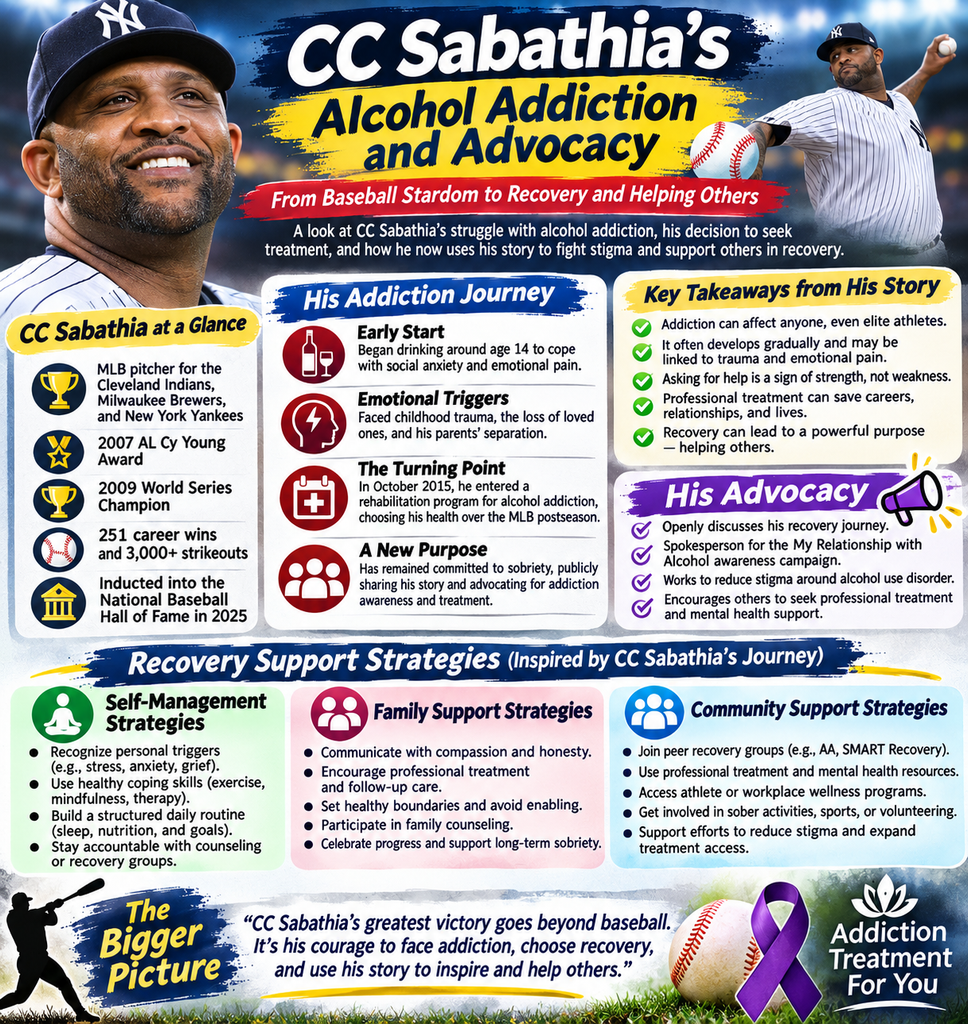
CC Sabathia is widely recognized as one of Major League Baseball’s most accomplished pitchers. Throughout his career with the Cleveland Indians, Milwaukee Brewers, and New York Yankees, Sabathia earned numerous accolades, including a Cy Young Award, a World Series championship, and more than 3,000 career strikeouts.
However, behind his extraordinary athletic achievements, Sabathia was fighting a personal battle with alcohol addiction.
In October 2015, just before the New York Yankees entered the postseason, Sabathia made the courageous decision to enter an alcohol rehabilitation program. His announcement attracted national attention because he prioritized his health and family over one of baseball’s most important moments.
Since seeking treatment, Sabathia has spoken openly about alcohol use disorder, recovery, and the importance of reducing stigma surrounding addiction.
His journey demonstrates that addiction can affect anyone, regardless of professional success, financial security, or public recognition.
Understanding Sabathia’s experiences provides valuable lessons about self-management, family involvement, community support, and the importance of recognizing when professional treatment is necessary.
CC Sabathia’s Rise to Baseball Stardom
Born in Vallejo, California, Sabathia developed exceptional baseball talent at a young age. He made his Major League debut in 2001 with Cleveland and quickly became one of the game’s premier pitchers.
His accomplishments include:
- Winning the 2007 American League Cy Young Award.
- Helping the New York Yankees win the 2009 World Series.
- Earning six All-Star selections.
- Recording 251 career victories.
- Reaching 3,000 career strikeouts.
- Being inducted into the National Baseball Hall of Fame in 2025.
Despite these achievements, Sabathia later revealed that alcohol had become an increasingly destructive part of his personal life.
His experiences challenge the misconception that people with addiction must appear unsuccessful or unable to function professionally.
A person may maintain a demanding career while experiencing significant substance-related harm.
The Beginning of His Alcohol Addiction
Sabathia has explained that alcohol initially helped him feel more comfortable in social situations.
As a young professional athlete, he experienced pressure to fit in, socialize with teammates, and navigate the expectations of professional sports.
Because he was naturally reserved, drinking temporarily reduced his social anxiety and made him feel more confident.
Over time, however, alcohol became less about socializing and more about escaping uncomfortable emotions.
In his 2016 personal essay, My Toughest Out, Sabathia described how drinking gradually shifted from a social activity to something he did alone.
He also acknowledged that he repeatedly attempted to control his alcohol consumption without professional assistance. The Players’ Tribune
Factors That Contributed to His Drinking
- Social anxiety: Alcohol initially helped him feel more outgoing and accepted.
- Professional pressure: Baseball created high expectations and frequent opportunities to celebrate or cope with disappointment.
- Emotional avoidance: Drinking became a way to suppress difficult feelings.
- Social normalization: Alcohol was frequently present at gatherings and celebrations.
- Isolation: Drinking alone allowed him to conceal the severity of his difficulties.
- Difficulty accepting addiction: He initially believed he could manage his drinking through willpower.
These factors illustrate how alcohol use can gradually develop into dependence, even when the individual remains successful in other areas of life.
Childhood Trauma, Grief, and Emotional Pain
One of the most important aspects of Sabathia’s recovery story is his recognition of the connection between unresolved emotional pain and alcohol use.
During a 2021 NPR Fresh Air interview, Sabathia discussed experiencing significant losses during adolescence, including the deaths of loved ones and his parents’ separation.
He recalled beginning to drink at approximately age 14 and connected his early alcohol use with attempts to escape painful experiences.
He also described the emotional impact of losing his father, who had struggled with drug addiction. KSJD+1
Understanding Trauma and Alcohol Addiction
Traumatic experiences and unresolved grief can increase vulnerability to substance use disorders.
Alcohol may temporarily reduce emotional discomfort, but repeated use can interfere with healthy emotional processing and contribute to worsening anxiety, depression, and dependence.
Healthy trauma-management strategies include:
- Seeking trauma-informed counseling or psychotherapy.
- Learning to identify emotional triggers.
- Developing healthy ways to express grief.
- Practicing mindfulness and relaxation techniques.
- Building supportive relationships.
- Addressing co-occurring mental health symptoms.
- Replacing emotional avoidance with healthier coping skills.
Sabathia’s story demonstrates that understanding why a person drinks can be as important as addressing the drinking behavior itself.
The Turning Point: Choosing Rehabilitation in 2015
In October 2015, Sabathia reached a defining moment in his recovery journey.
While staying in a Baltimore hotel during the final weekend of the baseball season, he recognized that his alcohol consumption had become unmanageable.
Despite the Yankees preparing for postseason competition, Sabathia informed manager Joe Girardi that he needed professional treatment.
He entered Silver Hill Hospital in Connecticut, where he spent about 29 days in rehabilitation.
Sabathia later described the decision as one of the most important choices of his life.
His manager, teammates, and family provided support during this difficult transition. The Players’ Tribune+2
Why His Decision Was Significant
- He acknowledged that alcohol had become a serious problem.
- He stopped attempting to manage addiction entirely on his own.
- He prioritized health over professional expectations.
- He accepted support from family and colleagues.
- He participated in structured addiction treatment.
- He publicly challenged the stigma associated with rehabilitation.
His decision demonstrated that asking for help is not a professional failure. It is an important step toward protecting one’s health and future.
Self-Management Strategies: Lessons From Sabathia’s Recovery
Successful recovery requires more than completing a rehabilitation program.
Individuals must develop practical skills to manage cravings, recognize emotional triggers, maintain treatment engagement, and establish healthier routines.
Sabathia has discussed how treatment helped him understand the reasons behind his drinking and develop tools for maintaining sobriety.
Recognize Personal Triggers
Triggers may include anxiety, stress, loneliness, celebrations, conflict, and emotional pain.
Individuals can strengthen self-awareness by:
- Keeping a journal of cravings and emotional patterns.
- Identifying situations associated with previous drinking.
- Recognizing early warning signs of relapse.
- Developing alternative responses to stress.
- Discussing triggers with a therapist or recovery counselor.
Develop Healthy Emotional Coping Skills
Instead of using alcohol to suppress emotions, individuals can practice healthier approaches.
Examples include:
- Cognitive behavioral therapy (CBT).
- Mindfulness and breathing exercises.
- Regular physical activity.
- Talking with trusted supporters.
- Problem-solving and stress-management techniques.
- Participating in meaningful hobbies.
Establish a Structured Recovery Routine
Daily structure can reduce exposure to triggers and promote emotional stability.
A recovery routine may include consistent sleep, balanced nutrition, exercise, scheduled counseling, and regular contact with supportive individuals.
For people with alcohol use disorder, medications such as naltrexone or acamprosate may also help reduce relapse risk when prescribed appropriately.
Practice Accountability
Sabathia has emphasized the importance of openness and accountability in his recovery.
Accountability may involve regular counseling, peer support meetings, honest communication, and a written relapse prevention plan.
Recovery should be based on support and personal responsibility rather than shame or punishment.
Family Support: The Importance of His Wife and Children
Family relationships have played a central role in Sabathia’s recovery.
His wife, Amber Sabathia, recognized the seriousness of his drinking and encouraged him to seek help.
Sabathia has publicly expressed gratitude for her support and the encouragement he received from extended family and friends.
He has also described wanting to be a present, healthy father as a major motivation for maintaining sobriety. The Players’ Tribune
Strategies Families Can Learn From His Experience
Communicate concerns with compassion.
Families should discuss alcohol-related problems without insults, humiliation, or judgment.
Encourage professional treatment.
Loved ones can help find treatment programs, schedule appointments, and support follow-up care.
Establish healthy boundaries.
Boundaries protect family members while allowing the individual with addiction to take responsibility for recovery.
Participate in family counseling.
Counseling can improve communication, rebuild trust, and address relationship difficulties.
Recognize positive changes.
Acknowledging treatment participation, honest communication, and healthier behaviors can reinforce recovery efforts.
Protect the family’s emotional health.
Spouses, children, and other relatives may also benefit from counseling and support groups.
Why Family Support Matters
Addiction can create secrecy, emotional distance, broken trust, and financial or relationship stress.
Family involvement can help rebuild connections, but relatives cannot control another person’s sobriety.
Healthy family support combines compassion, accountability, realistic expectations, and respect for personal boundaries.
CC Sabathia’s Addiction Advocacy: Turning Recovery Into Purpose
Following rehabilitation, Sabathia began using his public platform to encourage others to seek help for alcohol addiction.
His advocacy emphasizes that substance use disorders are medical conditions rather than moral failures.
In 2021, he became a spokesperson for Alkermes’ My Relationship with Alcohol awareness campaign, which encouraged individuals to evaluate their drinking habits and discuss concerns with healthcare professionals.
The campaign included educational resources, personal recovery stories, and information about treatment options. Alkermes plc
Major Areas of Sabathia’s Advocacy
- Reducing addiction stigma: Encouraging people to discuss alcohol-related problems without shame.
- Promoting treatment: Emphasizing the importance of seeking professional assistance.
- Increasing awareness: Helping individuals recognize unhealthy drinking patterns.
- Supporting mental health: Discussing anxiety, trauma, and emotional distress alongside addiction.
- Encouraging accountability: Demonstrating how openness can support long-term recovery.
- Inspiring athletes: Showing that professional success and addiction can coexist, and that treatment is compatible with a successful career.
Sabathia has also shared his experiences through interviews, his memoir Till the End, and the HBO documentary Under the Grapefruit Tree: The CC Sabathia Story.
The documentary explores his baseball career and personal experiences with alcohol addiction and recovery. MLB.com
Community Support Strategies: Building Recovery-Friendly Environments
Sabathia’s recovery illustrates the importance of supportive environments, including professional sports organizations, healthcare providers, teammates, and community resources.
His Yankees manager and fellow players supported his decision to enter rehabilitation, helping demonstrate that addiction treatment should not be viewed as a professional disgrace.
How Communities Can Support Recovery
Expand access to evidence-based treatment.
Communities should support affordable addiction treatment, outpatient counseling, psychiatric services, and medication management.
Promote peer recovery programs.
Alcoholics Anonymous, SMART Recovery, and other peer support organizations provide opportunities for connection, encouragement, and accountability.
Educate schools and athletic organizations.
Athletes may experience pressure to perform while concealing mental health or substance use difficulties.
Education can help coaches, trainers, and teammates recognize warning signs and respond appropriately.
Develop substance-free social opportunities.
Recreational sports, community events, volunteer programs, and sober gatherings can strengthen social relationships without relying on alcohol.
Reduce discrimination.
Employers, healthcare professionals, and community leaders can challenge stereotypes and encourage people to seek treatment early.
Support families.
Family education, counseling, and caregiver support groups help loved ones understand addiction while protecting their own well-being.
The Role of Professional Sports Organizations in Addiction Prevention
Professional athletes face unique stressors, including injuries, performance expectations, travel schedules, public criticism, and pressure to maintain a competitive identity.
Some may hesitate to disclose substance use problems because they fear losing contracts, disappointing teammates, or damaging their reputation.
Sabathia’s decision to seek treatment during the postseason demonstrates why organizations need policies that prioritize health and safety.
Recommended Strategies for Sports Organizations
- Provide confidential screening for substance use and mental health conditions.
- Offer access to qualified addiction specialists.
- Educate athletes about alcohol use disorder and treatment.
- Train coaches and staff to recognize concerning behavioral changes.
- Establish supportive return-to-play and recovery plans.
- Provide resources for retired athletes adjusting to life after competition.
- Protect medical confidentiality and discourage discrimination.
An athlete should never have to choose between protecting their health and being treated with dignity.
Ten Years of Sobriety: A Meaningful Recovery Milestone
In October 2025, Sabathia publicly celebrated ten years since entering rehabilitation for alcohol addiction.
This milestone followed his induction into the National Baseball Hall of Fame earlier that year, reflecting both his extraordinary professional achievements and his publicly documented commitment to recovery. Pinstripe Alley
His journey demonstrates that treatment can create opportunities for meaningful personal change.
However, long-term recovery is not simply measured by the number of years without alcohol. It also involves emotional health, relationships, quality of life, and the ability to manage challenges without returning to harmful substance use.
Lessons From His Recovery
- Acknowledging addiction is an important first step.
- Professional success does not eliminate vulnerability to substance use disorders.
- Trauma and unresolved grief deserve clinical attention.
- Family and workplace support can encourage engagement in treatment.
- Structured treatment provides skills that support long-term recovery.
- Sharing personal experiences can help reduce stigma.
- Recovery can become a foundation for advocacy and helping others.
A Practical Recovery Support Plan
Individuals and families can apply lessons from Sabathia’s experience through a coordinated approach to addiction recovery.
| Recovery focus | Recommended action |
|---|---|
| Self-awareness | Identify emotional triggers and unhealthy drinking patterns |
| Professional treatment | Seek assessment from an addiction specialist |
| Mental health | Address anxiety, trauma, grief, or depression |
| Physical wellness | Establish healthy sleep, exercise, and nutrition routines |
| Family involvement | Encourage communication, counseling, and boundaries |
| Peer support | Attend recovery meetings or connect with a peer mentor |
| Relapse prevention | Develop a written plan for cravings and high-risk situations |
| Community engagement | Participate in meaningful activities and sober social networks |
| Long-term care | Maintain follow-up appointments and reassess treatment needs |
For individuals with significant alcohol dependence, stopping alcohol abruptly may cause dangerous withdrawal symptoms, including seizures and delirium.
Medical evaluation is important before attempting withdrawal when physiological dependence is suspected.
How CC Sabathia’s Advocacy Can Inspire Others
Sabathia’s willingness to discuss alcohol addiction has helped challenge the idea that individuals must hide their struggles to protect their reputation.
His experiences also illustrate the value of people with lived experience becoming advocates for others.
When respected public figures discuss recovery, they can encourage individuals who are struggling silently to recognize that professional help is available.
Families may also become more willing to discuss substance use problems when they see addiction addressed openly and without judgment.
Ways Individuals Can Become Recovery Advocates
- Share personal recovery experiences when comfortable and appropriate.
- Encourage others to seek qualified treatment.
- Challenge stigmatizing language about addiction.
- Support local recovery organizations.
- Volunteer in community education programs.
- Promote access to mental health and substance use services.
- Encourage employers to adopt recovery-supportive policies.
Personal recovery stories can be powerful, but advocacy should also emphasize evidence-based care and respect for individual differences.
Conclusion: CC Sabathia’s Greatest Victory Beyond Baseball
CC Sabathia’s journey from baseball superstar to addiction recovery advocate demonstrates that some of life’s most important victories occur outside professional competition.
Despite his success on the baseball field, Sabathia faced significant struggles with alcohol dependence, emotional distress, and the difficulty of acknowledging that he needed help.
His decision to enter rehabilitation in 2015 became a turning point.
Through professional treatment, family encouragement, personal accountability, and ongoing recovery efforts, he rebuilt important aspects of his life and began using his experiences to help others.
His advocacy reminds individuals and families that addiction is treatable and that seeking assistance is a sign of self-awareness and courage.
Sabathia’s greatest legacy may extend beyond his baseball accomplishments: showing others that asking for help can be the beginning of a healthier, more meaningful life.
Recovery is possible, and no one should have to face addiction alone.
Addiction Treatment and Family Support Resources
- SAMHSA National Helpline: 1-800-662-HELP (4357), offering confidential treatment referral information.
- FindTreatment.gov: Find addiction and mental health treatment services
- Alcoholics Anonymous: Find AA meetings and recovery support
- SMART Recovery: Explore evidence-informed recovery programs
- Al-Anon Family Groups: Find support for families affected by alcohol addiction
- 988 Suicide & Crisis Lifeline: Call or text 988 for immediate mental health crisis support in the United States.
Frequently Asked Questions and Answers
1. Who is CC Sabathia?
CC Sabathia is a retired Major League Baseball pitcher who played for the Cleveland Indians, Milwaukee Brewers, and New York Yankees.
His accomplishments include winning the 2007 American League Cy Young Award, the 2009 World Series championship, and recording more than 3,000 career strikeouts.
He was inducted into the National Baseball Hall of Fame in 2025.
Beyond his athletic accomplishments, Sabathia is recognized for publicly discussing his experiences with alcohol addiction and recovery.
2. When did CC Sabathia begin drinking alcohol?
Sabathia has discussed beginning to drink during his teenage years, around age 14.
He has connected his early alcohol use with emotional distress, difficult childhood experiences, and a desire to feel more comfortable in social situations.
Early alcohol exposure can increase the risk of developing alcohol use disorder later in life, particularly when combined with psychological, genetic, and environmental vulnerabilities.
3. What contributed to CC Sabathia’s alcohol addiction?
Sabathia has described several experiences associated with his drinking, including social anxiety, emotional pain, personal losses, and the pressures of professional baseball.
Potential contributing factors included:
- Childhood grief and difficult family experiences.
- Using alcohol to feel more comfortable socially.
- Professional stress and performance expectations.
- Social environments where drinking was common.
- Increasing reliance on alcohol to manage uncomfortable emotions.
- Difficulty recognizing when drinking had become unmanageable.
Alcohol use disorder typically develops through multiple interacting biological, psychological, and environmental factors rather than one specific cause.
4. How did alcohol affect Sabathia’s personal and professional life?
Sabathia has explained that his drinking became increasingly difficult to control despite his professional success.
He described drinking alone, hiding aspects of his alcohol consumption, and experiencing growing concerns about his behavior.
His experiences demonstrate that individuals can maintain successful careers while experiencing serious substance use problems.
Professional achievement does not necessarily indicate that a person’s drinking is safe or controlled.
5. What was the turning point in CC Sabathia’s addiction journey?
In October 2015, Sabathia recognized that his drinking had become unmanageable and decided to seek professional treatment.
He told the Yankees organization he needed rehabilitation, even as the team prepared for the postseason.
His decision attracted national attention and became an important moment in his recovery journey.
It also demonstrated that seeking addiction treatment should take priority over professional expectations when health and safety are at risk.
6. Where did CC Sabathia receive treatment for alcohol addiction?
Sabathia entered Silver Hill Hospital in Connecticut in October 2015 and completed approximately 29 days of residential rehabilitation.
During treatment, he participated in counseling, recovery meetings, and activities designed to help him understand his drinking patterns and develop healthier coping strategies.
He later described rehabilitation as a life-changing experience that helped him recognize the emotional factors contributing to his addiction. Silver Hill Hospital
7. Did CC Sabathia experience relapses before entering rehabilitation?
Yes. In his personal essay My Toughest Out, Sabathia described repeatedly attempting to stop drinking independently, maintaining periods of sobriety, and then returning to alcohol.
He eventually recognized that relying on willpower alone was not providing the support he needed.
His experience illustrates why structured treatment and ongoing relapse prevention can be important for individuals with alcohol use disorder. The Players’ Tribune
8. How did childhood grief and trauma influence his alcohol use?
Sabathia has discussed painful experiences involving family losses and his father’s struggles with drug addiction.
He explained that alcohol helped him temporarily avoid feelings of sadness, anxiety, and emotional vulnerability.
Grief and trauma can increase vulnerability to substance misuse, especially when individuals lack healthy ways to process difficult emotions.
Trauma-informed counseling, grief therapy, and supportive relationships can help address these underlying concerns.
9. How long has CC Sabathia been sober?
On October 5, 2025, Sabathia publicly celebrated 10 years of sobriety.
He reflected on how acknowledging his addiction and asking for help changed his life. This was a significant milestone in his recovery journey. Yahoo Sports
10. How did sobriety affect his baseball career?
Sabathia returned to professional baseball following rehabilitation and continued pitching for the Yankees through 2019.
He has explained that sobriety helped improve his physical health, mental clarity, and appreciation for baseball.
He also achieved major career milestones after treatment, including his 250th victory and 3,000th strikeout. Silver Hill Hospital
CC Sabathia’s Addiction Advocacy
11. Why did CC Sabathia become an addiction recovery advocate?
Sabathia wanted to help others recognize that alcohol addiction is treatable and that seeking help should not be associated with shame.
By discussing his personal experiences, he hoped to encourage people who were concealing their drinking problems to seek professional assistance.
His advocacy emphasizes early intervention, accountability, and access to treatment.
12. What is the My Relationship with Alcohol campaign?
In 2021, Sabathia partnered with Alkermes on the My Relationship with Alcohol awareness campaign.
The initiative encouraged people to evaluate their drinking behaviors, recognize signs of alcohol dependence, and discuss treatment options with healthcare professionals.
Sabathia participated by sharing his recovery story and promoting conversations about alcohol use disorder. Pinstripe Alley
13. How has Sabathia helped reduce stigma surrounding addiction?
Sabathia has spoken publicly about the embarrassment and fear that can prevent individuals from seeking addiction treatment.
In a 2021 Sports Illustrated interview, he specifically discussed the importance of addressing alcohol dependence within Black communities, where cultural stigma may discourage open conversations.
His message encourages individuals to seek help before experiencing severe personal, medical, or professional consequences. SI
14. Has CC Sabathia written about his addiction and recovery?
Yes. Sabathia shared his experiences in his memoir, Till the End.
His story is also featured in the HBO documentary Under the Grapefruit Tree: The CC Sabathia Story.
Both explore his baseball career, personal challenges, alcohol addiction, and recovery.
Self-Management Strategies for Alcohol Addiction
15. What self-management strategies can individuals learn from CC Sabathia?
Sabathia’s experiences demonstrate the importance of recognizing addiction, accepting professional help, and developing healthier coping skills.
Effective strategies include:
- Identify triggers: Recognize stress, anxiety, grief, and social situations associated with drinking.
- Seek professional treatment: Participate in counseling, rehabilitation, or appropriate medication management.
- Establish daily routines: Prioritize sleep, nutrition, exercise, and structured activities.
- Develop coping skills: Practice mindfulness, problem-solving, and emotional regulation.
- Build accountability: Maintain communication with trusted supporters.
- Create a relapse prevention plan: Identify warning signs and prepare responses to cravings.
These strategies are most effective when tailored to an individual’s treatment needs.
16. Can someone overcome alcohol addiction through willpower alone?
Some individuals reduce alcohol consumption independently, but alcohol use disorder often requires professional treatment and ongoing support.
Sabathia’s repeated attempts to control his drinking illustrate the limitations of relying exclusively on willpower.
Evidence-based treatments include cognitive behavioral therapy, motivational interviewing, relapse prevention counseling, and medications such as naltrexone or acamprosate when appropriate.
People with significant physical alcohol dependence should seek medical guidance before stopping abruptly because withdrawal can cause seizures and other life-threatening complications.
17. How can someone manage cravings without drinking?
Alcohol cravings are common during recovery and can be managed through practical behavioral strategies.
Helpful approaches include:
- Identifying the situations or emotions triggering cravings.
- Delaying the decision to drink while using coping strategies.
- Practicing deep breathing or mindfulness.
- Contacting a recovery sponsor, counselor, or trusted friend.
- Leaving environments associated with alcohol use.
- Engaging in exercise or another meaningful activity.
- Following a prescribed treatment plan.
Discuss persistent or worsening cravings with a qualified healthcare professional.
Family Support and Relationships
18. What role did CC Sabathia’s wife play in his recovery?
Sabathia has publicly credited his wife, Amber Sabathia, with providing important emotional support.
He has acknowledged that his drinking affected their relationship and that her encouragement helped him recognize the seriousness of his addiction.
In interviews, he described their relationship becoming stronger after he stopped drinking. SI
19. How can families help someone struggling with alcohol addiction?
Families can support recovery through compassionate communication, healthy boundaries, and encouragement to seek professional treatment.
Helpful strategies include:
- Discussing concerns without blaming or humiliating the individual.
- Encouraging addiction treatment and psychiatric evaluation when needed.
- Participating in family counseling.
- Avoiding financial or behavioral patterns that sustain harmful drinking.
- Supporting healthy lifestyle changes.
- Recognizing recovery progress.
- Seeking emotional support for themselves.
Families should understand that they can encourage recovery but cannot control another person’s drinking decisions.
20. Why is family counseling important during addiction recovery?
Alcohol addiction can damage trust, communication, and emotional security within families.
Family counseling helps relatives understand addiction, improve communication, address conflict, and establish healthier relationship patterns.
It can also help children and spouses process the emotional consequences of living with someone experiencing substance use problems.
Community Support and Addiction Prevention
21. What can professional sports organizations learn from CC Sabathia’s experience?
Sabathia’s decision to seek treatment during the baseball postseason highlights the importance of prioritizing athletes’ health over professional performance.
Sports organizations can support addiction prevention by:
- Offering confidential substance use screenings.
- Providing access to mental health and addiction specialists.
- Educating athletes about alcohol use disorder.
- Creating nonjudgmental pathways to treatment.
- Supporting athletes returning after rehabilitation.
- Providing resources for athletes transitioning into retirement.
His experience demonstrates how supportive workplaces can help individuals access treatment without unnecessary shame.
22. How can communities reduce alcohol addiction stigma?
Communities can reduce stigma by presenting addiction as a treatable health condition rather than a moral failure.
Educational programs, public recovery stories, peer support organizations, and accessible treatment services can encourage individuals to seek help.
Community leaders can also promote respectful language, protect confidentiality, and support recovery-friendly workplaces.
23. What recovery support groups are available for individuals and families?
Several organizations provide support for people experiencing alcohol addiction and their loved ones.
- Alcoholics Anonymous (AA) — Peer support meetings focused on recovery from alcohol addiction.
- SMART Recovery — Evidence-informed mutual support emphasizing practical coping skills.
- Al-Anon Family Groups — Support for relatives and friends affected by another person’s drinking.
- Adult Children of Alcoholics and Dysfunctional Families — Peer support for adults affected by childhood family dysfunction.
These programs can complement professional addiction treatment.
Lessons From CC Sabathia’s Recovery Journey
24. What makes CC Sabathia’s recovery story inspiring?
Sabathia demonstrated that acknowledging addiction and seeking treatment can lead to meaningful personal and professional change.
His experiences are especially important because he chose rehabilitation while still competing at the highest level of professional baseball.
Rather than hiding his struggles, he later used his public platform to encourage others to seek help.
His story illustrates how recovery can create opportunities for improved health, stronger relationships, and advocacy.
25. What is the most important lesson from CC Sabathia’s alcohol addiction and advocacy?
The most important lesson is that asking for help can be a turning point in overcoming addiction.
Sabathia’s journey demonstrates that recovery involves more than stopping alcohol consumption. It also requires addressing emotional pain, developing coping skills, rebuilding relationships, and maintaining supportive connections.
His advocacy reinforces the message that people experiencing alcohol addiction deserve compassionate, evidence-based treatment and opportunities to rebuild their lives.
Video: