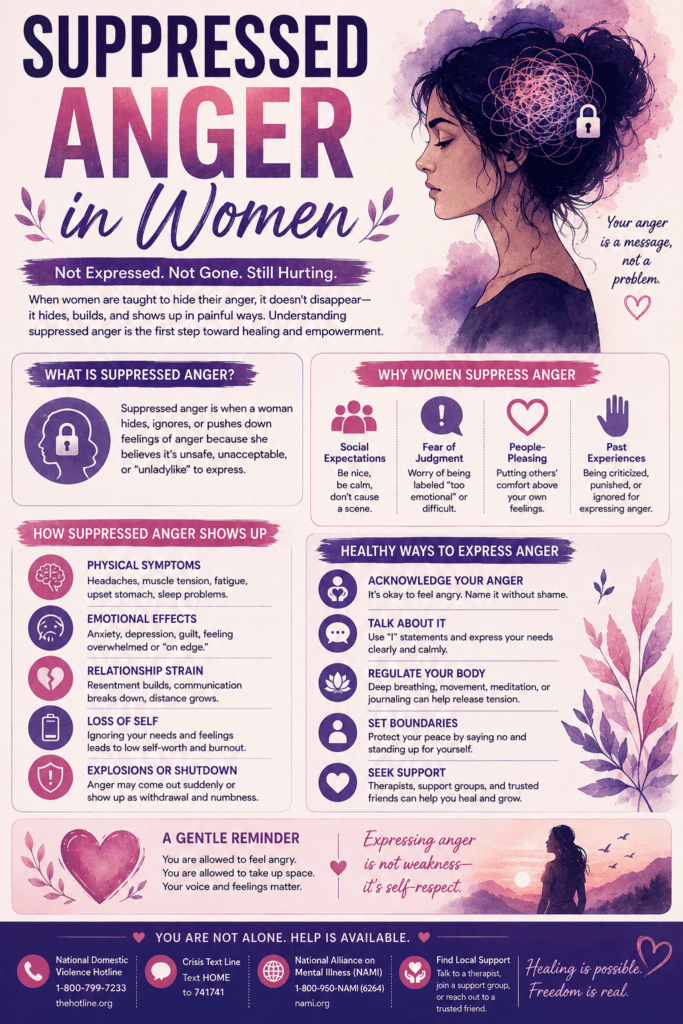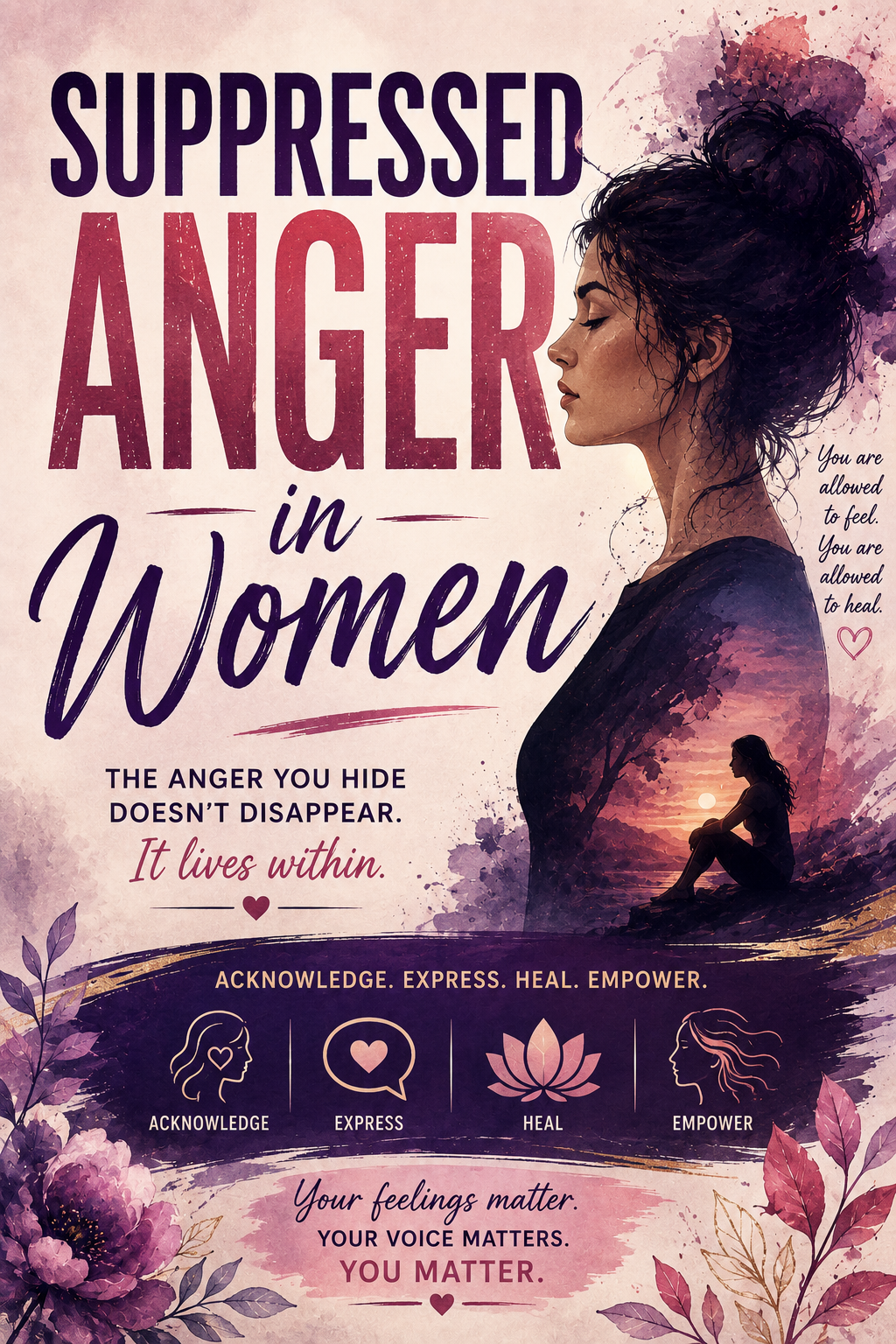
Women’s anger is often viewed as inappropriate, excessive, or disruptive. Whether at home, in the workplace, or in public conversations, a woman who expresses frustration or speaks with intensity may quickly be judged differently. Social expectations have historically encouraged women to remain calm, agreeable, and accommodating, sometimes pushing them to replace anger with sadness, silence, or politeness. Understanding these expectations can help explain why many women feel pressure to suppress their anger rather than express it openly and constructively.
Why Women’s Anger Gets Silenced
There’s a mix of history, culture, and old-school beliefs driving this idea that women shouldn’t show anger. While everyone experiences frustration or rage, women usually hear advice like “just ignore it” or “be the bigger person.” This expectation is baked into how we talk to young girls and how we react to women at work, in families, and even in the media.
From a young age, girls often receive messages that being agreeable is better than speaking up. Anger is painted as disruptive or unattractive. But men are sometimes called strong or passionate for speaking their minds. These different standards shape how people respond to anger and how women begin to manage their emotions.
The root of this goes way back. Historical records and studies show that traditional societies linked femininity with qualities like kindness and nurturing, while anger was connected to masculinity and strength. Over time, these ideas have stuck around, making it harder for women to be seen as fair or reasonable when they let their anger show.
How Gender Expectations Shape Emotions
Cultural norms play a big role in shaping emotional habits. For women, the message often boils down to “keep the peace.” I see this on TV, in magazines, and in everyday advice from family or friends. If a woman gets visibly angry, she’s often labeled as irrational, dramatic, or even hostile. But if she stays calm and agreeable, she’s considered “mature.”
These double standards pop up everywhere. At work, a woman who speaks strongly in a meeting can be judged as “difficult.” In personal relationships, expressing anger can get women painted as “too much.” These social cues make it easy for women to doubt their own feelings or feel guilty about having strong emotional reactions.
- Media influences: Movies and television often portray “angry women” as villains or as comic relief rather than taking them seriously. The “angry woman” trope is rarely positive.
- Family upbringing: Many girls grow up watching mothers, aunts, or teachers smooth things over rather than stand their ground.
- Peer pressure: Teenage girls who get angry may be teased or isolated, which can encourage them to mask their anger as sadness or silence.
Beyond these examples, even social media shapes expectations: viral videos of men expressing outrage are treated as bold, while similar reactions from women are called aggressive. These subtle inputs add up, teaching women to mask or tone down anger well into adulthood.
The Costs of Suppressing Women’s Anger
Expecting women to hide anger doesn’t just create awkward moments; it has real consequences. Suppressed anger can pile up, eventually leading to anxiety, depression, or even physical health issues. It can also strain relationships when honest communication gets replaced by bottled-up feelings or sarcasm that hints at deeper frustration.
When anger is channeled inward, self-doubt grows. Instead of recognizing that an injustice occurred, a woman might ask herself, “Am I overreacting?” This mental back-and-forth takes energy and confidence away from dealing with the actual problem. Researchers have found links between repressed anger and higher rates of stress-related illnesses in women. (Source: American Psychological Association.)
I’ve heard from friends and readers who say they’ve struggled to name or express anger because of these fears. Sometimes the anger never quite goes away; it just simmers, waiting for a way out. On the flip side, not expressing true feelings can make situations worse in the long run, sometimes blowing up unexpectedly after being suppressed for too long.
It’s important to note that research into mental health continues to shed light on these issues, and many therapists encourage honest self-expression as a path to both personal well-being and healthier social interactions.
Common Scenarios Where Women Suppress Anger
I’ve seen various situations where women are especially pressured to keep their cool or bite their tongues. Here are some of the places where this dynamic comes up repeatedly:
- At Work: Speaking up about unfair treatment, being overlooked, or dealing with microaggressions can get labeled as being “too emotional.” Many women choose restraint to avoid hurting their career progress or reputation.
- In Relationships: Disagreements with a partner, parent, or friend are sometimes covered up to keep the peace, especially when people fear being judged as argumentative or “nagging.”
- In Public Spaces: Reacting to harassment or rudeness can be risky. Many women worry about looking “unladylike” or escalating the situation.
- Online: On social media, women expressing anger, especially about discrimination, often face backlash, trolling, or threats. It can feel safer to just log off or phrase criticism carefully.
How Expectations Start Early
Schools and families play a big role in reinforcing these rules about anger. Girls are sometimes encouraged to organize, comfort, or step in rather than speak out forcefully. Boys get more leeway to argue or challenge rules. This split can shape what kids think is okay long before adulthood.
Teachers often expect girls to be peacemakers in classrooms, stepping between disputing students or smoothing things over when there’s tension. This expectation can follow women into adulthood, creating pressure to avoid open conflict and to swallow strong feelings, even when it’s about things that matter a lot.
Everyday Language Signals
I’ve noticed that when women do express anger, people often react by telling them to “calm down” or accusing them of being overreactive. These kinds of responses train women not to trust their own instincts. Even well-meaning comments can further push emotional suppression.
Sometimes, everyday language includes phrases like “don’t be so dramatic” or “you’re being too sensitive,” which reinforce the idea that women’s reactions are unwelcome or invalid. Over time, these words become internalized, making it even harder to break free from the cycle of suppression.
Barriers to Expressing Anger Openly
There are a few major hurdles for women who want to show anger comfortably. Some of these are pretty obvious, while others are more subtle:
- Fear of Negative Consequences: Women might worry about losing friends, missing out on promotions, or being dismissed if they react too strongly.
- Internalized Expectations: After years of being told anger is bad, it’s easy to feel ashamed or anxious even before saying anything.
- Lack of Role Models: There aren’t many examples of women expressing anger in ways that are accepted or constructive, so it’s hard to imagine what that might look like in practice.
How Suppression Becomes Habitual
Many women tell me that at a certain point, bottling up anger feels automatic. It’s like a reflex; they weigh the consequences, predict reactions, and decide it’s safer to keep quiet. This has long-term effects, making it harder to assert themselves or recognize their own needs. It can even seep into other areas of life, dampening enthusiasm and spontaneity in expressing not just anger but also joy or disappointment.
This habitual suppression makes it tough to break old habits, but with attention and support, change is possible.
Reframing Anger: Healthy Expression and Social Change
Not all anger is destructive. In fact, anger is a natural signal that something isn’t right. When expressed reasonably, it helps set boundaries, drive change, and demand respect. There’s nothing wrong with feeling angry; the problems start when the world says you’re not allowed to be.
Women from diverse backgrounds have begun speaking out about their anger in public. The #MeToo movement is one clear example. When enough people voice their experiences, it challenges the idea that only certain emotions or behaviors are allowed.
- Constructive communication: Learning to voice anger clearly, without guilt or apology, can defuse situations and lead to genuine solutions. Assertive communication classes or workshops can help women build confidence in expressing themselves.
- Seeking support: Therapy, support groups, or trusted friends offer safe spaces where anger can be validated and processed. Journaling or creative outlets like painting, writing, or physical activity can also provide a healthy way to process difficult feelings.
- Changing the narrative: Celebrating stories of women who set boundaries or stand up for themselves helps challenge old stereotypes. Media, literature, and social campaigns that show strong women using anger constructively can inspire others to follow suit.
Societal attitudes are also changing thanks to advocacy and education. While progress is slow, younger generations are becoming more comfortable with openly expressing all emotions, encouraged by authentic online communities and relatable role models. Over time, these changes will hopefully mean fewer women feel forced into silence when they have every right to speak up.
Frequently Asked Questions
These are some questions that come up a lot when it comes to women and anger:
Question: Why do people react differently when women are angry compared to men?
Answer: Gender stereotypes play a big role. Men are expected to be assertive or confrontational, while women are expected to nurture and accommodate. This leads to anger being seen as a character flaw in women rather than a valid reaction.
Question: Are there safe ways for women to show anger?
Answer: Yes. Communicating clearly, setting boundaries, and seeking support among trusted people can help. Learning tools for assertive communication can also make a difference.
Question: Do these expectations vary across cultures?
Answer: Attitudes toward women’s anger do change across cultures, but most traditions still favor emotional restraint or direct anger inwardly. However, some communities are starting to welcome more honest conversations about emotional expression for everyone. Global campaigns addressing gender-based emotional biases are opening doors to change, even in places with very traditional norms.
Breaking Free from the Suppression of Anger
Working through years of conditioning isn’t simple, but recognizing these patterns is a huge first step. Choosing when and how to express anger is personal, and finding healthy ways to channel it can improve relationships, self-confidence, and even community culture. These small acts add up to bigger shifts over time, helping everyone, not just women, develop more honest and genuine communication.
Finding outlets for anger, celebrating assertiveness, and supporting others who do the same are powerful ways to challenge and change the conversations around women’s emotions. Step by step, with support and understanding, women and their allies can help build a society where everyone feels free to speak up when something’s wrong—and that’s a future we can all get behind.
Video: What Happens When Women Suppress Their Anger #psychology #emotions