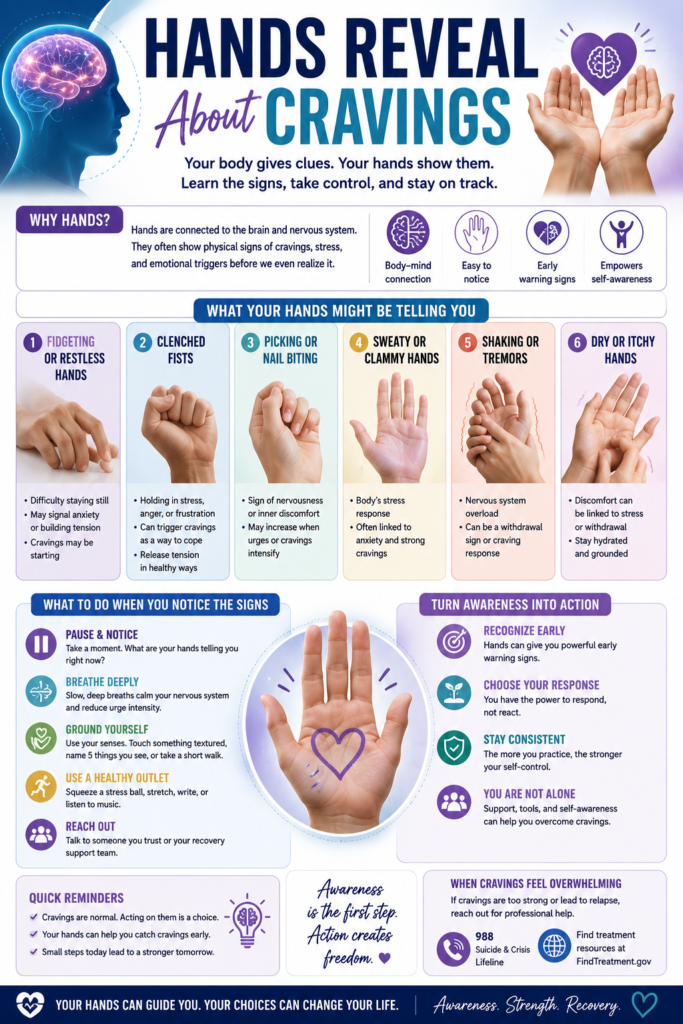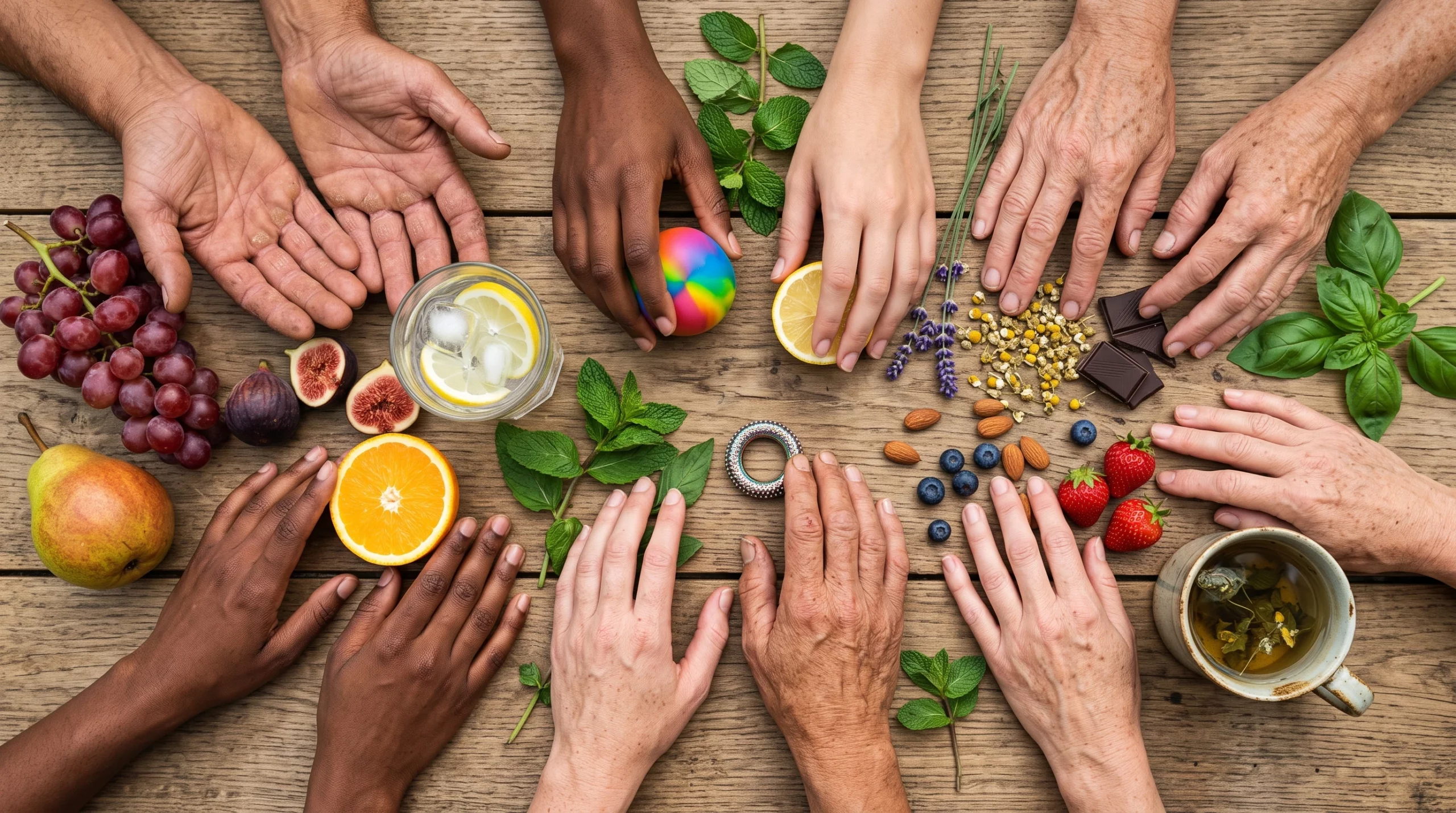
Your hands can reveal surprising clues about your cravings, often before you consciously recognize them. Because the hands are closely connected to the brain and nervous system, they frequently reflect physical and emotional responses to stress, anxiety, hunger, fatigue, or substance cravings. Subtle behaviors such as fidgeting, nail biting, clenching your fists, picking at your skin, rubbing your hands together, or experiencing sweaty palms may signal that your body or mind is seeking relief, comfort, stimulation, or connection. While these signs alone do not diagnose addiction or another medical condition, they can serve as valuable reminders to pause and assess what you are truly experiencing. Learning to recognize these early physical cues can improve self-awareness, helping you distinguish between emotional and physical needs. By responding with healthy coping strategies instead of acting impulsively, individuals can better manage cravings, reduce the risk of relapse, and build healthier habits that support long-term recovery and overall well-being.
Understanding the Link Between Hands and Cravings
There’s an interesting relationship between your hands and your cravings that goes beyond just reaching for your favorite food. Many scientists and health professionals have noticed that your hands can act as an early warning system, signaling internal changes before you fully realize what you’re longing for.
Cravings aren’t just about hunger; they can signal deficiencies, emotional needs, or habits. For example, biting your nails, rubbing your hands together, or clenching your fists could all point to different types of cravings. These small movements and physical signs are your body’s way of telling you something’s up.
Your nervous system connects your brain to your hands, so sometimes what’s going on in your head shows up in your hands first. Even ancient practices like palmistry or reflexology have explored the idea of reading hands for deeper insights, but I’m going to focus on what the research and common experience say about hands and cravings today.
Physical Signs on Your Hands That Relate to Cravings
The most obvious signs that your body is craving something often show up on your hands. If you pay close attention to the skin, nails, and even the temperature of your hands, you might notice patterns that link back to cravings.
- Nail Biting or Picking: Frequently biting or picking at your nails is often linked to stress or anxiety cravings. Some people chew their nails when they want comfort or need to redirect nervous energy.
- Dry or Peeling Skin: This can sometimes be a sign that you’re craving water or certain nutrients, such as essential fatty acids or vitamins.
- Shaky Hands: If your hands tremble, this could be due to low blood sugar, which may trigger a craving for food, usually something sugary or carb-heavy.
- Skin Color Changes: Pale or bluish hands might mean your body is craving more oxygen or iron. In these cases, cravings for red meat or leafy greens often follow.
- Restless Fidgeting: When you can’t stop tapping, rubbing, or twisting your hands, it could be your body or mind expressing the need for stimulation or relief from boredom.
Reading physical signs takes a bit of practice, but it can get you more in tune with genuine needs, sometimes before they turn into overwhelming cravings. Besides these, changes like redness, excessive sweating, or even tingling sensations can also signal underlying physical needs, ranging from dehydration to mineral imbalances. Keeping an eye out for these less obvious signs can provide deeper insight into your daily routine and health habits.
Hand Movements That Reveal Emotional and Habitual Cravings
Hand gestures can be super revealing when it comes to uncovering what you’re craving emotionally or habitually. Some gestures come out of nowhere, while others are patterns you fall back on regularly.
- Clenched Fists: Tensing your hands into fists often shows you’re holding on to stress, anger, or frustration. This sometimes leads to a craving for comfort food or a craving for release, like exercise.
- Reaching Motions: When you catch yourself reaching for things subconsciously (food, your phone, even your hair), it could signal a desire for distraction or satisfaction.
- Self-Soothing Touches: Rubbing your hands together, holding your own hand, or massaging your palms can mean you’re seeking calm or reassurance, often connected to emotional cravings.
- Desk Drumming or Table Tapping: These repetitive motions can reveal boredom or a craving for mental stimulation, prompting you to seek a more engaging activity or snack.
Sometimes just noticing these movements helps interrupt the cycle and can reframe what you’re really craving underneath the habit. For instance, many therapists encourage bringing awareness to your hand habits as a mindfulness tool — instead of letting them go unnoticed, you can trace these gestures back to their roots, creating the space for better choices.
Common Types of Cravings and Their Hand Signals
Some cravings are physical, while others are emotional or psychological. Here’s how I’ve learned to spot the difference using hand signals.
- Food Cravings: Rubbing your stomach, unconsciously flexing your fingers, or keeping your hand near your mouth (even without eating) often hints at a food-related craving. Picking at your cuticles can also ramp up when you’re denying yourself treats.
- Nicotine or Caffeine Cravings: Smokers or coffee drinkers tend to fidget, snap their fingers, or tap pens when they haven’t gotten their fix yet. Watch for repetitive, almost ritualistic hand motions associated with preparing or consuming these substances.
- Cravings for Connection: Longing for touch, affection, or reassurance can cause you to clasp your hands, wring them, or reach out to others. This usually ramps up for people who are feeling isolated or lonely.
- Rest and Relaxation Cravings: Stretching your fingers, massaging your palms, or flexing your wrists can signal your body is looking for a break, rest, or just a change of pace.
Of course, not every hand movement means you’re craving something specific, but these clues can provide pretty handy hints about what’s going on inside. The more you tune in, the easier it gets to distinguish between physical hunger, emotional needs, and simple habit.
What Science Says About Hands and Cravings
Researchers have stumbled upon some pretty eye-catching facts about hands and cravings. For example, studies in behavioral psychology suggest that physical habits like nail biting (onychophagia) and knuckle cracking are common coping strategies for cravings, anxiety, or boredom. One study published in the Journal of Behavior Therapy and Experimental Psychiatry found that repetitive hand behaviors are closely linked to self-regulation struggles and can signal underlying needs.
Your body uses your hands to reflect cravings partly because hands are sensitive and frequently in motion. Chronic habits like skin picking or repetitive tapping are often connected to dopamine, the same neurotransmitter responsible for pleasurable sensations and cravings.
Studies about hydration and nutrition have also found that the skin on your hands can be a fast indicator of imbalance. Dehydration can first appear as dryness or cracking, while vitamin and mineral deficiencies can leave marks on nails and cuticles before other physical symptoms appear.
I like keeping an eye out for new research since scientists are always finding new links between hand behaviors and cravings in both psychological and health contexts. Diving deeper into scientific journals, you can find evidence suggesting that hand-based rituals, whether unconscious or purposeful, can actually reinforce certain cravings through repeated neural pathways.
Tips for Recognizing and Responding to Hand-Related Cravings
Noticing what your hands are telling you is the first step in understanding and managing cravings more effectively. Here are a few tips and tricks that have worked for me:
- Track Your Hand Habits: Make a mental note (or jot down) when you find yourself engaging in repetitive hand behaviors, and see if a craving follows shortly after. You might even want to note the time of day or your mood, as certain patterns can emerge.
- Check for Physical Signs: Watch for changes in your skin, nails, or overall comfort. These can signal a need to eat, hydrate, or get some rest.
- Slow Down and Observe: If you catch your hands fidgeting or reaching unconsciously, pause for a second. Ask yourself what you’re feeling and if there’s something else you really want or need.
- Redirect the Motion: If a craving leads to a less healthy habit (like biting your nails), try switching to a healthier one. For instance, stress balls or mindful stretching can channel that energy in a better direction.
- Use Your Hands Intentionally: Sometimes, using your hands for creative pursuits—like drawing, crafting, or gardening—can ease cravings and soothe restless feelings.
Getting to know what your hands are trying to tell you can help you spot a craving early and respond in ways that benefit both your mind and your body. Sometimes, even something as simple as washing your hands or briefly massaging them can give you a moment to reset and rethink a craving before acting on it.
Real-World Examples of Hands Revealing Cravings
Here’s how hand signals connect to cravings in everyday life:
- During stressful meetings: I’ve seen people drum their fingers or tug at their sleeves, sometimes before reaching for a sugary snack or coffee to deal with the tension.
- Late-night study sessions: When I’m up late working, my hands start to tap, or my fingers stray toward snacks. That silent communication usually pushes me to pause and ask if I’m actually hungry, thirsty, or just tired.
- Social gatherings: In group settings, clasped hands and nervous fidgeting often signal a need for connection or reassurance, sometimes before the craving for food or drink even kicks in.
Spotting these patterns can be useful for making better decisions or breaking unhealthy cycles. For instance, you might notice your hands gravitating toward your mouth even when you’re not hungry, simply because a stressful environment has triggered the habit. Recognizing these early signs helps you change course before falling into autopilot habits.
Frequently Asked Questions
These are some common questions about how hands and cravings are connected, along with answers drawn from both research and my own experience.
Question: Can my hands really tell me what kind of food I’m craving?
Answer: Sometimes, yes. Nail biting, tapping, or fidgeting can be your body’s way of telling you it’s ready for a snack, especially when these habits pop up before meals.
Question: Is fidgeting with my hands always a sign of a craving?
Answer: Not always. Sometimes it just means you’re bored or restless, but other times it can signal emotional or physical needs, like the craving for attention, comfort, or even just movement.
Question: Should I be concerned if my hands are always dry or my nails are brittle?
Answer: Persistent dryness or nail problems might indicate dehydration or a nutritional deficiency. This could trigger cravings for water-rich or nutrient-dense foods. If your hands stay this way, it’s worth checking with a healthcare provider.
Staying Mindful About What Your Hands Reveal
Hands can be surprisingly accurate sources of information about cravings, whether they’re physical (like dehydration or hunger), emotional (needing comfort or connection), or just habit-based. Watching those signals closely makes it easier to figure out what you really need, and helps break cycles of mindless snacking or stress habits. I find that listening to my hands takes a bit of effort at first, but it’s one of those habits that can seriously improve self-awareness.
Whether you’re trying to tame snack cravings, break a nervous habit, or stay on top of your general health, starting with what your hands are telling you is a pretty smart move. If you pair this awareness with a bit of curiosity and patience, your hands can guide you to make better choices throughout your day—helping you switch up routines and step up your wellbeing over time.
Video: This Hand Behavior Predicts Emotional Breakdown #Anxiety #Recovery #MentalWellness