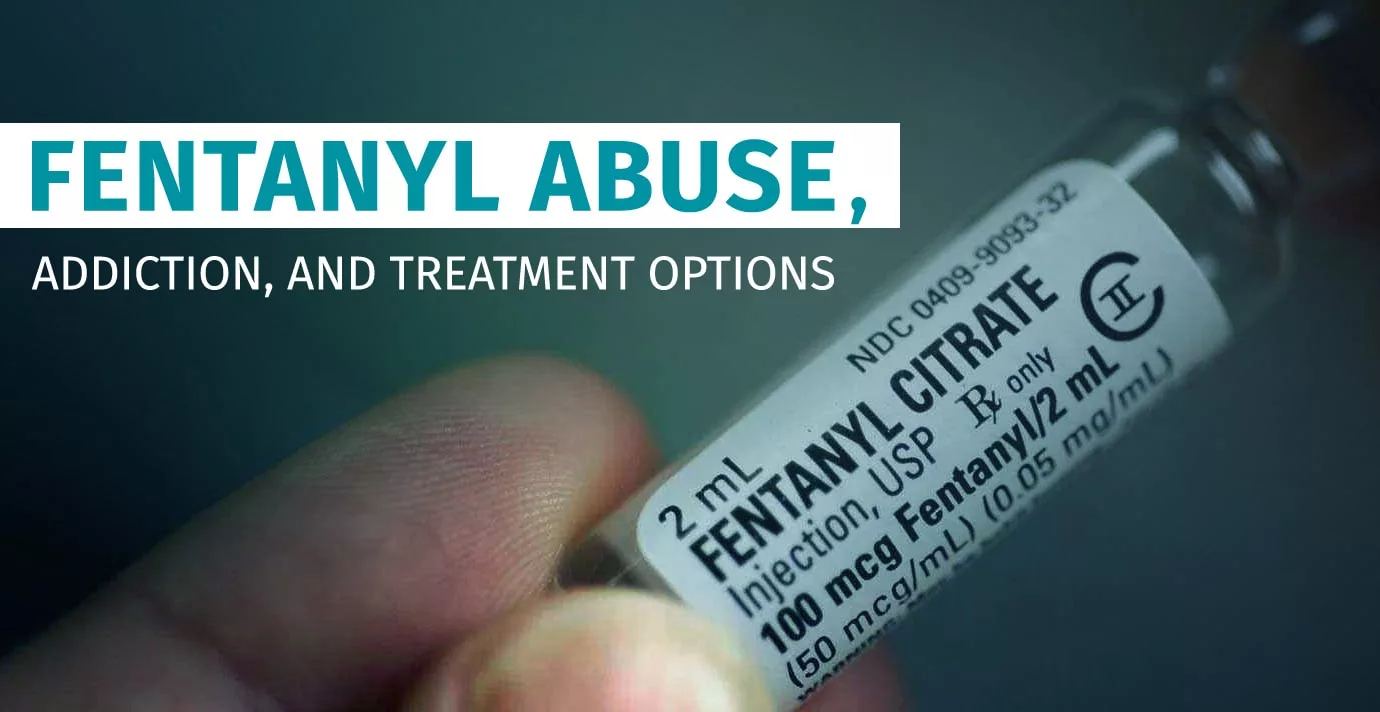
Fentanyl, a potent synthetic opioid, has become a key contributor to the global opioid epidemic, presenting significant challenges to public health. Its exceptional potency, surpassing even that of morphine and heroin, plays a pivotal role in opioid-related overdoses and fatalities. By binding to receptors in the brain and spinal cord, fentanyl induces powerful analgesic effects. The misuse of this opioid, whether through illicit means or unintentional overdose from prescribed medications, has underscored the need for effective treatment strategies. While current approaches like medication-assisted treatments exist, they face obstacles such as accessibility and diversion risks. Amid these challenges, the exploration of anti-opioid vaccines offers a promising avenue for addiction management. This essay delves into the impact of fentanyl, the current treatment challenges, and the considerations in ongoing vaccine research, highlighting the complexities of addressing opioid addiction.
How Fentanyl affects the body.
Fentanyl is a potent synthetic opioid that is used medically for pain management, particularly in situations requiring strong analgesia, such as surgery or severe pain. However, its potency also contributes to its high risk for addiction and overdose. Fentanyl works on the body by binding to opioid receptors in the brain and spinal cord, producing analgesic (pain-relieving) effects. Here’s how fentanyl affects the body and can become addictive:
- Opioid Receptor Binding:
- Fentanyl belongs to a class of drugs known as opioids. Like other opioids, it binds to specific receptors in the brain and spinal cord known as opioid receptors. These receptors are part of the body’s endogenous pain modulation system.
- Central Nervous System Depression:
- When fentanyl binds to opioid receptors, it inhibits the transmission of pain signals in the central nervous system. This results in a powerful analgesic effect, making it effective for managing severe pain.
- Dopamine Release:
- In addition to its analgesic effects, fentanyl also affects the release of neurotransmitters, including dopamine. Dopamine is a neurotransmitter associated with reward and pleasure. The release of dopamine in certain brain regions contributes to the euphoria or “high” that individuals may experience when using opioids.
- Reward Pathway Activation:
- The activation of the brain’s reward pathway is a key factor in the development of addiction. The intense pleasure or euphoria associated with opioid use reinforces drug-taking behavior, creating a powerful incentive for individuals to continue using the substance.
- Tolerance and Dependence:
- With repeated use, the body can develop tolerance to the effects of fentanyl. Tolerance means that over time, higher doses are needed to achieve the same level of pain relief or euphoria. Dependence can also develop, leading to withdrawal symptoms if a person suddenly reduces or stops using the drug.
- Physical and Psychological Dependence:
- Dependence on fentanyl can be both physical and psychological. Physical dependence is characterized by withdrawal symptoms such as nausea, vomiting, and muscle aches when the drug is not used. Psychological dependence involves a strong desire to use the drug for its pleasurable effects.
- Addiction and Loss of Control:
- Addiction is a chronic, relapsing disorder characterized by compulsive drug-seeking, continued use despite harmful consequences, and long-lasting changes in the brain. The loss of control over drug use is a hallmark of addiction.
- Risk of Overdose:
- Due to its high potency, the use of fentanyl carries a significant risk of overdose. An overdose occurs when the drug suppresses the respiratory system to a dangerous extent, leading to respiratory failure. Fentanyl overdoses can be life-threatening and require emergency medical intervention.
It’s important to note that the use of fentanyl outside of medical supervision or in ways not prescribed by a healthcare professional significantly increases the risk of addiction and overdose.
Current Fentanyl therapies.
Fentanyl is primarily used in medical settings for pain management. It is available in various formulations and delivery methods, both for acute pain management and chronic pain conditions. It’s important to note that new developments may have occurred since then, so it’s advisable to consult more recent sources for the latest information. Here are some common formulations of fentanyl that were available:
- Transdermal Patches:
- Fentanyl patches are designed to deliver a controlled, continuous release of the medication through the skin. These patches are commonly used for chronic pain management, providing long-lasting relief for up to 72 hours.
- Oral Formulations:
- Fentanyl is available in oral formulations, such as lozenges (often referred to as “lollipops”) and buccal tablets. These are designed for breakthrough pain in patients who are already receiving opioid therapy.
- Injectable Formulations:
- Injectable forms of fentanyl are used in medical settings, such as hospitals and surgical centers, for managing severe pain. Fentanyl injections are commonly administered intravenously (IV) or intramuscularly (IM) for rapid pain relief.
- Nasal Spray:
- Fentanyl nasal spray is available for the management of breakthrough cancer pain in adults. It is administered intranasally and provides rapid relief.
It’s crucial to emphasize that the use of fentanyl is associated with a high risk of overdose, especially when not used as prescribed by a healthcare professional. Illicitly manufactured fentanyl, which may be mixed with other substances, has been a major contributor to the opioid overdose crisis. Unauthorized use of fentanyl or its analogs obtained through non-medical sources poses significant dangers.
Fentanyl addiction treatment options.
These medications are typically used as part of medication-assisted treatment (MAT) programs, which combine pharmacotherapy with counseling and behavioral therapies. MAT has been shown to be effective in reducing opioid use, preventing relapse, and supporting long-term recovery. Please note that developments may have occurred since my last update, and it’s essential to consult current medical sources for the latest information. As of my last knowledge update, some medications used for opioid addiction treatment include:
- Methadone:
- Methadone is a long-acting opioid agonist that helps reduce cravings and withdrawal symptoms without producing the euphoric effects associated with other opioids. It is usually administered daily under supervision in specialized clinics.
- Buprenorphine:
- Buprenorphine is a partial opioid agonist that can be prescribed in office-based settings. It reduces cravings and withdrawal symptoms and has a lower risk of overdose compared to full agonists like fentanyl. Buprenorphine is often combined with naloxone to discourage misuse.
- Naltrexone:
- Naltrexone is an opioid receptor antagonist that blocks the effects of opioids. It is available in oral form (daily pill) or as a monthly extended-release injection. Naltrexone is typically used after a person has completed detoxification to help prevent relapse.
- Combination Medications:
- Some medications combine buprenorphine and naloxone (e.g., Suboxone) to deter misuse. These combination medications can be administered under medical supervision and are part of MAT programs.
The choice of medication depends on individual factors, including the severity of addiction, treatment goals, and the patient’s medical history. Medications are often used in conjunction with counseling, behavioral therapies, and support services to provide a comprehensive approach to addiction treatment.
It’s crucial to consult with healthcare professionals and addiction specialists to determine the most appropriate treatment plan based on an individual’s unique needs.
Challenges of Fentanyl therapies.
There were several challenges and limitations associated with the management of fentanyl addiction using existing therapies. Some challenges with current fentanyl addiction therapies included:
- Potency and Overdose Risk:
- Fentanyl is an extremely potent opioid, and individuals using it illicitly or those with a high tolerance may be at an increased risk of overdose, even with medication-assisted treatment (MAT). The risk of overdose is a significant concern in the context of fentanyl addiction.
- Access to Treatment:
- Access to MAT programs, including medications like methadone and buprenorphine, can be limited in certain regions. Barriers to access may include geographic location, inadequate healthcare infrastructure, and limited availability of specialized treatment facilities.
- Stigma and Misperceptions:
- Stigma surrounding opioid use disorders, including fentanyl addiction, can discourage individuals from seeking help or adhering to prescribed treatment plans. Misperceptions about MAT and concerns about social judgment may contribute to reluctance in engaging with treatment.
- Medication Adherence:
- Adherence to MAT medications, such as daily dosing for methadone, can be challenging for some individuals. Factors such as transportation issues, work schedules, or the stigma associated with visiting treatment centers may affect consistent medication adherence.
- Co-Occurring Mental Health Disorders:
- Individuals with fentanyl addiction often have co-occurring mental health disorders. Addressing both addiction and mental health simultaneously is complex and may require a comprehensive treatment approach that includes counseling and psychiatric support.
- Withdrawal Symptoms:
- Withdrawal symptoms can be a barrier to initiating or maintaining MAT. Individuals may fear or experience withdrawal when transitioning from fentanyl or other opioids to MAT medications.
- Treatment Engagement and Retention:
- Engaging individuals in treatment and retaining them in care over the long term can be challenging. Factors such as motivation for treatment, social support, and external stressors can influence treatment retention.
- Lack of Comprehensive Support Services:
- Comprehensive support services, including counseling, behavioral therapies, and social services, are crucial components of addiction treatment. Limited access to these services can hinder the effectiveness of MAT.
- Illicit Fentanyl Variants:
- Illicitly manufactured fentanyl and its analogs, often encountered in the context of the opioid epidemic, can present additional challenges. Variability in potency and formulation may complicate treatment efforts.
- Individual Variability in Treatment Response:
- Responses to MAT can vary among individuals. Factors such as genetic differences, medical history, and psychosocial factors may influence treatment outcomes.
Efforts are ongoing to address these challenges and enhance the effectiveness of addiction treatment, including the development of new medications and therapeutic approaches.
Fentanyl vaccine consideration.
The development and use of anti-opioid vaccines represent a novel approach in the field of addiction treatment. These vaccines are designed to induce an immune response that targets and neutralizes opioids, reducing their effects in the body. While anti-opioid vaccines show promise, there are several important considerations to keep in mind:
- Effectiveness:
- The effectiveness of anti-opioid vaccines can vary among individuals. Factors such as genetic differences, overall health, and the specific opioid targeted by the vaccine can influence its efficacy. Clinical trials and ongoing research are essential for evaluating and improving vaccine effectiveness.
- Specificity and Cross-Reactivity:
- Designing a vaccine that is specific to the targeted opioid (e.g., fentanyl, heroin) without causing cross-reactivity with other substances is a challenge. Cross-reactivity could result in unintended consequences, affecting other opioids or natural neurotransmitters.
- Duration of Immunity:
- The duration of immunity provided by anti-opioid vaccines is a critical consideration. Long-lasting protection is desirable to reduce the risk of relapse, but the development of sustained immunity presents challenges that need to be addressed in vaccine design.
- Individualized Treatment:
- The response to anti-opioid vaccines can vary from person to person. Individualized treatment plans, considering factors such as genetics and overall health, may be necessary to optimize vaccine efficacy.
- Combination with Behavioral Therapies:
- Anti-opioid vaccines are often considered as part of a comprehensive treatment approach that includes behavioral therapies and counseling. Combining vaccines with behavioral interventions can address both the physical and psychological aspects of addiction.
- Addressing Co-Occurring Disorders:
- Many individuals with opioid addiction have co-occurring mental health disorders. Treatment plans incorporating anti-opioid vaccines should consider the complex interplay between addiction and mental health.
- Access to Treatment:
- Ensuring widespread access to anti-opioid vaccines is essential. Efforts should be made to ensure these treatments are available to diverse populations, including those with limited resources and those in underserved areas.
- Ethical Considerations:
- Ethical considerations, including informed consent and the potential for coercion, need to be carefully addressed in the development and administration of anti-opioid vaccines.
- Safety and Side Effects:
- The safety profile of anti-opioid vaccines is a critical concern. Monitoring for potential side effects and adverse reactions is essential during clinical trials and post-marketing surveillance.
- Integration into Treatment Paradigms:
- Integrating anti-opioid vaccines into existing treatment paradigms requires careful planning. Coordinated efforts with healthcare providers, addiction specialists, and policymakers are needed to facilitate the incorporation of vaccines into comprehensive treatment strategies.
- Public Perception and Stigma:
- Public perception and stigma associated with addiction treatment, including vaccines, can impact their acceptance and adoption. Education and awareness campaigns are important for addressing misconceptions and reducing stigma.
- Regulatory Approval:
- Regulatory approval from health authorities is a critical step in the development and deployment of anti-opioid vaccines. The safety and efficacy of these vaccines must be rigorously evaluated before they can be made widely available.
While anti-opioid vaccines hold potential as a tool in the arsenal against opioid addiction, ongoing research, clinical trials, and thoughtful integration into comprehensive treatment plans are essential for their successful implementation.
Frequently Asked Questions and Answers
1. What is a fentanyl vaccine?
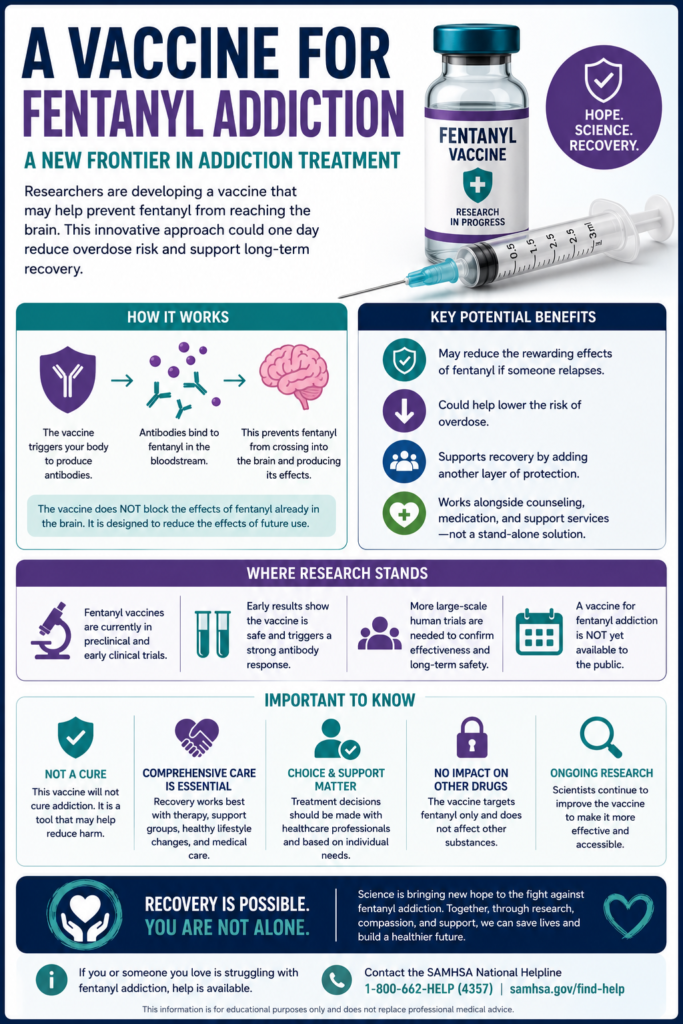
A fentanyl vaccine is an experimental medical treatment being developed to help prevent fentanyl from reaching the brain. The vaccine teaches the immune system to produce antibodies that attach to fentanyl molecules in the bloodstream.
Researchers hope this approach may help reduce overdose risk and support addiction recovery.
2. Is there an approved fentanyl vaccine available now?
No. At this time, there is no FDA-approved fentanyl vaccine available to the public.
Current fentanyl vaccines are still being studied in:
- Laboratory research
- Animal studies
- Early clinical trials
3. How would a fentanyl vaccine work?
The vaccine is designed to trigger the immune system to recognize fentanyl as a target.
Antibodies created by the body may:
- Bind to fentanyl in the bloodstream
- Prevent large amounts from entering the brain
- Reduce the drug’s euphoric and dangerous respiratory effects
This could potentially lower overdose risk.
4. Would the vaccine cure addiction?
No. A vaccine would not “cure” addiction.
Addiction is a complex medical condition involving:
- Brain chemistry
- Behavior
- Trauma
- Mental health
- Social and environmental factors
A fentanyl vaccine would likely be one tool within a larger recovery treatment plan.
5. Could the vaccine prevent an overdose?
Researchers hope it may reduce overdose risk by limiting fentanyl’s effects on the brain.
However:
- Studies are still ongoing
- Effectiveness in humans is not fully known
- It would not replace emergency overdose treatment like Naloxone
6. Would the vaccine block all opioids?
Most fentanyl vaccine research focuses specifically on fentanyl and related synthetic opioids.
It may not block:
- Heroin
- Oxycodone
- Morphine
- Other non-fentanyl opioids
Scientists are also studying broader approaches to opioid vaccines.
7. Would someone still feel pain after getting the vaccine?
Possibly. One major research concern is whether fentanyl vaccines could interfere with opioid pain medications used during surgery or emergencies.
Researchers are studying:
- Pain management alternatives
- Selective targeting approaches
- Safety protocols
8. Could people still relapse after receiving the vaccine?
Yes. Addiction relapse is influenced by many factors beyond drug effects alone.
Even with a vaccine, people may still struggle with:
- Cravings
- Stress
- Trauma
- Mental health disorders
- Environmental triggers
Recovery support would still be essential.
9. Would the vaccine replace Suboxone or methadone?
Probably not completely.
Current medications such as:
- Suboxone
- Methadone
- Vivitrol
Already have strong evidence supporting their effectiveness.
A vaccine might eventually become an additional recovery tool alongside existing treatments.
10. Are fentanyl vaccines safe?
Safety testing is still ongoing.
Early studies suggest promising immune responses, but larger human trials are needed to evaluate:
- Long-term safety
- Side effects
- Effectiveness
- Duration of protection
11. How long would vaccine protection last?
Researchers do not yet know exactly how long protection would last.
Some vaccines may require:
- Booster shots
- Multiple doses
- Ongoing monitoring
12. Could someone override the vaccine by taking more fentanyl?
This is one concern researchers are studying carefully.
With many addiction treatments, there is concern that some individuals might attempt to overcome blocked effects by taking larger amounts, which could still be dangerous.
13. Would the vaccine affect other medications?
Potentially. Researchers are studying how fentanyl vaccines interact with:
- Pain medications
- Anesthesia
- Emergency medical treatment
Healthcare providers would likely need detailed medical history information.
14. Why are scientists developing this vaccine?
The fentanyl overdose crisis has caused extremely high overdose death rates in many countries, especially the United States.
Researchers are exploring new tools that may:
- Reduce overdose deaths
- Improve recovery outcomes
- Add another layer of protection for high-risk individuals
15. Would counseling still be important?
Absolutely.
Even if a vaccine becomes available, recovery would still involve:
- Counseling
- Behavioral therapy
- Peer support
- Mental health treatment
- Lifestyle changes
- Relapse prevention planning
Addiction treatment works best when biological, psychological, and social factors are all addressed.
16. Is this similar to vaccines for infectious diseases?
Not exactly.
Traditional vaccines target viruses or bacteria. A fentanyl vaccine targets drug molecules by teaching the immune system to recognize and attach to them before they reach the brain.
17. Could vaccines be developed for other addictions?
Researchers are also studying vaccines for:
- Cocaine addiction
- Nicotine addiction
- Methamphetamine addiction
- Other opioids
Most are still experimental.
18. What is the biggest takeaway about fentanyl vaccine research?
Fentanyl vaccine research is promising, but still experimental.
Current evidence-based treatments remain extremely important, including:
- Suboxone
- Methadone
- Vivitrol
- Counseling and recovery support
Recovery is possible, and scientific research continues working toward safer and more effective treatments.
Conclusion
The impact of fentanyl on the body and the challenges associated with its misuse underscore the urgent need for comprehensive and innovative approaches to addiction treatment. While current therapies such as medication-assisted treatment play a crucial role, challenges such as accessibility and the risk of diversion persist. The exploration of anti-opioid vaccines represents a promising frontier in addiction research, offering potential solutions to mitigate the devastating effects of fentanyl and other opioids. However, it is crucial to approach these advancements with a thorough understanding of the complexities involved, considering factors such as individual variability, ethical considerations, and the integration of vaccines into existing treatment paradigms. As the scientific community continues to make strides in developing effective interventions, a holistic and patient-centered approach remains paramount in addressing the multifaceted nature of fentanyl addiction and promoting lasting recovery.
Video: Could this vaccine end the fentanyl epidemic? #fentanyl #health #science