Human trafficking is a tough topic, but understanding the addictive cycle that often traps people is really important. Trafficking isn’t just about the first act of exploitation; it’s about a whole system created to keep people stuck, both psychologically and physically. In this article, I’ll break down how this cycle works, what keeps it turning, and how people can get help to break free from it.
What Is the Addictive Cycle in Human Trafficking?
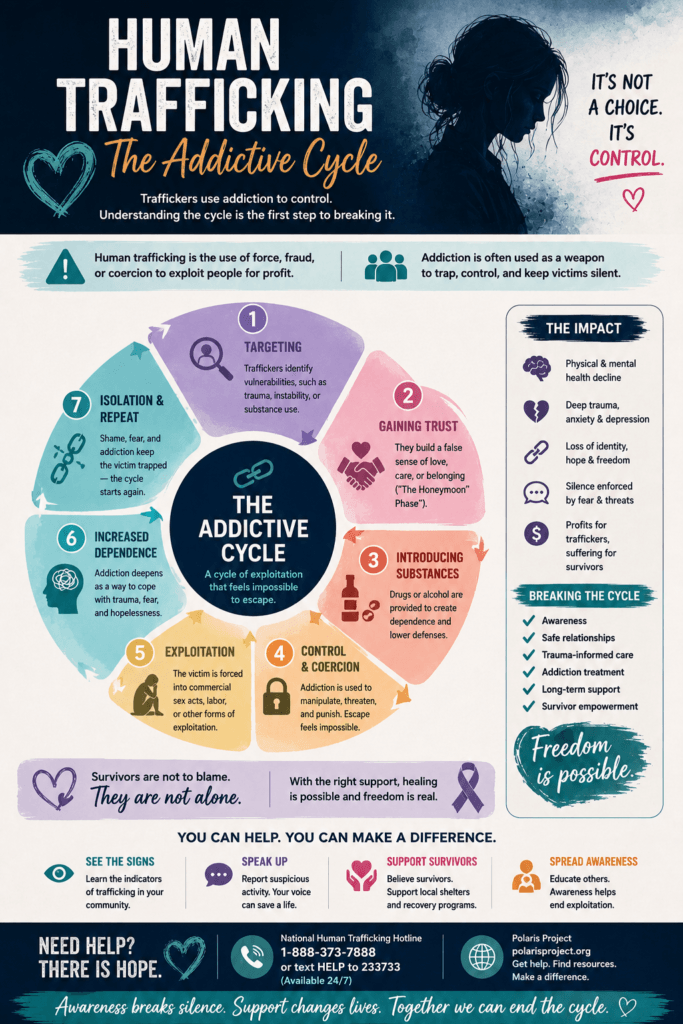
Human trafficking happens when someone is forced, tricked, or pressured into exploitative situations, including forced labor or sex work. The “addictive cycle” refers to the methods traffickers use to keep their victims dependent and trapped. This cycle borrows patterns seen in both addiction and abusive relationships, blending psychological, emotional, and sometimes chemical means to reinforce dependency.
This cycle can affect anyone, regardless of age, gender, or background, but traffickers often target those who are already vulnerable, such as people facing poverty, abuse, homelessness, addiction, or unstable family lives.
So, why do traffickers have such a strong hold on their victims, preventing them from escaping? A big part of the answer lies in recognizing how similar this cycle is to addiction.
The Phases of the Addictive Cycle in Human Trafficking
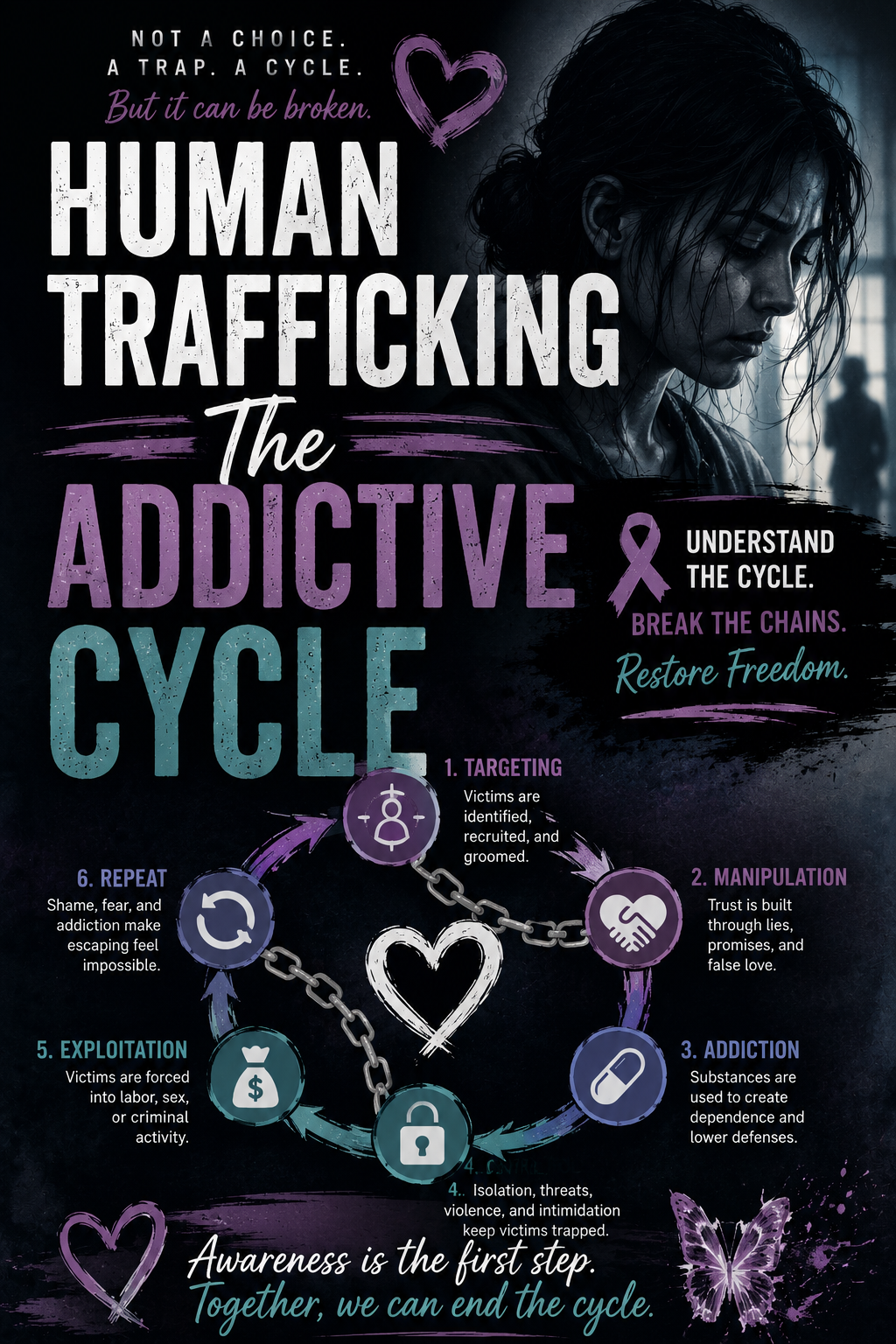
The cycle usually follows several stages. Let’s check out each phase to see how they fit together.
- Grooming and Recruitment: Traffickers often build trust first by offering friendship, love, a job, or a sense of protection. They pay close attention to their target’s needs and vulnerabilities, making the person feel truly valued and seen.
- Isolation and Dependency: After trust is firmly in place, traffickers gradually cut victims off from friends, family, or support. They might move them far away, confiscate their phones, or threaten anyone who tries to help. In some cases, abusers introduce alcohol or drugs to foster chemical dependency, making breaking away a lot harder.
- Manipulation and Control: Control escalates as traffickers use a mix of fear, violence, debt, and promises. They may offer just enough praise, food, or shelter to create confusion. Victims may think, “If I keep the trafficker happy, maybe things will calm down.” The psychological “highs and lows” mirror what’s experienced in addiction.
- Punishment and Reward: Traffickers rotate between cruelty and small acts of kindness or relief. This unpredictability keeps victims on edge, hoping for better treatment but fearing the worst. This is also referred to as trauma bonding or Stockholm syndrome, and it’s extremely powerful.
- Entrapment and Resignation: Over time, this repetitive cycle wears down a person’s hope or plans for a better life. Victims may start blaming themselves, develop learned helplessness, or become reliant on substances introduced by traffickers.
Common Methods Traffickers Use to Keep the Cycle Turning
Traffickers use an array of tactics drawn from methods used by abusers and cult leaders. These approaches are designed so that leaving seems not just tough but outright impossible.
- Fake Promises: Offers of love, a future, security, or money sound real, but are usually fake. Still, victims often keep chasing those empty promises.
- Drugs and Alcohol: Substances are sometimes used to create chemical dependency, control actions, or help numb pain from abuse.
- Violence and Threats: Physical harm or threats against family and loved ones are commonly used to keep victims cooperative.
- Emotional Manipulation: Traffickers may be excessively kind one moment, then cruel the next, making victims desperate for approval and stability.
- Shame and Stigma: Victims are told that no one will believe them or that their situation is their own fault, which adds to their isolation and shame.
Signs Someone Might Be Trapped in the Cycle
Spotting someone stuck in this loop can be challenging. The signs aren’t always clear, but here are a few red flags to look for:
- Sudden isolation from friends and family
- Unexplained absences or shifts in behavior
- Poor physical health, unaccounted-for injuries, or signs of substance use
- Movements that are closely monitored or always accompanied
- Rehearsed-sounding answers when asked personal questions
- Fear or nervousness around specific people or places
- Missing identification documents
If you notice these signs, reaching out to a local support group or organization is crucial. Trafficked individuals rarely escape alone, since the control is so intense and far-reaching.
Barriers That Make Escape So Tough
Escaping isn’t as simple as just leaving. There are several hurdles that make breaking out of the trafficking cycle extremely difficult. Here are some of the biggest challenges:
- Emotional Bonds: Victims may develop feelings of loyalty or care for the trafficker, especially if the relationship was presented as romantic or close at first.
- Addiction: If drugs or alcohol are part of daily survival, withdrawal and craving further complicate the idea of escaping.
- Lack of Resources: Freedom often requires basic needs such as money, housing, and sometimes legal assistance, all of which are hard to obtain when someone is isolated or in a foreign country.
- Fear of Law Enforcement: Traffickers may threaten their victims with arrest or deportation. Those caught in sex trafficking cases might fear being punished instead of helped.
- Trauma Responses: Repeated trauma brings anxiety, depression, PTSD, and confusion, which can freeze decision-making and planning abilities.
How People Can Break the Cycle
It takes lots of support and understanding to break free. A few highly effective resources include:
- Trauma-Informed Counseling: Survivors need access to medical and emotional support with providers who understand the big impact of trauma on their lives. Recovery isn’t just about rescue; it’s about long-term healing.
- Safe Housing: A secure and welcoming place to live is a fundamental first step toward recovery, allowing survivors space to recover and start anew.
- Substance Use Recovery: When addiction is in play, specialized recovery programs for trafficking survivors are invaluable.
- Legal Help: Navigating courts and immigration matters can be intimidating. Legal support paves the way for protection, the chance to reunite with loved ones, or to gain work status and independence.
- Community Support: Survivor-run groups and nonprofit organizations provide judgment-free help, resources, and encouragement on the path to independence.
Breaking this pattern is absolutely possible with the right resources and community awareness. Something as simple as sharing helplines, being informed, or lending time at a supportive organization truly matters.
In addition to these practical steps, societal change—such as challenging stigma and spreading accurate information—can reduce shame and isolation among survivors. Community members can also help by staying sharp and reporting suspicious activity when they spot it, potentially saving someone trapped in the cycle.
FAQs About the Addictive Cycle of Human Trafficking
Here are common questions and answers on this topic:
Question: Why don’t victims just leave?
Answer: Emotional control, fear, physical threats, and a lack of resources create barriers that feel insurmountable. Trauma bonding and substance dependency add even more chains to the situation.
Question: Are drugs always involved in trafficking?
Answer: Not always, but traffickers sometimes use alcohol and drugs to foster dependency and keep tighter control over victims. Other times, only emotional manipulation and isolation are used.
Question: Can people fully recover from this cycle?
Answer: With ongoing support—safe homes, trauma counseling, legal aid, and healthcare—many survivors rebuild their lives and regain hope.
Helpful Resources and Ways to Support Survivors
Getting help can be life-changing. If you or someone you know may be caught up in trafficking, these resources are worth tracking down:
- National Human Trafficking Hotline (1-888-373-7888), which offers free and confidential support in the US
- Polaris Project – Offers resources, survivor stories, and ways for people to get involved
- UNODC – Provides detailed global info and support on trafficking cases
- Local shelters, counseling centers, and faith organizations, often with specialized programs for survivors
Understanding the addictive cycle in human trafficking is just one initial step. Real progress requires a willingness to learn, community backing, and support for survivors as they work to reclaim their lives. Every action, no matter how small, can be another push toward breaking this cycle for good.
Video: Breaking the Cycle of Abuse: Addiction and Human Trafficking #BreakTheCycle #RecoverySupport