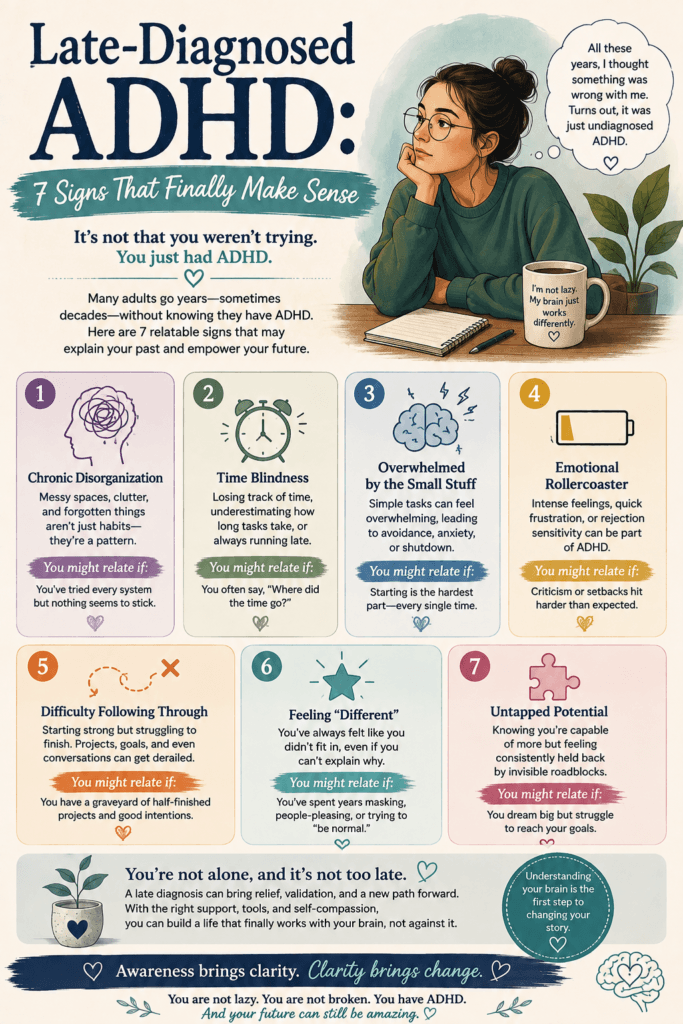
Getting diagnosed with ADHD as an adult can feel both validating and overwhelming. For many of us, that late diagnosis comes after years of feeling different but not really knowing why. It’s pretty common to reflect on all those moments and habits that just didn’t add up, and suddenly, everything starts to make way more sense. So, I’ve put together a guide to some super relatable signs people often notice in themselves after getting a late ADHD diagnosis.
Understanding Life Before a Late ADHD Diagnosis
Living with undiagnosed ADHD shapes everything, from how you get through school to handling work, relationships, and daily routines. For many adults, getting a diagnosis brings on a wave of “aha” moments. Things like chronic forgetfulness, struggles with time management, or feeling like life is “louder” for you than for other people suddenly fall into place. According to the CDC, adult ADHD is estimated to affect around 4-5% of adults in the US, but a large chunk goes undiagnosed well into their 30s or 40s.
You might realize the differences you carried for years are pretty common among people whose ADHD was missed earlier on. It’s not about blame or wishing things were different; it’s about finally having language for a lived experience. Many adults find that these late-in-life revelations help untangle complex feelings about their past setbacks or challenges.
7 Relatable Signs for Adults Diagnosed Late with ADHD
While everyone’s story is a bit different, I see some patterns that come up pretty often among people diagnosed in adulthood. Here are seven signs that might sound familiar and a bit relatable if you’re in the same boat:
- Chronic Forgetfulness: Always losing your keys, forgetting appointments, or missing deadlines, no matter how many sticky notes or calendar apps you try.
- Time Blindness: Struggling to tell how much time has passed, arriving way too early or embarrassingly late, and always underestimating how long things will take.
- Procrastination Followed by Last-Minute Rush: Regularly putting off tasks (even big, important ones), then summoning bursts of focus to get things done at the absolute last moment.
- Difficulty Prioritizing: Jumping between tasks, starting a bunch of new projects, but rarely finishing everything, because it’s hard to figure out what matters most in the moment.
- Sensitivity to Stimuli: Finding that noises, lights, or even crowded rooms get overwhelming fast, or noticing you’re more distracted than others by things most people tune out.
- Inconsistent Motivation: Feeling totally energized about something one day, then unable to start even simple tasks the next, without being able to explain why.
- Feeling Different or Out of Place for Years: Having a constant feeling that you operate differently from friends, family, or coworkers, which sometimes leads to frustration or feeling misunderstood.
Digging Deeper: What These Signs Can Look Like Day-to-Day
These signs might sound like minor quirks to someone on the outside, but when you’re living with ADHD, they can add up. Here are some down-to-earth examples from my own experience and other adults who got diagnosed later in life:
- Misplacing Everyday Items: You know you walked into the kitchen for something, but what exactly was it? Your phone, wallet, or sunglasses have their own hide-and-seek game every morning.
- Struggling with “Simple” Tasks: Mailing a letter, returning a call, or tidying up a cluttered desk can feel overwhelming, even if you know they aren’t big jobs. Sometimes you’ll do a super-complex project, but picking up the dry cleaning seems impossible.
- Unpredictable Energy Levels: There are moments of turbocharged focus called “hyperfocus,” but only if a topic clicks just right. Other times, finishing even repetitive, daily tasks feels like trying to walk through mud.
- Frequent Distractibility: You might sit down to write an email, get distracted by tidying your desk, end up sorting books, and then an hour later, remember you never sent that email in the first place.
Other adults share similar experiences. For instance, some say that something as simple as checking the mail becomes an obstacle course of distractions. Or, instead of handling bills as soon as they arrive, they get buried under piles of paper, lost until the final reminder comes in. One friend compared their to-do list to a “choose your own adventure” book, where every attempt to finish a task leads to a completely unintended place. All of these real-life stories point back to the same set of struggles with attention, motivation, and memory.
Finding Positives in a Late ADHD Diagnosis
Getting that diagnosis later in life isn’t just about looking back. It’s about switching up your perspective and sometimes letting go of long-held self-criticism. Recognizing that your brain just works differently opens the door to building systems and habits that actually work for you. It also helps you understand the creative and passionate streaks that people with ADHD often have, which often become real strengths in both personal and professional life.
Connecting with a supportive community, either in person or online, can be a game-changer. You’ll realize you’re far from alone in this experience. There are lots of podcasts, blogs, and local groups dedicated to adult ADHD. CHADD is a pretty handy starting point if you’re looking for resources for adults.
Getting Started After Diagnosis: Steps and Strategies
If you’ve just received a diagnosis (or are seriously wondering if you fit the profile), it’s a good idea to start experimenting with new strategies. These don’t solve everything overnight, but they can make things a lot more manageable:
- Use External Reminders: Set calendar alerts, alarms, or visual cues. Sometimes, the right phone app or a giant whiteboard is super helpful.
- Break Down Big Tasks: Chop projects into tiny, bite-sized steps so that each bit feels doable. Even writing down “open laptop” as the first step counts.
- Set Realistic Routines: Forget about the idea that you have to be ultrastructured. Creating loose routines or checklists can ease the pressure without feeling boxed in.
- Watch for “All-or-Nothing” Thinking: If you miss a routine or drop a task, it doesn’t mean you’ve failed. Try to be as patient with yourself as possible.
- Look into Professional Support: Therapists, ADHD coaches, or support groups can be really valuable. Sometimes it takes a professional to help implement new strategies.
Things to Consider: Common Hurdles and How to Tackle Them
Getting the diagnosis is just one part of the puzzle. Here are some practical things you might run into, along with some workable ideas for dealing with them:
- Overwhelmed With Information: There’s a ton of info, advice, and opinions online. It’s better to pick one trusted source and try out strategies at your own pace.
- Difficulty Speaking Up for Yourself: Explaining ADHD to friends, family, or coworkers can be awkward. Sometimes, just sharing a few relatable signs or articles helps others understand where you’re coming from.
- Perfectionism: Many adults with ADHD put huge pressure on themselves because of past criticism or self-doubt. Try to celebrate the small wins and progress, not just big milestones.
- Finding the Right Medication or Treatment: If you and your doctor decide to try medication, it can take time to find what works. Be patient and honest with your provider about what’s changing (or not).
Overwhelmed With Information
It’s tempting to try every technique or hack you find online. Instead, pick one or two strategies that fit your lifestyle and give them a real shot before mixing things up. A “trial-and-error” mindset can actually be pretty freeing, making you more flexible in finding what suits you best.
Difficulty Speaking Up for Yourself
Not everyone understands ADHD, especially how it shows up in adults. Sometimes, sharing a list of your main struggles or using analogies can help family or colleagues relate. You might also find printed materials or podcasts helpful when starting conversations.
Perfectionism
Living with undiagnosed ADHD often means getting used to criticism or missed expectations. It’s really helpful (though not always easy) to focus on progress instead of perfection. Most adults with ADHD thrive in creative or flexible environments, so lean into your strengths and adapt where it makes sense.
Finding the Right Medication or Treatment
If you and your doctor decide to try medication, keep track of any changes you notice. Side effects and effectiveness can vary a lot, so don’t be shy about reporting back to your healthcare professional. If one treatment isn’t helping, there are usually other options to try together.
Dealing with a late ADHD diagnosis can mean unlearning old self-judgments and learning new ways to live more comfortably with your own brain. Most importantly, there’s nothing wrong with reaching out for support or just laughing at those familiar “ADHD moments” with others who understand. You’re part of a really creative, passionate crowd, and with some new strategies in play, things can start feeling a lot less overwhelming. For more info on living well with adult ADHD, check out ADDitude Magazine for tons of practical ideas, expert tips, and real stories.
Frequently Asked Questions About Late-Diagnosed Adult ADHD
Here are some questions I hear a lot after someone gets their diagnosis in adulthood:
Question: Is it common to get diagnosed with ADHD as an adult?
Answer: Yep! More adults are being diagnosed now as awareness grows. Sometimes the signs were missed in childhood, or they became more challenging with adult responsibilities.
Question: Does having ADHD mean I can’t be successful?
Answer: Not at all. Plenty of people with ADHD do really well in careers and personal life, especially once they find strategies or environments that play to their strengths. It’s about learning what works best for you.
Question: Will medication solve all my challenges with ADHD?
Answer: Medication can help, but it’s usually just one part of managing ADHD. Habits, routines, therapy, or coaching often play a big role too. If medication works for you, it’s a useful tool, not a total fix.
Looking Ahead After Diagnosis
Getting diagnosed with ADHD as an adult isn’t the end of the story. It’s a new chapter. With more self-awareness, fresh strategies, and community support, the day-to-day can feel less confusing. There’s plenty of practical help out there, whether you’re looking for tips, treatment, or just someone who gets it. Be kind to yourself throughout the process, try what works, and keep moving forward at your own pace.
Video: Why You’re Not Alone In Your ADHD Journey #LateDiagnosedADHD #ADHDAwareness