Entering rehab for addiction therapy and recovery is a significant step toward reclaiming one’s health, stability, and purpose. It’s not just about stopping substance use—it’s about healing the mind, body, and relationships that have been affected. Rehab provides structure through medical detox, counseling, education, and emotional rebuilding, but success also depends on the individual’s commitment to self-management and readiness for change. Families play a vital role by offering consistent support, open communication, and encouragement without enabling. At the same time, community resources—such as recovery coaches, educational workshops, and peer groups—help ensure lasting stability after treatment. Together, these elements create a comprehensive foundation where recovery becomes not just a goal, but a sustainable lifestyle.
Expectations in Rehab: Addiction Therapy and the Recovery Journey
What to Know Before Beginning Treatment
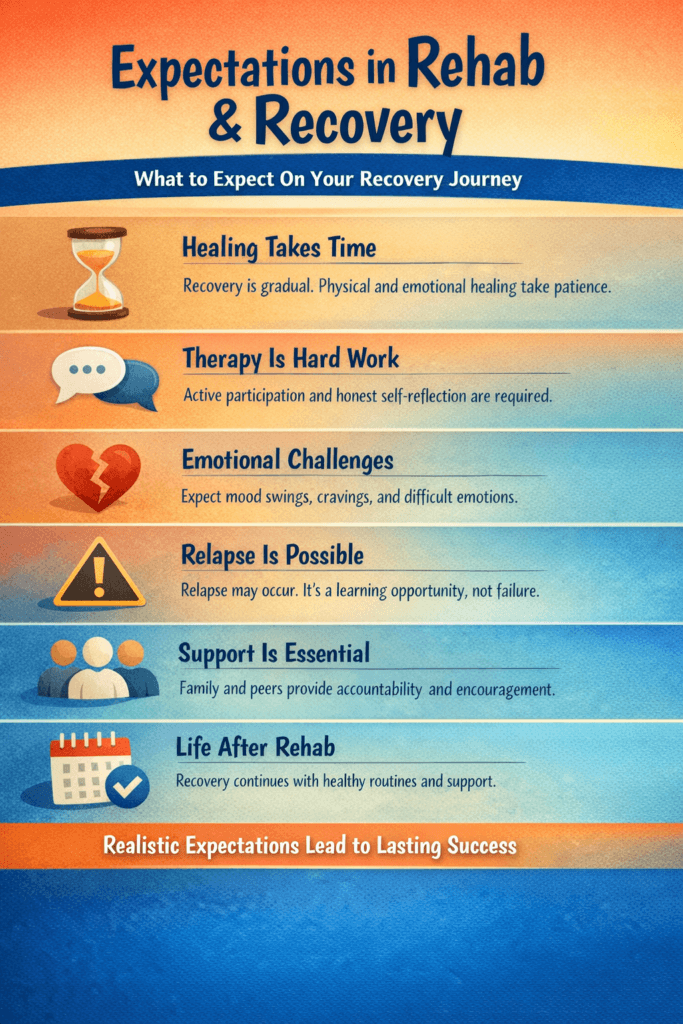
Entering addiction treatment is a brave and life-changing decision. Yet many individuals begin rehab with unclear or unrealistic expectations about what recovery will look like. Movies, social media, and cultural myths often portray rehab as a quick fix or dramatic turning point, when in reality, recovery is a gradual process of physical healing, emotional growth, and behavioral change. Understanding realistic expectations for rehab, therapy, and recovery helps individuals stay engaged, reduce frustration, and build long-term success.
What Rehab Really Provides
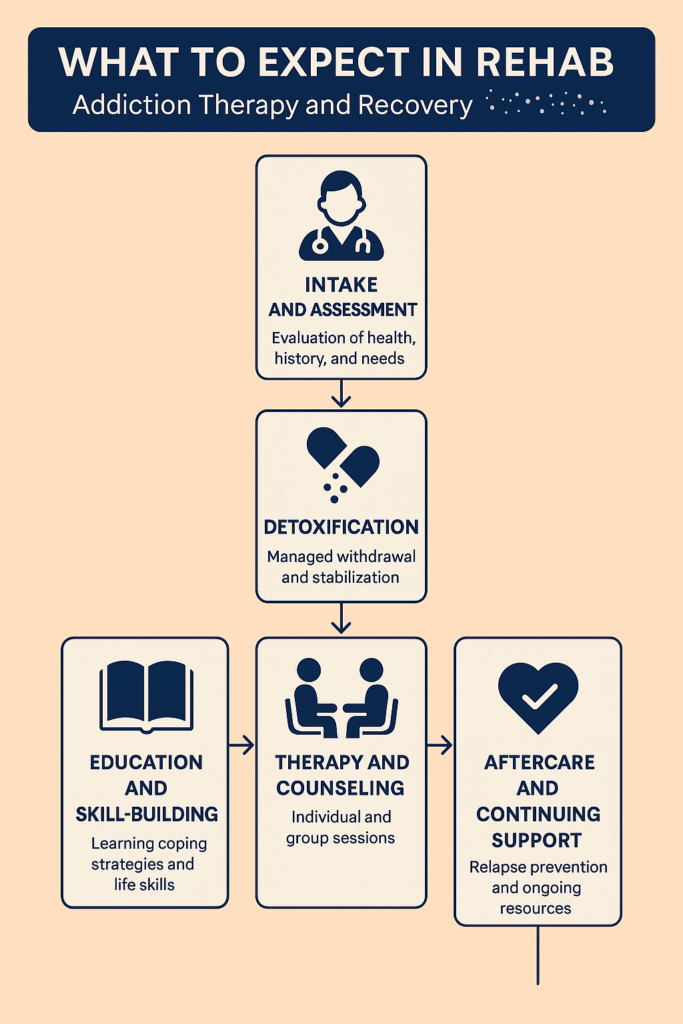
Rehab is designed to create a safe, structured environment for early recovery. Most programs include medical detox when needed, individual and group therapy, relapse-prevention training, mental health support, and education about addiction. Rehab does not “cure” addiction, but it provides tools, stability, and support to begin healing.
Participants should expect daily schedules, therapy sessions, accountability, and emotional challenges. Honest self-reflection is often uncomfortable but necessary for growth.
Emotional and Physical Healing Takes Time
Early recovery involves withdrawal, mood swings, sleep disruption, anxiety, and cravings. These experiences are normal as the brain and body adjust. Progress may feel slow, but healing happens step by step. Patience and persistence are essential.
Therapy Requires Active Participation
Addiction therapy is not passive. Individuals must engage, share honestly, practice coping skills, and apply feedback. Breakthroughs happen through consistent effort, not instant insight.
Recovery Is a Lifelong Process
Completing rehab is the beginning, not the end. Long-term recovery includes outpatient therapy, support groups, healthy routines, boundary-setting, and lifestyle changes. Relapse can occur, but it is part of learning — not failure.
Support Systems Matter
Family involvement, peer groups, sponsors, and community resources strengthen accountability and emotional stability after rehab.
Final Thought
Rehab opens the door to recovery, but walking through that door requires commitment, patience, and support. When individuals enter treatment with realistic expectations, they are more likely to stay engaged, build resilience, and achieve lasting freedom from addiction.
Self-Management Strategies in Rehab, Addiction Therapy, and Recovery
Building Daily Skills for Lasting Sobriety
Rehab provides professional treatment and structured support, but long-term recovery depends on the individual’s ability to manage daily thoughts, emotions, and behaviors. Self-management strategies help people take active ownership of healing, prevent relapse, and build confidence throughout therapy and beyond discharge.
1. Establish Daily Structure
Addiction thrives in chaos. Creating consistent routines for sleep, meals, therapy sessions, exercise, and relaxation builds stability and reduces impulsive decision-making.
2. Practice Emotional Regulation
Rehab often brings intense emotions. Deep breathing, mindfulness, grounding exercises, and journaling help individuals process feelings without turning to substances.
3. Identify Triggers
Recognizing personal triggers — such as stress, loneliness, conflict, or boredom — allows individuals to prepare coping responses rather than react automatically.
4. Use Healthy Coping Skills
Replacing substance use with healthy alternatives such as physical activity, creative expression, music, or talking with peers builds resilience.
5. Participate Actively in Therapy
Engaging honestly in individual and group therapy, completing assignments, and practicing new skills strengthens recovery outcomes.
6. Set Short-Term Goals
Small, achievable goals build motivation and self-efficacy. Progress is measured step by step, not overnight.
7. Build Accountability
Checking in with counselors, peers, or sponsors encourages responsibility and consistency.
8. Practice Self-Compassion
Recovery includes setbacks. Learning to respond with self-kindness rather than shame keeps individuals engaged in treatment.
9. Strengthen Physical Wellness
Nutrition, hydration, sleep, and exercise repair the body and stabilize mood — key foundations for emotional control.
10. Plan for Life After Rehab
Developing relapse-prevention plans, support networks, and daily routines prepares individuals for real-world recovery.
Final Insight
Self-management turns rehab from a temporary program into a lifelong transformation. When individuals learn to regulate emotions, build structure, and practice healthy coping skills, recovery becomes sustainable, empowering, and deeply rewarding.
Family Support Strategies in Rehab, Addiction Therapy, and Recovery
Healing the Family While Supporting Lasting Sobriety
Addiction affects the entire family system, not just the individual in treatment. During rehab and recovery, family involvement plays a vital role in rebuilding trust, strengthening emotional stability, and supporting long-term sobriety. Healthy family strategies create a foundation of accountability, understanding, and shared healing.
1. Learn About Addiction and Recovery
Families who understand addiction as a medical and psychological condition respond with empathy instead of blame. Education about withdrawal, cravings, relapse risk, and recovery stages reduces fear and misunderstanding.
2. Participate in Family Therapy
Family counseling sessions help repair communication, address unresolved conflicts, and rebuild trust damaged by addiction. Therapy also teaches healthy interaction patterns moving forward.
3. Practice Open and Honest Communication
Creating safe, judgment-free conversations allows loved ones to express feelings, ask questions, and share concerns without fear of anger or shame.
4. Set Healthy Boundaries
Clear expectations protect both the individual in recovery and family members. Boundaries prevent enabling behaviors while encouraging accountability.
5. Avoid Blame and Shame
Recovery grows in encouragement, not criticism. Supportive language strengthens motivation and self-worth.
6. Encourage Treatment Participation
Families can support attendance at therapy sessions, recovery meetings, and medical appointments — reinforcing consistency in care.
7. Build a Stable Home Environment
Consistency in routines, reduced conflict, and emotional safety lower relapse risk after rehab discharge.
8. Support Self-Care for Family Members
Families also need healing. Support groups such as Al-Anon or family counseling help loved ones manage stress and emotional fatigue.
9. Celebrate Progress
Recognizing effort and milestones builds confidence and reinforces recovery motivation.
10. Prepare for Post-Rehab Transition
Helping plan housing, employment, transportation, and support networks strengthens real-world recovery success.
Family Healing Strengthens Recovery
When families learn healthy communication, boundaries, and shared understanding, rehab becomes more effective, and long-term recovery becomes more stable. Addiction recovery succeeds best when no one heals alone.
Community Resource Strategies in Rehab, Addiction Therapy, and Recovery
Extending Support Beyond the Treatment Center
Rehab is the starting point of recovery, but long-term success depends on ongoing community connection. Community resource strategies provide accountability, purpose, social support, and access to services that help individuals maintain sobriety after formal treatment ends.
1. Peer Recovery Support Groups
Programs such as:
Alcoholics Anonymous (AA)
Narcotics Anonymous (NA)
SMART Recovery
Refuge Recovery
offer shared understanding, sponsorship, and consistent encouragement.
2. Outpatient Counseling Services
Community mental health clinics and private practices provide continued therapy, trauma counseling, and relapse-prevention support after rehab discharge.
3. Recovery Community Centers
Recovery cafés and wellness centers provide safe social environments, group activities, educational workshops, and sober events that reduce isolation.
4. Employment and Job Training Programs
Workforce development services, resume workshops, and vocational training help individuals rebuild independence and confidence.
5. Housing and Transitional Support
Sober living homes and transitional housing programs offer structured, substance-free environments during early recovery.
6. Family and Parenting Support Services
Community family counseling and parenting classes strengthen home stability during recovery.
7. Health and Wellness Programs
Community gyms, nutrition workshops, mindfulness classes, and recreational activities promote physical and emotional healing.
8. Faith-Based and Spiritual Resources
Many individuals find purpose and accountability through faith communities or spiritual recovery programs.
9. Legal and Financial Assistance
Community legal clinics and financial counseling help address consequences related to addiction, reducing relapse stress.
10. Crisis and Outreach Services
Hotlines, mobile crisis teams, and peer recovery coaches provide immediate support during high-risk moments.
Community Connection Builds Lasting Recovery
Recovery thrives when individuals feel supported, understood, and connected. Community resources transform rehab from a short-term intervention into a long-term lifestyle of stability, purpose, and sobriety.
Frequently Asked Questions
Here are some common questions:
1. Will rehab cure my addiction?
Rehab does not “cure” addiction, but it provides tools, therapy, medical support, and structure to begin recovery. Long-term sobriety requires continued effort and support after rehab ends.
2. How long does rehab last?
Program length varies. Common options include 30-day, 60-day, or 90-day programs. Longer stays often improve recovery outcomes, especially for severe addiction.
3. What should I expect during the first days of rehab?
Early days focus on detox (if needed), medical monitoring, rest, and orientation into therapy schedules. Withdrawal symptoms, emotional ups and downs, and fatigue are common and temporary.
4. Is therapy in rehab difficult?
Yes. Therapy requires honesty, self-reflection, and emotional work. Many people find it challenging at first, but it becomes easier with time and builds lasting coping skills.
5. Will I have free time in rehab?
Yes. Most programs balance therapy sessions with personal time for rest, journaling, exercise, and reflection. Structure helps stability.
6. Will my family be involved?
Many rehab programs offer family therapy or educational sessions. Family involvement improves communication, trust, and long-term recovery success.
7. What if I feel like quitting rehab early?
Feeling overwhelmed is normal. Speaking with counselors or peers before leaving helps process emotions and stay engaged in treatment.
8. Will cravings go away after rehab?
Cravings usually decrease over time, but may still occur. Rehab teaches coping strategies and relapse-prevention planning to manage them.
9. Is relapse a sign of failure?
No. Relapse is a setback, not a failure. It signals that treatment plans or coping strategies need adjustment. Returning to recovery quickly is what matters.
10. What happens after rehab ends?
Aftercare may include outpatient therapy, support groups, sober living housing, or recovery coaching. Ongoing support is essential for long-term sobriety.
11. Will I feel “normal” again?
Physical and emotional healing takes time. Sleep, mood, and brain function improve gradually over weeks and months in recovery.
12. What is the most important expectation to have?
Recovery is a journey, not a single event. Patience, commitment, and support lead to lasting change.
Conclusion
The journey through rehab is both challenging and transformative. It teaches individuals to manage emotions, rebuild confidence, and live with intention through strong self-management practices. Families reinforce progress by maintaining boundaries, showing empathy, and remaining involved in recovery-based activities. Communities strengthen these efforts by offering accessible care, aftercare support, and public awareness programs that break stigma and build connection. True recovery thrives when individuals, families, and communities work together—transforming rehab from a temporary stay into a lifelong commitment to growth, healing, and hope.
Video: Detox Was Easy, This Part Broke Me #RehabExpectations #AddictionHelp