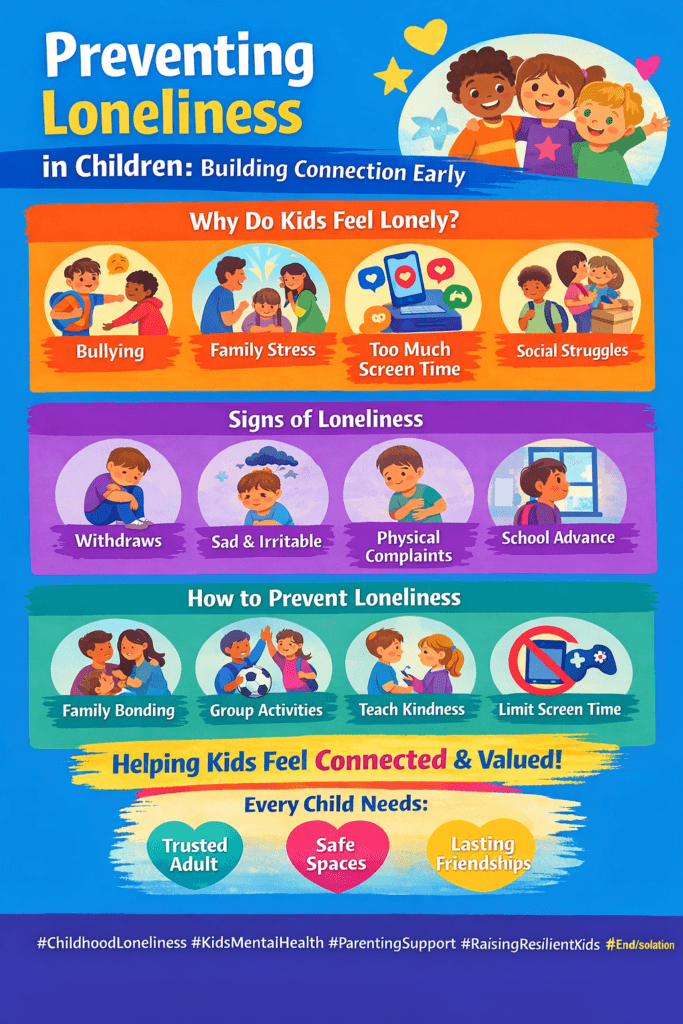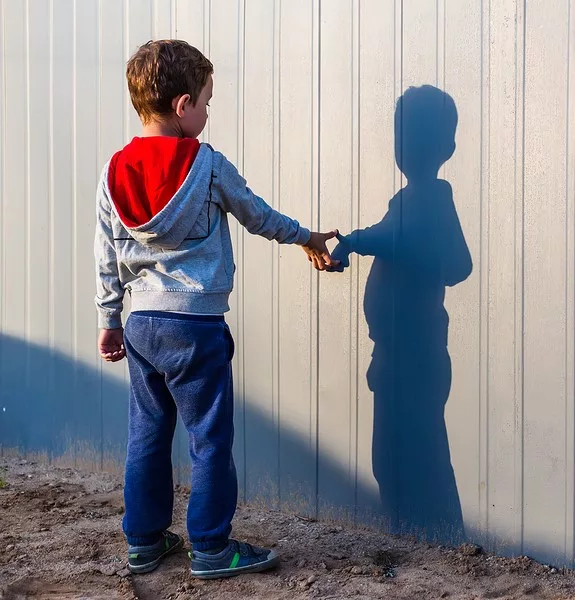
Preventing loneliness in children requires a comprehensive approach involving self-management, family support, and community resources. Self-management strategies help children recognize and cope with loneliness, while family support provides a foundation of love and communication. Community resources offer opportunities for social interaction and engagement beyond the family. Together, these strategies promote children’s social well-being and resilience.
Supporting Children through Loneliness: Effective Strategies for Building Connection and Resilience
Helping Children Cope with Loneliness: Practical Ways to Foster Connection and Well-Being
Loneliness can be challenging for children, but with support and guidance, they can learn to cope, build connections, and develop resilience. Here are some practical ways to support a child experiencing loneliness:
- Validate Their Feelings
Let your child know it’s okay to feel lonely and that you understand. By validating their emotions, you reassure them that their feelings are normal and that you’re there to help. - Encourage Open Communication
Create a safe, non-judgmental environment where your child feels comfortable expressing themselves. Encourage them to talk about their feelings and listen attentively to show you care. - Spend Quality Time Together
One-on-one time is powerful for connection. Engaging in activities your child enjoys can strengthen your bond and remind them that they are loved and valued. - Promote Social Connections
Arrange opportunities for social interaction, like playdates, community events, or extracurricular activities. These environments allow your child to naturally meet new friends and develop social connections. - Teach Social Skills
Help your child build communication, empathy, and problem-solving skills. Role-playing social situations can make them feel more confident when interacting with peers and building friendships. - Foster Hobbies and Interests
Encourage your child to explore hobbies that make them happy. Finding joy in activities can boost their confidence and provide a fulfilling sense of belonging and purpose. - Connect with Family and Friends
Help your child maintain family connections by scheduling regular calls or video chats with relatives. Familiar connections can offer comfort and reduce feelings of isolation. - Model Healthy Relationships
Children learn by watching adults. Show positive relationship skills by demonstrating empathy, effective communication, and problem-solving in your interactions with others. - Seek Professional Support if Needed
If loneliness becomes overwhelming, consider reaching out to a mental health professional. Therapy can provide children with additional tools and coping strategies. - Create a Supportive Environment
A nurturing home environment where children feel accepted and valued makes a difference. Regularly offer encouragement, praise, and reassurance to help them feel supported.
Implementing these strategies can help your child develop resilience, foster social skills, and build a supportive network. This will be a foundation for lifelong emotional well-being and confidence in navigating social relationships.
Self-Management Strategies for Preventing Loneliness in Children: Building Resilience and Social Confidence
Helping Children Prevent Loneliness: Essential Self-Management Skills for Resilience and Connection
Preventing loneliness in children is not just about providing them with social opportunities; it also involves equipping them with self-management skills to navigate their emotions, build social connections, and develop confidence. Here are self-management strategies that can help children address loneliness and foster healthy relationships:
- Emotional Awareness
Help children recognize and label their emotions, including loneliness. Encourage them to talk about their feelings and provide a supportive environment where they feel comfortable expressing themselves. - Positive Self-Talk
Teach children to practice positive self-talk. Encourage them to challenge negative thoughts and replace them with empowering affirmations that build self-esteem and reduce feelings of loneliness. - Identify Hobbies and Interests
Guide children to explore hobbies and interests that bring them joy. Engaging in these activities provides a sense of purpose and can help them connect with peers who share similar passions. - Social Skills Development
Equip children with social skills, such as empathy, active listening, and clear communication. Role-play different social situations to help them feel more confident making friends and maintaining connections. - Initiate Social Interactions
Encourage children to take the initiative in social interactions by inviting others to play or join clubs. Taking the initiative can build confidence and open up more social opportunities. - Problem-Solving Skills
Teach problem-solving strategies to help children handle challenges in social situations. Help them brainstorm solutions, weigh options, and confidently implement strategies to manage social hurdles. - Build Resilience
Encourage a growth mindset by teaching children that setbacks are learning opportunities. Resilience helps children bounce back from disappointments and reinforces perseverance in friendships and other social efforts. - Encourage Independence
Allow children to make decisions and solve problems independently. As they build confidence in their abilities, they’ll feel more empowered and less reliant on external validation. - Healthy Lifestyle Habits
Encourage physical well-being through regular exercise, balanced nutrition, and sufficient sleep. Physical health supports emotional balance and positively impacts social and emotional resilience. - Seek Support
Teach children that it’s okay to ask for help. Encourage them to speak with trusted adults, such as parents, teachers, or counselors, when they need guidance regarding loneliness or other emotional struggles.
Teaching these self-management strategies empowers children to proactively handle loneliness, build meaningful connections, and develop the resilience needed for healthy social and emotional development.
Family Support Strategies to Prevent Loneliness in Children
Building Strong Connections: Family Support Strategies for Reducing Loneliness in Children
Family support is vital in helping children feel connected and valued, creating a foundation that prevents loneliness and promotes emotional well-being. Here are effective family support strategies to nurture children’s sense of belonging:
- Create a Nurturing Environment
Foster a warm, supportive family environment where children feel unconditionally loved and accepted. Prioritize open affection and reassurance so children feel valued and safe. - Encourage Open Communication
Establish a space for open, honest communication where children feel comfortable sharing their thoughts and feelings without judgment. This reinforces their sense of trust and security within the family. - Spend Quality Time Together
Dedicate regular one-on-one time with each child, engaging in activities they enjoy. This personalized attention strengthens parent-child bonds and reassures children of their importance within the family. - Create Family Rituals and Traditions
Develop family traditions that foster connection, such as weekly game nights, Sunday brunches, or seasonal activities. These shared rituals create lasting memories and a sense of unity. - Practice Active Listening
Show genuine interest when children share experiences or concerns. Practice active listening by giving full attention, empathizing, and validating their feelings to help them feel valued and understood. - Promote Positive Sibling Relationships
Encourage positive sibling interactions by fostering cooperation and mutual respect. Facilitate activities that help siblings bond, collaborate, and build supportive relationships. - Model Healthy Relationships
Set a positive example by demonstrating healthy communication, empathy, and conflict resolution in your relationships. Children learn essential social skills by observing and emulating these behaviors. - Provide Emotional Support
Offer comfort, validation, and guidance during times of stress or uncertainty. When children feel emotionally supported, they’re better equipped to manage challenges and feel secure. - Encourage Social Connections Beyond Family
Facilitate opportunities for children to build friendships outside the family by supporting their involvement in extracurricular activities, playdates, or community events. These experiences broaden their social connections and help them develop meaningful peer relationships. - Be Available and Responsive
Show genuine interest in children’s lives and be present when they seek guidance, comfort, or companionship. This responsiveness reassures them of your support and strengthens family bonds.
By implementing these strategies, parents can create a nurturing, connected family environment that supports children’s emotional well-being, reduces loneliness, and fosters resilience in their social development.
Community Resource Strategies to Help Prevent Loneliness in Children
Leveraging Community Resources to Foster Connection and Prevent Loneliness in Children
Community resources provide essential avenues for children to build social connections, develop interests, and feel a sense of belonging. Here are some strategies that can help:
- After-School Programs
Encourage participation in after-school programs hosted by community centers, schools, or local organizations. These programs offer structured environments where children can engage in social and recreational activities, build skills, and make friends. - Youth Clubs and Organizations
Explore community-based clubs and organizations that align with children’s interests, such as sports teams, arts programs, scouting groups, or community service clubs. These activities foster connections among children with shared passions and help them form friendships. - Library Programs
Utilize library programs like storytime, art workshops, and book clubs. Libraries often serve as community hubs and host events that enable children to interact, learn, and make friends through engaging, educational activities. - Community Recreation Centers
Take advantage of community recreation centers that offer children’s sports leagues, fitness classes, and other recreational activities. Recreation centers provide a supportive environment where children can stay active and build connections with peers. - Community Events and Festivals
Attend local family-friendly events and festivals that offer activities for children. These events often feature entertainment, games, and interactive booths, allowing children to meet others and feel more connected to their community. - Youth Mentoring Programs
Enroll children in youth mentoring programs offered by local nonprofits or mentoring agencies. Mentors provide positive role models, offering guidance, friendship, and a reliable connection outside the family. - Cultural and Religious Organizations
Engage with cultural or religious organizations that host programs and events for families and children. These groups often organize activities that foster a sense of belonging, cultural pride, and community. - Community Volunteer Opportunities
Involve children in age-appropriate community volunteer opportunities. Volunteering can instill a sense of purpose, introduce children to others with similar values, and foster meaningful connections, thereby contributing to their self-worth. - Counseling and Support Services
If a child struggles with feelings of loneliness or social challenges, seek counseling or support services. Community-based counseling centers and support groups provide resources and guidance to help children develop healthy social skills. - Online Resources and Virtual Communities
Explore safe, child-friendly virtual communities and online resources to connect with peers. When balanced with in-person socializing, virtual options provide an additional way for children to maintain friendships, especially when in-person interaction is limited.
By leveraging these community resource strategies, caregivers can expand children’s social opportunities, helping them feel more connected, supported, and engaged within their broader community.
Frequently Asked Questions
Here are some common questions:
What is childhood loneliness?
Childhood loneliness is the feeling of being socially or emotionally disconnected from others. A child can feel lonely even when surrounded by people if they lack meaningful relationships.
What causes loneliness in children?
Common causes include bullying, difficulty making friends, frequent moving, family stress, lack of social opportunities, excessive screen time, or feeling different from peers.
How can I tell if a child is lonely?
Signs may include withdrawal from activities, frequent complaints of boredom, sadness, clinginess, low self-confidence, school avoidance, or acting out for attention.
Is loneliness harmful to child development?
Yes. Long-term loneliness can affect emotional regulation, stress response, and academic performance, and increase the risk of anxiety and depression later in life.
How can parents help prevent loneliness?
Parents can encourage social play, schedule family time, listen without judgment, teach social skills, limit excessive screen time, and help children find group activities they enjoy.
What role do schools play in preventing loneliness?
Schools can promote inclusion, peer-support programs, anti-bullying policies, group projects, and safe spaces where every child feels accepted.
Can shy children be at greater risk for loneliness?
Shy children may need extra support practicing social skills, but shyness alone does not mean loneliness. With encouragement, they can build strong friendships.
How does screen time affect loneliness?
Passive screen use can replace real-world interaction. Balanced limits and encouraging in-person play help strengthen social connections.
At what age can children experience loneliness?
Loneliness can occur at any age, even in early childhood. Awareness and early support make a significant difference.
Can loneliness be prevented?
Yes. Strong family bonds, supportive adults, opportunities for friendship, emotional validation, and inclusive environments are powerful protective factors.
Conclusion
Preventing loneliness in children is essential for their overall well-being and social development. By implementing self-management strategies, fostering supportive family environments, and leveraging community resources, we can develop a comprehensive approach to address loneliness. Teaching children to recognize and cope with loneliness empowers them to navigate social challenges confidently. Family support provides a strong foundation of love and communication, while community resources offer opportunities for social interaction and engagement. Together, these strategies promote children’s resilience, happiness, and sense of belonging, ensuring they thrive in their families and communities. By working collaboratively, we can create a supportive network that nurtures children’s social connections and fosters emotional growth.
Video: Connection stops childhood loneliness before it starts #FamilyFirst #EmotionalWellbeing #Prevention