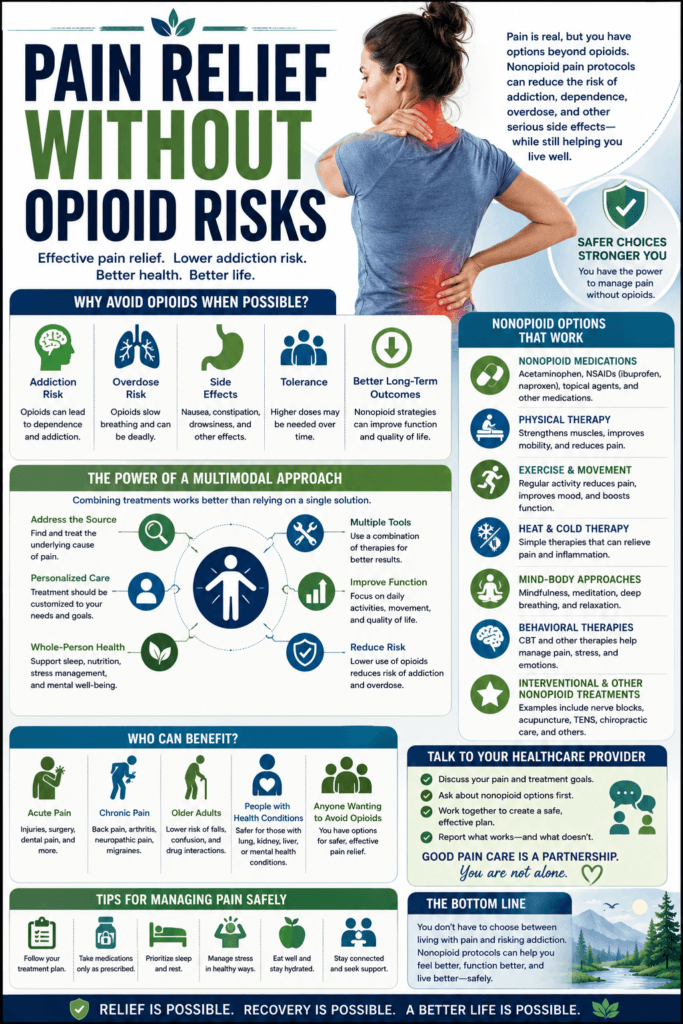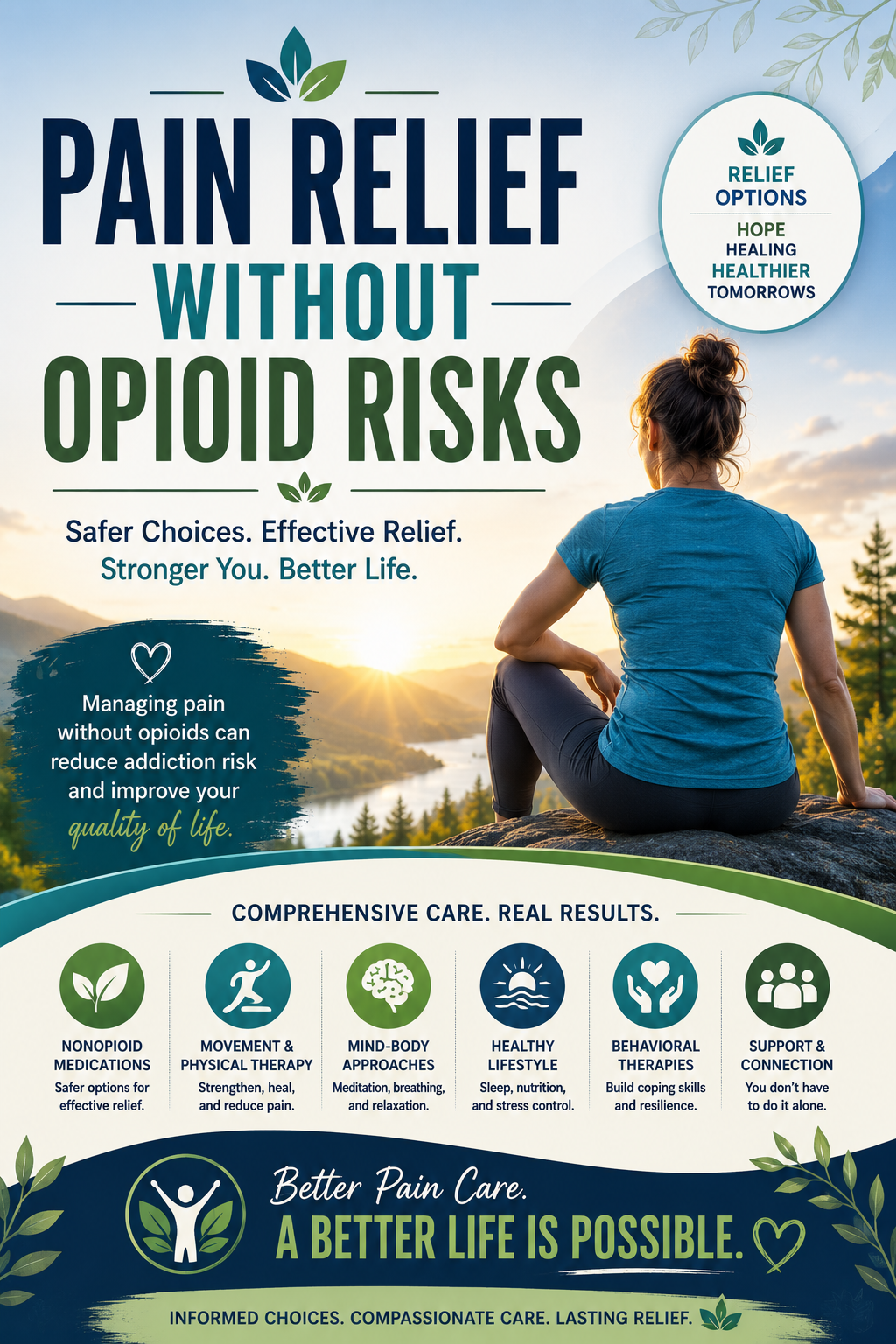
Nonopioid pain protocols offer an important approach to managing acute and chronic pain while reducing unnecessary exposure to opioid medications. By combining options such as nonopioid medications, physical therapy, exercise, behavioral therapies, mindfulness, and other individualized treatments, healthcare providers can address pain while focusing on function and quality of life. Although opioids remain appropriate for certain patients and medical situations, using effective alternatives when possible may reduce risks associated with prolonged opioid exposure, including dependence, opioid use disorder, and overdose. A comprehensive approach ensures that addiction prevention does not come at the expense of compassionate and effective pain management.
Understanding Nonopioid Pain Protocols
A nonopioid pain protocol is a structured approach that prioritizes treatments other than opioid medications when they are clinically appropriate. The CDC recommends maximizing nonpharmacologic and nonopioid pharmacologic therapies based on the patient’s condition. Nonopioid therapies are at least as effective as opioids for many common types of acute pain and are preferred for subacute and chronic pain.
Treatment may include acetaminophen, nonsteroidal anti-inflammatory drugs (NSAIDs), certain antidepressants or anticonvulsants, topical medications, physical therapy, exercise, cognitive behavioral therapy (CBT), mindfulness techniques, massage, acupuncture, and selected interventional procedures. Treatment should be individualized because nonopioid medications also have contraindications and potential adverse effects.
How Nonopioid Protocols Can Reduce Addiction Risk
Prescription opioids can be appropriate and necessary for certain patients, including some people experiencing severe traumatic, postoperative, cancer-related, palliative, or other serious pain. Therefore, reducing addiction risk does not mean eliminating opioids from medical practice.
Instead, nonopioid protocols can reduce unnecessary opioid exposure. When effective alternatives manage pain adequately, fewer patients may need to begin or continue opioid treatment. This is important because opioid medications carry risks that include opioid use disorder and overdose, particularly with longer-term exposure.
A multimodal approach also changes the focus of treatment from simply lowering a pain score to improving function. Patients can work toward meaningful goals such as walking farther, returning to work, sleeping better, completing household activities, exercising, or participating more fully in family life.
Self-Management Strategies
Patients are active participants in successful pain management. Self-management begins with understanding the cause of pain and establishing realistic treatment goals with healthcare professionals. Keeping a pain journal can help identify patterns involving activity, sleep, stress, medications, and symptoms.
Regular movement and appropriately prescribed exercise can improve function in many chronic pain conditions. Physical therapy may teach techniques for strengthening, flexibility, posture, pacing, and body mechanics. Behavioral approaches such as CBT and mindfulness can help patients manage the emotional and psychological effects of persistent pain.
Patients should take medications only as directed and discuss over-the-counter medications and supplements with their healthcare provider. NSAIDs, acetaminophen, anticonvulsants, and other nonopioid medications are not appropriate for everyone and can produce significant adverse effects in certain medical conditions.
When opioids are already being taken regularly, patients should not abruptly discontinue them without medical guidance. CDC guidance emphasizes individualized decision-making and warns against abruptly discontinuing or rapidly reducing opioid therapy except when circumstances indicate an immediate safety concern.
Family Support Strategies
Families can play an important role without becoming responsible for controlling the person’s pain. Support begins with recognizing that chronic pain is a complex health condition that can affect mood, sleep, relationships, mobility, employment, and independence.
Family members can encourage attendance at medical appointments, physical therapy, behavioral health treatment, and rehabilitation programs. They can participate in healthy activities such as walking, preparing nutritious meals, practicing relaxation techniques, or helping the individual follow an agreed-upon activity schedule.
Communication should focus on progress rather than only on pain intensity. Asking, “What were you able to do today?” can encourage attention to functional improvement.
Families should also understand the difference between appropriate medication use, physical dependence, tolerance, and substance use disorder. If concerning behaviors develop—such as taking medication differently than prescribed or obtaining opioids from multiple unauthorized sources—the response should emphasize professional evaluation rather than shame or punishment.
Community Support Strategies
Communities can strengthen nonopioid pain management by improving access to comprehensive services. Primary care practices, pain specialists, pharmacists, physical therapists, behavioral health professionals, addiction specialists, and rehabilitation programs can collaborate to create coordinated treatment plans.
Community resources can include affordable exercise programs, chronic pain education, physical therapy, behavioral health services, peer support, transportation assistance, and substance use disorder treatment when needed.
Insurance coverage and accessibility remain important challenges. The CDC notes that nonpharmacologic treatments are not always fully covered and that cost, transportation, inadequate insurance, and limited availability—particularly in rural communities—can interfere with access.
Healthcare systems and policymakers can therefore support prevention by making evidence-based alternatives accessible and affordable rather than simply restricting opioid prescriptions.
Combining Pain Relief With Addiction Prevention
The strongest pain protocols are individualized and multimodal. A patient recovering from an injury, for example, might receive appropriate nonopioid medication combined with ice or heat, gradual movement, physical therapy, education, and follow-up. Someone with chronic pain may benefit from exercise therapy, behavioral treatment, medication, mindfulness practices, and rehabilitation.
Opioids may still be appropriate when their expected benefits for pain and function outweigh their risks. When they are initiated for acute pain, CDC guidance recommends using the lowest effective dosage and no greater quantity than necessary for the expected duration of severe pain.
Frequently Asked Questions
Here are some common questions:
1. Is it possible to manage pain without opioids?
Yes. Many types of acute and chronic pain can be managed with nonopioid medications, physical therapy, exercise, behavioral therapies, and other treatments. The best approach depends on the cause and severity of the pain and the individual’s medical history.
2. Why consider nonopioid treatments first?
Opioids can be appropriate in certain situations, but they carry risks such as sedation, constipation, physical dependence, opioid use disorder, respiratory depression, and overdose. Effective nonopioid approaches can reduce unnecessary opioid exposure while still treating pain.
3. What medications can relieve pain without opioids?
Depending on the condition, options may include:
- Acetaminophen.
- NSAIDs such as ibuprofen or naproxen.
- Topical pain medications.
- Certain antidepressants.
- Certain anticonvulsants for nerve pain.
- Other condition-specific nonopioid medications.
These medications have their own risks and are not appropriate for everyone.
4. What nonmedication treatments can help with pain?
Several approaches may be useful depending on the diagnosis:
- Physical or occupational therapy.
- Therapeutic exercise and movement.
- Heat or cold therapy.
- Cognitive behavioral therapy (CBT).
- Mindfulness and relaxation techniques.
- Massage.
- Acupuncture.
- Selected interventional procedures.
5. What is multimodal pain management?
Multimodal pain management combines different treatments rather than relying on one medication. For example, a patient might use an appropriate nonopioid medication along with physical therapy, exercise, sleep improvement, and behavioral pain-management techniques.
6. Does “nonopioid” mean completely risk-free?
No. Nonopioid medications and procedures can still cause side effects or complications. NSAIDs, for example, may increase gastrointestinal, kidney, or cardiovascular risks in some people. Treatment should be individualized with a healthcare professional.
7. Are opioids always inappropriate for pain?
No. Opioids may have an important role in certain situations, including some severe acute pain, cancer-related pain, palliative care, and other carefully selected circumstances. The goal is appropriate prescribing—not the elimination of necessary pain treatment.
8. Can physical therapy really reduce pain?
For many musculoskeletal and chronic pain conditions, physical therapy can improve strength, flexibility, mobility, and function. Treatment may also teach patients how to move safely and gradually return to normal activities.
9. How does mental health affect physical pain?
Pain is influenced by biological, psychological, and social factors. Stress, anxiety, depression, poor sleep, and fear of movement can intensify the experience of pain. Addressing these factors does not mean the pain is imaginary; it means that pain management treats the whole person.
10. How can behavioral therapy help with chronic pain?
CBT and related approaches can help people recognize unhelpful thought patterns, develop coping skills, manage stress, improve activity pacing, and respond differently to persistent pain.
11. Can nonopioid pain management reduce addiction risk?
It can reduce unnecessary opioid exposure, which can lower opportunities for opioid-related harms. However, no pain-management strategy can guarantee that addiction will never occur.
12. What healthy habits can support pain management?
- Follow the treatment plan.
- Stay physically active within medical recommendations.
- Maintain consistent sleep habits.
- Use pacing rather than alternating between overactivity and prolonged inactivity.
- Practice stress-management techniques.
- Eat a balanced diet.
- Avoid using alcohol or drugs to cope with pain.
- Maintain supportive social connections.
13. What if nonopioid treatments do not control the pain?
Persistent or worsening pain should be reassessed rather than simply endured. A healthcare professional can reconsider the diagnosis, adjust medications, recommend rehabilitation, evaluate interventional treatments, or refer the patient to a pain specialist.
14. Should someone already taking opioids suddenly stop them?
Generally, no. People taking opioids regularly should discuss changes with their healthcare professional. Abrupt discontinuation after physical dependence has developed can cause withdrawal and other problems. Any taper should be individualized when tapering is clinically appropriate.
15. What questions should patients ask their healthcare provider?
- What is causing my pain?
- What nonopioid treatments are appropriate for me?
- What are the benefits and risks of each option?
- Would physical therapy or exercise help?
- Are there behavioral or mind-body treatments I could try?
- What functional goals should we use to measure improvement?
- When should my treatment plan be reassessed?
16. What is the main message of “Pain Relief Without Opioid Risks”?
Effective pain management does not always require opioids. A personalized combination of nonopioid medications, physical rehabilitation, behavioral strategies, healthy routines, and supportive care can provide meaningful pain relief while reducing unnecessary opioid exposure and its associated risks.
Conclusion
Nonopioid pain protocols offer an important strategy for improving pain management while reducing unnecessary exposure to medications that carry risks of opioid use disorder and overdose. Their effectiveness comes from combining appropriate medications with physical rehabilitation, behavioral strategies, patient education, and ongoing clinical assessment.
Self-management helps patients become active participants in recovery. Family support strengthens motivation, function, and treatment engagement. Community resources make evidence-based alternatives more accessible. Together, these strategies create a balanced approach in which addiction prevention does not mean undertreating pain. Instead, the goal is safer, individualized pain care that improves both function and quality of life.
Video: Don’t let opioids control your life #addictionprevention