Natural High is a nonprofit organization dedicated to helping young people discover their passions, develop healthy coping skills, and make informed decisions about alcohol and drug use. Through inspirational stories, educational programs, and positive role models, Natural High encourages adolescents to pursue meaningful activities that provide excitement, fulfillment, and a sense of purpose without relying on substances.
Unlike traditional drug prevention campaigns that focus primarily on the dangers of substance use, Natural High emphasizes the positive experiences young people can achieve through sports, music, art, personal relationships, volunteering, and other meaningful interests.
Its prevention philosophy highlights an important principle: When young people develop confidence, meaningful connections, and a strong sense of purpose, they may be better equipped to resist substance-related pressures and make healthier choices.
This article explores Natural High’s advocacy journey, its approach to substance use prevention, and practical self-management, family, and community support strategies that can help young people build healthier, substance-free lives.
The Origins of Natural High: Turning Personal Loss Into Prevention
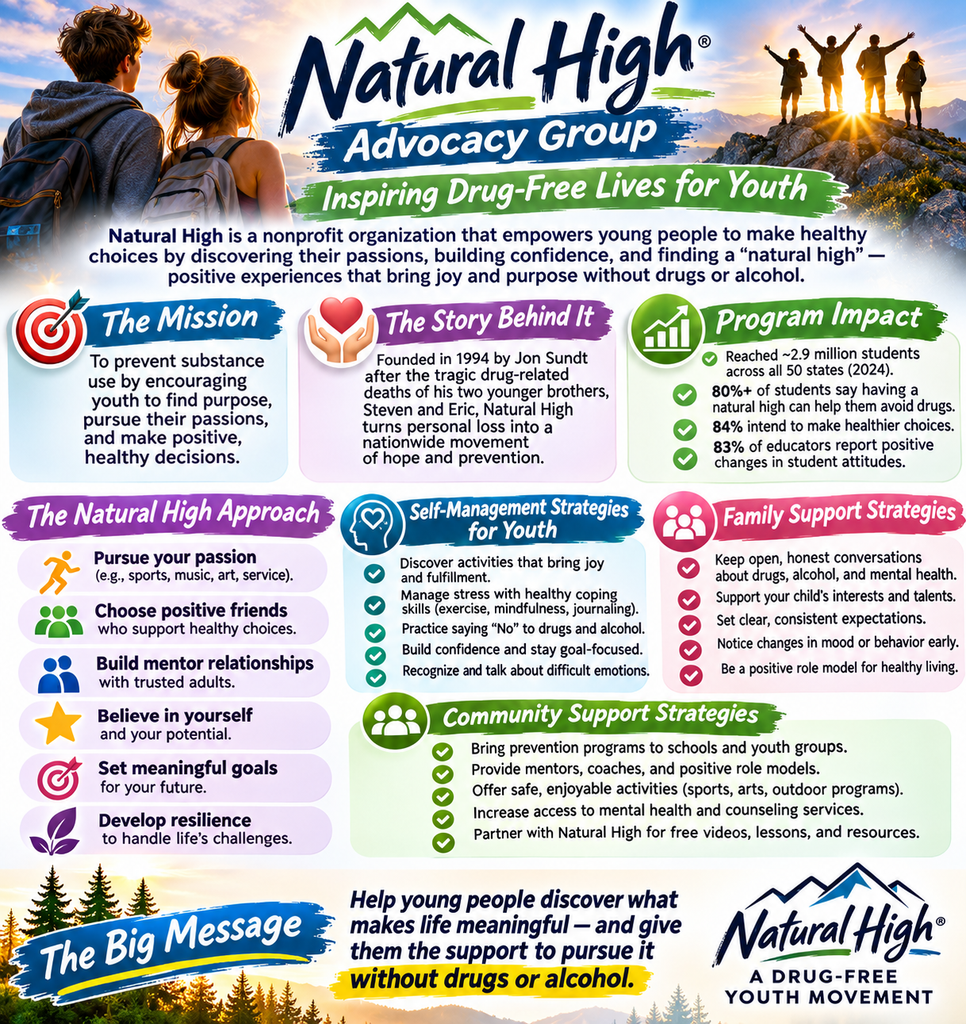
Natural High was founded in 1994 by Jon Sundt following the devastating impact of addiction on his family. His two younger brothers, Steven and Eric, died from drug-related causes.
Determined to help prevent similar tragedies, Sundt established the organization to encourage young people to discover positive alternatives to substance use.
His personal experiences shaped a prevention strategy focused on inspiration rather than fear. Instead of relying exclusively on warnings about addiction, Natural High encourages young people to identify activities, relationships, and goals that make life meaningful.
The organization’s message centers on helping adolescents discover their own natural high—a positive experience or passion that brings fulfillment without drugs or alcohol.
How Natural High’s Advocacy Movement Developed
What began as Sundt’s personal mission grew into a nationwide educational initiative.
Natural High initially delivered presentations in schools, sharing personal stories and examples of individuals who found fulfillment through positive activities. Over time, the organization expanded its programs to include videos, classroom lessons, discussion guides, and educational resources for parents.
Today, Natural High collaborates with educators, athletes, musicians, and other role models to communicate prevention messages that resonate with young audiences.
According to its 2024 impact report, the organization reached approximately 2.9 million students across all 50 states during that reporting year. Impact Report+1
Its continued expansion demonstrates the potential of combining personal storytelling with practical prevention education.
Understanding the Natural High Approach to Addiction Prevention
Natural High emphasizes six interconnected protective principles that help young people make healthier choices.
- Pursue your natural high: Discover interests and activities that create joy, motivation, and personal fulfillment.
- Embrace positive peer influence: Build friendships with people who encourage healthy decisions.
- Cultivate mentor relationships: Connect with trusted adults who provide encouragement and guidance.
- Believe in yourself: Develop confidence, resilience, and the belief that personal abilities can improve.
- Set meaningful goals: Identify personal aspirations that encourage responsible decision-making.
- Develop resilience: Learn to navigate disappointment, stress, and challenges without turning to substances.
These principles are designed to strengthen protective factors associated with reduced substance use risk. Drug Abuse Prevention Program
The approach recognizes that prevention involves more than warning young people about dangerous substances. It also requires helping them develop the emotional, social, and behavioral skills necessary to navigate adolescence.
Self-Management Strategies: Helping Young People Make Healthy Choices
Self-management involves recognizing emotions, managing stress, making responsible decisions, and developing positive daily habits.
Natural High encourages adolescents to identify activities that provide a sense of excitement and accomplishment without relying on alcohol or drugs.
For some young people, this may involve sports or outdoor recreation. Others may discover fulfillment through music, technology, creative arts, volunteering, or academic achievements.
Practical self-management strategies
- Identify personal passions: Explore hobbies, talents, and activities that create happiness and motivation.
- Develop healthy coping skills: Practice journaling, mindfulness, physical activity, and emotional regulation.
- Recognize peer pressure: Learn to identify situations where friends or classmates encourage substance use.
- Practice refusal skills: Prepare confident responses when offered alcohol, drugs, or other substances.
- Set achievable goals: Establish educational, personal, and recreational goals that provide direction.
- Build self-confidence: Recognize strengths and celebrate progress toward meaningful achievements.
- Choose supportive friendships: Spend time with peers who respect boundaries and encourage healthy decisions.
- Ask for help when needed: Speak with trusted adults, school counselors, or healthcare professionals about emotional difficulties.
These strategies can help adolescents develop a stronger sense of identity and reduce their reliance on unhealthy coping behaviors.
Family Support Strategies: Creating a Foundation for Prevention
Families play an essential role in shaping children’s attitudes toward alcohol, drugs, emotional health, and responsible decision-making.
Natural High encourages parents and caregivers to engage young people in meaningful conversations about substance use while supporting their interests and personal development.
Its educational resources include videos, discussion questions, and activities that families can use together. The organization has also developed a parent-focused course called Building a Natural High Family. Natural High+1
Effective family support strategies
- Maintain open communication: Discuss alcohol and drugs honestly without relying on threats or judgment.
- Encourage healthy interests: Support participation in sports, music, art, community activities, and other positive experiences.
- Model responsible behavior: Demonstrate healthy ways to manage stress and difficult emotions.
- Establish clear expectations: Set age-appropriate rules concerning alcohol, drugs, and personal safety.
- Recognize emotional changes: Pay attention to anxiety, depression, withdrawal, or sudden behavioral changes.
- Build family connections: Spend meaningful time together through shared activities and conversations.
- Support healthy friendships: Encourage relationships with peers who demonstrate positive behaviors.
- Seek professional guidance: Consult pediatricians, mental health professionals, or addiction specialists when concerning behaviors arise.
Families should remember that prevention is most effective when young people feel respected, understood, and supported.
Community Support Strategies: Building Drug-Free Opportunities for Youth
Community involvement strengthens prevention by providing safe environments, positive role models, and accessible recreational opportunities.
Natural High works with schools, families, and community organizations to share educational materials that encourage healthier choices.
Its free resources include inspirational videos, discussion guides, and activities designed to help adults engage young people in meaningful conversations about substance use. Natural High
Community-based prevention strategies
- Implement school prevention programs: Incorporate evidence-informed substance use education into health classes and school activities.
- Develop mentorship opportunities: Connect young people with trusted adults, coaches, educators, and community leaders.
- Expand recreational activities: Offer affordable sports, arts, music, and outdoor programs.
- Promote youth leadership: Encourage adolescents to participate in community service and prevention campaigns.
- Support mental health services: Improve access to school counselors, therapists, and early intervention programs.
- Organize family education workshops: Teach parents about warning signs of substance use, communication strategies, and protective factors.
- Encourage positive peer networks: Develop youth groups that promote healthy relationships and responsible choices.
- Partner with prevention organizations: Use resources from Natural High, local coalitions, and public health agencies.
Communities can also address barriers such as transportation, program costs, and limited access to safe recreational spaces.
The Role of Positive Role Models in Addiction Prevention
One of Natural High’s distinctive approaches involves using stories from recognizable athletes, entertainers, musicians, and other influential individuals.
These individuals discuss how pursuing meaningful interests helped shape their choices and personal development.
For example, skateboarder Tony Hawk has participated in Natural High’s educational storytelling efforts, demonstrating how commitment to a personal passion can provide motivation and direction. Fox Business
Positive role models may help young people recognize that success, excitement, and fulfillment do not require substance use.
However, prevention messages should avoid suggesting that personal interests alone eliminate addiction risk. Young people may still require mental health treatment, family intervention, or specialized substance use services.
How Natural High Supports Mental Health and Emotional Resilience
Adolescence is a developmental period characterized by emotional changes, identity formation, increased independence, and sensitivity to social influences.
Stress, trauma, depression, anxiety, and social isolation may contribute to vulnerability to substance use.
Natural High’s emphasis on meaningful activities and supportive relationships aligns with broader prevention approaches that strengthen resilience.
Healthy activities may improve emotional well-being by providing opportunities for accomplishment, connection, and positive reinforcement.
Strategies for strengthening emotional resilience
- Teach adolescents to recognize and communicate difficult emotions.
- Encourage healthy problem-solving and conflict-resolution skills.
- Provide opportunities for creativity, exercise, and social interaction.
- Normalize seeking counseling and mental health support.
- Help young people recover from setbacks without excessive self-criticism.
- Promote supportive relationships with family members, teachers, and mentors.
Emotional resilience does not mean avoiding all distress. It involves developing the ability to respond to challenges while knowing when additional support is necessary.
Measuring the Impact of Natural High’s Prevention Programs
Natural High reports encouraging feedback from students and educators who participate in its programs.
According to the organization’s published program evaluation summaries:
- More than 80% of participating students reported that having a natural high could help them resist substance use.
- Approximately 84% reported intending to make healthier decisions after participating.
- About 83% of educators reported positive changes in students’ perceptions of drugs and alcohol. Natural High
These findings suggest that the program may positively influence attitudes and intentions.
However, improved attitudes and intentions do not necessarily demonstrate long-term reductions in substance use or addiction rates. Stronger longitudinal and controlled research is needed to establish those outcomes.
Natural High is best understood as one component of a comprehensive prevention strategy that also includes family involvement, school policies, mental health services, and community support.
Lessons From Natural High’s Advocacy Journey
Natural High’s development offers important lessons for individuals, families, educators, and healthcare professionals.
- Personal tragedy can inspire meaningful advocacy. Jon Sundt transformed the loss of his brothers into an initiative focused on protecting young people.
- Prevention should emphasize positive choices. Helping adolescents discover meaningful activities can complement education about substance-related risks.
- Family relationships matter. Open communication, consistent expectations, and emotional support can strengthen protective factors.
- Positive peer influence can encourage healthier decisions. Supportive friendships help normalize substance-free lifestyles.
- Mentorship provides direction. Trusted adults can help young people build confidence and navigate challenges.
- Mental health is essential to prevention. Addressing anxiety, depression, trauma, and emotional distress can reduce vulnerability.
- Communities share responsibility. Schools, families, healthcare professionals, and local organizations can work together to create safer environments.
Conclusion: Helping Young People Find Purpose Beyond Drugs and Alcohol
Natural High’s advocacy journey demonstrates how personal loss can inspire a meaningful commitment to substance use prevention.
Founded by Jon Sundt after the deaths of his two brothers, the organization has grown into a national educational movement that encourages young people to discover their passions, strengthen resilience, and make healthier decisions.
Its positive prevention philosophy emphasizes that adolescents need more than warnings about alcohol and drugs. They also need opportunities to experience joy, accomplishment, connection, and personal growth.
Self-management strategies help young people recognize triggers, build confidence, and develop healthy coping skills. Family support strengthens communication, emotional security, and responsible decision-making. Community programs provide mentorship, educational resources, and meaningful activities that reinforce substance-free choices.
Although no single prevention program can eliminate addiction risk, combining positive youth development with evidence-based education and accessible healthcare can create stronger foundations for long-term well-being.
The message of Natural High is simple but powerful: Help young people discover what makes life meaningful, and give them the support and confidence to pursue it without drugs or alcohol.
Frequently Asked Questions and Answers
Understanding Natural High and Its Mission
1. What is the Natural High advocacy group?
Natural High is a nonprofit youth substance use prevention organization that encourages young people to pursue meaningful activities and make healthy, drug-free choices.
Its educational programs use inspirational stories, positive role models, classroom discussions, and family resources to help adolescents discover activities that provide natural enjoyment and fulfillment.
2. Who founded Natural High, and why was it established?
Natural High was founded in 1994 by Jon Sundt following the drug-related deaths of his two younger brothers, Steven and Eric.
Their deaths inspired Sundt to create a prevention initiative that would encourage young people to find purpose and excitement through positive experiences rather than drugs or alcohol.
His personal tragedy became the foundation of a nationwide youth prevention movement.
3. What does the term “natural high” mean?
A natural high refers to the positive feelings of excitement, satisfaction, accomplishment, or happiness that individuals experience through healthy activities.
Examples include:
- Playing sports or exercising.
- Creating music, art, or photography.
- Spending time outdoors.
- Volunteering and helping others.
- Achieving academic or personal goals.
- Developing meaningful friendships.
- Participating in hobbies and creative projects.
These experiences can provide healthy sources of motivation and enjoyment without substance use.
4. What is the primary mission of Natural High?
Natural High’s mission is to inspire and empower young people to find their natural high and develop the confidence to live without drugs and alcohol.
Its approach emphasizes prevention, positive decision-making, emotional resilience, mentorship, and supportive relationships.
The organization encourages young people to focus on what makes their lives meaningful rather than defining prevention exclusively through the dangers of substance use.
Natural High’s Educational Programs
5. What age group does Natural High serve?
Natural High primarily develops educational resources for students in grades 4 through 12, generally ages 9–18.
The organization provides age-appropriate materials for elementary, middle, and high school students. Parents and educators are encouraged to preview the materials before using them. Natural High
6. What are the six principles of Natural High?
Natural High promotes six protective principles:
- Pursue your natural high: Discover meaningful interests and passions.
- Embrace positive peer influence: Build friendships that encourage healthy choices.
- Cultivate mentor relationships: Develop connections with trusted adults.
- Believe in yourself: Strengthen confidence and personal resilience.
- Set goals: Establish meaningful objectives for the future.
- Develop resilience: Learn to overcome challenges and setbacks.
These principles support positive youth development and substance use prevention. Drug Abuse Prevention Program
7. How does Natural High differ from traditional drug prevention programs?
Natural High emphasizes inspiration and positive role models rather than relying exclusively on warnings about the consequences of substance use.
Its programs feature personal stories from athletes, artists, musicians, and other influential individuals who demonstrate how meaningful activities can support healthy choices.
This approach encourages young people to focus on what they want to achieve rather than simply what they should avoid.
8. Are Natural High’s educational programs free?
Yes. Natural High provides free educational videos, discussion guides, and activities for students, parents, teachers, and community organizations.
As a nonprofit, it relies on donations and fundraising to support its educational mission. Natural High
9. How can teachers use Natural High in schools?
Teachers can incorporate Natural High into health education, substance use prevention lessons, and classroom discussions.
The organization recommends a three-step approach:
- Watch: Show an inspirational video featuring a positive role model.
- Discuss: Use guided questions to explore the story and its lessons.
- Apply: Complete activities that encourage goal setting, reflection, and healthy decision-making.
Its curriculum aligns with the Common Core and National Health Education Standards. Natural High
10. Is Natural High effective in preventing substance use?
Natural High reports encouraging results from its program evaluations.
According to the organization, more than 80% of surveyed students believed having a natural high could help them resist substance use, while 84% reported intending to make healthier decisions.
These results suggest positive effects on attitudes and intentions. However, they do not independently establish long-term reductions in substance use or addiction. Natural High
Self-Management Strategies for Youth
11. How can teenagers discover their natural high?
Teenagers can begin by exploring activities that match their interests, strengths, and personal values.
Examples include participating in sports, learning an instrument, creating artwork, joining clubs, volunteering, or exploring technology and science.
The goal is to identify activities that provide enjoyment, confidence, personal growth, and meaningful social connections.
12. How can Natural High help young people resist peer pressure?
Natural High encourages adolescents to develop confidence, recognize positive peer influences, and make decisions based on personal values.
Practical refusal strategies include preparing a simple response, suggesting an alternative activity, leaving uncomfortable situations, and seeking support from trusted friends or adults.
Young people should understand that they do not need to use alcohol or drugs to gain acceptance.
13. What healthy coping strategies can reduce the risk of substance use?
Helpful strategies include:
- Practicing mindfulness and relaxation techniques.
- Participating in physical activity.
- Maintaining healthy sleep routines.
- Developing creative hobbies.
- Talking with trusted adults about emotional difficulties.
- Setting realistic personal goals.
- Building supportive friendships.
- Seeking counseling when emotional distress becomes overwhelming.
These activities can strengthen resilience but do not eliminate all substance use risks.
14. Why is goal setting important in addiction prevention?
Goal setting helps adolescents develop motivation, direction, and a sense of personal responsibility.
When young people establish meaningful educational, recreational, or career goals, they may become more motivated to make decisions that support their future.
Goals should remain flexible, achievable, and appropriate for the individual’s developmental stage.
Family Support Strategies
15. How can parents use Natural High to prevent substance use?
Parents can use the organization’s videos and discussion guides to initiate conversations about drugs, alcohol, peer pressure, and healthy decision-making.
Families can also encourage children to explore interests, develop friendships, and participate in meaningful activities.
Regular communication is more effective when children feel comfortable discussing difficult situations without fear of immediate punishment or humiliation.
16. What should parents do if their teenager shows signs of substance use?
Parents should approach the situation calmly and seek to understand the underlying concerns.
Recommended actions include:
- Discussing observed behavioral changes without accusations.
- Asking about emotional distress, peer pressure, and substance exposure.
- Establishing appropriate safety boundaries.
- Consulting a pediatrician or adolescent healthcare professional.
- Seeking a substance use assessment when indicated.
- Providing continued emotional support.
Early intervention can help prevent worsening substance-related problems.
17. How can families encourage drug-free activities?
Families can support healthy interests by providing opportunities to explore sports, arts, outdoor recreation, music, and community service.
Parents should recognize that every child’s interests are different. Encouraging autonomy and personal choice can help adolescents develop confidence and motivation.
Family activities also provide opportunities to strengthen relationships and build positive memories.
18. Can strong family relationships reduce addiction risk?
Supportive family relationships are an important protective factor against adolescent substance use.
Open communication, consistent expectations, emotional warmth, and appropriate supervision can help young people make healthier decisions.
However, strong family relationships do not guarantee that a young person will never develop a substance use disorder.
Community Support and Advocacy
19. How can communities support Natural High’s mission?
Communities can promote substance use prevention by expanding access to safe, affordable, and meaningful youth activities.
Effective approaches include establishing mentorship programs, offering after-school activities, supporting youth leadership, and integrating prevention education into schools.
Community organizations can also use Natural High’s free educational resources to support workshops and youth events.
20. How can someone become involved with Natural High?
Parents, educators, healthcare professionals, and community advocates can participate by using educational resources, organizing prevention activities, sharing awareness materials, or supporting the organization financially.
Natural High also provides resources for Red Ribbon Week and other substance use prevention initiatives.
Visit Natural High’s official website to explore available programs and opportunities.
Video: