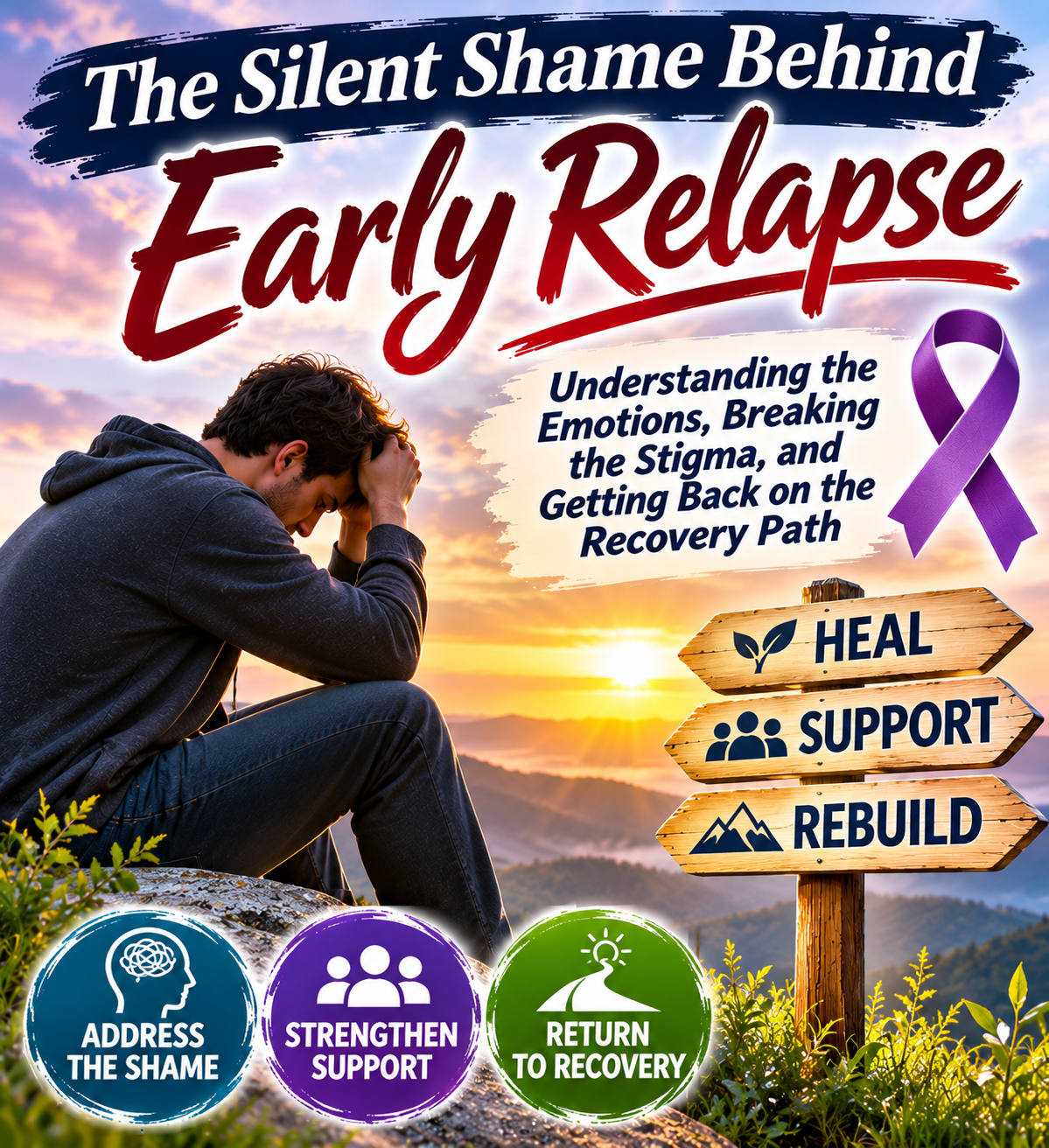
Early relapse is one of the most emotionally challenging experiences for individuals recovering from alcohol or drug addiction. After making the courageous decision to seek treatment, many people enter recovery filled with hope, determination, and expectations of lasting sobriety. However, when substance use returns during the first weeks or months, feelings of shame, guilt, disappointment, and fear can become overwhelming.
For some individuals, the emotional consequences of relapse are more devastating than the relapse itself. They may believe they have failed their families, disappointed their treatment providers, or lost the progress they worked so hard to achieve. These feelings can lead to secrecy, isolation, and reluctance to seek help.
Early relapse does not erase the progress made during recovery. Instead, it signals the need to reassess treatment, identify triggers, and strengthen coping strategies.
This article explores the hidden shame associated with early relapse, the psychological factors contributing to substance use recurrence, and practical self-management, family, and community support strategies that can help individuals regain confidence and continue their recovery journey.
Understanding Early Relapse in Addiction Recovery
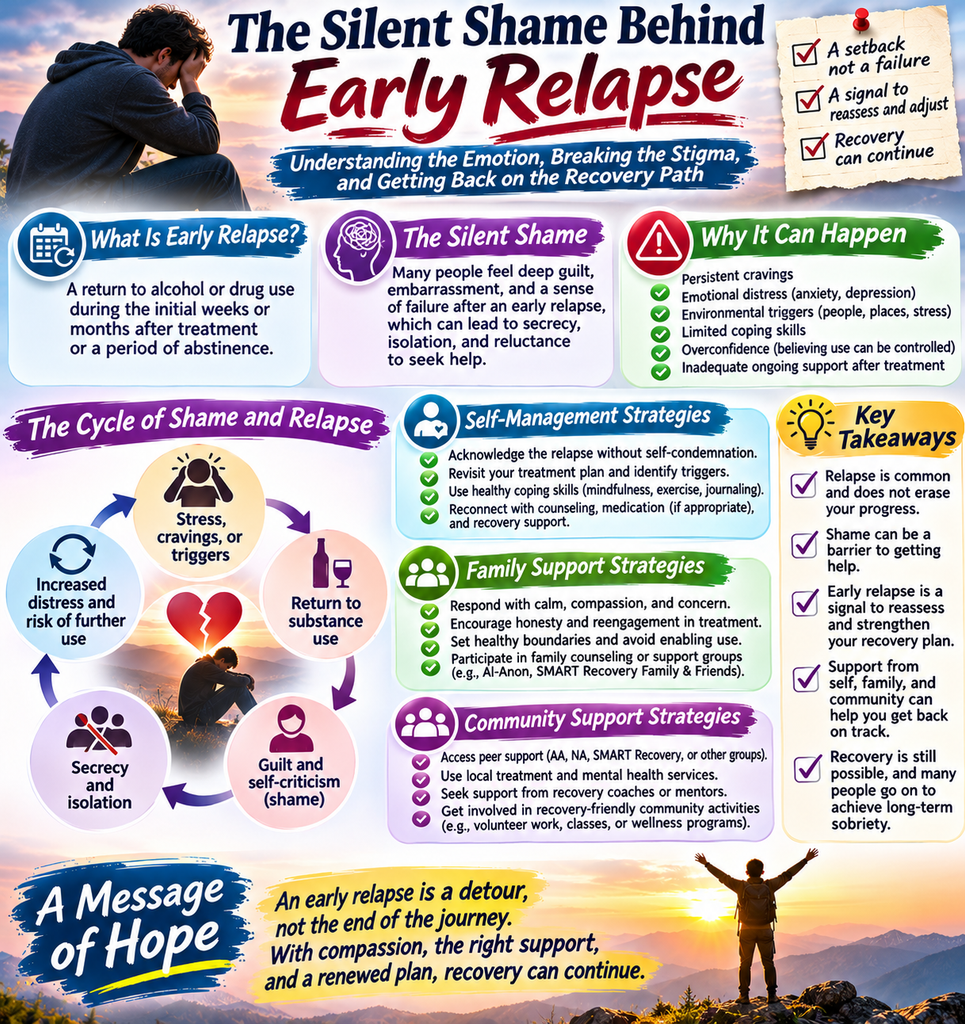
Early relapse generally refers to a return to substance use during the initial weeks or months following treatment initiation, detoxification, or a period of abstinence.
Although relapse is commonly discussed as part of addiction recovery, it is not inevitable, and individuals experience different recovery patterns.
Early recovery can be particularly challenging because the brain and body are adjusting to functioning without substances. Individuals may experience cravings, sleep disturbances, emotional instability, stress sensitivity, and difficulties managing everyday responsibilities.
Several factors may increase vulnerability to early relapse:
- Persistent cravings: Strong urges to use alcohol or drugs may continue after detoxification.
- Emotional distress: Anxiety, depression, loneliness, or unresolved trauma can contribute to substance use.
- Environmental triggers: Returning to familiar locations or relationships associated with previous substance use.
- Limited coping skills: Difficulty managing stress without relying on substances.
- Social isolation: Lack of supportive relationships or recovery-oriented activities.
- Overconfidence: Believing that occasional substance use can be controlled despite a history of addiction.
- Inadequate continuing care: Limited access to counseling, medications, or recovery support after treatment.
Understanding these factors can help individuals recognize that relapse involves complex biological, psychological, and environmental influences rather than simply a lack of willpower.
The Silent Shame: Why Early Relapse Feels Like Personal Failure
Shame is a painful emotion involving negative beliefs about one’s identity or worth.
People who relapse may begin thinking:
- “I disappointed everyone who believed in me.”
- “I wasted all the progress I made.”
- “My family will never trust me again.”
- “I should have been stronger.”
- “Maybe recovery is impossible for me.”
These thoughts can create a destructive cycle of emotional distress and substance use.
It is important to distinguish guilt from shame.
Guilt focuses on behavior: “I made a decision that harmed my recovery.”
Shame focuses on identity: “I am a failure because I relapsed.”
Guilt can sometimes motivate constructive action, such as acknowledging harmful behavior and seeking help. Persistent shame, however, may contribute to withdrawal, secrecy, hopelessness, and avoidance of treatment.
Recovery requires accountability without defining a person’s entire identity by a setback.
The Psychological Cycle of Shame and Relapse
When individuals experience a return to substance use, their emotional response can influence what happens next.
How shame can reinforce substance use
Stress, cravings, or emotional triggers
Return to alcohol or drug use
Guilt, embarrassment, and self-criticism
Secrecy, isolation, and avoiding help
Increased distress and vulnerability to further use
The cycle may repeat without intervention
This pattern is not universal, but it illustrates why shame can become a barrier to recovery.
An individual who fears criticism may avoid contacting a counselor, sponsor, physician, or family member. Without support, the risk of continued substance use may increase.
Breaking this cycle requires compassionate communication, timely intervention, and a willingness to seek help.
Self-Management Strategies: Overcoming Shame and Rebuilding Confidence
Self-management involves recognizing emotional triggers, responding constructively to setbacks, and developing healthy behaviors that support recovery.
After early relapse, individuals may feel tempted to abandon their recovery plans. However, reconnecting with treatment and identifying what contributed to substance use can help restore stability.
Practical self-management strategies
- Acknowledge the relapse without self-condemnation: Recognize what happened while avoiding negative labels about personal worth.
- Seek professional support immediately: Contact an addiction counselor, healthcare professional, or treatment program to discuss the return to substance use.
- Identify relapse triggers: Examine the emotional, social, and environmental circumstances preceding substance use.
- Practice self-compassion: Replace statements such as “I am a failure” with “I experienced a setback, and I can take steps to recover.”
- Develop a relapse-response plan: Establish specific actions for managing cravings and obtaining support.
- Use evidence-based coping techniques: Practice cognitive behavioral strategies, mindfulness, problem-solving, and emotional regulation.
- Reestablish healthy routines: Prioritize sleep, nutritious meals, exercise, and structured daily activities.
- Reconnect with recovery support: Attend counseling sessions, peer-support meetings, or other recovery activities.
- Review medication options: Discuss treatments such as buprenorphine or methadone for opioid use disorder, or naltrexone or acamprosate for alcohol use disorder, when appropriate.
- Celebrate continued engagement: Recognize the decision to return to treatment as a meaningful step forward.
A practical exercise for challenging shame
Reframing negative self-talk. Shame-based thought:
I failed because I relapsed. Healthier, compassionate response:
I experienced a setback. I can seek support, understand what happened, and continue recovery.
Try acknowledging the behavior while separating it from your identity and identifying a constructive next step.
Family Support Strategies: Responding to Relapse Without Increasing Shame
Family members often experience fear, frustration, disappointment, and emotional exhaustion when a loved one returns to substance use.
These reactions are understandable, particularly when families have witnessed previous overdoses, financial difficulties, broken promises, or repeated treatment attempts.
However, harsh criticism and humiliation can intensify shame and discourage someone from seeking help.
Families can provide compassionate support while maintaining clear expectations and personal boundaries.
How families can help after early relapse
- Respond calmly: Avoid yelling, threats, or humiliating statements.
- Prioritize immediate safety: Assess for overdose symptoms, intoxication, withdrawal risk, and urgent medical needs.
- Encourage honesty: Create opportunities for open conversations about substance use without automatic punishment or rejection.
- Support treatment reengagement: Help arrange counseling appointments, medical evaluations, or appropriate treatment services.
- Maintain healthy boundaries: Do not provide money or resources that directly support substance use.
- Avoid defining the person by relapse: Reinforce that a setback does not eliminate their value or potential.
- Recognize warning signs: Pay attention to withdrawal from support, changes in mood, and increasing cravings.
- Participate in family counseling: Address communication difficulties, trust, and emotional distress.
- Protect personal well-being: Seek support through therapy, Al-Anon, SMART Recovery Family & Friends, or other resources.
What families can say after relapse?
Supportive communication can reduce defensiveness and encourage engagement in treatment.
Instead of saying, “You ruined everything again,” consider:
“I am concerned about your safety. I care about you, and I want to help you reconnect with treatment.”
Instead of saying, “You clearly don’t want to recover,” consider:
“Something made recovery difficult. Let’s talk about what support might help now.”
Compassion should not eliminate accountability. Families can recognize harmful behavior while encouraging constructive changes.
Community Support Strategies: Creating Recovery Environments Without Stigma
Community support can be especially important following early relapse because individuals may feel embarrassed about returning to treatment or recovery meetings.
A welcoming recovery environment helps people understand that they can seek assistance without being defined by previous setbacks.
Community-based recovery strategies
- Expand access to addiction treatment: Provide affordable outpatient services, medications, counseling, and residential care when clinically indicated.
- Promote peer recovery support: Connect individuals with trained recovery coaches and people with lived experience.
- Offer nonjudgmental recovery meetings: Encourage participation in Alcoholics Anonymous, Narcotics Anonymous, SMART Recovery, or other support programs.
- Integrate mental health treatment: Address depression, anxiety, trauma, and other co-occurring conditions.
- Provide recovery-friendly housing: Support safe, stable living environments that encourage participation in treatment.
- Reduce treatment barriers: Improve transportation, insurance coverage, appointment availability, and access to medications.
- Educate the public: Challenge misconceptions that relapse means treatment failure or moral weakness.
- Support overdose prevention: Increase access to naloxone, overdose education, and harm-reduction services.
- Develop recovery community centers: Create spaces for mentorship, employment assistance, social activities, and continued recovery support.
Recovery-supportive communities can help reduce isolation and improve opportunities for sustained treatment engagement.
Why Early Relapse Can Be Medically Dangerous
Early relapse is not only an emotional challenge. It can also create significant medical risks.
After a period of abstinence, tolerance to certain substances may decrease. This is particularly dangerous with opioids because returning to a previously tolerated dose can cause a fatal overdose.
Alcohol relapse can also create serious complications, especially when combined with sedatives or when heavy drinking is followed by abrupt cessation in a physically dependent individual.
Important safety considerations include:
- Naloxone can reverse opioid overdose and should be readily available to individuals at risk and their families.
- Avoid combining alcohol, opioids, benzodiazepines, or other sedating substances.
- Seek medical evaluation for symptoms of alcohol or benzodiazepine withdrawal.
- Never assume that a previously used opioid dose remains safe after abstinence.
- Contact emergency services immediately for unconsciousness, slow or absent breathing, or suspected overdose.
A suspected overdose is a medical emergency. Call 911 and administer naloxone if an opioid overdose is possible and naloxone is available.
The Role of Professional Treatment After Early Relapse
Returning to substance use does not automatically mean that treatment has failed.
Instead, it may indicate that the existing treatment plan requires adjustment.
Healthcare professionals can reassess substance use patterns, mental health symptoms, medication adherence, environmental triggers, and the intensity of treatment needed.
Depending on the individual, recommendations may include additional counseling, medication adjustments, more frequent follow-up, intensive outpatient treatment, or a higher level of care.
Effective treatment should address both the substance use itself and the emotional factors contributing to relapse-related shame.
Rebuilding Trust and Self-Worth After Relapse
Shame can make individuals believe they have permanently damaged their relationships and personal identity.
However, rebuilding trust is possible through consistent behavior, honesty, accountability, and meaningful changes.
Recovery does not require immediate forgiveness from others. Trust may take time to restore, particularly when substance use has caused significant harm.
Individuals can begin rebuilding confidence by:
- Following through with treatment appointments.
- Communicating honestly about recovery challenges.
- Respecting family boundaries.
- Taking responsibility for harmful behavior.
- Practicing healthy coping skills.
- Establishing realistic short-term goals.
- Recognizing progress without expecting perfection.
Self-worth should not depend entirely on sobriety milestones. A person’s value remains intact even when they experience difficulties in recovery.
Lessons From the Silent Shame Behind Early Relapse
Early relapse offers important lessons for individuals, families, healthcare professionals, and communities.
- Relapse is not inevitable or proof of personal failure. It is a serious event that deserves attention, support, and reassessment.
- Shame can interfere with recovery. Fear of judgment may prevent individuals from disclosing substance use or seeking treatment.
- Honesty supports intervention. Open communication allows professionals and loved ones to identify emerging problems.
- Family responses matter. Compassionate communication, combined with healthy boundaries, can encourage engagement in treatment.
- Recovery requires individualized care. Treatment plans should address substance use, emotional health, and environmental challenges.
- Community support reduces isolation. Peer recovery groups and accessible services provide opportunities for continued progress.
- Safety must remain the priority. Returning to substance use after abstinence may increase overdose risk, particularly with opioids.
Conclusion: Breaking the Silence and Moving Beyond Shame
The silent shame behind early relapse can become one of the greatest emotional barriers to addiction recovery. Individuals who return to alcohol or drug use may experience guilt, disappointment, fear, and a painful sense of failure.
However, these emotions do not have to determine the future of their recovery.
By recognizing shame, challenging negative self-beliefs, and seeking professional support, individuals can begin rebuilding confidence and stability. Families can encourage healing through compassionate communication, healthy boundaries, and involvement in treatment. Communities can strengthen recovery by reducing stigma, expanding access to care, and providing supportive environments.
Early relapse should never be ignored or minimized, but neither should it become a permanent label.
A setback does not erase recovery progress. What matters is responding safely, seeking appropriate support, and continuing to move toward a healthier future.
For confidential addiction treatment referrals in the United States, contact SAMHSA’s National Helpline at 1-800-662-HELP (4357) or visit FindTreatment.gov.
Frequently Asked Questions and Answers
Understanding Early Relapse and Shame
1. What is early relapse in addiction recovery?
Early relapse refers to returning to alcohol or drug use during the initial weeks or months after beginning recovery, completing treatment, or achieving abstinence.
This period can be particularly challenging because individuals are adjusting to new routines, managing cravings, and learning healthier ways to cope with stress.
Relapse is not inevitable, and a return to substance use should prompt reassessment of the recovery plan.
2. Why do people feel ashamed after an early relapse?
Many individuals enter recovery with strong expectations of achieving lasting sobriety. When substance use returns, they may interpret the experience as a personal failure.
Shame can arise from fear of disappointing loved ones, losing trust, facing criticism, or believing that previous recovery efforts were wasted.
These feelings may become especially intense when someone has experienced repeated treatment attempts or social stigma.
3. What is the difference between guilt and shame after relapse?
Guilt generally focuses on a person’s actions, while shame involves negative beliefs about their identity.
For example:
- Guilt: “I made a decision that interfered with my recovery.”
- Shame: “I am a failure because I relapsed.”
Guilt may encourage accountability and corrective action. Persistent shame, however, can contribute to hopelessness, isolation, and avoidance of treatment.
4. Does early relapse mean addiction treatment has failed?
No. A return to substance use does not automatically mean that treatment has failed or that recovery is impossible.
Substance use disorders are often chronic or recurring conditions that may require adjustments in treatment intensity, medications, counseling, or recovery support.
However, relapse should never be minimized because it can create serious medical and psychological risks.
5. Why is early recovery a vulnerable period for relapse?
Early recovery often involves significant biological, emotional, and lifestyle adjustments.
Common challenges include:
- Persistent cravings.
- Sleep disturbances and fatigue.
- Anxiety, depression, or emotional instability.
- Exposure to familiar substance-related environments.
- Limited coping skills.
- Relationship conflicts.
- Social isolation.
- Inadequate continuing care after treatment.
Recognizing these challenges allows individuals and healthcare professionals to strengthen prevention strategies.
The Emotional and Psychological Effects of Relapse
6. How can shame increase the risk of continued substance use?
Shame can contribute to a cycle of negative emotions, secrecy, and avoidance.
An individual may feel embarrassed about returning to substance use and avoid contacting a counselor, sponsor, or family member.
Without support, emotional distress may intensify, increasing vulnerability to further substance use.
Breaking this cycle involves acknowledging what happened, seeking professional guidance, and replacing harsh self-judgment with constructive action.
7. Can shame cause depression or anxiety after relapse?
Persistent shame can contribute to or worsen symptoms of depression and anxiety.
Individuals may experience negative self-talk, hopelessness, social withdrawal, sleep difficulties, and reduced motivation.
These symptoms deserve professional attention, especially when they interfere with daily functioning or participation in recovery.
8. Why do people hide relapse from their families?
Individuals may conceal substance use because they fear criticism, rejection, punishment, or loss of trust.
Some worry that disclosing relapse will disappoint loved ones or lead to another treatment admission.
Unfortunately, secrecy can delay medical care and increase isolation.
Supportive communication can make it easier for individuals to disclose difficulties and seek help.
9. Can perfectionism contribute to relapse-related shame?
Yes. Individuals who believe recovery requires flawless behavior may experience intense disappointment after a setback.
All-or-nothing thinking can lead someone to believe that one episode of substance use has destroyed all previous progress.
Cognitive behavioral therapy can help challenge these beliefs and encourage a more realistic understanding of recovery.
10. How can someone overcome negative self-talk after relapse?
Helpful strategies include identifying shame-based thoughts, questioning unrealistic beliefs, and replacing self-condemnation with compassionate accountability.
For example, instead of thinking, “I ruined everything,” an individual might say:
“I experienced a setback, but I can take steps to protect my health and continue recovery.”
Counseling, journaling, and supportive conversations can help reinforce healthier thinking patterns.
Self-Management Strategies After Early Relapse
11. What should someone do immediately after an early relapse?
The first priority is safety, followed by reconnecting with treatment.
Recommended steps include:
- Seek emergency help for suspected overdose, severe intoxication, or dangerous withdrawal symptoms.
- Avoid additional substance use and dangerous combinations of substances.
- Contact a healthcare professional or addiction treatment provider.
- Inform a trusted support person.
- Identify circumstances that contributed to the return to substance use.
- Review and strengthen the recovery plan.
Individuals should not attempt to manage potentially dangerous alcohol or benzodiazepine withdrawal without medical guidance.
12. What coping strategies can help prevent another relapse?
Effective strategies include:
- Recognizing emotional and environmental triggers.
- Practicing mindfulness and stress-management techniques.
- Maintaining regular sleep and physical activity.
- Participating in behavioral therapy.
- Attending peer recovery meetings.
- Developing healthy recreational interests.
- Following prescribed medication treatment.
- Creating a written relapse-response plan.
Coping skills are most effective when combined with appropriate professional care.
13. How can someone rebuild self-confidence after relapse?
Rebuilding confidence begins with setting realistic goals and recognizing meaningful progress.
Individuals can focus on attending treatment appointments, practicing coping skills, maintaining healthy routines, and reconnecting with supportive people.
Confidence develops through consistent actions rather than expecting immediate perfection.
14. Can medications help reduce the risk of relapse?
Yes. Evidence-based medications can support recovery for certain substance use disorders.
For opioid use disorder, buprenorphine and methadone reduce opioid use and overdose mortality. Extended-release naltrexone may also be appropriate for selected patients after completing opioid withdrawal.
For alcohol use disorder, medications such as naltrexone and acamprosate can help reduce heavy drinking or support abstinence.
Medication selection should be individualized by a qualified healthcare professional.
Family Support Strategies
15. How should families respond when a loved one relapses?
Families should prioritize safety, communicate concerns calmly, and encourage professional treatment.
Helpful approaches include:
- Avoiding humiliation or personal attacks.
- Expressing concern for the individual’s health.
- Encouraging honest communication.
- Supporting treatment reengagement.
- Establishing clear boundaries.
- Recognizing positive behavioral changes.
- Seeking family counseling when appropriate.
Compassion and accountability can coexist.
16. What should families avoid saying after relapse?
Statements that label the person as a failure or question their worth may intensify shame.
Instead of saying, “You always ruin everything,” families can say:
“I’m worried about your safety, and I want to help you find the support you need.”
Supportive communication does not mean ignoring harmful behavior. It means addressing concerns without attacking the individual’s identity.
17. How can families rebuild trust after repeated relapses?
Trust is generally rebuilt through consistent behavior, honesty, accountability, and time.
Families can establish realistic expectations, communicate boundaries, and participate in counseling when appropriate.
Rebuilding trust does not require immediately restoring financial access, living arrangements, or other responsibilities that may create safety concerns.
18. Can family counseling help after early relapse?
Yes. Family counseling can improve communication, address relationship conflicts, establish healthy boundaries, and help relatives understand substance use disorders.
It may also reduce blame and encourage a more collaborative approach to recovery.
Family involvement should be appropriate to the individual’s circumstances and should never compromise personal safety.
Community Support and Recovery Resources
19. What community resources can help individuals after relapse?
Several organizations provide recovery support and treatment information:
- Alcoholics Anonymous (AA): Peer support for individuals addressing alcohol problems.
- Narcotics Anonymous (NA): Mutual-support meetings for individuals recovering from drug addiction.
- SMART Recovery: Meetings focused on self-management and behavioral change.
- SAMHSA National Helpline: Confidential treatment referrals at 1-800-662-HELP (4357).
- Community mental health centers: Counseling and treatment for substance use and co-occurring psychiatric conditions.
- Peer recovery specialists: Individuals with lived experience who provide encouragement and practical support.
Recovery communities can help reduce isolation and provide ongoing encouragement.
20. How can communities reduce the shame associated with relapse?
Communities can challenge stigma by promoting accurate education about addiction, using nonjudgmental language, and improving access to treatment.
Healthcare professionals, employers, schools, and community organizations can encourage individuals to seek help without fear of humiliation.
Recovery-friendly environments support accountability while recognizing that individuals deserve dignity and appropriate care.
Long-Term Recovery and Hope
21. Is relapse inevitable during addiction recovery?
No. Many individuals achieve sustained recovery without returning to substance use.
Others experience setbacks that require additional treatment or changes in their recovery plans.
Recovery outcomes depend on numerous factors, including the substance involved, severity of the disorder, mental health conditions, treatment access, and social support.
22. Why is early relapse especially dangerous for people recovering from opioid addiction?
After a period of abstinence, opioid tolerance can decrease substantially.
Returning to a previously tolerated dose may cause respiratory depression and fatal overdose.
Individuals with opioid use disorder benefit from evidence-based medications, overdose education, and access to naloxone.
If an opioid overdose is suspected, call 911 immediately, administer naloxone if available, and follow emergency dispatcher instructions.
23. Can someone achieve long-term recovery after multiple relapses?
Yes. Individuals can achieve sustained recovery even after experiencing repeated episodes of substance use.
However, recurring relapse suggests the need to reassess treatment effectiveness, medication options, co-occurring mental health conditions, environmental risks, and the level of care.
Long-term recovery is supported by individualized treatment and ongoing engagement, not willpower alone.
24. What is the most important lesson about the silent shame behind early relapse?
The most important lesson is that shame should not prevent someone from seeking help.
A return to substance use can have serious consequences, but it does not eliminate a person’s worth or make future recovery impossible.
Recognizing warning signs, responding promptly, and strengthening treatment and social support can help individuals move forward.
Video: