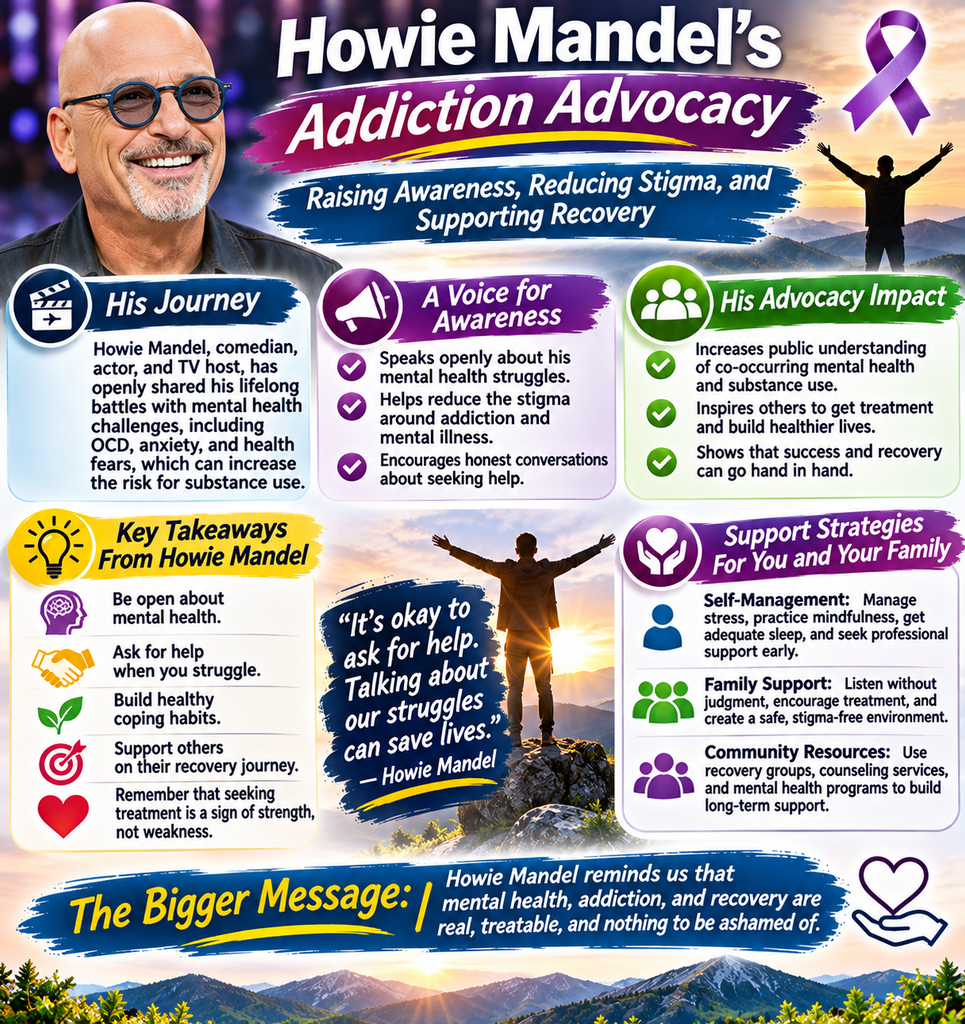
Howie Mandel, the internationally recognized comedian, television host, actor, and judge on America’s Got Talent, has become an outspoken advocate for mental health awareness. Behind his successful entertainment career, Mandel has openly discussed his experiences with obsessive-compulsive disorder (OCD), anxiety, and the emotional challenges associated with living with mental health conditions.
Although Mandel is primarily known for his mental health advocacy rather than a publicly established personal history of substance addiction, his message has important implications for addiction prevention, treatment, and recovery. His willingness to discuss psychological struggles helps challenge stigma and encourages individuals to seek professional support instead of suffering in silence.
Mental health disorders and substance use disorders can occur together, making early intervention, emotional awareness, and access to treatment essential components of comprehensive care.
This article explores Howie Mandel’s advocacy journey and its connection to addiction awareness, highlighting practical self-management, family support, and community-based strategies that promote emotional well-being and long-term recovery.
Howie Mandel’s Early Mental Health Struggles
Howie Mandel has described experiencing symptoms of OCD and attention-deficit/hyperactivity disorder (ADHD) since childhood, long before receiving formal diagnoses in adulthood.
Growing up during a time when mental health conditions were poorly understood, Mandel often struggled with intrusive thoughts, anxiety, impulsivity, and difficulties concentrating. These challenges affected his education, relationships, and daily functioning.
Mandel has explained that he did not receive a formal diagnosis until his forties. Despite these difficulties, he developed a successful entertainment career while continuing to manage his symptoms. ADDitude+1
His experiences highlight the importance of early mental health screening, accurate diagnosis, and accessible treatment.
Howie Mandel’s Experiences With Alcohol, Sleep Aids, and Emotional Distress
In September 2026, Mandel shared additional details about a particularly difficult period during the COVID-19 pandemic.
During an interview on Hoda Kotb’s Joy 101 podcast, he described experiencing severe anxiety, overwhelming fears, and insomnia. He reported using excessive amounts of sleep gummies and combining them with drinking and smoking in an effort to become unconscious and escape his distress.
His wife, Terry, became concerned when she sometimes had difficulty waking him. Mandel described her intervention as instrumental in getting him professional help. He also reported being sober and receiving therapy and prescribed medication. People.com
This account provides an important connection between Mandel’s mental health advocacy and substance-related risks.
Although his experiences involved dangerous substance use, they should not automatically be interpreted as proof of a specific substance use disorder diagnosis.
Understanding the dangers of self-medication
Individuals experiencing severe anxiety, depression, insomnia, or overwhelming emotional distress may sometimes turn to alcohol, cannabis, or sedating products for temporary relief.
However, self-medication can create additional risks:
- Alcohol can worsen anxiety, depression, and sleep quality.
- Combining alcohol with sedating medications or sleep products can cause dangerous impairment.
- Repeated substance use to manage emotions may increase the risk of dependence.
- Untreated mental health symptoms can become more difficult to manage.
- Relying on substances may delay appropriate medical or psychological treatment.
Combining alcohol with sedatives can also increase the risk of respiratory depression, loss of consciousness, and overdose, depending on the substances involved.
Mandel’s experience illustrates why severe insomnia and emotional distress deserve professional evaluation rather than attempts to suppress symptoms through substance use.
Breaking the Stigma Surrounding Mental Health and Addiction
One of Mandel’s most significant contributions has been his willingness to discuss conditions that many people hesitate to disclose.
He has spoken about the embarrassment he initially felt after revealing his OCD diagnosis publicly. However, hearing from others who shared similar experiences helped him recognize the importance of open conversations.
Mandel subsequently became involved in mental health education, including a partnership with NOCD to promote OCD awareness and access to specialized treatment. Parade+1
His advocacy reinforces several principles relevant to addiction recovery:
- Mental health conditions are legitimate medical concerns.
- Seeking psychiatric treatment should not be viewed as weakness.
- Shame and stigma can discourage individuals from requesting help.
- Early intervention can prevent worsening symptoms.
- Public conversations can encourage people to recognize similar struggles in themselves.
- Treatment should be accessible regardless of financial or social circumstances.
Reducing stigma is especially important for individuals experiencing both mental health disorders and problematic substance use.
Self-Management Strategies: Learning to Cope Without Harmful Substances
Mandel has discussed the importance of therapy, medication, physical activity, meaningful work, and maintaining connections with others.
In interviews, he has described exercise and staying engaged in activities as helpful ways of managing emotional distress. He has also emphasized the value of professional mental health treatment. Health Insight+1
For individuals facing similar challenges, self-management strategies can reduce the temptation to rely on alcohol or other substances.
Practical self-management strategies
- Recognize emotional triggers: Identify situations that increase anxiety, intrusive thoughts, loneliness, or the urge to use substances.
- Seek professional treatment: Work with qualified mental health and addiction professionals to develop an individualized care plan.
- Practice stress-management techniques: Use breathing exercises, mindfulness, relaxation, and physical activity to manage emotional distress.
- Develop healthy sleep habits: Maintain a consistent sleep schedule and seek medical evaluation for persistent insomnia.
- Avoid self-medicating: Do not combine alcohol, sedatives, or other substances to manage emotional symptoms.
- Follow prescribed treatment: Take medications as directed and discuss side effects or concerns with a healthcare professional.
- Establish a support network: Maintain contact with trusted friends, relatives, counselors, or recovery peers.
- Create a safety plan: Identify warning signs of emotional deterioration and know when to seek urgent help.
For individuals with OCD, exposure and response prevention (ERP), a specialized form of cognitive behavioral therapy, is an evidence-based treatment. Addiction treatment may require additional interventions, including relapse-prevention counseling and medications when appropriate.
Family Support Strategies: How Loved Ones Can Encourage Treatment
Family support has played a meaningful role in Mandel’s mental health journey.
He has credited his wife, Terry, with encouraging him to seek professional treatment when his symptoms and behaviors became difficult to manage. In his September 2026 interview, he described her intervention during the pandemic as especially important. Health Insight+1
His experience demonstrates how family members can recognize concerning changes and encourage professional intervention.
Effective family support strategies
- Recognize warning signs: Pay attention to worsening anxiety, severe insomnia, isolation, excessive substance use, and changes in behavior.
- Communicate with compassion: Express concerns without blaming, criticizing, or humiliating the individual.
- Encourage professional evaluation: Help loved ones access mental health specialists, addiction counselors, or medical treatment.
- Avoid enabling harmful behavior: Maintain boundaries around substance use and unsafe decisions.
- Support treatment participation: Encourage attendance at appointments and adherence to mutually agreed treatment plans.
- Learn about co-occurring disorders: Understand how mental health symptoms and substance use can influence one another.
- Promote healthy routines: Encourage regular meals, physical activity, adequate sleep, and supportive social connections.
- Protect family well-being: Seek counseling or support groups when caregiving becomes emotionally overwhelming.
Families should also understand that they cannot single-handedly control another person’s recovery. Their role is to provide encouragement, communicate concerns, and help create a supportive environment.
Community Support Strategies: Expanding Access to Mental Health and Addiction Care
Mandel’s advocacy extends beyond sharing his personal experiences.
Through his involvement with NOCD and mental health awareness initiatives, he has emphasized the importance of reducing stigma and improving access to specialized care.
In 2022, he also participated in a mental health awareness discussion involving NOCD and the National Alliance on Mental Illness (NAMI). Fox News+1
Community organizations play an essential role in helping people obtain treatment, education, and peer support.
Valuable community resources
- National Alliance on Mental Illness (NAMI): Provides mental health education, support groups, and resources for individuals and families.
- NOCD: Offers specialized OCD treatment and educational resources.
- Substance Abuse and Mental Health Services Administration (SAMHSA): Provides treatment referral resources through its National Helpline at 1-800-662-HELP (4357).
- SMART Recovery: Offers mutual-support meetings focused on managing addictive behaviors and developing healthier coping strategies.
- Alcoholics Anonymous (AA): Provides peer support for individuals seeking recovery from alcohol problems.
- Community mental health centers: Offer counseling, psychiatric evaluation, and treatment for co-occurring disorders.
- 988 Suicide & Crisis Lifeline: Provides free, confidential crisis support by calling or texting 988 in the United States.
Community resources can help individuals find appropriate treatment, reduce isolation, and build supportive relationships.
Understanding the Connection Between OCD, Anxiety, and Addiction
Mandel’s experiences provide an opportunity to examine how mental health symptoms may increase vulnerability to problematic substance use.
OCD involves recurrent intrusive thoughts, images, or urges and often repetitive behaviors or mental rituals intended to reduce distress.
Anxiety disorders may involve persistent worry, physical tension, avoidance, and difficulty tolerating uncertainty.
Some individuals experiencing these symptoms may use alcohol or drugs to obtain temporary emotional relief. This pattern can contribute to a cycle in which substance use initially reduces distress but ultimately worsens psychological symptoms.
However, having OCD or anxiety does not mean someone will develop addiction.
Effective care focuses on identifying the individual’s specific symptoms, substance use patterns, and treatment needs.
For individuals with co-occurring conditions, coordinated mental health and addiction treatment may improve outcomes.
Lessons From Howie Mandel’s Advocacy Journey
Mandel’s experiences offer several meaningful lessons for individuals, families, and healthcare professionals.
- Mental health deserves the same attention as physical health. Psychological symptoms should be evaluated and treated, not ignored.
- Self-medication can become dangerous. Using alcohol or sedating substances to escape emotional distress can create serious health risks.
- Family intervention can encourage treatment. Concerned loved ones may help someone recognize when professional assistance is necessary.
- Recovery requires individualized care. Treatment should address the underlying mental health condition and any associated substance use problems.
- Public advocacy reduces stigma. Sharing personal experiences can encourage others to seek support.
- Community resources improve access to care. Support organizations and specialized treatment providers help individuals obtain appropriate services.
- Long-term well-being requires continued attention. Managing chronic mental health conditions often involves ongoing treatment, coping skills, and supportive relationships.
Conclusion: Turning Personal Struggles Into Hope and Advocacy
Howie Mandel’s journey demonstrates the importance of speaking openly about mental health challenges, recognizing dangerous coping behaviors, and seeking professional treatment when emotional distress becomes overwhelming.
His experiences with OCD, ADHD, anxiety, and substance-related risks highlight how untreated psychological symptoms can affect personal relationships, daily functioning, and overall health.
Through public advocacy and partnerships with mental health organizations, Mandel has helped encourage conversations about psychiatric treatment, stigma, and access to care.
His story reinforces the value of a comprehensive approach that combines self-management, family involvement, and community support.
For individuals experiencing addiction or co-occurring mental health conditions, recovery may involve difficult decisions, ongoing treatment, and adjustments to daily routines. However, meaningful improvement is possible with appropriate care and supportive relationships.
Mental health struggles should never be faced in silence. Asking for help is a step toward healing, and compassionate support can make a lasting difference.
Frequently Asked Questions and Answers
Understanding Howie Mandel’s Advocacy
1. What is Howie Mandel best known for advocating?
Howie Mandel is best known for raising awareness about OCD, ADHD, anxiety, and mental health stigma.
He has used interviews, television appearances, podcasts, and partnerships with mental health organizations to encourage people to discuss psychological struggles openly and seek appropriate treatment.
His advocacy also supports broader conversations about the importance of addressing mental health conditions that may coexist with substance use disorders.
2. Has Howie Mandel publicly discussed having an addiction?
Mandel has discussed mental health struggles and substance-related behaviors, including using substances during periods of severe emotional distress.
However, publicly discussing substance use does not necessarily establish a diagnosis of addiction or substance use disorder.
It is important to distinguish his documented mental health advocacy from claims that he has a specific addiction diagnosis.
3. What mental health conditions has Howie Mandel experienced?
Mandel has publicly disclosed living with OCD and ADHD. He has also discussed anxiety, intrusive thoughts, and the challenges of managing emotional distress.
OCD involves unwanted intrusive thoughts and repetitive behaviors or mental rituals, while ADHD can affect attention, impulse control, organization, and emotional regulation.
Both conditions may interfere with daily functioning and relationships, but effective treatments are available.
4. Why is Howie Mandel’s advocacy important to addiction awareness?
Mental health conditions and substance use disorders can occur together. Some individuals attempt to manage anxiety, insomnia, depression, or overwhelming emotions by using alcohol or other substances.
Mandel’s willingness to discuss mental health challenges reinforces the importance of early intervention, professional treatment, and reducing shame.
His message encourages people to seek healthier coping strategies rather than relying on potentially harmful forms of self-medication.
5. Did Howie Mandel use substances to cope with emotional distress?
Yes. In a September 2026 interview on Hoda Kotb’s Joy 101 podcast, Mandel described a difficult period during the COVID-19 pandemic when severe anxiety and insomnia led him to use excessive sleep gummies alongside drinking and smoking.
He explained that his wife became concerned because she sometimes struggled to wake him. He subsequently sought professional help and reported being sober. People.com
His experience illustrates how attempting to escape emotional distress through substances can become dangerous.
6. Is Howie Mandel sober today?
According to reporting published in September 2026, Mandel described himself as sober and receiving professional mental health treatment, including therapy and prescribed medication. People.com
His reported sobriety is encouraging, although his personal circumstances and treatment remain his own to discuss.
7. How did Howie Mandel become a mental health advocate?
Mandel initially felt uncomfortable when his OCD diagnosis became public during a radio appearance. Over time, he discovered that discussing his experiences helped other people feel less isolated.
He subsequently became involved with NOCD to promote awareness and improve access to specialized OCD treatment. Parade
His advocacy emphasizes that mental health conditions deserve the same attention and respect as physical illnesses.
Self-Management and Recovery Strategies
8. What self-management strategies does Howie Mandel use?
Mandel has discussed psychotherapy, prescribed medication, exercise, maintaining meaningful activities, and talking openly about his experiences.
He has also emphasized that treatment must be individualized because strategies that help one person may not work for another. ADDitude+1
These approaches demonstrate the importance of combining professional care with healthy daily habits.
9. How can individuals manage anxiety without relying on alcohol or drugs?
Helpful strategies include:
- Identifying situations that trigger anxiety or emotional distress.
- Participating in cognitive behavioral therapy (CBT).
- Practicing relaxation and breathing exercises.
- Maintaining consistent sleep and exercise routines.
- Avoiding alcohol or sedating substances as coping mechanisms.
- Seeking professional help for persistent insomnia.
- Developing a support network of trusted individuals.
- Following prescribed medication plans.
For OCD specifically, exposure and response prevention (ERP) is an evidence-based treatment. Relaxation techniques may help with general stress but should not replace ERP or become rituals used to neutralize obsessive fears.
10. Why is professional therapy important for mental health and addiction?
Therapy helps individuals identify unhealthy thought patterns, manage difficult emotions, develop coping strategies, and address behaviors that interfere with daily functioning.
For individuals with co-occurring mental health and substance use disorders, integrated treatment can address both conditions simultaneously.
Therapy may also help reduce the likelihood of returning to harmful coping behaviors.
11. Can untreated anxiety or OCD increase the risk of substance misuse?
Some individuals with anxiety or OCD may attempt to relieve distress through alcohol, cannabis, or other substances.
Although temporary relief may occur, repeated use can worsen sleep, increase anxiety, and create dependence.
Not everyone with OCD or anxiety develops a substance use disorder. Risk depends on multiple biological, psychological, and environmental factors.
12. What are the dangers of using alcohol or sleep aids to manage emotional distress?
Combining alcohol with sedating medications or other sleep-inducing substances may cause excessive sedation, impaired coordination, confusion, and, with certain combinations, respiratory depression.
Individuals should consult healthcare professionals before combining alcohol with prescription medications, over-the-counter sleep aids, or other sedating products.
Persistent insomnia and severe anxiety deserve appropriate medical evaluation.
Family Support and Intervention
13. How did Howie Mandel’s wife support his mental health journey?
Mandel has credited his wife, Terry, with encouraging him to seek professional help.
In interviews, he has explained that her concerns about his symptoms and their effects on family life contributed to his decision to pursue treatment.
During the pandemic, her intervention also helped him recognize the seriousness of his substance-related coping behaviors. Health Insight+1
14. How can families support someone struggling with mental health and substance use?
Families can help by:
- Listening without criticism or judgment.
- Recognizing changes in sleep, mood, and substance use.
- Encouraging professional mental health evaluations.
- Establishing healthy boundaries.
- Avoiding behaviors that conceal dangerous substance use.
- Participating in family counseling when appropriate.
- Supporting treatment and recovery goals.
- Seeking emotional support for themselves.
Families should understand that providing support does not mean assuming responsibility for controlling another person’s behavior.
15. What warning signs suggest someone may be self-medicating?
Potential warning signs include increased alcohol or drug consumption, using substances specifically to fall asleep or manage anxiety, hiding substance use, withdrawing from relationships, and continuing to use substances despite harmful consequences.
These behaviors do not automatically indicate addiction, but they warrant a compassionate conversation and possibly professional assessment.
Community Support and Addiction Awareness
16. What organizations support mental health and addiction recovery?
Several organizations provide valuable resources:
- National Alliance on Mental Illness (NAMI): Mental health education, advocacy, and family support.
- NOCD: Specialized OCD education and treatment services.
- Substance Abuse and Mental Health Services Administration (SAMHSA): Treatment information and referrals at 1-800-662-HELP (4357).
- SMART Recovery: Peer support for managing addictive behaviors.
- Alcoholics Anonymous (AA): Mutual support for individuals addressing alcohol problems.
- 988 Suicide & Crisis Lifeline: Crisis assistance by calling or texting 988 in the United States.
These organizations offer different forms of assistance, from education and peer support to treatment referrals.
17. How does Howie Mandel help reduce mental health stigma?
Mandel challenges stigma by discussing his experiences with OCD, ADHD, anxiety, and treatment in public settings.
His advocacy encourages people to recognize that mental health conditions are legitimate health concerns rather than personal weaknesses.
He has also emphasized the need for better access to affordable and specialized mental health services. Parade
18. Why is community support important for long-term recovery?
Community support helps reduce isolation, strengthen emotional connections, and provide opportunities to learn healthier coping strategies.
For individuals experiencing addiction, recovery communities can also provide accountability, encouragement, and support during stressful periods.
Peer support works best as part of a broader care plan that includes professional treatment when indicated.
Lessons From Howie Mandel’s Journey
19. What can families and individuals learn from Howie Mandel’s experiences?
His experiences offer several important lessons:
- Mental health problems can affect anyone, regardless of success or social status.
- Emotional distress should be recognized and treated early.
- Self-medication can create serious health risks.
- Family members can play an important role in encouraging treatment.
- Professional counseling and medication may improve functioning.
- Recovery and symptom management require ongoing attention.
- Speaking openly about mental health can reduce shame and isolation.
20. What is the most important message from Howie Mandel’s advocacy?
Mandel’s advocacy emphasizes that mental health struggles should never be ignored or treated as signs of weakness.
His experiences demonstrate the value of recognizing symptoms, accepting professional help, and developing healthier coping strategies.
For individuals facing addiction or substance-related risks, his message reinforces the importance of addressing underlying emotional difficulties while building strong family and community support systems.
Video: