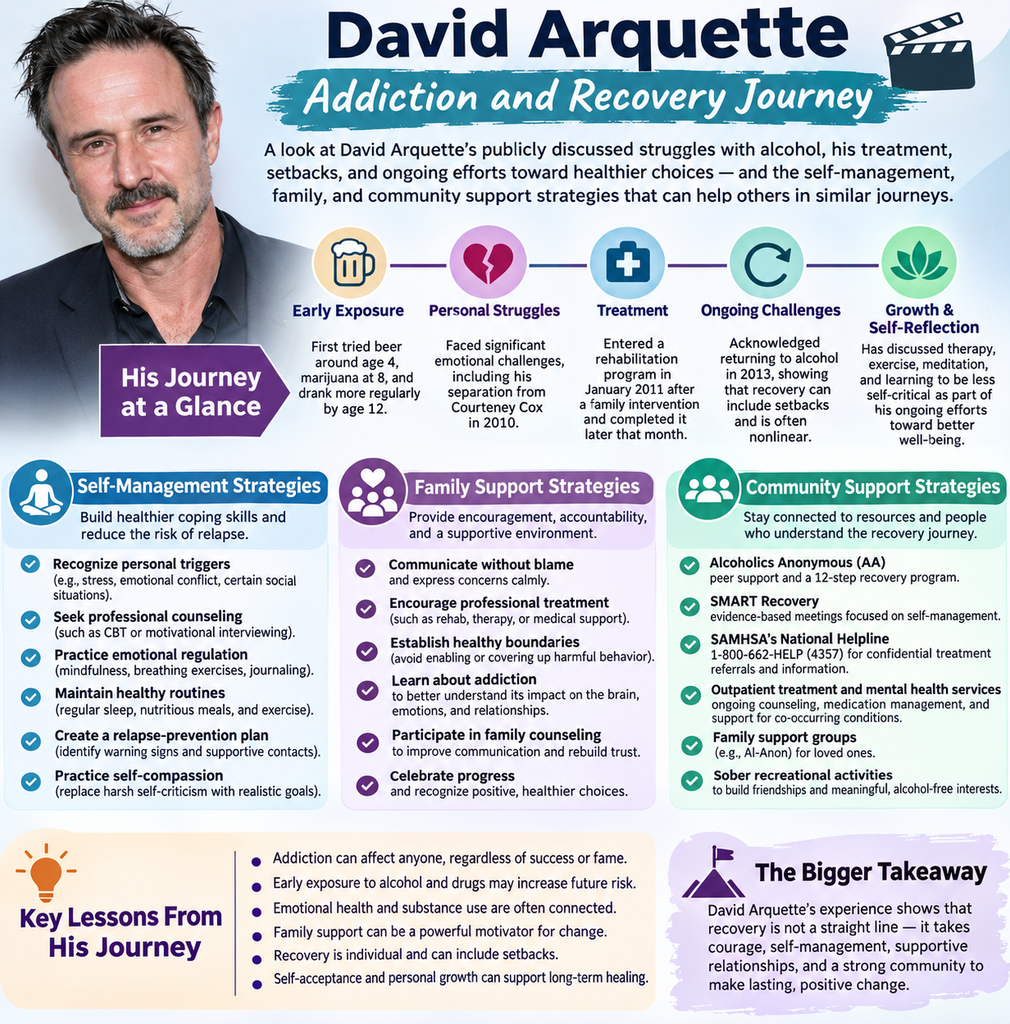
David Arquette, the American actor, producer, and former professional wrestler best known for his role as Dewey Riley in the Scream film franchise, has experienced personal challenges involving alcohol use, emotional struggles, and family relationships. Despite his successful Hollywood career, Arquette has spoken publicly about seeking treatment and making changes to improve his well-being.
His experiences demonstrate that addiction can affect anyone, regardless of fame, financial stability, or professional accomplishments. Recovery requires more than stopping substance use. It often involves addressing underlying emotional difficulties, rebuilding relationships, developing healthier coping mechanisms, and establishing long-term support systems.
This article explores David Arquette’s publicly discussed struggles with alcohol, his efforts toward recovery, and the importance of self-management, family involvement, and community support in overcoming addiction.
David Arquette’s Early Exposure to Alcohol and Substance Use
David Arquette has publicly discussed his early experiences with alcohol and marijuana. During a 2011 interview with Oprah Winfrey, he revealed that he first tasted beer at approximately four years old, experimented with marijuana at eight, and began drinking more regularly around age twelve.
His experiences highlight how early exposure to substances can increase the risk of developing unhealthy drinking patterns later in life. Childhood environments, family behaviors, emotional distress, and genetic vulnerability can all influence addiction risk. CBS News+1
Early substance exposure does not guarantee addiction, but it emphasizes the importance of prevention, education, and supportive family relationships.
Personal Struggles and the Decision to Seek Treatment
In 2010, Arquette experienced significant emotional difficulties following his separation from actress Courteney Cox. During this period, concerns about his alcohol consumption and behavior became increasingly public.
In January 2011, he entered a rehabilitation program after an intervention involving Cox, his sister Patricia Arquette, and other people close to him. He completed treatment later that month. CBS News+1
His decision to enter treatment illustrates several important principles:
- Recognizing unhealthy behaviors: Acknowledging when substance use interferes with emotional stability and relationships.
- Accepting professional treatment: Seeking structured support to address alcohol-related problems.
- Listening to loved ones: Considering concerns expressed by family members and trusted friends.
- Addressing emotional distress: Understanding how grief, separation, anxiety, and depression may contribute to substance use.
- Taking responsibility: Making changes that support healthier decisions and relationships.
Treatment can provide an opportunity to identify underlying problems and develop skills necessary for long-term recovery.
Understanding Relapse and the Challenges of Recovery
Arquette’s recovery experience has not followed a simple or uninterrupted path.
After reporting a period of sobriety following treatment, he acknowledged returning to alcohol consumption in 2013. In a 2020 interview, he described his relationship with addiction as complicated and discussed periods of sobriety, treatment, and ongoing efforts to manage his behavior. Los Angeles Times+1
His openness illustrates that recovery experiences vary considerably. Although sustained abstinence is an important goal for many individuals with alcohol use disorder, some people struggle with ambivalence, recurring use, or difficulty maintaining behavioral changes.
A return to drinking does not erase previous progress, but it can indicate the need to reassess treatment, strengthen support, and address unresolved triggers.
Importantly, Arquette’s current sobriety status should not be assumed from historical interviews.
Self-Management Strategies: Developing Healthier Coping Skills
Self-management is an essential component of addiction treatment. Individuals recovering from alcohol or substance use problems benefit from recognizing triggers, improving emotional regulation, and establishing consistent daily routines.
Arquette has discussed therapy, exercise, meditation, and learning to be less self-critical. His experience offers useful lessons about addressing emotional distress rather than relying on substances for temporary relief. The Independent+1
Practical self-management strategies
- Recognize personal triggers: Identify stressful situations, emotional conflicts, social environments, and behaviors associated with substance use.
- Seek professional counseling: Cognitive behavioral therapy (CBT) and motivational interviewing can help individuals understand unhealthy patterns and strengthen motivation for change.
- Develop emotional regulation skills: Practice mindfulness, breathing exercises, journaling, and stress-management techniques.
- Establish healthy routines: Maintain regular sleep, nutritious meals, physical activity, and structured daily schedules.
- Create a relapse-prevention plan: Identify warning signs, coping strategies, supportive contacts, and steps to take when cravings intensify.
- Consider evidence-based medication: For alcohol use disorder, medications such as naltrexone or acamprosate may help reduce drinking or support abstinence when clinically appropriate.
- Practice self-compassion: Replace excessive guilt and negative self-talk with realistic goals, accountability, and constructive problem-solving.
Recovery requires consistent effort, but it should not depend on willpower alone. Professional treatment and supportive relationships can significantly improve outcomes.
Family Support Strategies: Encouraging Recovery Without Judgment
Family involvement played an important role in Arquette’s decision to seek treatment in 2011. His experience shows how concerned relatives can encourage someone to recognize harmful behaviors and seek professional help.
However, family support should balance compassion with healthy boundaries.
How families can help
- Communicate without blame: Express concerns calmly, using specific examples rather than accusations.
- Encourage professional treatment: Help identify addiction specialists, therapists, and appropriate rehabilitation programs.
- Establish healthy boundaries: Avoid covering up harmful behavior or accepting unsafe situations.
- Learn about addiction: Understand how substance use disorders affect brain function, decision-making, emotions, and relationships.
- Recognize warning signs: Watch for escalating drinking, secrecy, emotional withdrawal, and changes in responsibilities.
- Participate in family counseling: Address communication difficulties, trust, and relationship patterns.
- Celebrate meaningful progress: Recognize treatment participation, healthier coping skills, and responsible decisions.
- Protect family well-being: Encourage relatives to seek counseling and support for their own emotional needs.
Family members cannot force someone to recover, but they can create an environment that encourages treatment, accountability, and healthier relationships.
Community Support Strategies: Building a Strong Recovery Network
Community resources can provide ongoing support beyond formal rehabilitation programs. Individuals recovering from addiction often benefit from connections with professionals, peers, and organizations that understand the challenges of maintaining behavioral changes.
Helpful community resources
- Alcoholics Anonymous (AA): Peer-led meetings offering fellowship and support for individuals seeking recovery from alcohol problems.
- SMART Recovery: Evidence-informed mutual-support meetings emphasizing self-management and behavioral change.
- SAMHSA’s National Helpline: Confidential treatment referrals and information at 1-800-662-HELP (4357).
- Outpatient addiction programs: Counseling, medication management, and structured treatment while individuals continue living at home.
- Peer recovery specialists: Individuals with lived recovery experience who provide guidance and encouragement.
- Family support organizations: Al-Anon and other groups that help relatives cope with a loved one’s alcohol use.
- Community mental health centers: Services addressing depression, anxiety, trauma, and co-occurring substance use disorders.
- Sober recreational activities: Opportunities to develop friendships and meaningful interests without relying on alcohol or drugs.
Community support can reduce isolation, strengthen accountability, and help individuals maintain recovery goals over time.
The Connection Between Mental Health and Addiction
Arquette has also discussed emotional distress, depression, and the importance of therapy. In interviews surrounding his 2020 documentary, You Cannot Kill David Arquette, he described struggles with self-criticism and efforts to develop greater self-acceptance. Los Angeles Times+1
Mental health symptoms and substance use disorders frequently interact. Some individuals use alcohol or drugs to temporarily escape uncomfortable emotions, while repeated substance use may worsen anxiety, depression, sleep disturbances, and emotional instability.
Effective treatment should consider both conditions when they occur together.
An integrated treatment approach may include psychotherapy, appropriate medications, addiction counseling, family education, and long-term monitoring.
It is also important to recognize that untreated alcohol withdrawal can cause seizures or delirium tremens in physically dependent individuals. Medical evaluation is recommended before abruptly stopping heavy, prolonged alcohol use.
Lessons From David Arquette’s Journey
Arquette’s experiences provide several meaningful lessons about addiction and recovery.
- Addiction does not discriminate. Professional success and financial resources do not eliminate the risk of substance use disorders.
- Early experiences matter. Childhood exposure to alcohol and drugs may influence future behaviors and vulnerability.
- Emotional health deserves attention. Addressing psychological distress can be an important part of addiction treatment.
- Family support can encourage change. Compassionate intervention may help someone recognize the need for professional assistance.
- Recovery is individualized. Treatment plans should reflect personal needs, goals, medical history, and readiness for change.
- Setbacks require reassessment. Returning to substance use should prompt additional support rather than shame or abandonment.
- Self-acceptance supports healing. Developing healthier self-talk and emotional coping skills can strengthen long-term recovery.
Conclusion: Recovery Requires Courage, Support, and Continued Growth
David Arquette’s publicly discussed experiences with alcohol, treatment, emotional struggles, and personal growth illustrate the complexities of addiction recovery. His willingness to discuss difficult periods in his life helps challenge the misconception that successful individuals are immune to substance use problems.
His story also reinforces the importance of addressing addiction through comprehensive care rather than focusing exclusively on substance use.
Self-management strategies help individuals recognize triggers and develop healthier coping skills. Family involvement provides encouragement, accountability, and emotional connection. Community resources offer professional guidance, peer support, and opportunities to maintain meaningful behavioral changes.
Although recovery experiences differ, effective treatment, supportive relationships, and continued personal development can help individuals build healthier and more fulfilling lives.
Recovery is not defined by perfection. It is strengthened by continued effort, appropriate treatment, and the willingness to seek help when needed.
Frequently Asked Questions and Answers
Understanding David Arquette’s Addiction Struggles
1. What addiction did David Arquette struggle with?
David Arquette has publicly discussed problematic alcohol use and early experimentation with marijuana. His difficulties with drinking became particularly visible during a period of personal and emotional challenges surrounding his separation from actress Courteney Cox in 2010.
His experiences demonstrate that substance-related problems can affect individuals regardless of professional success, fame, or financial security.
2. At what age did David Arquette begin using alcohol and drugs?
During a 2011 interview with Oprah Winfrey, Arquette reported tasting beer around age four, experimenting with marijuana at approximately eight, and beginning to drink more regularly around age twelve.
Early exposure to alcohol and drugs is associated with an increased risk of substance use disorders later in life, although not everyone who experiments with substances develops addiction.
3. Why did David Arquette enter rehabilitation?
Arquette entered a rehabilitation program in January 2011 following concerns about his alcohol consumption, emotional well-being, and behavior.
His decision followed an intervention involving family members and other people close to him. Treatment offered an opportunity to address unhealthy behaviors and begin developing healthier coping strategies.
4. Did David Arquette’s divorce contribute to his addiction struggles?
His separation from Courteney Cox in 2010 coincided with a period of emotional distress and increased public concern about his drinking.
Relationship difficulties can contribute to stress, loneliness, and unhealthy coping behaviors. However, it would be inaccurate to attribute Arquette’s substance use problems entirely to his separation.
Addiction generally develops through a combination of biological, psychological, social, and environmental factors.
5. Did David Arquette experience setbacks during recovery?
Yes. Arquette publicly acknowledged returning to alcohol consumption in 2013 after previously reporting sobriety following rehabilitation.
His experience illustrates that recovery is not always straightforward. A return to substance use can indicate a need to reassess treatment, strengthen coping strategies, and increase support.
6. Is David Arquette sober today?
Arquette has discussed periods of sobriety, treatment, and changes in his relationship with alcohol. However, his current sobriety status should not be assumed without a recent, reliable statement from him.
Recovery is a personal and ongoing process, and public figures are entitled to privacy regarding their current health and treatment.
Self-Management and Emotional Recovery
7. What self-management strategies can help someone struggling with addiction?
Effective self-management involves developing healthier responses to cravings, emotional distress, and stressful situations.
Helpful strategies include:
- Identifying emotional triggers and high-risk situations.
- Practicing mindfulness, meditation, and relaxation techniques.
- Maintaining regular sleep, exercise, and healthy eating habits.
- Attending counseling or behavioral therapy.
- Creating a personalized relapse-prevention plan.
- Building meaningful hobbies and alcohol-free activities.
- Discussing medications for alcohol use disorder with a qualified healthcare professional.
These strategies are most effective when combined with appropriate professional treatment and social support.
8. How did David Arquette work on improving his mental health?
Arquette has discussed therapy, physical activity, meditation, and efforts to improve his emotional well-being. His documentary, You Cannot Kill David Arquette, also explores his struggles with self-esteem, personal identity, and emotional challenges.
In a 2020 interview, he acknowledged that drinking had negatively affected his life. Los Angeles Times+1
His experiences emphasize the importance of addressing emotional health alongside substance use.
9. Can addiction and mental health problems occur together?
Yes. Substance use disorders frequently coexist with depression, anxiety, trauma-related symptoms, and other mental health conditions.
Some individuals use alcohol or drugs to cope with distressing emotions. However, repeated substance use may worsen psychological symptoms and interfere with treatment.
Integrated care that addresses both addiction and mental health can improve overall functioning and recovery outcomes.
10. What should someone do after returning to alcohol use during recovery?
A return to drinking should be addressed promptly and constructively rather than with shame.
Recommended steps include reconnecting with a treatment provider, identifying triggers, evaluating whether the treatment plan needs adjustment, and strengthening recovery support.
Individuals with significant alcohol dependence should seek medical guidance before abruptly stopping drinking because withdrawal can sometimes cause life-threatening complications.
Family Support and Relationships
11. How did David Arquette’s family support his recovery?
Courteney Cox, Patricia Arquette, and other individuals close to him participated in the intervention that preceded his entry into rehabilitation in 2011.
Arquette later discussed the intervention during his interview with Oprah Winfrey. CBS News+1
Their involvement demonstrates how concerned family members and friends can encourage someone to consider professional treatment.
12. How can families help someone struggling with alcohol addiction?
Families can provide meaningful support by encouraging treatment while maintaining healthy boundaries.
Helpful approaches include:
- Expressing concerns calmly and without judgment.
- Encouraging professional addiction assessments.
- Learning about alcohol use disorder and recovery.
- Avoiding behaviors that conceal or enable harmful drinking.
- Participating in family therapy when appropriate.
- Supporting healthier routines and alcohol-free activities.
- Recognizing progress without demanding perfection.
Family members should also protect their own emotional and physical well-being.
13. Can addiction affect marriages and family relationships?
Yes. Problematic substance use can contribute to communication difficulties, mistrust, financial problems, emotional distance, and family conflict.
Arquette’s publicly discussed relationship challenges illustrate how emotional distress and alcohol use may become intertwined.
However, addiction should not automatically be considered the sole cause of a relationship breakdown. Family difficulties are often complex and involve multiple factors.
14. What role does forgiveness play in addiction recovery?
Forgiveness may help individuals and families move beyond resentment, guilt, and emotional pain.
However, forgiveness does not mean ignoring harmful behavior or immediately restoring trust.
Healthy reconciliation generally requires accountability, consistent behavioral changes, respectful communication, and appropriate boundaries.
Community Support and Long-Term Recovery
15. What community resources can help people recovering from alcohol addiction?
Several organizations offer education, treatment referrals, and recovery support.
- Alcoholics Anonymous (AA): Peer-led meetings for people seeking recovery from alcohol problems.
- SMART Recovery: Mutual-support meetings focused on practical behavioral change and self-management.
- Al-Anon Family Groups: Support for relatives and friends affected by someone else’s drinking.
- SAMHSA National Helpline: Free, confidential treatment referrals at 1-800-662-HELP (4357).
- Community mental health centers: Counseling and treatment for substance use and co-occurring mental health conditions.
These services can complement medical treatment and help reduce isolation.
16. Why is community support important during recovery?
Community support provides emotional connection, encouragement, accountability, and opportunities to learn from others with similar experiences.
Supportive relationships can help individuals manage cravings, identify warning signs, and maintain healthier lifestyles.
Peer support is especially valuable for people who feel isolated or ashamed of their addiction history.
17. Can exercise and recreational activities support addiction recovery?
Yes. Regular physical activity can improve mood, reduce stress, support sleep, and contribute to overall well-being.
Arquette has discussed exercise and professional wrestling as meaningful parts of his personal development. GQ+1
Activities such as walking, yoga, swimming, gardening, and recreational sports may provide healthy alternatives to substance-related routines.
However, exercise should complement rather than replace evidence-based addiction treatment.
18. How can individuals maintain long-term recovery?
Long-term recovery often requires ongoing attention to emotional health, relationships, and daily habits.
Important strategies include staying in contact with healthcare professionals, participating in recovery groups, recognizing triggers, practicing healthy coping skills, and regularly reviewing treatment goals.
For some individuals, medication treatment and ongoing psychotherapy are important components of relapse prevention.
Lessons From David Arquette’s Journey
19. What can people learn from David Arquette’s experiences?
Arquette’s story offers several important lessons about addiction and personal growth.
- Addiction can affect anyone, regardless of fame or success.
- Early exposure to substances may increase future addiction risk.
- Emotional distress can contribute to unhealthy drinking patterns.
- Family intervention may encourage someone to seek treatment.
- Recovery may involve setbacks and changing goals.
- Professional treatment and ongoing support are important.
- Self-awareness and healthier coping strategies can improve quality of life.
His experiences also highlight the importance of compassion toward individuals facing substance use problems.
20. What is the most important message from David Arquette’s addiction and recovery journey?
One of the most meaningful lessons from Arquette’s experiences is that acknowledging personal struggles and accepting support can create opportunities for positive change.
His publicly discussed history shows that recovery may involve treatment, difficult decisions, periods of progress, and renewed challenges.
Although his present recovery status cannot be determined from older interviews, his willingness to discuss addiction and emotional health can encourage broader conversations about treatment, stigma, and personal responsibility.
Video: